Detailed Guide to Magnolia Planting Methods and Pest and Disease Control Techniques
Magnolia is very common, and magnolia flowers are also used in the landscaping of many cities. Magnolia flowers are very large, most of them are white, and they are very beautiful. How do you plant magnolia? What pests and diseases are there? How should they be controlled?
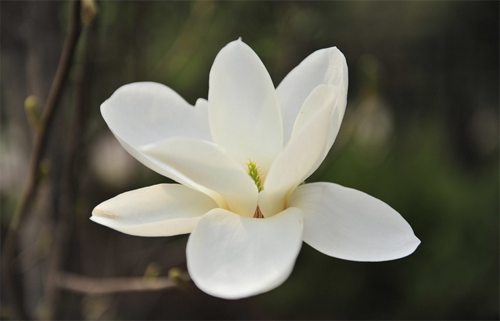
How to plant magnolia:
1. Environment selection
Magnolia likes light, and young trees are relatively shade-tolerant. It is not tolerant of strong light or west exposure. Too strong light or west exposure can easily cause the trees to be scorched.
Magnolia can be planted in an environment with lateral shading. If planted under large trees or in a shaded place, it will grow poorly, with a thin and small tree shape, sparse branches, small and yellowing leaves, and no flowers or small flowers;
It is cold-resistant and can withstand a brief low temperature of -20°C, but it should not be planted in windy openings, otherwise shoot dieback is likely to occur. In sheltered and sunny places in the Beijing area, it can safely overwinter in the open field without measures such as wrapping the trunk;
Magnolia likes fertile, moist, well-drained, slightly acidic soil, but it can also grow normally in mildly saline-alkaline soil; Magnolia has fleshy roots and is afraid of waterlogging, so the planting site should be high. Planting in low-lying areas can easily cause root rot and lead to death; the soil at the magnolia planting site should also have good permeability. Planting in clay soil leads to poor growth, while it grows best in sandy loam and yellow sandy soil.
2. Planting precautions
Magnolia is not tolerant of transplanting. Generally, transplanting 10 to 15 days before budding or when the flowers have just faded but the leaves have not yet unfolded is ideal. Four to five days before digging up the seedlings, water them thoroughly once. This not only allows the plants to absorb sufficient water, which helps them survive after planting, but also helps the soil form a ball when the seedlings are dug.
Try to damage the root system as little as possible. The wounds on broken roots must be smooth to help the wounds heal.
Note: No matter what size the seedlings are, they should be dug with a soil ball. The diameter of the soil ball should be 8-10 times the ground diameter of the seedling and must not be too small. After the soil ball is dug, it should be tied well with straw rope.
3. Soil selection
Before planting, dig the tree pit well. The tree pit should be large rather than small. If the tree pit is too small, it is not only troublesome to plant, but also not conducive to root growth. The bottom soil of the tree pit is best if it is matured soil. If the soil is too clayey or the salt content exceeds the standard, foreign soil should be used or the soil should be improved.
The permeability of the cultivation soil must be good, the soil fertility must be sufficient, and it must be able to supply the plants with enough nutrients. There must also be no impurities such as bricks, tiles, or lime in the soil.
4. Planting techniques
When planting, the depth should be appropriate. Generally speaking, the planting depth can be slightly 2 to 3 cm higher than the original soil ball. If it is too deep, buds can easily be stifled; if it is too shallow, the tree roots will be exposed and the tree can easily be blown over by wind. Large-sized seedlings should have supports set up in time. Triangular supports can be used to prevent them from being blown askew by wind.
5. Watering
After planting is completed, water immediately. Water a second time after 3 days and a third time after 5 days. After the third watering, normal management can begin. If the planted seedlings have flower buds, the flower buds should be cut off to prevent flowering and fruiting from consuming a large amount of nutrients and affecting the survival rate.
Magnolia is neither tolerant of waterlogging nor drought. During cultivation and maintenance, the principle of “liking moisture and fearing waterlogging” should be strictly followed. During cultivation and maintenance, many people think that because magnolia fears waterlogging, it should be watered as little as possible. This understanding and practice are very wrong, because magnolia fearing waterlogging does not mean it likes drought. It itself likes a moist environment. In water management, the degree must be controlled so that the soil is neither too dry nor too wet.
During maintenance, newly planted magnolias should keep the soil moist. This is also an important measure to ensure their survival rate.
The green-up water in early spring and the antifreeze water in early winter are indispensable, and they should be watered sufficiently and thoroughly. During the growing season, water once a month. Watering should stop during the rainy season, and drainage should be carried out promptly after rain to prevent root rot caused by water accumulation. In addition, the soil should be loosened in time to preserve moisture.
Note: During dry periods in the rainy season, irrigation should also be carried out in time. Lack of water not only affects the plant's vegetative growth, but can also cause flower buds to fall off or shrink, affecting flowering the following year.
If magnolia is planted in an environment with poor soil, a large hardened area, and a small green space, then during high-temperature and drought weather, while watering the roots, water should also be sprayed on the leaves. Attention should be paid to the degree of atomization when spraying. The higher the degree of atomization, the better the effect. The best times for spraying are before 8:00 in the morning and after 6:00 in the evening. It must not be done at noon when light is strong.
For magnolia suffering from waterlogging damage, it should be rescued immediately. The accumulated water should be drained promptly, the tree should be shaded, especially to prevent west exposure, and some leaves and flower buds should be cut off.
6. Fertilization
Apply base fertilizer when planting, and fertilize every year. This makes it easy to set many buds, with large flowers, a long flowering period, and fragrance.
Fertilize 4 times each year. Apply a nitrogen, phosphorus, and potassium compound fertilizer once before flowering; apply a phosphorus and potassium compound fertilizer once in July and August to promote flower bud differentiation; before winter, in combination with watering winter water, apply once more with decomposed and fermented barnyard manure. This fertilization can not only improve soil activity, and the amount applied should be large rather than small. For seedlings planted in the same year, if their growth is poor, spray the leaves with a 0.2% potassium dihydrogen phosphate solution to effectively strengthen the tree form.
7. Overwintering maintenance
Although magnolia can withstand a low temperature of -20°C, small-sized magnolias and magnolias planted in the same year should have overwintering management strengthened. In addition to thoroughly watering freezing water after leaf fall in mid-to-late November, the tree pit should also be treated by covering with grass, covering with film, or hilling soil. The tree body can be whitewashed to prevent spring shoot dieback. For magnolias that have survived planting for many years, it is sufficient to water antifreeze water and carry out whitewashing.
Pest and disease control of magnolia:
Diseases
Magnolia is a tree species with relatively strong disease resistance, and a few may have anthracnose, chlorosis, and leaf scorch.
(1) Anthracnose
It harms leaves, producing lesions from the leaf tip or leaf margin, with the peak incidence period in summer during high temperature and high humidity. This disease is extremely likely to occur when plant water and fertilizer management is inadequate, ventilation is poor due to dense planting, and growth declines.
Control method: Strengthen water and fertilizer management, remove diseased leaves, and in late autumn remove fallen leaves and burn them in a centralized manner; spray with 800 times dilution of 75% chlorothalonil wettable powder or 500 times dilution of 70% thiophanate-methyl plus thiram. Once every 10 days, 3-4 times can effectively control the disease.
Specific-effect agents: Penjunci, kresoxim-methyl, amisulbrom, etc. have specific effects on diseases caused by fungi.
(2) Chlorosis
It first appears as chlorosis of small leaves, with leaves turning yellow. After the disease spreads, the entire leaf turns yellow, then gradually turns white, plant growth gradually declines, and eventually the plant dies.
Control method: It is mainly caused by soil that is too clayey, pH exceeding the standard, and insufficient iron supply.
A 0.2% ferrous sulfate solution can be used to irrigate the roots, or a 0.1% ferrous sulfate solution can be used to spray the leaves, and more farmyard manure should be applied.
(3) Leaf scorch
In the early stage, leaf margins are scorched; later the leaves shrivel and dry up. In severe cases, new leaves do not unfold, and a large number of leaves dry up and fall off.
This disease often occurs under conditions such as a large hardened soil area, small green space area, prolonged high temperature, drought, and excessively strong light; soil alkalization or excessive flower quantity.
Control method: Increase watering frequency and keep the soil moist; apply more organic fertilizer to improve the plant's resistance, and whitewash or wrap the tree trunk.
Pests
Pests include bagworm moths, Psilogramma menephron, red spider mites, longhorn beetles, etc. If pest damage occurs, 8 dichlorvos and fenitrothion can be used to kill bagworm moths; Bt emulsion and fenitrothion can be used to kill Psilogramma menephron;
Use 4 dicofol and hexythiazox to kill red spider mites;
Use green Weilei to kill longhorn beetles; use zinc phoxim emulsion to irrigate the roots and kill white grubs
Other names for magnolia:
Yulan, white magnolia, Wangchun
The planting methods for magnolia and the pests and diseases that appear during cultivation are introduced here. Quickly plant one at home too.
What to do if magnolia gets insects, pest and disease control of magnolia / 3 pests, 2 diseases
During the growth of magnolia, the last thing we want to encounter is pests and diseases. Such problems are extremely harmful to the plant, and in severe cases can even cause the plant to wither and die. So what should be done if magnolia gets insects? How should magnolia pest and disease control be carried out? Below, the editor will take everyone to understand.
1. What to do if magnolia gets insects, find the cause
If you want to know what to do if magnolia gets insects, first we must find the cause and know what kind of insect it is, so that we can handle it in a targeted way, because the control methods for each pest and disease are different. The specific control methods are introduced in detail below, and interested friends can take a look.
2. Pest and disease control of magnolia (pests)
1. Red wax scale
This pest, red wax scale, mainly feeds on the sap of magnolia, and its excrement often induces sooty mold, thereby weakening the plant, making the tree shape haggard, and causing it to bloom rarely or not at all.
Control method: For this magnolia pest and disease, if the affected area is relatively small, we can scrape it off manually. If there are many affected parts, we can use 1500 times dilution of 40% omethoate emulsifiable concentrate to spray and treat the plant.
2. Red spider mite
Red spider mite is a relatively common pest on many plants, and magnolia is no exception. When this pest appears on the plant, the leaves gradually turn yellow and white. If it is not dealt with for a long time, it can also cause the plant to wither.
Control method: When dealing with this magnolia pest and disease, we can use 2000 times dilution of 20% clofentezine wettable powder to spray and kill it.
3. Longhorn beetle
The longhorn beetle is an extremely harmful pest. It mainly feeds on magnolia leaves, gradually eating away at the leaves, causing them to become tattered and severely affecting their appearance. In severe cases, it can even cause magnolia to wither.
Control method: For this magnolia pest and disease, we can use 2000 times dilution of 20% fenvalerate emulsifiable concentrate and 25% fenvalerate plus omethoate mixture to spray and kill it. Generally once every 5-7 days, after 1-2 times this pest can be completely eliminated.
3. Pest and disease control of magnolia (diseases)
1. Anthracnose
Anthracnose is a disease that can appear on many plants, and magnolia is no exception. When the disease occurs, many round brown lesions appear on the leaves of magnolia, with a size of 2-8 mm. Over time, they gradually spread, and finally gradually cause the plant to rot.
Control method: When controlling this magnolia pest and disease, we can use 600 times dilution of 70% thiophanate-methyl plus thiram to spray it. Generally spray once every 7-10 days, and after 3-4 times it can be cured.
2. Leaf spot disease
Leaf spot disease is a disease caused by fungi. When it occurs, many irregular brown lesions appear on the leaves of the plant, and over time the lesions gradually spread to the petioles and stems. In severe cases, they can also cause the plant to wither and die.
Control method: When dealing with this magnolia pest and disease, we can use 20 ml of 4% pyrimidine nucleoside antibiotic plus 20 ml of 41% pyrimethanil and mix with water to spray the diseased plant. Generally once every 5-7 days, and after 2-3 times it can be cured.
Common spring flower pests and diseases and control methods
In spring, the temperature is warm at first and then cold again. How should pests and diseases harming flowers in April-May be defended against? The following is obtained from Huahua Network and my own practical experience. The pests and diseases harming flowers during this period include the following. I hope it is helpful to friends who grow flowers.Common spring flower pests and diseases and control methods
Aphids
Hibiscus, ornamental peach, Chinese rose, honeysuckle, etc. are all easily harmed by aphids. As the temperature rises, aphids also increase day by day.
Control method: Spray with imidacloprid or acetamiprid, and a very small amount of laundry detergent solution can be added to enhance the effect.
Common spring flower pests and diseases and control methods
Red spider mite
They begin to cause damage to jasmine, asparagus fern, Chinese rose, dahlia, etc. from early April.
Control method: Use pyridaben or avermectin for control.
Common spring flower pests and diseases and control methods
Scale insects
Scale insects on white magnolia, Chinese rose, littleleaf boxwood, and crape myrtle mostly begin to hatch from mid-April to mid-to-late May.
Control method: 1. Before hatching, gently brush off the insect bodies manually. 2. During the larval hatching period, spray chlorpyrifos or beta-cyfluthrin.
Common spring flower pests and diseases and control methods
Damping-off
When the temperature reaches 20°C, newly sown flowers, saplings, and some flowers prone to root rot are extremely likely to develop damping-off when soil moisture is high.
Control method: 1. Before sowing, use a flower-specific seed coating agent for seed dressing. 2. Control watering at the seedling stage and do not make the soil too wet. 3. At the beginning of the disease, irrigate with 1% ferrous sulfate or spray mancozeb.
Common spring flower pests and diseases and control methods
Rust disease
Rose rust disease attacks when rose flowers are in bud.
Control method: 1. When roses sprout, promptly remove and burn the yellow diseased buds that sprout first to eliminate the source of infection. 2. During the initial infection period, spray 700-1000 times dilution of 15% triadimefon.
Common spring flower pests and diseases and control methods
Powdery mildew
Chinese rose powdery mildew and garden balsam powdery mildew mostly occur in May-June. In early summer, they easily cause symptoms such as yellow leaves, withered leaves, and curved tender shoots.
Control method: 1. Pay attention to ventilation and light transmission for flowers. 2. Apply less nitrogen fertilizer and more phosphorus and potassium fertilizer. 3. Spray once with 700-1000 times dilution of 15% triadimefon at the initial infection stage.