Cultivation methods and flowering duration of Orychophragmus violaceus
Orychophragmus violaceus - just hearing this name sounds especially imposing, as if Zhuge Liang himself were alive. Orychophragmus violaceus is also edible and can make you smarter. What are the cultivation methods of Orychophragmus violaceus? How long is the flowering period?
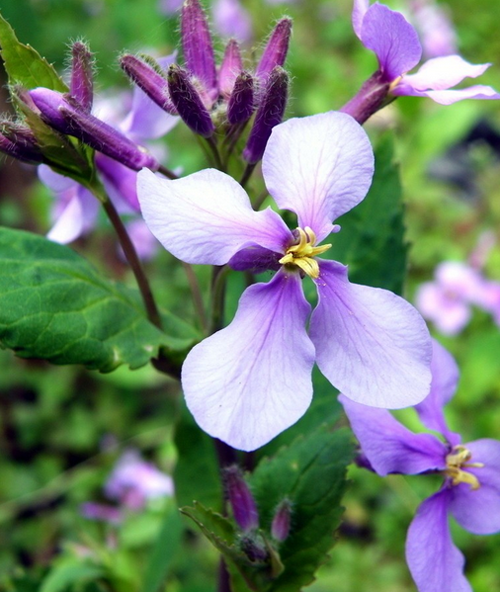
Cultivation methods of Orychophragmus violaceus:
1. Seed propagation method
Start sowing in autumn, and take good cold protection measures in winter. Orychophragmus violaceus has a certain degree of cold tolerance, but during the seedling stage you still need to pay attention to keeping warm to ensure the seedlings survive.
Before propagation, the soil should be prepared to ensure it is loose and fertile, and watering should be increased according to seedling growth.
When the sprouts grow into seedlings, increase fertilization to provide the nutrients they need for growth, and correspondingly increase some light exposure during the growth of Orychophragmus violaceus to enhance photosynthesis and promote plant growth.
2. Extensive care
Orychophragmus violaceus mainly propagates by seed and has strong regeneration ability. After the plant withers, newly dropped seeds will quickly germinate and grow into new plant seedlings: on soil that has not been plowed, manually broadcast seeds can also develop into seedlings, and it has strong weed resistance.
Some freshly harvested seeds have a physiological after-ripening phenomenon. Early sowing results in a low germination rate, and germination may continue for 1 to 2 months or even longer.
3. Sowing time
Both summer and autumn are acceptable, but August to September is most suitable. Each gram contains 300 to 400 seeds, and the sowing rate is about 1 kg per mu (of course, it can also be grown in pots).
For the potting soil, mix garden soil, perlite, and plant ash thoroughly in a ratio of 6:2:1. Apply sufficient base fertilizer when potting, and after the seedlings stand upright, move the pot to a sunny place for routine fertilizer and water management.
4. Environmental care
Compared with other flowers, cultivation management is relatively extensive and does not require much care. It has strong cold tolerance and shade tolerance, and can grow, bloom, and set seed normally with a certain amount of scattered light.
It is best to choose loose, fertile, and well-drained sandy soil. As long as you water and fertilize in time and manage it slightly, it can grow robustly.
5. Fertilization
Fertilize 4 times a year. Flower bud fertilizer in early spring, vigor fertilizer after flowers fade, fruit-strengthening fertilizer after fruit set, and seedling-strengthening fertilizer before winter. If a 0.2% potassium dihydrogen phosphate solution is sprayed on the leaves once each during the bud stage and young fruit stage, the flower color will be more brilliant and the fruit will be fuller.
In winter, Orychophragmus violaceus has lush green leaves, and in early spring the flowers bloom in patches. If there is heavy frost in winter, frost protection measures need to be strengthened. If grown for food, it should be divided frequently to promote the sprouting of tender stems and leaves.
6. Watering before sowing
This promotes the germination of weed seeds in the topsoil. If soil moisture is moderate, the seeds will germinate within two weeks.
Applying herbicide spray can basically eradicate weeds. Note that after applying herbicide, you must rest the soil for a period before sowing, because herbicides are harmful to any plant.
7. Pay attention to safety
When spraying chemicals, avoid chemical residues affecting the germination and growth of flower seeds. Before sowing wildflower mixes, reserve a 3 to 4 week recovery period for the soil, and then plant the wildflower mix. Excessive use of herbicides may delay seed germination or weaken the growth vigor of flower seedlings.
8. Management during germination
Remove weeds to prevent them from spreading. As soon as weeds are found, they should be pulled out immediately. Effective methods are using broad-spectrum herbicides or manual cutting.
Make sure to remove weeds before they set seed. Both annual and perennial weeds can be controlled with specialized herbicides. These herbicides will not affect the growth and development of broadleaf plants and can be used on wildflower mixes. Spraying them on newly grown seedlings works very well.
9. Pruning
If you want Orychophragmus violaceus to look good, do not let it set fruit. During the fruiting period, prune it to a height of 10 to 15 cm. When preparing the land for autumn sowing, clear away ground debris that hinders good contact between seeds and soil.
Although Orychophragmus violaceus is a wildflower, the natural and beautiful landscape effect it creates is unmatched by other flowers. Grown with extensive care, it is full of wild charm, and it also has a long ornamental period. It is really very good!
10. Disease and pest protection
The main disease and pest of Orychophragmus violaceus is downy mildew. The leaf surface turns yellow-green with polygonal spots, and a white downy mildew layer forms on the underside, causing swelling, bending, and greening of petals on stems and flowers. It mostly occurs on the lower leaves of Orychophragmus violaceus.
In April, when the weather is cold, overcast, and humid, and planting is too dense, this disease can occur.
Treatment methods:
Pay attention to ventilation and light transmission, and do not plant too densely; you can also spray with Yimeijing.
Flowering period of Orychophragmus violaceus:
Around February it begins to bloom with blue-purple flowers, and the flowers can also be pink and white. It is also called February Orchid. It grows in plains, mountains, roadsides, and field edges. It has low requirements for soil, light, and other conditions, is tolerant of cold and drought, and has strong vitality.
Other names of Orychophragmus violaceus:
Caizihua, February Orchid, Zijincao, February Blue;
The introduction to the cultivation methods, flowering period, and other names of Orychophragmus violaceus ends here. Hurry and grow some wild vegetables at home.
Cultivation methods and precautions of Orychophragmus violaceus
Chinese scientific name: Orychophragmus violaceusLatin scientific name: Orychophragmus violaceusOther names: Caizihua, February Orchid, ZijincaoBinomial name: Orychophragmus violaceusKingdom: PlantaeClass: DicotyledoneaeSubclass: DilleniidaeFamily: BrassicaceaeGenus: OrychophragmusSpecies: Orychophragmus violaceusDistribution area: Northeast China, North China, and East ChinaPhonetic notation: ㄓㄨ ㄍㄜˇ ㄘㄞˋOrychophragmus violaceus (February Orchid), of the genus Orychophragmus in the family Brassicaceae, is an annual or biennial herb. Because it begins to bloom with blue-purple flowers around the second lunar month, it is called February Orchid. It grows in plains, mountains, roadsides, and field edges. It has low requirements for soil, light, and other conditions, is tolerant of cold and drought, and has strong vitality. Legend says that when Zhuge Liang led troops on campaign, he once picked the tender shoots of this "turnip" as a vegetable, hence the name.1. Morphological characteristics
Flowers purple or white, 2 to 4 cm in diameter. Calyx tubular, purple, sepals about 0.3 cm long; petals spreading, 1 to 1.5 cm long, with fine vein lines, claw 0.3 to 0.6 cm long.Leaf shape varies greatly. Basal leaves and lower cauline leaves are lyrate-pinnatifid, terminal lobe nearly round or ovate, 3 to 7 cm long, 2 to 3.5 cm wide, base cordate, with blunt teeth; lateral lobes 2 to 6 pairs, ovate or triangular-ovate, 0.3 to 1.5 cm long, smaller toward the base, entire or serrate, occasionally with very small lobes interspersed on the rachis; petiole 2 to 4 cm long; upper cauline leaves oblong or narrowly ovate, 4 to 9 cm long, base auriculate, stem-clasping, margin irregularly serrate.
Silique linear, 0.7 to 10 cm long, 4-angled, valves with 1 midvein, beak 1.5 to 2.5 cm long. Seeds ovate to oblong, about 0.2 cm long, black-brown. Flowering and fruiting period April to June.
Annual or biennial herb. Plant height 10 to 50 cm, entirely hairless; stem single, erect. Leaf shape varies greatly. Basal leaves and lower cauline leaves are lyrate-pinnatifid, terminal lobe nearly round or ovate, 3 to 7 cm long, 2 to 3.5 cm wide, base cordate, with blunt teeth; lateral lobes 2 to 6 pairs, ovate or triangular-ovate, 0.3 to 1.5 cm long, smaller toward the base, entire or serrate, occasionally with very small lobes interspersed on the rachis; petiole 2 to 4 cm long; upper cauline leaves oblong or narrowly ovate, 4 to 9 cm long, base auriculate, stem-clasping, margin irregularly serrate. Flowers purple or white, 2 to 4 cm in diameter. Calyx tubular, purple, sepals about 0.3 cm long; petals spreading, 1 to 1.5 cm long, with fine vein lines, claw 0.3 to 0.6 cm long. Silique linear, 0.7 to 10 cm long, 4-angled, valves with 1 midvein, beak 1.5 to 2.5 cm long. Seeds ovate to oblong, about 0.2 cm long, black-brown. Flowering and fruiting period April to June.
Orychophragmus violaceus grows 20 to 70 cm tall, usually 30 to 50 cm. The stem is erect and usually single. Basal leaves and lower cauline leaves are pinnately parted, leaf base cordate, leaf margin bluntly toothed; upper cauline leaves are oblong or narrowly ovate, leaf base stem-clasping and auriculate, leaf margin irregularly serrate. Racemes are terminal, bearing 5 to 20 flowers. The petals have fine vein lines. The flowers are mostly blue-purple or pale red, and as the flowering period continues, the flower color gradually fades and finally turns white. The flowering period is April to May, and the fruiting period is May to June. There are 4 petals, long ovate, with long claws about 3 to 6 mm, petals about 1 to 2 cm long; 6 stamens, filaments white, anthers yellow; calyx slender and tubular, blue-purple, sepals about 3 mm long. The fruit is a cylindrical silique, 6 to 9 cm long, with a slender beak at the tip, four ridges, and containing many tiny dark brown seeds. The seeds are ovate to round. After the fruit matures, it splits naturally and expels the seeds.
2. Growth characteristics
1. Strong cold tolerance. It is also relatively shade-tolerant. Used as ground cover, it has a good covering effect, with lush green leaves, a expanse of emerald green that people love.2. Strong adaptability. It can grow from Northeast China and North China all the way to East China and Central China. If there is heavy frost and snow in winter, although some leaves may freeze, it can still sprout new leaves, bloom, and set seed in early spring. It is not strict about soil requirements.
3. The purple flowers open successively from bottom to top, blooming continuously from February to May or June. Especially when planted in groups, it looks like a sea of blue-purple. If planted by riversides or seawalls, green leaves, flower seas, seawater, and blue sky interweave together, which is very spectacular.
4. Orychophragmus violaceus has strong self-propagation ability. Once sown, it can form its own community year after year. After seeds mature from May to June each year, they fall into the soil on their own, grow green seedlings in September, the seedlings overwinter, bloom in late spring, set seeds in summer, and continue year after year. It is often planted in garden green spaces, forest belts, parks, residential communities, and under elevated bridges, and is widely used as flowering ground cover. The seed source is abundant and cheap. Sowing costs only a few jiao per square meter. Therefore, it is used by many greening projects, parks, and tourist attractions. Experts also suggest planting February Orchid in large patches at airports. It not only clothes the ground in green in winter, but also produces patches of purple flowers in spring. Moreover, it can continue to self-propagate, requires little maintenance, and can be mixed with other plants. It is a good variety that combines many advantages.
3. Landscape greening
1. Suitable for planting under forests, at forest edges, in residential communities, under elevated bridges, at the foot of slopes, or at the edges of lawns. It can be planted alone in patches or mixed with various shrubs to form a spring landscape feature.2. It can be used in large quantities in parks, forest edges, urban streets, and green belts on both sides of expressways or railways. When it blooms in large areas, the greening and beautification effect is excellent. Hydroseeding can be used for slope greening along expressways, with even better results. Self-sown seeds can grow new seedlings by mid-to-late June just as the previous generation of plants withers, so bare soil basically does not appear. It is an extremely good plant material for expressway slope greening.
3. As a flowerbed flower, Orychophragmus violaceus, with its medium-tall traits, strong adaptability, and early spring flowering characteristics, can be used in early spring flowerbeds.
4. Cultivation management
Orychophragmus violaceus mainly propagates by seed and has strong regeneration ability. After the plant withers, newly dropped seeds will quickly germinate and grow into new plant seedlings: on soil that has not been plowed, manually broadcast seeds can also develop into seedlings, and it has strong weed resistance. Therefore, cultivation management can be relatively extensive and fairly easy. Some freshly harvested seeds have a physiological after-ripening phenomenon. Early sowing results in a low germination rate, and germination may continue for 1 to 2 months or even longer. Sowing time can be summer or autumn, but August to September is most suitable. Each gram contains 300 to 400 seeds, and the sowing rate is about 1 kg per mu. If calculated per square meter, it should be 1 to 2 grams per square meter. If the hydroseeding method is used, the amount per unit area should preferably be increased by 10 to 20%.For the potting soil, mix garden soil, perlite, and plant ash thoroughly in a ratio of 6:2:1. Apply sufficient base fertilizer when potting, and after the seedlings stand upright, move the pot to a sunny place for routine fertilizer and water management.
Compared with other flowers, cultivation management is relatively extensive and does not require much care. It has strong cold tolerance and shade tolerance, and can grow, bloom, and set seed normally with a certain amount of scattered light. It is not strict about soil requirements. It is best to choose loose, fertile, and well-drained sandy soil. As long as you water and fertilize in time and manage it slightly, it can grow robustly. Fertilize 4 times a year. Flower bud fertilizer in early spring, vigor fertilizer after flowers fade, fruit-strengthening fertilizer after fruit set, and seedling-strengthening fertilizer before winter. If a 0.2% potassium dihydrogen phosphate solution is sprayed on the leaves once each during the bud stage and young fruit stage, the flower color will be more brilliant and the fruit will be fuller. The flowering period is from early spring to June. The silique is elongated, maturing in June. Seeds are black-brown, ovate. In winter, Orychophragmus violaceus has lush green leaves, and in early spring the flowers bloom in patches. If there is heavy frost in winter, frost protection measures need to be strengthened. If grown for food, it should be divided frequently to promote the sprouting of tender stems and leaves.
Common pests include aphids, cabbage caterpillars, snails, leaf miners, and others. If pests are found, timely chemical control should be carried out.
Weed management measures
1. Water before sowing to promote the germination of weed seeds in the topsoil. If soil moisture is moderate, the seeds can germinate within two weeks. Do not plow the soil again, otherwise more weed seeds will be brought to the surface soil. Applying herbicide spray can basically eradicate weeds, but you must pay attention to resting the soil for a period after applying herbicide before sowing, because herbicides are harmful to any plant.2. When using chemical herbicides, be sure to pay attention to safety and avoid chemical residues affecting the germination and growth of flower seeds. Therefore, before sowing wildflower mixes, generally reserve a 3 to 4 week recovery period for the soil, and then plant the wildflower mix, because extensive use of herbicides may delay seed germination or weaken the growth vigor of flower seedlings.
3. Remove weeds promptly when flower seeds germinate to prevent them from spreading. If conditions permit, pull out weeds immediately as soon as they are found. In addition, a relatively effective method is to use broad-spectrum herbicides or cut them with a mower (or brush cutter). Make sure to remove weeds before they set seed. Many annual or perennial weeds can be controlled with specialized herbicides. These herbicides will not affect the growth and development of broadleaf plants and can be used on wildflower mixes. Spraying them on newly grown seedlings works very well.
Pruning and cleanup
If you want to keep a wildflower mix looking good in landscape arrangements, you must control it so it does not set seed. Generally, during the fruiting period, use a mower to prune it to a height of 10 to 15 cm. In addition, when preparing the land for autumn sowing, clear away ground debris that hinders good contact between seeds and soil, including dead branches and fallen leaves. At present, in the field of landscape greening, creating natural and diverse garden landscapes, exploring plant application forms that return to simplicity and nature, and building a resource-saving and sustainably developing ecological environment are the direction of future development. Wildflower mixes can create natural and beautiful landscape effects, and with their extensive management, rich species, wild charm, low planting cost, and long ornamental period, they will become the most distinctive element in the field of landscape greening and be most widely used. Cultivation techniques of Orychophragmus violaceus.5. Nutritional value
Orychophragmus violaceus is a common wild vegetable in early spring. Its tender stems and leaves have a relatively large growth amount and are rich in nutrients. According to measurements, every 100 grams of fresh product contains 3.32 mg of carotene, 0.16 mg of vitamin B2, and 59 mg of vitamin C. The seeds contain more than 50% oil and are also a very good oil plant. In particular, its linoleic acid proportion is relatively high, which is extremely beneficial to the human body. Because linoleic acid has the function of lowering serum cholesterol and triglycerides in the human body, and can soften blood vessels and prevent thrombosis, it is a good medicine for patients with cardiovascular disease. Orychophragmus violaceus has strong cold tolerance and sprouts early, so it can help fill the slack season for early spring vegetables. Its wild collection is generally carried out in March to April. After collection, it only needs to be blanched in boiling water to remove the bitter taste before eating.6. Food
Orychophragmus violaceus is a common wild vegetable in northern China. Its tender leaves and stems are edible, and the seeds can be collected for oil pressing. Therefore, every early spring, people who enjoy wild flavors enter parks or other wild areas where Orychophragmus violaceus grows in abundance to dig it up for food. Excessive harvesting will damage the population of Orychophragmus violaceus.7. Plant character
Orychophragmus violaceus is one of the most common wildflowers in early spring in northern China. Therefore, the unassuming Orychophragmus violaceus often appears in literary works with the posture of the grassroots class. Among literary works featuring Orychophragmus violaceus as the protagonist, the most famous is undoubtedly the prose "February Orchid" written by Ji Xianlin.There is a lesson called "The Words of Flowers", a fairy tale by Zong Pu. The article arranges flowers that cannot speak and could not possibly gather together to compare beauty and discuss worth in a moonlit garden. Using flowers as a medium, this article vigorously praises the admirable spirit of February Orchid: modesty, simplicity, and selfless dedication.
8. Stories and legends
1. Origin of the name: Zhuge "Crouching Dragon", entrusted with the heavy responsibility of the orphaned heir, devoted himself to assisting the later ruler, and sent troops to conquer Wei. Although Shu was known as the Land of Abundance, it could not withstand years of continuous warfare; moreover, the Shu army repeatedly marched out through Qishan, and the Shu roads were difficult, so military provisions often could not be supplied. To solve this problem, Zhuge Liang came up with the idea of growing turnips in the army. Based on his experience farming in Longzhong, he ordered soldiers to plant turnips extensively wherever they went, thereby supplementing military food.The soldiers acted according to orders, and before long they planted turnips over large areas near the march routes, temporarily alleviating the contradiction between military food supply and demand. After the Shu army left, the turnips they had planted were not wasted. The local people widely gathered and ate them, calling them "Zhuge Cai".
2. It is said that Zhuge Liang became Liu Bei's military commander and chief supervisor of military provisions and taxes. Because Liu Bei had a large number of troops, the demand for provisions and forage was relatively great, and the burden on the common people was even greater. For example, if the people could not eat enough or dress warmly, people's hearts would become unsettled. Once, when Zhuge Liang went out in plain clothes on an inspection tour, he saw a vegetable called "turnip". From an old farmer he learned that this vegetable was treasured in every part: the leaves and stems could both be eaten, the leftovers could be made into pickles, and during the lean season it could become a staple vegetable.
Zhuge Liang became extremely interested in this vegetable. He asked the old farmer about the yield per mu of "turnip" and how to grow it, then ordered soldiers to open wasteland and plant this vegetable, both to supplement military provisions and to serve as livestock feed. It was economical and practical, achieving two goals at once. So Zhuge Liang ordered soldiers to plant "turnip" extensively, and military provisions became sufficient. Later generations called this vegetable Zhuge Cai.
Orychophragmus violaceus, native to Northeast China and North China, is not strict about soil requirements and can grow fairly well even in ordinary soil environments. Key points for propagation and cultivation: it has relatively strong cold tolerance and shade tolerance. With a certain amount of scattered light, it can grow, bloom, and set seed normally.
9. Literary works
Ji Xianlin wrote a very famous prose piece titled "February Orchid". He said: "I have lived in Yanyuan for more than forty years. At first I did not particularly notice this little flower. It was not until the year before last, perhaps exactly a major flowering year for February Orchid, that I suddenly discovered that starting from the small earthen hill beside the building where I live, throughout the whole garden, wherever my eyes reached, there was February Orchid. Beside residences, under hedges, in the woods, on hilltops, on earthen slopes, by the lake - wherever there was an open space, there was a mass of purple air, interspersed with white mist. The little flowers bloomed fully and with extraordinary momentum, the purple air rushing straight to the sky, as if even the universe had turned purple."Zong Pu's "The Words of Flowers" mentions February Orchid. Suddenly, the side gate of the garden opened, and a little boy came flying in. He did not look at the riot of colors under the moonlight, but ran straight to an unnoticed corner behind the pine tree, and among the lush green grass, picked wild February Orchid.
His "Farewell to Spring" also describes February Orchid: "Everyone rejoices in welcoming spring; who likes to see spring off? The loyal and steadfast February Orchid does not decline this task. It welcomes spring in, accompanies spring while it stays, and sees spring off."
10. Flower meaning
Modest and simple, selflessly dedicated.11. Disease control
The main disease and pest of Orychophragmus violaceus is downy mildew.Symptom manifestation
- Symptoms: In the early stage of the disease, yellow-green polygonal spots appear on the leaf surface. Subsequently, a white downy mildew layer forms on the underside of the lesions, causing swelling, bending, and greening of petals on stems and flowers.
Pathogen and current disease situation: The pathogen is a fungus in the genus Peronospora, Peronospora parasitica (Pers) Fr. This disease mostly occurs on the lower leaves of Orychophragmus violaceus. Especially in April, when the weather is cold, overcast, and humid, plants are more likely to become infected. Planting too densely can also lead to the occurrence of this disease.
Diagnosis and countermeasures
- Choose a well-ventilated and well-lit location for planting. Keep planting density reasonable.
Spray with 50% Yimeijing 500 times dilution.
Cultivation methods of February Orchid (Orychophragmus violaceus)
February Orchid (Orychophragmus violaceus)
Scientific name: Orychophragmus violaceus
Other names: Zhuge Cai, Caizihua, Zijincao
Family and genus: Brassicaceae, Orychophragmus
Morphological characteristics: Biennial herb. Because it begins to bloom with blue-purple flowers around the second lunar month, it is called February Orchid. Stem erect, plant height 30 to 50 cm, sometimes reaching 70 to 80 cm. Stems smooth, with white powdery bloom. Basal leaves and upper leaves differ greatly in shape. Basal leaves nearly round, with petioles, margins with coarse irregular serrations; lower leaves pinnately parted; terminal leaves reniform or triangular-ovate, without petioles; lateral leaves oblique-ovate, with petioles. Racemes terminal, flowers deep purple or light purple, 4 petals, obovate, with long claws, arranged in a cross shape, blooming successively from early spring to June. Silique elongated. Maturing in June. Seeds black-brown, ovate. Legend says that when Zhuge Liang led troops on campaign, he once picked tender shoots as a vegetable, hence the name.
Ecological habits: Not strict about soil requirements. It grows robustly in fertile, moist, and sunny environments, and shows good adaptability in shaded and humid environments. It has strong resistance to frost and winter cold.
Care points: For pot cultivation, direct sowing can be used. After emergence, determine the number of plants per pot according to pot size. No special management is needed. Water when dry, and apply fertilizer 1 to 2 times during the growing period.
Propagation method: sowing.
Flower meaning: modest and simple, selflessly dedicated.
Landscape application: In winter, February Orchid has lush green leaves, and in spring its flowers are soft and pleasing to the eye. In early spring it blooms in patches and has a long flowering period. It is suitable for large-area ground cover or as a background plant for green spaces that do not require intensive management. It is a good ground cover plant for shaded garden areas or under forests, and can also be used for flower path cultivation. It can also be planted on slopes, roadsides, and other places.
Dietary therapy and medicinal effects: The tender stems and leaves are rich in various trace elements needed by the human body. They can be stir-fried, served cold, or used in soup, and also have beautifying effects. The seeds can be pressed for oil. It has relatively high medicinal value and has the effect of clearing heat and detoxifying.