What to Do When Cyclamen Leaves Turn Yellow and Curl? With Growing Methods and Precautions
The cyclamen itself looks just like a fairy, extremely beautiful, and many people want to grow it. What are the growing methods and precautions for cyclamen? What should be done when the leaves turn yellow and curl during cultivation?
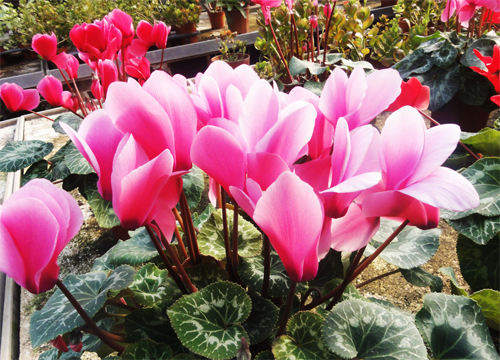
Growing methods for cyclamen:
Cyclamen prefers a cool, moist environment with plenty of sunlight. The optimal temperature for growth and flower bud differentiation is 15—20°C, with humidity of 70%-75%; during the winter flowering period, the temperature must not fall below 10°C. If the temperature is too low, the flower colors will fade and the flowers will drop easily; if the summer temperature reaches 28—30°C, the plant will go dormant, and if it reaches above 35°C, the tuber will easily rot.
Cyclamen seedlings are slightly more heat-tolerant than older plants. It is a long-day plant, and the suitable light intensity during the growing season should not be too strong, though it can be slightly increased in winter. It requires loose, fertile, humus-rich, well-draining, slightly acidic sandy loam soil. The flowering period is from October to April of the following year.
Precautions for growing cyclamen:
When cultivating cyclamen, the soil should be loose. You can use a potting mix of 2 parts leaf mold, 1 part garden soil, and a small amount of superphosphate. You can also use dried and crushed river mud, or a potting mix of 2 parts peat and 1 part perlite. The potting soil needs to be fumigated and sterilized.
When repotting, gradually increase the pot size according to the plant's size. Do not directly use a large pot to grow small seedlings. When planting, it is best to plant shallowly.
When potting or repotting large seedlings, keep 2/3 to 1/2 of the tuber above the soil surface to prevent the tuber from rotting from moisture in the soil. Avoid applying concentrated fertilizer, as it can easily damage the roots. Apply top dressing about 3 times a month. Before fertilizing, loosen the soil. Choose a sunny day for top dressing. Do not apply fertilizer from the top of the plant; apply it to the side instead. After fertilizing, spray water to rinse.
Causes of cyclamen leaves turning yellow and solutions:
1. Long-term nutrient deficiency
If nitrogen fertilizer has not been applied for a long time, or the pot and water have not been changed, the lack of nitrogen and other nutrients in the water will cause the branches and leaves to become weak and thin, with thin, yellow leaves. You need to promptly change to fresh growing water and gradually apply dilute, decomposed liquid fertilizer or compound flower fertilizer.
2. Excessive fertilization
If too much fertilizer is applied, new leaves will become thick and fleshy with many bumps and uneven surfaces, while old leaves will dry at the tips, turn scorched yellow, and drop off. You should immediately stop fertilizing, increase the amount of water changed to let the fertilizer leach away, or immediately repot, rinse the bulb with water, and replant it in the pot.
3. Hot, high temperatures
If the narcissus is placed in a high-temperature location exposed to direct strong sunlight, it can easily cause the leaf tips and margins of young leaves to scorch, or leaves to turn yellow and drop. It needs to be promptly moved to a well-ventilated, shady place.
4. Excessive shading
If the narcissus is kept in a shaded area or a place with insufficient light for a long time, the branches and leaves will turn yellow.
5. Alkaline soil and water
If the growing environment lacks absorbable soluble iron and other elements, the leaves will gradually turn yellow. When planting, choose acidic soil and water, and frequently water with alum fertilizer water during the growing period.
5. Poor ventilation due to crowding
If too much nitrogen fertilizer is applied, the branches and leaves grow too luxuriantly, and combined with a lack of pruning over a long period, the inner branches and leaves receive insufficient light, which can easily cause leaves to turn yellow and drop. Fertilize reasonably and strengthen pruning to improve ventilation and light penetration.
6. Dry air
When indoor air is excessively dry, narcissus often develops symptoms such as dry leaf tips or scorched leaf margins. Take measures such as spraying water and covering with plastic film to increase air humidity.
Cyclamen leaves curling and turning yellow:
Solutions:
It is lacking nutrients. Apply fertilizer promptly. Buy specialized fertilizer from a flower shop, but do not over-supplement the plant's nutrients. Normally, you can bury a small amount of cooked soybeans, cooked peanuts, bean cake, or spoiled steamed bread in the pot, so you won't need to worry about nutrient deficiency (reply: household fertilizer).
Cyclamen flower stems rotting, flowers and leaves turning yellow:
Solutions:
Overwatering. Stop watering, and water again only after the wound has healed and the soil has dried.
Overwatering causes leaves to turn yellow; underwatering causes newly grown flower buds to wither.
When summer temperatures are high, cyclamen will go dormant.
During dormancy, water as little as possible, just keeping the soil moist, to prevent the roots from rotting due to excess moisture. When planting, it is best to leave one-third of the bulbous root exposed above the soil surface.
When watering, pour water directly into the pot and try to avoid getting water on the leaves and flowers, because cyclamen leaves are round with a concave center that easily holds water, and if not handled properly, water stains will remain after evaporation.
Over time, the leaf surface cannot breathe properly and will easily dry out and turn yellow, affecting its ornamental value. It is best to wipe with a soft cloth. When watering, water thoroughly once when the soil is dry, and do not water every day, because cyclamen has a bulbous root with water-storage capacity. Overwatering can easily cause flower buds to drop. When leaves turn yellow in spring, water once every three days when the weather is dry; in autumn, water about once every five days.
Leaves yellow and dry:
Solutions:
Cyclamen turning yellow and drying out is mainly caused by poor soil aeration and overly dry potting soil. When the temperature is 15-25°C, you can repot into soil with better aeration, and water from the bottom. Water only when the potting soil is dry, and only when the water temperature is close to room temperature.
Pest and disease control for cyclamen:
The main pests and diseases of cyclamen include root rot, soft rot, aphids, and scale insects.
Root rot
Root rot is a seedling-stage disease. The roots become water-soaked, soften and rot, and diseased seedlings wilt, turn yellow, and die.
Control measures:
1. Soak seeds in 0.1% copper sulfate solution for half an hour for disinfection.
2. Before sowing, spray a 1800-2000 times diluted potassium permanganate solution to disinfect the soil.
3. Strengthen ventilation and control humidity; properly expose seedlings to air to harden them and enhance resistance.
4. In the early stage of the disease, use 72.2% Previcur SL, 50% Likuqing, or 40% Genfuning at 1000 times dilution for spraying or root drenching.
Soft rot
Leaves develop water-soaked lesions, then soften and rot, exuding white bacterial ooze, and the plant wilts and dies.
Control measures:
1. Remove diseased leaves and pull out diseased plants.
2. Control watering and ensure ventilation.
3. Spray with 50% Xiaojunling wettable powder at 1000-2000 times dilution for control.
Aphids
They damage young leaves and flower buds, form galls, induce sooty mold, and spread viruses.
Control measures:
1. Introduce natural enemies such as ladybugs and lacewings for control.
2. Set up sticky traps to trap and kill them, or cover with plastic film to repel aphids.
3. Alternately spray with 50% Pirimicarb wettable powder at 2000 times dilution and 10% imidacloprid at 1500 times dilution for control.
Scale insects
They damage leaves and flowers.
Control measures:
1. Promptly remove diseased plants.
2. Spray with 10% imidacloprid emulsifiable concentrate at 1000 times dilution or 25% Fenjieling at 1500 times dilution for control.
That covers the growing methods for cyclamen and the problems encountered during cultivation. Why not get a cyclamen for your home right away?
How to Grow Cyclamen: Growing Methods and Precautions / Temperature Is Key
Cyclamen, also known as Yipinguan, has a name very similar to poinsettia (Yipinhong). It is a flowering plant with a robust plant form, magnificent appearance, and bright colors. In modern times, growing cyclamen indoors is many people's first choice, but they don't know how to grow it. So how do you grow potted cyclamen? Soil, light, and other factors are essential, but watering is also very important. The following are the growing methods and precautions for cyclamen. Friends who want to grow it should definitely take a look~
1. How to Grow Cyclamen: Temperature Is Key
Bringing cyclamen indoors for pot cultivation means losing the favorable conditions of nature. To grow it well, we need to prepare properly in terms of soil, light, watering, and temperature, especially temperature, which must meet the requirements. In addition, for how to grow cyclamen, we also need to pay attention to many things. The following are the growing methods and precautions for cyclamen. Let's continue reading.
2. Growing Methods and Precautions for Cyclamen
1. Soil: Loose and Fertile
The potting soil for cyclamen can be prepared using 3 parts humus soil, 2 parts forest leaf mold, 2 parts furnace ash slag, 2 parts river sand (sandy garden soil), and 1 part decomposed compost, with an appropriate amount of calcium carbonate and other chemical substances added. This soil is relatively loose and fertile, suitable for cyclamen growth.
Precautions: When potting, the potting soil must be fumigated and strictly sterilized at high temperature. The container should be gradually increased in size according to the size of the bulb. Do not use a large pot to grow small seedlings.
2. Light and Temperature
In the growing methods for cyclamen, light and temperature are very important. Throughout the entire growth process, the main focus is on temperature, with consideration for extending the flowering period. From April to August, the light and temperature requirements for cyclamen should meet the following:
① After the number of flowers decreases at the end of April, the potted plant should be moved out of the greenhouse and placed in a ventilated, cool place with scattered light for cultivation.
② By July, during the hottest period when all leaves wither, place the pot in a low-temperature, ventilated environment. The potting soil should not be too dry, and let it go dormant for one month.
③ After August, place the cyclamen back in a temperature and light environment suitable for growth, water lightly, so the bulb can revive and sprout as quickly as possible, and the cyclamen can then sprout ahead of schedule.
④ At the end of August, repot and change the soil, cut off decayed roots, so the plant can grow vigorously under good ecological conditions.
Precautions: The optimal growth temperature for cyclamen in winter is 10-22°C, and a temperature difference of 8-10°C should be maintained between day and night. If the nighttime temperature is controlled at 7-8°C, it can still bloom, but the flowering period will be slightly delayed; however, if it falls below 6°C, it cannot bloom normally. In summer, if conditions permit, use cooling equipment to lower the ambient temperature.
3. Watering Method
Cyclamen can tolerate drought, but it is best to keep the soil moist during its growing season, and be careful not to let water accumulate in the pot. Cyclamen does not like overly wet soil. Water frequently but lightly, and do not overwater. If it does not go dormant in summer, normal watering can be carried out, keeping the potting soil pleasantly moist.
Precautions: After the Start of Autumn, cyclamen enters the reproductive growth stage, and phosphorus-potassium fertilizer should be applied. If the plant is found to be growing leggy, switch to superphosphate or wood ash extract to control vegetative growth, promote flower bud differentiation, and encourage bud formation and flowering.
4. Fertilizing: Dislikes Concentrated Fertilizer
Cyclamen likes fertilizer but dislikes concentrated fertilizer. Besides applying some base fertilizer when repotting and changing soil, generally fertilize once every ten days to half a month, emphasizing light but frequent applications. After planting, during the vegetative growth period lasting several months, apply organic liquid fertilizer at concentrations of 1:6, 1:8, and 1:10, watering the flowers with the diluted mixture.
Precautions: When the temperature cannot be controlled at the start of summer, stop fertilizing.
3. Precautions for Growing Cyclamen
Although there are already quite a few precautions in the growing methods for cyclamen above, there are still many things flower lovers need to pay attention to in order to grow cyclamen well, such as getting through summer. When summer temperatures exceed 28°C, the cyclamen bulb will begin to go dormant. If dormancy management is poor, the bulb can easily dry out or rot, so safely getting through summer becomes the difficult part of cyclamen cultivation.
The best way is to get through summer with robust young seedlings. Annual seedlings grown from seed grow vigorously and have a weak tendency to go dormant in summer. Before summer arrives, strengthen fertilizer and water management to form strong seedlings with thick, numerous, deeply colored, and glossy leaves. Such seedlings have strong heat resistance. At the same time, do a good job of cooling and reducing humidity. Cover with a shade net, increase ventilation, apply light but frequent fertilizer, and spray water around the plant to lower the temperature. After getting through summer in late August, cyclamen enters the growing period, and fertilizer and water management should be strengthened.
For old bulbs that are more than two years old, move them to a shaded, rain-sheltered place when summer arrives, and frequently spray water around them to lower the temperature. Strictly control watering into the pot, preferring dry over wet. Generally, about every 10 days, pour 2-3 parts water into a completely dried pot. Never overwater or let them get rained on, otherwise the bulb will rot. Until early September, gradually resume watering. After two to three weeks, they can be moved into sunlight and given normal fertilizer and water, and they will bloom as scheduled during the Spring Festival period.
After the Start of the Dog Days, when cyclamen leaves have completely dropped, dig out the bulb, remove the soil and dead leaves, and store it in a cool, ventilated indoor place. Repot in autumn, apply fertilizer and water reasonably, and it will recover its vitality. To break cyclamen dormancy, you can artificially create a cool environment, such as placing it in an air-conditioned room. Keep the temperature at 20-30°C, water normally, and the cyclamen will continue to grow, sprout new leaves, and produce new flowers. After autumn, restore the original environment.
What to Do When Cyclamen Leaves Turn Yellow? -- Detailed Explanation of Cyclamen Growing Methods and Precautions
The flower language of cyclamen carries the meaning of welcoming honored guests. In feng shui, it signifies "a fairy guest drifting in," and is a symbol of good fortune.Cyclamen is also called radish begonia or Yipinguan. The flower colors include white, red, purple, orange-red, and red with a white center, and some are even fragrant. The flowering period can last as long as half a year, making it very popular.Flower-loving friends often encounter problems such as cyclamen leaves turning yellow, growing mold, stems rotting, and flower colors fading when caring for cyclamen. So how can you grow cyclamen well?
Let's learn together with Lanyao about the care methods for cyclamen.
1. Seed Selection and Seedling Cultivation
1. Seed Selection
Home cultivation of cyclamen mostly uses seed propagation. When selecting seeds, choose brown seeds harvested in the current year that are plump, glossy, and free of pests and diseases.2. Sowing
Place the seeds in a mixture of 50 ppm gibberellin and 500 ppm thiophanate-methyl or chlorothalonil, and soak for a full day and night. Then drain the water, rinse clean in clear water, and drain off surface moisture. Then sow. Soaked seeds bloom about 10 days earlier than unsoaked seeds.
The sowing soil should have good aeration. Mix peat and perlite in a certain ratio, with a pH of 6-6.5 and moderate humidity, not too wet.
The germination temperature for cyclamen is around 18°C. No light is needed during the germination period. After sowing, cover with vermiculite or perlite, with a thickness just enough to cover the seeds, and cover with plastic film.
3. Management After Germination
After the seeds germinate, appropriately use a shade net for shading, or cover the seedling tray with non-woven fabric to maintain seed moisture. Keep relative humidity at around 85%, and spray if necessary.4. Water and Fertilizer Management During the Seedling Stage
During the seedling stage, do not flood-irrigate when watering. Use a watering can and pour close to the soil surface. The water temperature should be kept above 14°C.
According to the growth of the seedlings, start fertilizing from the 5th week after sowing, with a nitrogen:phosphorus:potassium ratio of 1:1:1. The seedling leaves should be glossy; if they appear dark red, fertilization is needed.
5. Transplanting Seedlings into Pots
Transplanting into pots can be done from the 10th to 11th week after sowing.
Cyclamen is very prone to rotting from water accumulation, so it is best to use sandy soil or other soil with good aeration and drainage. You can mix peat with a certain proportion of garden soil and perlite, with a pH of 6-6.5 being suitable.The transplanting soil should just cover the root system, leaving the small bulb exposed. Never press the seedlings or surrounding soil with your hands. Keep relative humidity between 65%-85%, and increase humidity by spraying.
2. Precautions for Planting Bulbs:
If you directly purchased cyclamen bulbs, the specific planting method should be determined according to the season.
Because cyclamen has the characteristic of summer dormancy, if you buy bulbs in summer, the focus should be on getting through summer. If you buy bulbs during the growing season, you can cultivate them normally and wait for them to sprout.
When burying the bulb, leave 1/3 of the bulb above the soil, or leave the growth point exposed.If it is summer, generally after May, cyclamen has already begun to go dormant, so when planting, you must not water the potting soil thoroughly. Instead, plant when the potting soil is slightly moist, and then place the cyclamen in a cool, ventilated place.
Check the soil's moisture every few days. If it is dry, sprinkle just a little water to keep the soil slightly moist. Continue this until the weather turns cool, and the cyclamen will sprout. Then switch to normal care.Not all cyclamens can wake up after summer dormancy; this is closely related to bulb quality and storage environment. After autumn temperatures cool down to around below 25°C, water thoroughly to wake the dormant cyclamen (sometimes it will also wake up naturally).
III. 8 key points for the daily care of cyclamen:
1. There is no need to rush to repot a newly bought cyclamen; during its six-month flowering period it will not grow very large.
2. If the leaves are too lush, it is best to remove some of them; simply break them off by hand.
3. Continue fertilizing after buds appear; if you want more flowers and stronger flowers, the nutrients must keep up.
4. When watering, you must water thoroughly. The soil used for most bought cyclamens is nutrient soil (good for raising seedlings). Its drainage is excellent, and water runs right out, so in fact it may not have been watered thoroughly. It is best to soak the pot for a while so the flowers and leaves fully absorb enough water and stand upright; (be careful not to pour water on the flowers)
5. Strong light is not needed; place it indoors in a spot with diffused light and good ventilation.
6. During the flowering period you can help with pollination, and it sets seed fairly easily. Of course, growing it from seed requires patience.
7. During the winter flowering period, the temperature for cyclamen must not be lower than 10°C; if the temperature is too low, the flower color becomes dull and the flowers easily drop.
8. In summer, if the temperature for cyclamen reaches 28-30°C, the plant goes dormant; if it reaches above 35°C, the tuber easily rots.IV. Care points for cyclamen by month:
November-March
November-March is the flowering period of cyclamen. The potted plant should be placed in front of a south-facing window or within 1 m of a south-facing enclosed balcony where it can see light. Keep the room temperature above 10°C, keep the potting soil moist, and water once every half month with a 1‰ monopotassium phosphate foliar fertilizer, and it can bloom continuously.
In rooms without heating facilities, pay attention to protection from low temperatures and cold wind. You can cover the whole pot with a transparent plastic bag and place it in a warm, bright place. When the temperature is high at noon, open the plastic bag to let air in. It can bloom from February to March.
When watering, make sure the water temperature is as close as possible to the medium temperature; it is best to choose 10 a.m.-12 noon, and do not let water touch the flower buds and young leaves, so as to avoid rot and affect flowering.April-May
From April to May, the flowering period of cyclamen is coming to an end. Remove the spent flowers early and gradually move it outdoors into the sunlight. Water once a week with a 1‰ compound fertilizer solution; new leaves will quickly grow, old leaves will fall off, and the corm will also enlarge.
If aphids appear, you can brush them off with a writing brush or cotton swab dipped in water; if you find the leaves shriveling and turning yellow, you can bury 1-2 g of carbofuran along the edge of the pot to kill root-knot nematodes.June
The water and fertilizer management for cyclamen in June is the same as in May. When the temperature is high, place it in a shady spot. Some potted plants lose their leaves after flowering and enter dormancy until September. At this time they should be placed in a cool, ventilated place, the potting soil kept slightly moist, and no fertilizer should be applied.
July-August
This is when the north enters the high-temperature season, so water should be controlled and fertilizer stopped. Plants that have not gone dormant should be placed on an east-facing or north-facing balcony, exposed to the sun for more than an hour each morning, or placed under the shade of a tree.
At this time new leaf buds and flower buds will grow from the top of the corm. If rot disease (gray mold) occurs, you can spray and drench with a 1000-fold dilution of 75% chlorothalonil wettable powder.September
At this time the dormant corm of cyclamen begins to sprout. Old plants over two years old can have their potting soil changed, and newly purchased seed corms are also planted at this time. When planting, first place 2-3 cm of charcoal slag or ceramsite or coarse gravel at the bottom of the pot, then add culture soil.
Old plants should be planted with the root ball intact. After planting, the pot surface should be higher in the center and lower around the edges, with the corm exposed 1/2 above the soil surface. Water thoroughly the next day and keep it in a shady place for care. After new buds grow, light can be increased.October
It enters a period of vigorous growth and should be kept in the sunlight. Water once a week with a ‰ compound fertilizer solution, and spray once with a 1‰ monopotassium phosphate foliar fertilizer. Move it indoors before Frost's Descent. It can bloom in November.V. Common care problems of cyclamen:
Symptom 1: Cyclamen leaves curl and turn yellow.
Cause: Lack of nutrients; fertilization should be done promptly.
Solution: You can buy special fertilizer at a flower shop. But do not supplement the plant with too many nutrients. Usually you can bury a small amount of cooked soybeans, cooked peanuts, bean cake, spoiled steamed buns, etc. in the pot, so you do not need to worry about cyclamen lacking nutrients.Symptom 2: The flower stems of cyclamen rot and the flowers and leaves turn yellow.
Cause: Too much watering.
Solution: Stop watering, and wait until the cyclamen leaves are no longer yellow and the soil is dry before watering again. Water should be supplied from the bottom, and water only when the potting soil is dry; the water temperature should be close to room temperature.Symptom 3: With too much water the leaves turn yellow, and with too little water the newly grown flower buds wither.
Cause: Dormancy
Solution: If cyclamen is well cared for, it can bloom twice a year, mainly in spring and autumn. Cyclamen likes semi-shade, so do not place it in direct sunlight. In summer, when the temperature is high, cyclamen will go dormant. During dormancy, water as little as possible; just keep the soil moist, to prevent the roots from rotting due to too much water.Symptom 4: Cyclamen leaves turn yellow.
Cause: Yellowing of cyclamen leaves is mainly caused by poor air permeability of the potting soil and the potting soil being too dry.
Solution: When the temperature is 15-25 degrees, you can change the cyclamen into soil with better air permeability.Symptom 5: The flowers of cyclamen become paler and paler.
Cause: The increasingly pale flower color of cyclamen is mainly related to insufficient light and insufficient fertilization. Most cyclamens sold at flower markets now are given special fertilizer before they go on the market, and the water used is also softened water, so the flowers produced are especially vivid.
Solution: Improve the light for cyclamen, apply cyclamen special fertilizer once every half month, and for daily watering try to use purified water or boiled water that has been left to cool for two days.If this article is useful to you, please share it to your Moments or QQ Zone!
Welcome to follow the Lanyao WeChat official account and chat with Lanyao one-on-one!
WeChat ID ilanyao (← long-press to copy)
If you have any flower-growing questions, leave me a message on WeChat and we can discuss them together!