What to Do When the Leaves of a Parlor Palm Turn Yellow? Master the Growing Methods and Precautions
The parlor palm, as its name suggests, is closely related to the coconut. What are the growing methods and precautions for the parlor palm? What should you do when its leaves turn yellow?
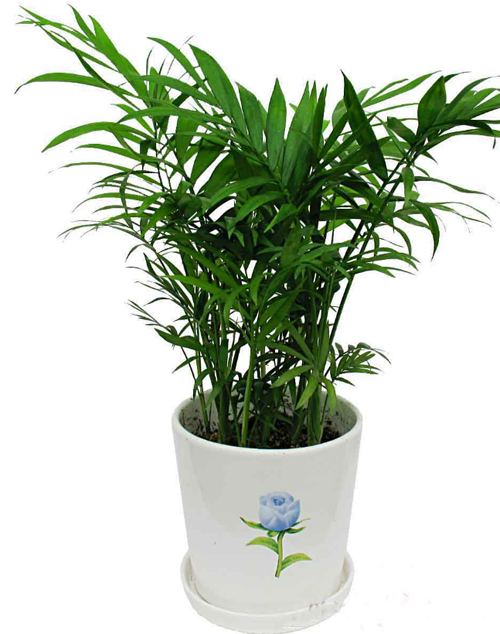
Growing methods and precautions for the parlor palm:
I. Introduction to the Parlor Palm
It is also called the dwarf coconut, miniature palm, or dwarf palm. Its flowering season is spring, though potted plants basically never bloom. Its flowers are not particularly distinctive, being white-green in color. Its leaves are flat and spreading, and a mature plant takes on an umbrella shape, which is quite elegant.
II. Introduction to Its Growth Habits
It prefers a warm, humid, and semi-shaded environment. The suitable temperature for growth is 20-30 degrees; at 13 degrees it enters dormancy, and the minimum winter temperature for overwintering is 3 degrees.
1. Soil Selection
For the parlor palm, a well-drained, moist, and fertile loam is best as a growing medium. For potted plants, a mix of leaf mold and peat soil with 1/4 river sand and a small amount of base fertilizer can generally be used as the medium.
It does not have high fertilizer requirements. Generally, apply liquid fertilizer 1-2 times a month during the growing season, and apply little or no fertilizer in late autumn and winter. Repot once every 2-3 years in spring.
2. Watering and Misting
When watering the parlor palm, the principle is to keep it moist rather than dry; just keep the potting soil consistently moist. When the air is dry in summer and autumn, mist the plant frequently to raise the ambient air humidity. This benefits its growth and also keeps the leaves dark green and glossy;
In winter, reduce the amount of watering appropriately to help it overwinter. The parlor palm prefers semi-shaded conditions and should be kept out of direct sunlight during hot seasons.
Under strong sunlight, its leaf color will fade or turn yellow, and scorched leaves and black spots will appear, causing it to lose its ornamental value.
3. Pests and Diseases
In addition, under high temperature and high humidity, the parlor palm is prone to brown spot disease. If brown spot disease is found, promptly use 800-1000 times diluted thiophanate or Baijunlingqing for control.
When the air is dry and ventilation is poor, scale insects are also likely to occur. If scale insects are found, besides scraping them off by hand, you can also spray 800-1000 times diluted omethoate for control.
III. Detailed Introduction to Daily Care
The growing medium is peat, perlite, ceramsite, and the like.
After planting, the first application of nutrient solution should be thorough, until seepage is seen in the tray at the bottom of the pot. For regular nutrient replenishment, apply once every 10-15 days; replenish water in time according to the moisture condition of the medium, but do not water on days when nutrient solution is applied.
Before each watering, first pour out the seepage from the tray. If no disease occurs, it can be reused; otherwise, it should be discarded.
When there is no seepage in the tray, water promptly. For each nutrient or water application, it is best to use a small spray bottle; for large-scale cultivation, irrigation facilities can be set up to spray the nutrient mist directly. This not only rinses the medium but also increases the air humidity around the plant, favoring normal growth.
IV. Winter Care
From October to February of the following year, the parlor palm is in a relatively dormant period (night temperature 12-14°C). Watering should be controlled to prevent root rot, yellow leaves, necrosis, and other symptoms caused by excessively low temperatures. During the winter heating period in northern regions, room temperature can generally be maintained at 15-20°C or 25°C. At this time, the indoor air is dry, so attention should be paid to replenishing water. It is best to mist the leaves 1-2 times a day, and the flowerpot should not be placed near a stove, radiator, or air conditioner, to prevent acute water loss from the leaves, which can cause dry tips, yellow leaves, or even death. In addition, in winter, place the flowerpot in a spot indoors with ample sunlight to help the plant carry out photosynthesis.
V. Introduction to Hydroponics with Nutrient Solution
Hydroponic parlor palm means cultivating it with a nutrient solution. The parlor palm prefers a shaded environment and should not be placed near a south window; it should be placed on a north, east, or west windowsill, or a comparable location.
In dimmer places, the leaves grow dark green; under direct light, the leaf color gradually turns yellow-green. Too much strong light can cause scorched leaves and black spots. The optimum temperature for growth is between 20-30°C; at 13°C it enters dormancy, and in winter it must not go below 10°C.
For watering, follow the principle of keeping it moist rather than dry, and keep the potting soil moist year-round. In winter, reduce the amount of water appropriately, and it is best to water with cool boiled water. In summer, clean rainwater may be used. Mist the leaves and the surrounding ground frequently to maintain higher air humidity.
VI. Other Care Precautions
After being brought outdoors in spring, place it in a shaded spot, avoiding direct sunlight; bright light is sufficient. When the plant becomes larger, repot it promptly. It has relatively high requirements for environmental humidity, and watering should follow the principle of keeping it moist rather than dry, so as to keep the potting soil moist.
When the air is dry (especially in summer), mist the plant frequently to increase the ambient air humidity. This plant does not have high fertilizer requirements; from May to October, apply cake fertilizer water twice a month.
Hydroponic Care:
1. Avoid direct sunlight, otherwise the leaves will turn dry and yellow; but when it is too shady, the leaf color will also fade.
2. The parlor palm is most beautiful at a plant height of 30-50 cm. When the plant is too tall, the lower part becomes bare, which reduces its ornamental value. When planting, small plants can be grown below it.
3. Obtaining hydroponic material: Use the potted root-washing method. After washing with water, new roots will grow within a few days.
With current nutrient solution formulations, most plants can be grown hydroponically, but they require careful care; otherwise, the plants may easily die from nutritional problems!
VI. To Grow a Healthy Parlor Palm, Note the Following:
① Beware of scorched edges caused by excessive light
Since the parlor palm prefers a more shaded environment, when grown indoors it should be placed near a north or east window or in another spot with bright, indirect light;
The parlor palm is most afraid of direct strong light. Even brief exposure to the sun can cause leaf scorch and yellowing. Conversely, if kept in a too dry and dark place for a long time, the leaf color will also fade and lose its gloss.
② Suitable Temperature
Generally, the optimum temperature for growth is 20-30°C. In winter, the indoor temperature should be between 12-14°C, and the minimum temperature must not go below 10°C.
③ Maintain Ambient Air Humidity
Mist the leaves frequently to increase air humidity.
④ Do not use acidic soil for the potting mix, and add a small amount of clay.
⑤ Repot once every 3 years
Repot once every 2-3 years in spring to promote growth. Since parlor palm cuttings do not root easily, propagation is mainly done by sowing seeds.
⑥ During the seedling stage, apply 3-4 times diluted liquid fertilizer in spring in each of the two seasons.
The parlor palm has relatively fine roots, so a loose, fertile growing medium should be used; heavy clay soil easily causes root rot.
Because it prefers a more shaded environment, when grown indoors it should be placed near a north or east window or in another spot with bright, indirect light.
The parlor palm is most afraid of direct strong light. Even brief exposure to the sun can cause leaf scorch and yellowing. Conversely, if kept in a too dark place for a long time, the leaf color will also fade and its gloss will diminish.
In summer, watering should be sufficient, and the leaves should be misted frequently to increase air humidity. To meet indoor ornamental needs, the plant height is best kept between 40 cm and 60 cm, so fertilizer should not be applied too much.
Generally, during the seedling stage, apply 3—4 times diluted liquid fertilizer in spring and autumn. The ratio of nitrogen to phosphorus in the fertilizer is best at 1.5:1.2. This ratio can both promote sturdy stems and improve leaf gloss.
What to Do When the Leaves of a Parlor Palm Turn Yellow?
If the parlor palm's leaves turn yellow, just take it out to get some sun and avoid watering it too much.
That is all for the introduction to the parlor palm's growing methods and how to deal with yellowing leaves. Why not get one and grow it right away?
How to Grow a Parlor Palm: Growing Methods and Precautions
The parlor palm, also called the dwarf coconut, is native to Mexico and Guatemala. Because it is relatively shade-tolerant, it can be grown as an indoor potted plant to beautify the living room, study, or hotel, adding a tropical atmosphere. Its leaves are fine and upright, full of vitality, and it is very popular. Below, let us share the growing methods and precautions for the parlor palm.
Growing Methods for the Parlor Palm
1. Soil: For the parlor palm, the growing medium should preferably be a well-drained, moist, and fertile loam. When planting, a small amount of river sand and base fertilizer can be added.
2. Watering: The parlor palm likes moisture, and watering should follow the principle of keeping it moist rather than dry. Sufficient watering can keep the leaves glossy, but in winter the amount of watering should be reduced appropriately.
3. Light: The parlor palm avoids direct sunlight and is mostly placed in a semi-shaded environment. Strong light will cause the leaves to lose their green color and gloss, or even turn yellow and fall off.
4. Pests and Diseases: High temperatures can also induce brown spot disease in the parlor palm. If the disease occurs, use 800-1000 times diluted thiophanate or Baijunlingqing for control; when the air is dry or ventilation is poor, the parlor palm is prone to scale insects. Once found, scrape them off promptly, or spray 800-**** times diluted omethoate for control.
Precautions for the Parlor Palm
Excessive light or too little watering can both cause the parlor palm's leaves to turn yellow. Therefore, the parlor palm should be cared for in a place with good indirect light and watered regularly. In summer, mist the leaves to enhance air humidity.
The parlor palm gives a sense of dignity and solemnity, rustic elegance, graceful leaves, and lustrous color. It has strong ornamental value and is an ideal choice for decorating a room. That is all for the introduction to the parlor palm's growing methods and precautions. We hope it helps you.
How to Grow a Parlor Palm: Growing Methods and Precautions
The parlor palm is very shade-tolerant and highly suitable as a small indoor potted plant, decorating the living room, study, or meeting room and adding a touch of tropical charm to the interior. So how do you grow a parlor palm? Let us look at the growing methods and precautions together.
I. How to Grow a Parlor Palm
The parlor palm has a strong ability to absorb water. In summer, water it 2-3 times a day; in winter, control the amount of watering to prevent cold damage and root rot caused by low temperatures. But the potting soil should not be overly dry either. Soilless cultivation technology for growing the parlor palm uses an inorganic chemical fertilizer solution, that is, the nutrient solution cultivation method.
The parlor palm prefers a shaded environment and should not be placed near a south window; it should be placed on a north, east, or west windowsill, or a comparable location. In dimmer places, the leaves grow dark green; under direct light, the leaf color gradually turns yellow-green. Too much strong light can cause scorched leaves and black spots. The optimum temperature for growth is between 20-30°C; at 13°C it enters dormancy, and in winter it must not go below 10°C. For watering, follow the principle of keeping it moist rather than dry, keep the potting soil moist year-round, and reduce the amount of water appropriately in winter.
II. Growing Methods for the Parlor Palm
1. Growth Habits: The parlor palm prefers a warm, humid, and semi-shaded environment. The suitable temperature for growth is 20-30 degrees; at 13 degrees it enters dormancy, and the minimum winter temperature for overwintering is 3 degrees. Recommended: Can the parlor palm be exposed to the sun? How should the parlor palm be watered?
2. Potting Soil: For potted parlor palms, a mix of leaf mold and peat soil with 1/4 river sand and a small amount of base fertilizer can generally be used as the medium. It is best to grow it in a well-drained, loose, and fertile loam.
3. Watering: For the parlor palm, watering follows the principle of keeping it moist rather than dry; just keep the potting soil consistently moist. When the air is dry in summer and autumn, mist the plant frequently to raise the ambient air humidity. This benefits its growth and also keeps the leaves dark green and glossy; in winter, reduce the amount of watering appropriately to help it overwinter.
4. Fertilizing: The parlor palm does not have high fertilizer requirements. Generally, apply liquid fertilizer 1-2 times a month during the growing season, and apply little or no fertilizer in late autumn and winter. Repot once every 2-3 years in spring. Recommended: Propagation methods for the parlor palm.
5. Propagation: The parlor palm is generally propagated from seeds.
6. Temperature Settings: The optimum growing temperature for the parlor palm is 15-30°C, of which May-September is 19-30°C and October-April of the following year is 13-16°C. In summer, it can withstand high temperatures of 35°C. When the temperature exceeds 35°C, appropriate shading or measures such as misting and ventilation should be taken. In winter, maintain an ambient temperature of no less than 5°C; otherwise, when the temperature is below 5°C for a long time, it is prone to cold damage and leaf drop.
7. Placement: The parlor palm is very tolerant of light, but a semi-shaded spot with 50-60% sunlight is best.
8. Disease Control: Under high temperature and high humidity, the parlor palm is prone to brown spot disease. If brown spot disease is found, promptly use 800-1000 times diluted thiophanate or Baijunlingqing for control. When the air is dry and ventilation is poor, scale insects are also likely to occur. If scale insects are found, besides scraping them off by hand, you can also spray 800-1000 times diluted omethoate for control.
III. Precautions for Growing the Parlor Palm
1. Beware of scorched edges caused by excessive light. Since the parlor palm prefers a more shaded environment, when grown indoors it should be placed near a north or east window or in another spot with bright, indirect light; the parlor palm is most afraid of direct strong light. Even brief exposure to the sun can cause leaf scorch and yellowing. Conversely, if kept in a too dry and dark place for a long time, the leaf color will also fade and lose its gloss.
2. Suitable Temperature. Generally, the optimum temperature for growth is 20-30°C. In winter, the indoor temperature should be between 12-14°C, and the minimum temperature must not go below 10°C.
3. Maintain Ambient Air Humidity. Mist the leaves frequently to increase air humidity.
4. Do not use acidic soil for the potting mix, and add a small amount of clay.
5. Repot once every 3 years.
6. During the seedling stage, apply 3-4 times diluted liquid fertilizer in spring in each of the two seasons.
The above isGrowing Methods and Precautions for the Parlor Palmintroduced. The parlor palm is not only highly ornamental but can also purify benzene, trichloroethylene, and formaldehyde from the air. It is worth growing!