African Jasmine (Madagascar Jasmine) Growing Methods and Precautions, Detailed Explanation of Propagation and Pruning Techniques
African Jasmine is also a kind of jasmine, bearing small white flowers that look somewhat like osmanthus flowers. What are the growing methods and precautions for African Jasmine? How is African Jasmine propagated?
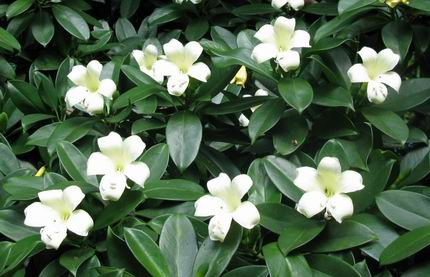
Growing methods and precautions for African Jasmine:
1. Soil selection
Its greatest requirement for soil is good water drainage, so naturally you should choose loose, fertile sandy soil. Generally, leaf mold mixed with fine sand can be used, and adding organic fertilizer appropriately is even better.
If the soil has become compacted, loosen the surface soil slightly at intervals, being careful not to damage the root system.
2. Water
It likes environments with abundant rain and plenty of sunlight, but its roots must not have standing water, as they rot easily, and watering too frequently will cause yellowing leaves.
For watering, just follow the principle of watering thoroughly once the soil has dried out. In hot summer, you can spray water once in the morning and once in the evening to increase humidity and lower temperature (in summer, scorching sun will cause the leaves to wilt; move the pot to a shaded spot and spray water, and it will recover before long).
In winter, there is no need to water much; let the soil stay dry for a few days, then on a sunny day with good weather, water just a little.
3. Light and temperature
It likes warm environments with sufficient light. An overwintering environment above 5°C is sufficient, and the growing temperature is 17-35°C.
In summer, if there is a high temperature of 40°C, pay attention to shading as well. Potted plants must not be exposed to scorching sun. It is relatively cold-tolerant; when the temperature is below 3°C, move it indoors or cover the soil and use plastic film for insulation.
The main light-related issues to watch for are: do not suddenly take an indoor potted plant out into scorching sun, or in summer when it is too hot pay attention to shading. Do not place potted plants in overly dark places.
4. Fertilizing
Fertilizing can be done in spring, summer and autumn. Generally, give a phosphorus-potassium fertilizer once before May to help promote more flowers, and give another phosphorus-potassium fertilizer after flowering for safe overwintering. Two or three fertilizations a year is enough!
5. Pruning
Proper pruning not only makes the African Jasmine plant shape more attractive, but also allows it to bloom more and reduces pests and diseases.
It is a small shrub that branches quickly and tolerates pruning. After flowering, you can do appropriate trimming between branches and shape the plant according to your own ideas (the branches at the bottom should not be too dense, as this easily breeds insects).
Propagation methods for African Jasmine:
The common propagation method for African Jasmine is cuttings, while sowing is usually used for raising seedlings and large-scale propagation.
1. Cutting propagation
African Jasmine can be propagated by cuttings in any season except winter. Generally, June to July is the most suitable; in the south, August to September is also quite good. It is best to do it on cloudy and rainy days. Choose robust 1-2 year old branches 10-15 cm long for cuttings, remove the lower leaves, and keep just 1-2 pairs of leaves.
Use peat soil with perlite, fine sand or vermiculite for rooting cuttings. Cover with plastic film, add appropriate shading, and roots will form quickly after about a month.
2. Division propagation
Division is generally done together with repotting after the weather warms in spring. Shake off the soil and separate the root system (cut apart with a sterilized sharp knife). Each division should carry 2-3 stems, and can be planted separately.
3. Layering propagation
Generally ground layering is used: girdle and peel the bark of 2-3 year old branches, then bury them in soil, press down and cover with soil.
In late summer, cut them off and plant separately. The effect is the best, and there is no difficulty in the operation.
Air layering propagation is also possible, carried out in late spring. Generally choose 2-3 year old branches, make the cut 1 cm below a growing node. After girdling (peeling the bark), wrap with plastic film around moist peat soil and keep the soil slightly moist.
4. Seed propagation
Collect seeds after autumn, dry them and sow. Sow in slightly moist sandy soil, keeping moisture and warmth.
Pest and disease control for African Jasmine:
1. Anthracnose
Anthracnose is relatively common. On young branches and leaves you will see grayish-brown sunken spots, and there will also be small black dots.
Generally you need to remove diseased leaves and spray carbendazim and chlorothalonil. Alternating the sprays gives the best effect. Spray alternately once every 10 days, 3-4 times in total.
2. Sunburn
Right now is an extremely hot time, and improper care of potted plants will cause sunburn. For the common wilting, just move it to a cool place and spray water.
If young leaves and young branches are sunburned and white marks appear, then cut off the sunburned young branches and leaves, spray water, and provide ventilation and shade.
3. Pests
Thrips often damage young leaves and young buds. If you see the leaf surface inexplicably distorted or curled, be sure to check carefully whether there are insects, examining the leaf backs and branch forks closely.
Promptly remove branches and leaves with insects, and do not leave diseased leaves or dead branches in the potting soil.
In severe cases, combine with pesticide spraying. You can spray pesticides such as Tianwang and Jinzun, once every 6-7 days, for 3-4 consecutive sprays.
That is all for the growing methods, propagation and pruning methods of African Jasmine. Hurry and grow a few plants at home.
Growing Methods and Precautions for African Jasmine, Pruning Methods for African Jasmine
During the process of growing African Jasmine, it needs to be pruned according to the situation. First, do you know the growing methods and precautions for African Jasmine? And the pruning methods for African Jasmine? Today we will talk about these two questions.
Growing methods for African Jasmine:
1. Temperature. African Jasmine grows well in a warm climate environment. The suitable growing temperature is 18°C to 32°C. When the summer temperature is above 38°C, plant growth will be inhibited. In some areas of South China, ground-planted specimens can overwinter outdoors, while potted plants north of the Yangtze River require a winter greenhouse temperature of no less than 3°C to 5°C.
2. Light. African Jasmine likes sunlight, but its native environment is mostly semi-shaded. In South China, when ground-planted as a garden greening tree, it is best to choose a site with side shade; for potted plants north of the Yangtze River, full sunlight can be accepted in spring and autumn, while in summer a shade frame is required, or it should be moved under the dense shade of a large tree, at least avoiding direct sunlight for several hours around noon. Particularly noteworthy is that from June to July, when a long rainy period is followed by a clear sunny day, the temperature suddenly rises and the light is very intense, so shading work must be done well to prevent young new shoots and tender leaves from being scorched. For potted plants in public places, relatively sufficient scattered light is required, or they should be placed near a window; they should not be too dark, otherwise the leaves will lose their green color, turn yellow or fall off.
3. Water. Whether ground-planted or potted, sufficient water is required, but the roots must not have standing water, otherwise they rot easily. In spring and autumn, water to keep the potting soil moist; in the plum rain season, guard carefully against standing water; in the scorching summer, spray water once in the morning and once in the afternoon to increase humidity and lower temperature; in winter, for indoor potted plants, keep the potting soil slightly moist, and around noon when the temperature is relatively higher, spray an appropriate amount of water on the leaves. In spring, summer and autumn, when fertilizing is normal, if the lower leaves of a potted plant turn yellow and fall off, it is very likely due to root rot from standing water, and you should repot and change the soil promptly. In summer, if watering has been neglected and the new tender shoots wilt and droop, do not immediately give the potting soil a heavy watering; instead, first spray some water on the leaves, and after the leaves have slightly recovered, then give the potting soil an appropriate amount of water.
4. Soil. In the south, cultivation requires a planting site with loose, fertile, well-draining sandy loam. For potted plants in the north, you can use a mix of 7 parts leaf mold, 1 part river sand, 1 part composted organic fertilizer, and 1 part fermented sawdust. During the growing season, loosen the soil of potted plants once a month, always keeping the root area in a well-aerated state. In addition, potted plants can have their soil changed once every 1 to 2 years.
5. Fertilizer. During the growing season, apply a dilute decomposed cake fertilizer water once a month to potted plants. Before flowering in May, apply a phosphorus-potassium fertilizer once to promote flowering; after autumn, supplement with 1 to 2 more applications of phosphorus-potassium fertilizer for a safe winter. For potted plants in the north, to prevent leaf yellowing, add 0.2% ferrous sulfate when watering with fertilizer during the growing season. When ground-planting and establishing the plant, apply sufficient base fertilizer; in late autumn, dig trenches around the outer roots and bury cake fertilizer, 0.5 to 1 kg per plant.
Precautions for African Jasmine:
African Jasmine is a tree species that likes sunlight. It is not a herbaceous plant but belongs to the small tree family, so when grown at home you only need to pay attention to light. Proper daily light is one of the essential factors for ensuring its healthy growth.
The most difficult time for African Jasmine is winter. If there are no good protective measures, it will lead to sluggish growth the following year. Especially in the north, winter requires indoor insulation to ensure the growing environment is not below 5-10°C.
African Jasmine rarely gets sick once it is a mature plant, but during the growth period it will develop quite a few diseases, such as leaves turning yellow or black, or scorching of tender leaves due to too strong light. So during the growing period, careful care is needed. For pests, pesticide spraying can be done appropriately. Anthracnose is the most common, with symptoms of small black spots appearing on the leaves, along with gray and white conditions. Generally there are dedicated pesticides available for purchase. For sunburn, the usual approach is to water more and provide more shade to improve it.
Pruning methods for African Jasmine:
African Jasmine is usually pinched back during the growing season, which does not affect its ornamental value. For those with severe lower leaf loss, heavy pruning must be carried out. The specific method is: place the plant in suitable environmental conditions about half a month in advance (such as a sunny spot in spring or a scattered-light spot in summer), and fertilize appropriately to promote growth. When growth is normal after half a month, shorten every branch. The position of the cut should depend on the size of the plant; generally leave a length of about 15 cm, or you may keep up to 30 cm, to be done flexibly.
After pruning, you can reduce the frequency of watering, because with fewer or no leaves, transpiration is extremely low and the water requirement is not great. But afterward, it is best to water with fertilizer water each time. As the new branches and leaves grow, fertilizer and water management can be increased.
Potted African Jasmine generally should have its pot and soil changed once a year. When changing the pot, remove some of the old soil and residual roots around the jasmine's root system, replace with new growing soil, and improve the soil's aggregate structure and nutrients again, which is beneficial to the jasmine's growth. After repotting, water thoroughly just as when first potting, to help the roots and soil bind closely and restore growth. Before changing the pot, prune the jasmine once, keeping only about 10 cm of the previous year's branches, and cut off diseased and dead branches as well as overly dense and overly thin branches. During the growing season, often thin out overly dense old leaves, which can promote the sprouting of axillary buds, more new branches, and more flower buds.
More informationGrowing methods and precautions for African Jasmine
Jasmine is a very beautiful plant that likes sunlight, and in many cases originates from India. However, there is a jasmine variety that originated in Africa, and this variety is called African Jasmine. Below let us look at the growing methods and precautions you need to know if you plant African Jasmine.
Growing methods and precautions for African JasmineI. Growing methods for African Jasmine——Light
African Jasmine likes sunlight very much and is suited to growing in hot places that are also humid and well-ventilated. While jasmine likes light, it is very averse to cold. So planting African Jasmine in winter is not very suitable. In winter, African Jasmine needs to be given enhanced warmth protection. During the day, if sunlight is sufficient, it can be placed outdoors. But at night it must definitely be moved back into the room for warmth.
II. Growing methods for African Jasmine——Water
Because African Jasmine is an African variety, it is drought-tolerant but at the same time very averse to standing water. In summer, jasmine can be watered once each time; when the weather is especially dry, spray some water to increase humidity. In winter, African Jasmine enters a dormant state.
III. Growing methods for African Jasmine——Soil
African Jasmine needs a certain amount of nutrients to grow, so some auxiliary materials need to be added to the soil to increase nutrients. You can choose humus material with slight acidity.
IV. Growing methods for African Jasmine——Pruning
African Jasmine grows quickly, so you should always pay attention to pruning work to ensure that the African Jasmine's plant shape becomes beautiful and elegant.