How to grow Hibiscus syriacus? Detailed guide to cultivation methods, precautions and pruning methods
Many people love growing Hibiscus syriacus. As long as it is planted in the ground, it needs no care, and you can see it bloom every year. What are the cultivation methods and precautions for Hibiscus syriacus? What are the cultivation methods?
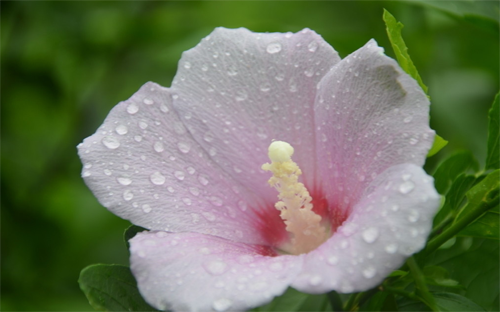
Cultivation methods and precautions for Hibiscus syriacus:
1. Growth habits
Hibiscus syriacus prefers cool, humid climates with plenty of sunlight, and favors fertile neutral to slightly acidic soil. It is relatively drought-tolerant, tolerant of poor soil, tolerant of partial shade, intolerant of waterlogging, and cold-resistant. The optimum growing temperature is 15-28°C.
Hibiscus syriacus prefers full sunlight and tolerates slight shade. It likes warmth and humidity, is relatively cold-tolerant, and can overwinter safely outdoors in most areas of North China. It prefers fertile, loose soil with good drainage. It is not tolerant of drought or poor soil, nor of waterlogging.
2. Cultivation
Hibiscus syriacus has strong adaptability, grows easily and vigorously, and is relatively easy to cultivate and manage. From December to March of the following year, during the dry season in the south, Hibiscus syriacus enters a semi-dormant state, and management focuses mainly on watering to keep the seedlings alive; from April to October, during the hot and rainy season, the plant can be cut back in April, and fertilizer and water management should be strengthened to promote new shoots and make the flowers bloom abundantly.
3. Planting out and fertilizing
Hibiscus syriacus can be transplanted in spring and autumn. Bare roots can be dipped in mud slurry, and some branch tips should be properly pruned off; it roots very easily. When planting out, base fertilizer should be applied in the planting hole, generally compost or decomposed barnyard manure mixed with a small amount of compound fertilizer; no further fertilizing may be needed afterward. However, to improve flower yield and quality, trees with weaker vigor should be top-dressed before flowering in summer, using compost mixed with an appropriate amount of compound fertilizer and applied at the base together with weeding and earthing up. With extensive management, it will also grow abundantly on its own.
4. Watering
Pay attention to drainage and waterlogging prevention during the rainy season. During the flowering period, watering should be done if drought occurs. In late autumn, late-autumn shoots, overly dense branches, weak branches and dead branches should be pruned away to improve ventilation and light penetration, maintain the plant shape and protect against cold for overwintering.
5. Pruning
For Hibiscus syriacus planted as a hedge or fence, shaping and pruning should be carried out 2-3 times before spring budding and during the growing season; for scattered garden plantings, the trunk should be cut back in the spring of the second year after planting out to encourage branching at the base, so that a 2-year-old seedling can be trained into an ideal tree shape.
6. Planting out
Hibiscus syriacus is not strict about soil requirements. It can generally be planted in vacant land around houses, on hillside land or on odd corners of wasteland, and can also be planted as a green hedge in a single row around vegetable plots and orchards, or planted in blocks for specialized production.
Hibiscus syriacus is a perennial shrub with fast growth; it can be planted once and harvested for many years. To obtain higher yields and facilitate field management and flower harvesting, single-row ridge cultivation can be used, with a ridge spacing of 110-120 cm and a plant spacing of 50-60 cm, with planting holes or planting furrows opened in the middle of the ridge. When transplanting and planting out Hibiscus syriacus, sufficient base fertilizer should be applied in the planting holes or furrows, generally dominated by farmyard manure such as rubbish soil or decomposed stable manure, combined with a small amount of compound fertilizer. Transplanting and planting out are best done during the seedling dormancy period, but can also be done during the rainy growing season. When transplanting, some branches and leaves should be pruned off to help survival. After planting out, water once to settle the roots and keep the soil moist until the plant is established.
7. Fertilizer and water management
When the branches begin to sprout, top-dressing should be done in time, mainly with quick-acting fertilizer, to promote vegetative growth. Before flower buds appear, apply phosphate and potassium fertilizer 1-2 times to promote bud formation; during the peak flowering period from May to October, top-dress twice in combination with weeding and earthing up, mainly with phosphate and potassium fertilizer supplemented with nitrogen fertilizer, to maintain flower quantity and tree vigor. During winter dormancy, weed and clean the garden, and open furrows or dig holes around the plant to apply fertilizer, mainly farmyard manure supplemented with an appropriate amount of inorganic compound fertilizer, to supply nutrients needed for growth and flowering the following year. In long periods of drought without rain, irrigation should be noted, and when there is too much rain, drainage and waterlogging prevention should be carried out.
8. Shaping and pruning
Newly planted Hibiscus syriacus plants are relatively small, and in the first 1-2 years they can be left to grow freely or given light pruning, that is, cutting off dead branches, diseased, insect-damaged and weak branches, and declining branches in autumn and winter. After the tree body grows larger, the Hibiscus syriacus plant should be shaped and pruned. Shaping and pruning are best done after leaf fall in autumn. According to the different degrees of branch spreading of Hibiscus syriacus, it is divided into upright type and spreading type. The upright type has branches with a small insertion angle, nearly upright, strong sprouting ability, and relatively poor branching ability; it is not suitable for long-term leaving unpruned, and it can be trained and transformed into a trunked, non-tiered tree form. On the trunk, select and keep 3-4 main branches and remove the rest; on each main branch, select and keep 1-2 side branches. This is called the trunked open-center form.
9. Pruning methods
Promptly use back branches to replace the leader to prevent the outer branch tips from drooping and aging prematurely. The treatment of branch tips is the same as for the open-center form; upright branches sprouting inside the canopy are generally thinned out to prevent excessive branches from disrupting the tree shape.
(1) Reasonably select and retain main branches and side branches, and thin out excess main and side branches in batches, so that the main and side branches are distributed reasonably and the density is moderate;
(2) Heavily cut back main branches and side branches. The branching angle of new branch tips should be large and the direction should be correct. Overly dense outer branches should be reasonably thinned to allow ventilation and light penetration;
(3) For 1-year-old vigorous flowering branches, leave them unpruned after flowering; the following year, remove all vigorous shoots and vigorous flowering branches that sprout on them, leaving medium and short branches to flower. For relatively thin perennial branches inside the canopy, continuously cut back and renew them. For medium flowering branches, cut back at the branching point, which can effectively regulate branch vigor and promote improved flower bud quality;
(4) Cut back the outer branch tips, pruning to an outward-facing bud; generally 3 vigorous branches can be produced. Remove competing branches at the branch tips, leave the others unpruned, then cut back to train them into branch groups. The spreading type of Hibiscus syriacus has a large branch angle and spreading branches, and produces more vigorous branches and medium flowering branches than the upright type, so it can be trained into a clumping shrub form. The spreading type of Hibiscus syriacus often shows excessive soil-level branches, premature drooping of outer branch tips, and numerous and messy upright branches inside the canopy.
Indoor cultivation
10. Potting, repotting and rotating the pot
The potting soil can be prepared with peat soil or leaf mold plus 1/4 river sand or perlite and a small amount of base fertilizer, or sandy loam can be used. Before potting, cut the cutting seedlings off at 15-20 cm to promote branching. Hibiscus syriacus grows relatively fast, so it should be repotted once a year to increase nutrients in the pot, and roots should be trimmed and branches pruned to maintain the plant shape. Hibiscus syriacus grows fast, and because indoor light is uneven, to maintain a good plant shape and more flowers, the pot can be rotated once a week.
11. Water, fertilizer and pruning
Indoor potted Hibiscus syriacus grows fast and has a high demand for water and fertilizer. In summer, water once every 2-3 days; in spring and autumn when there is no heating, water once every 4-6 days; during the winter heating period when the room is dry, water once every 2-3 days. The nutrients of the base fertilizer in the pot cannot meet the needs of Hibiscus syriacus growth, so foliar fertilizer should be sprayed once every 2 weeks; during the bud and flowering stages, spray the leaves once a week with a 500-1000 times dilution of monopotassium phosphate; during the post-flowering pruning recovery period, urea solution can be sprayed. To maintain the plant shape, pruning is generally done after flowering, mainly cutting off weak branches and dead branches.
12. Fresh flower harvesting
The harvest period of Hibiscus syriacus flowers is long. During the several months in a year from the start of flowering to the end of flowering, fresh flowers open every day. For flowers used as vegetables, picking should be done in the early morning every day, harvesting flowers that have just opened. When harvesting, pick and handle them gently, and use appropriate packaging to bring them to market as soon as possible to ensure the flowers are fresh.
Hibiscus syriacus has a long flowering period. In the Yangtze River basin, it starts flowering in May and ends in October. As for a single flower, it opens in the early morning and withers the next day. Therefore, flowers used as vegetables should be picked every morning. If processing by drying in the sun, they should be picked in the morning on a sunny day and dried immediately; after drying, place them in a ventilated, dry place, and protect against pressure and insects.
That is all for the introduction to the cultivation methods and precautions for Hibiscus syriacus. Hurry up and plant it, and plant one with a good-looking shape too.
How to grow Hibiscus syriacus, cultivation methods and precautions for Hibiscus syriacus / Do not overapply water and fertilizer
We know that among the effects and functions of Hibiscus syriacus, it not only has high nutritional value but can also treat many ailments, so many people grow it. So how should Hibiscus syriacus be grown to have better growth? Let us look at the cultivation methods and precautions for Hibiscus syriacus.
How to grow Hibiscus syriacus
To know the cultivation methods for Hibiscus syriacus, you must first understand its growth habits. Hibiscus syriacus has very strong adaptability to the environment. It is tolerant of dryness, shade, heat, cold, pruning, water and moisture, and poor soil, and in addition has extremely strong sprouting ability, so it is very easy to keep alive.
Suitable environment for Hibiscus syriacus
1. Soil
Hibiscus syriacus may have the loosest soil requirements among plants. It can grow in heavy clay and also in poor soil, but to grow it better, it is better to use fertile, well-drained acidic soil.
2. Temperature
Hibiscus syriacus has strong cold and heat tolerance, but it prefers a warm environment, so in the cultivation methods and precautions for Hibiscus syriacus, 18-25°C is most suitable. At this time it grows fastest. In winter, note that the temperature should not be lower than 0°C, and in summer it should not be higher than 35°C.
3. Light
Hibiscus syriacus has outstanding shade tolerance. It can grow normally in a semi-shaded environment, but it prefers an environment with sufficient light. Lack of light will cause its flower color to be dull and flowering to be reduced, so it should be placed in a bright place for care. If it is in a full-light environment, it should be shaded in summer.
Cultivation methods for Hibiscus syriacus
1. Watering
Hibiscus syriacus has strong tolerance to both drought and water and moisture, but during cultivation, the soil should be avoided from being too dry or frequently waterlogged. Therefore, when watering, keep the soil moist and do not let it become too dry. In summer, water should also be sprayed on the leaves.
2. Fertilizing
Hibiscus syriacus is a fertilizer-loving plant, so how should it be grown when fertilizing? Pay attention to reasonable fertilizing. For example, before buds form, phosphate and potassium fertilizer should be top-dressed, which can promote flowering and make the flower color more vivid. During the growing period, nitrogen fertilizer should be top-dressed to provide the nutrients needed for growth and make the leaves more emerald green.
3. Pruning
When Hibiscus syriacus buds in spring, it can be shaped and pruned. In the spring of the second year after planting out, the trunk can be cut back to promote branching at the base, thereby training Hibiscus syriacus into an ideal tree shape and giving it higher ornamental value. In the cultivation methods and precautions for Hibiscus syriacus, pruning is easily overlooked.
Precautions for growing Hibiscus syriacus
1. Loosening soil and repotting
Whether cultivated in open ground or in pots, regular soil loosening and repotting are needed. Generally, soil should be loosened or the pot changed once every 1-2 years to ensure soil permeability and good drainage, and at the same time prevent the soil from becoming too poor and affecting flowering.
2. Soil disinfection
Although Hibiscus syriacus does not have high soil requirements, it is not completely without requirements, and the most important point is that the soil must be healthy and free of pathogens and insect eggs. To achieve this, the soil needs to be disinfected before planting.
3. Do not overapply water and fertilizer
Whether watering or fertilizing, note that excessive amounts should be avoided. Do not pour large amounts of water just because it is tolerant of water and moisture, causing the roots to soak in water for a long time; and applying too much fertilizer will cause leaves to become thick and fat and will also affect flower bud formation. This kind of shortcut is not advisable when growing Hibiscus syriacus.
How to grow potted Hibiscus syriacus
If it is a household potted Hibiscus syriacus, in addition to understanding the above points, attention should also be paid to the prevention and control of pests and diseases. The preventive method is to keep the environment ventilated and clean, and when pests and diseases occur, timely use medication for treatment to avoid the spread of damage.
How to grow Hibiscus syriacus, cultivation methods and precautions for Hibiscus syriacus
Hibiscus syriacus, also known by the aliases mumian, jingtiao and hibiscus flower, can be used as a flower hedge or green hedge, and can also be planted alone or in groups for ornament. The seeds of Hibiscus syriacus can be used as medicine. The petals are delicate and vivid. It is the national flower of South Korea. It is widely distributed and is a common garden flower. This article explains the cultivation methods and precautions for Hibiscus syriacus.
Cultivation methods for Hibiscus syriacus
Hibiscus syriacus does not have high soil requirements; ordinary garden soil is generally enough. It can be planted around houses, on hillsides and wasteland. Transplanted plants should have some branches and leaves removed to concentrate nutrients and help the new plant survive. After planting out, water once in time, and keep the soil moist until growth is stable.
Hibiscus syriacus has a relatively high demand for fertilizer and water when budding, mostly quick-acting fertilizer. The flowering period of Hibiscus syriacus is from May to October. During this period, attention should be paid to weeding, loosening soil and fertilizing. At this time, phosphate and potassium fertilizer is mainly used, with a small amount of nitrogen fertilizer. Sufficient phosphorus and potassium elements can effectively improve flower bud formation and make the flowers large and colorful. Hibiscus syriacus enters dormancy in winter, and farmyard manure can be applied once, by digging holes around the tree and fertilizing, to accumulate energy for flowering the following year.
For newly transplanted Hibiscus syriacus, it can be allowed to grow freely in the first two years. After the tree body grows larger, shape and prune it. Pruning is mostly done after leaf fall in autumn.
Throughout the growing period of Hibiscus syriacus, diseases rarely occur. Diseases should be prevented and controlled early. Once insect pests occur, immediately use high-efficiency, low-toxicity pesticide spray or trapping to kill them.
Precautions for Hibiscus syriacus
Some Hibiscus syriacus growers grow it to harvest flowers, so pesticide application should be avoided during the harvest period to ensure that Hibiscus syriacus flowers are not contaminated by pesticides. To ensure better growth the following year, in the autumn and winter of the previous year, note to remove dead branches, weak branches and diseased branches infected by pests and diseases from Hibiscus syriacus, and carry out weeding and garden cleaning to reduce the occurrence of diseases.
Uses of Hibiscus syriacus
Hibiscus syriacus flowers are edible and have certain dietary therapeutic effects. The flowers, fruits, roots, leaves and bark of Hibiscus syriacus can all be used as medicine. In the south, Hibiscus syriacus is mostly used as fencing. In the north, it is mostly grown in pots or courtyards. Hibiscus syriacus can effectively absorb harmful gases such as sulfur dioxide and chlorides in the air, and has a certain dust-retaining function.