How to grow Sinningia speciosa: cultivation methods, propagation techniques and pest and disease control
Many people love growing Sinningia speciosa, and its flowers are quite beautiful, but here is the problem: many people just cannot grow it well. What are the cultivation and propagation methods for Sinningia speciosa? And what about its pest and disease control methods?
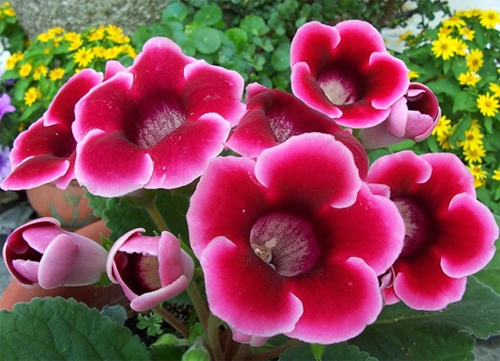
Cultivation methods for Sinningia speciosa:
1. Potting soil selection:
The potting soil can be an equal-parts mix of leaf mold, garden soil and barnyard manure; or a mix of 3 parts peat soil, 1 part perlite, 1 part river sand and a small amount of base fertilizer; or a blend of leaf mold, coarse sand and vermiculite.
2. Watering:
Water moderately at ordinary times; too much water easily causes the tubers to rot, the leaves to turn yellow and wither, and even the whole plant to die. During the high-temperature stage in summer, water 1 to 2 times a day. Water evenly, neither too dry nor too wet, and avoid sudden changes of cold and heat.
During the flowering period, rain must be avoided. In winter the potting soil should be a little drier.
3. Light:
Sinningia speciosa is a semi-sun plant and prefers a semi-shaded environment. Therefore, during the growing period, avoid strong direct sunlight; the environment must not be too dry either.
In summer, place it under a shade shed in a spot with scattered light and good ventilation for care, otherwise the leaves will very easily wither.
4. Temperature:
The suitable growing temperature for Sinningia speciosa is 10-25°C. Different seasons have different requirements: from January to October it is 18-25°C; from October to January of the following year it is 10-12°C.
A suitable temperature makes the leaves grow luxuriant and emerald green, and the flowers large and vivid.
5. Fertilizing:
Sinningia speciosa is fond of fertilizer. From leaf unfolding to before flowering, apply a diluted decomposed organic liquid fertilizer once a week; after the flower buds form, additional phosphorus fertilizer is needed. When fertilizing, never let it touch the leaf surface. After each fertilizing, spray clean water once to keep the leaf surface clean.
Notes on growing Sinningia speciosa:
During the flowering period, avoid rain and do not let the temperature get too high; this can extend the flower-viewing period.
Be careful when watering normally: the flowers and leaves of Sinningia speciosa are covered with fine hairs, and water droplets should not remain on the leaves for long, otherwise the leaves will rot, so do not spray water on the flowers and leaves.
When fertilizing, also be careful not to let it touch the leaf surface, otherwise it easily causes leaf rot.
During the winter dormant period, the potting soil should be kept slightly dry; if the temperature is below 8°C and the air humidity is high, the tubers will rot.
High temperature and high humidity are unfavorable to plant growth, so appropriate shading is needed; place it under a shade shed in a spot with scattered light and good ventilation for care, otherwise the leaves will very easily wither.
If you want Sinningia speciosa to bloom more, first choose imported F1 hybrid excellent varieties that bloom profusely, have a short sturdy plant shape, strong disease resistance, rapid growth and are easy to manage as mother plants; single-petal varieties bloom more than double-petal varieties.
Propagation methods for Sinningia speciosa:
Sinningia speciosa can be propagated by sowing, leaf cuttings, stem cuttings and tuber division.
1. Sowing
Do not sow the seeds too densely; the potting soil should be completely moist. Cover the pot surface with glass or plastic film and place it in a semi-shaded spot. At a temperature of 20°C to 22°C, seedlings emerge in about two weeks. Avoid direct strong sunlight and mist frequently. Sowing can be done in both spring and autumn.
Work before sowing
First soak the seeds for 24 hours. Put a mix of leaf mold, vegetable garden soil and fine sand as the growing medium into a shallow pot or wooden box, level and moisten the soil, then scatter the seeds. Under humidity conditions of 18-20°C, seedlings emerge in about 10 days. After emergence, let them gradually receive sunlight.
When the seedlings grow 3-4 true leaves, transplant them into small pots.
During the seedling stage, provide appropriate shade, avoid direct sunlight, and mist frequently with water to maintain relatively high humidity. Apply a diluted fertilizer solution about every 10 days; generally they can bloom 6 months after sowing.
2. Tuber division method
Choose 2- to 3-year-old tubers that have gone through dormancy; in autumn or from December to March of the following year, first bury them in soil, water thoroughly and keep the room temperature at 22°C to force sprouting.
When the sprouts grow to about 0.5 cm, dig up the tuber and cut it into 2 to 4 pieces with a sharp knife; each piece must have one sprout. Coat the cut surfaces with plant ash to prevent rot. Plant each piece in one pot, and each forms a new plant.
Sinningia speciosa can also be planted directly into a pot using 2- to 3-year-old or older tubers that have gone through dormancy. After new sprouts emerge, keep one strong sprout and remove all the other weak sprouts. During the growing period, maintain 18°C to 23°C and apply diluted fertilizer solution 1 to 2 times a week; as the plant grows, increase the amount of watering. When fertilizing, never splash the fertilizer solution onto the leaves and sprouts, otherwise spots easily form and rot may even occur.
Generally they bloom 3 to 4 months after planting. After the flowers fade, if you do not want to keep seeds, cut off the spent flowers so that nutrients are concentrated for continued blooming and for tuber growth.
The tubers of Sinningia speciosa can be planted continuously for 7 to 8 years, and with good cultivation they can bloom twice a year.
3. Leaf cutting method
After flowering, select excellent individual plants, cut off healthy leaves, leave 1 cm of petiole, and insert them obliquely into clean river sand (using a mixed medium of perlite and vermiculite gives better results). Insert 1/3 of the leaf surface into the river sand and leave 2/3 above the surface. Provide appropriate shade and maintain a certain humidity; at a temperature of about 22°C, they will root in 15 days, and after becoming small plantlets they can be transplanted into small pots.
For cuttings of Sinningia speciosa, leaf cuttings or sprout cuttings can be used.
Leaf cutting: choose healthy leaves in the middle stage of development, take them from the base together with the petiole, cut off half of the leaf blade, insert the petiole obliquely into a wet sand medium, cover with glass and shade, and keep the room temperature at 25°C and relatively high air humidity. Twenty days after insertion, callus tissue forms at the base of the petiole; after small plantlets grow, move them into small pots.
Sprout cutting: in the current year only a small tuber forms; after dormancy, new sprouts emerge from the tuber, and after a period of cultivation they bloom from June to July of the following year.
For black Sinningia speciosa, sprout cutting is done in spring when the tuber's new sprouts reach 4 cm to 6 cm long. Break off the excess new sprouts from the base, insert them into a sand bed, and maintain a certain humidity; after a period of cultivation, they bloom from June to July of the following year.
4. Stem cutting
Tender shoots often sprout from the tubers of Sinningia speciosa. For cuttings, cut 2-3 cm lengths and insert them into fine sand or expanded perlite medium. Pay attention to shading, avoid direct sunlight, and maintain a room temperature of 18-20°C; they will root in 15 days.
Pest and disease control methods for Sinningia speciosa:
The common leaf-blight nematode disease of Sinningia speciosa is very serious. Besides promptly pulling out diseased plants and burning them, the pots, tubers and soil all need to be sterilized.
During the seedling stage, damping-off easily occurs, so pay attention to sterilizing the soil for sowing and transplanting. During the growing period, inchworms often bite the tender sprouts; they can be caught by hand or controlled by applying carbofuran to the pot.
The main disease is leaf-blight nematode disease, caused by nematode infection. It damages tender stems, young plants, the stem base near the ground and the base of petioles, appearing as water-soaked softening and rot; the diseased part gradually extends upward, spreading from the leaf base to the leaf blade. The damaged leaves shrink, turn brown and die. In mature plants, damage starts from the petiole and gradually expands without softening.
Control methods:
(1) Sterilize the seedbed soil and flower pots with steam or chloropicrin, etc.
(2) Soak the tubers in warm water at 60°C for 5 minutes or sterilize with Uspulum.
(3) Pull out damaged plants and burn them or bury them deeply.
The main pest is the inchworm, which eats the plant's tender sprouts during the growing period and can cause serious losses.
They should be caught promptly or controlled by applying carbofuran to the potting soil.
Under high-temperature and dry conditions, red spider mites easily appear and must be controlled by spraying pesticide as soon as possible.
That is all for the introduction to the cultivation and propagation methods and pest and disease control methods of Sinningia speciosa. Why not hurry up and grow a few plants?
Sinningia speciosa Sinningia speciosa Benth. Sinningia speciosa illustrated guide: how to grow Sinningia speciosa / how to propagate Sinningia speciosa
Sinningia speciosa profileSinningia speciosa Sinningia speciosa Benth.
Cultivation methods and notes for Sinningia speciosa: an introduction to Sinningia speciosa
The introduction of Sinningia speciosa into China was mainly in the 1930s, brought from the United States by the College of Agriculture of Jinling University in Nanjing and the Zhongshan Mausoleum Memorial Botanical Garden. After the founding of New China, botanical gardens in various places only then formally introduced and trial-planted it. It was not until the 1990s that there was small-batch production, and to this day it has still not formed a scale.
Morphological characteristics of Sinningia speciosa
Perennial herb, tuber flattened spherical, aboveground stem extremely short, plant height 15-25 cm, the whole plant densely covered with white hairs. Leaves opposite, thick and large,
ovate or long elliptic, with serrated margins; veins raised between, flower stalks grow out from between the leaves. Flowers terminal or axillary, corolla bell-shaped, apex rounded, 5-6 shallow lobes, rich in color, including pink, red, purple-blue, white, multicolor and other colors, large and beautiful. Capsule, seeds mature 1 month after flowering; seeds brown, tiny and numerous.
Ecological habits of Sinningia speciosa
During the growing period it likes warmth and moisture and avoids direct sunlight. It has a certain ability to resist heat, but in summer it should be kept cool; around 23°C is favorable for flowering. From January to October keep the temperature at 18-23°C; from October to January of the following year (dormant period) it needs 10-12°C. The tubers can also overwinter safely at a temperature of around 5°C. During the growing period it requires high air humidity and does not like heavy watering; avoid rainwater intrusion. During the winter dormant period it needs to stay dry; if humidity is too high or the temperature is too low, the tubers easily rot. It likes fertile, loose, slightly acidic soil.
It grows wild in tropical plateau regions with cool summers and warm winters. During the growing period Sinningia speciosa likes warmth, humidity and a semi-shaded environment. From January to October the suitable temperature is 18-23°C, and from October to January of the following year it is 10-12°C. Summer high temperature and high humidity are unfavorable to plant growth, so appropriate shading is needed. During the growing period it requires high air humidity, and the leaves grow luxuriant and verdant. During the winter dormant period keep it dry; if humidity is too high and the temperature is also low, the tubers easily rot. In winter the temperature should not be lower than 5°C. It requires fertile, loose, well-drained soil rich in humus.
1. Temperature. The suitable growing temperature for Sinningia speciosa is 10-25°C. Different seasons have different requirements: from January to October it is 18-25°C; from October to January of the following year it is 10-12°C. A suitable temperature makes the leaves grow luxuriant and emerald green, and the flowers large and vivid. When the plant withers and goes dormant, take out the bulb and store it in slightly moist sand.
2. Light. Sinningia speciosa is a semi-sun plant. Normally provide appropriate shade and avoid strong direct sunlight on Sinningia speciosa. In winter during the seedling stage there should be sufficient sunlight to promote sturdy seedling growth. In summer it must be placed in a well-ventilated shade shed with scattered light for careful care. During the growing period the light must not be too strong, otherwise growth will be inhibited. When flowering, appropriately extend the shading time to help prolong the flowering period.
3. Watering. The flowers and leaves of Sinningia speciosa are covered with fine hairs; once they get water droplets, they rot very easily, so do not spray water on the flowers and leaves. It is best to use the soaking method for watering. Water moderately at ordinary times; too much water easily causes the tubers to rot, the leaves to turn yellow and wither, and even the whole plant to die. During the high-temperature stage in summer, water 1 to 2 times a day. When the air is dry, frequently spray water around the plant to increase environmental humidity. Water evenly, neither too dry nor too wet, and avoid sudden changes of cold and heat. During the flowering period, rain must be avoided. In winter the potting soil should be a little drier.
4. Fertilizing. Sinningia speciosa likes loose, fertile, humus-rich soil with good water retention. It is suitable to cultivate it in slightly acidic soil rich in humus and loose. A common mix is 1 part perlite, 1 part river sand and 3 parts leaf mold plus a small amount of decomposed, sun-dried, finely crushed poultry manure. From leaf unfolding to before flowering, apply a diluted decomposed organic liquid fertilizer once a week; after the flower buds form, additional phosphorus fertilizer is needed. When fertilizing, never let it touch the leaf surface. After each fertilizing, spray clean water once to keep the leaf surface clean. Water droplets should not remain on the leaves for long, otherwise the leaves will rot.
Cultivation techniques for Sinningia speciosa
(1) Suitable temperature. The suitable growing temperature for Sinningia speciosa is 18-22°C from January to October and 10-12°C from October to January of the following year. During the winter dormant period, the potting soil should be kept slightly dry; if the temperature is below 8°C and the air humidity is high, the tubers will rot.
(2) Appropriate shading. Sinningia speciosa is a semi-sun plant and prefers a semi-shaded environment. Therefore, during the growing period, avoid strong direct sunlight; the environment must not be too dry either. In summer, [3] high temperature and high humidity are unfavorable to plant growth, so appropriate shading is needed; place it under a shade shed in a spot with scattered light and good ventilation for care, otherwise the leaves will very easily wither. Watering should be based on the dry-wet degree of the pot, watering 1-2 times a day.
(3) Appropriate fertilizing. Sinningia speciosa is relatively fond of fertilizer and requires fertile, loose, well-drained soil rich in humus. From leaf expansion to before flowering, apply diluted cake fertilizer water once every 10-15 days. When the flower buds form, additionally apply bone meal or superphosphate once.
(4) During the flowering period, avoid rain and do not let the temperature get too high; this can extend the flower-viewing period. After flowering, if the growing medium is fertile and management is proper, it will send out a second batch of buds. After the flowers fade, if you do not want to keep seeds, it is best to cut off the flower stems, which helps continued blooming and tuber growth and development.
(5) The leaf surface of Sinningia speciosa has many velvety fine hairs. Therefore, when fertilizing, do not let it touch the leaf surface. Otherwise, it easily causes leaf rot.
(6) Sinningia speciosa is not cold-tolerant. In winter, the plant's leaves gradually wither and it enters dormancy. At this time the underground tubers can be dug out and stored in cool (temperature not lower than 8°C) dry sand to overwinter. When it warms up in the following spring, plant them again with new soil. The tubers can be cultivated continuously for 7-8 years, blooming twice a year. Old tubers need to be eliminated and replaced.
(7) Soil. For potted Sinningia speciosa, a mixed medium of leaf mold, coarse sand and vermiculite is commonly used.
Variety selection
If you want Sinningia speciosa to bloom more, first choose imported F1 hybrid excellent varieties that bloom profusely, have a short sturdy plant shape, strong disease resistance, rapid growth and are easy to manage as mother plants; single-petal varieties bloom more than double-petal varieties. Seedling raising generally uses the sowing method. After emergence, promptly strengthen daily management, and pay attention to small seedlings that have three cotyledons at the same time; such seedlings often bloom more, and this trait is hereditary and can be used through vegetative propagation.
Pinching to promote sprouting
Traditionally, Sinningia speciosa is mostly grown as a small single-stem specimen. This cultivation method generally means small pots and few flowers, and it is hard to achieve a "profusion of flowers" ornamental effect. To change this situation, the most direct method is to pinch off the growing tips to encourage more side branches, so that more and better flowers will bloom. In one cultivation process, a grower unexpectedly found that a small seedling had unknowingly grown into two side branches (at the time it was suspected to be caused by pests or external injury), and as a result it produced as many as 16 flowers at the same time in a very small pot. Therefore, pinching should be done early rather than late; early pinching helps it take shape and bloom sooner. After pinching, promptly select and keep 2-3 new sprouts of the same height and moderate position.
Strengthen fertilizer and water
The flower pots traditionally used for growing Sinningia speciosa are really too small. Although you can continue to use small pots with a diameter of about 12 cm according to growth vigor, the best method is still to promptly repot into larger pots (such as 15-16 cm in diameter) to meet their growth needs. When new roots meet new soil, growth will be more vigorous, and after pinching, Sinningia speciosa has lush branches and leaves and a high fertilizer demand, so fertilizer should be applied promptly to build strength, preferably watered on with water. In addition, foliar fertilizer can also be sprayed, and its concentration must not exceed 2-3%. According to a colleague, he regularly sprayed a pot of Sinningia speciosa that had not been pinched at all with "Huiyou" brand quick-acting fertilizer, and it also produced 7 flowers at the same time, a beautiful sight.
Siphon water uptake
The leaves of Sinningia speciosa are fleshy, and the surface is densely covered with fine hairs; when watering it is very easy to dirty the leaves, causing local leaf rot, which becomes a target for various pathogens to infect. To avoid this, use the siphon principle to take up water and supply fertilizer through the drainage hole at the bottom of the pot. The greatest advantage of this method is not only that it effectively prevents the leaves from getting dirty, but also that fertilizer and water can be used more fully and effectively, making management very convenient. In practice it has also been found that water remaining on the leaves is not absolutely unacceptable; as long as it is clean water, or occasionally contains a small amount of inorganic fertilizer (content not exceeding the spraying concentration, that is, 2-3‰), it does no harm even if it remains on the leaves. In fact, enthusiasts often spray and wash the leaves with clean water, and it does no harm; they grow even better.
Growing medium
In order to promote more and better blooming in Sinningia speciosa, the root system must be well grown. The root system of Sinningia speciosa is delicate, capillary-like, and intolerant of waterlogging and heavy clay soil. The growing soil should use a loose, breathable, water-permeable growing medium, such as leaf mold, perlite, peat, sawdust (already decomposed), vermiculite, pine needles, spent mushroom compost (already decomposed), etc. Fertilizers can use sesame paste residue (already decomposed), poultry manure and compound fertilizer, etc. For sowing soil, plain soil is better, such as peat and vermiculite. Especially at the seedling stage, the less fertilizer the better, to avoid fertilizer damage (this can be achieved by applying dilute fertilizer frequently).
Appropriate shading
Traditionally, Sinningia speciosa is mostly grown under shade, but its drawback is that it easily causes the plant to grow leggy and weak. Therefore, some references say that placing it in the sun, as long as it does not cause leaf scorch, fully satisfying its light needs can promote a short sturdy plant shape, compact internodes and more flowers. But many growers have found in practice that excessively pursuing light without considering light intensity causes physiological yellowing of the leaves, far inferior to the emerald, glossy, vibrant leaves under shaded conditions. Growers all believe that everything should proceed from reality and that first of all appropriate shading is still needed; while not affecting normal growth, slightly strengthen the light to ensure it safely passes the summer and grows normally.
Flowering treatment
When Sinningia speciosa is flowering, if the leaves around the flowers hinder the opening of the flowers, you can cut off some of the leaves as needed or cut off half of the relevant leaves, so that the flowers all concentrate and open at the top of the plant, forming a bouquet. For safe overwintering, after winter begins, keep a section of leafless stem (about 3-4 cm long) on the Sinningia speciosa bulb (tuber) and promptly store it in sand, keeping the temperature not lower than 5°C. During overwintering, the sand must not be too wet, to prevent tuber rot. If the sand soil is too dry, spray a small amount of clean water as appropriate to prevent tuber shrinkage.
When spring comes and flowers bloom, the tuber sends out sprouts. As needed, select and keep 2-3 new sprouts that are properly positioned, coordinated in height and plump and sturdy, then dig out the bulb and transplant it into a pot, entering normal care.
Sinningia speciosa cultivated by the above methods can produce as many as 18 flowers at one time. Among them, one Sinningia speciosa grown in a pot with a diameter of 12 cm, with a plant height not exceeding 15 cm and only 2 branches, produced 16 flowers at the same time, a profusion of flowers, very beautiful.
Distribution range of Sinningia speciosa
Sinningia speciosa is native to Brazil. Sinningia speciosa was discovered in Brazil, South America, in 1785, and introduced to Europe in the early 19th century. Through cross-breeding in the 1860s, varieties with ornamental value had already been selected. By the 1960s, the United States had bred 4 cultivated varieties including double flowers with a flower diameter of 7 to 12 cm with deep blue and white edges and bright red and white edges. In the 1990s, dwarf and mini Sinningia speciosa were also bred, opening a new path for the potted ornamental use of Sinningia speciosa.
The introduction of Sinningia speciosa into China was mainly in the 1930s, brought from the United States by the College of Agriculture of Jinling University in Nanjing and the Zhongshan Mausoleum Memorial Botanical Garden. After the founding of New China, botanical gardens in various places only then formally introduced and trial-planted it. It was not until the 1990s that there was small-batch production, and to this day it has still not formed a scale.
Propagation methods of Sinningia speciosa
Sinningia speciosa can be propagated by sowing, leaf cuttings, stem cuttings and tuber division.
Tuber division method
Choose 2- to 3-year-old tubers that have gone through dormancy; in autumn or from December to March of the following year, first bury them in soil, water thoroughly and keep the room temperature at 22°C to force sprouting. When the sprouts grow to about 0.5 cm, dig up the tuber and cut it into 2 to 4 pieces with a sharp knife; each piece must have one sprout. Coat the cut surfaces with plant ash to prevent rot. Plant each piece in one pot, and each forms a new plant.
Sinningia speciosa can also be planted directly into a pot using 2- to 3-year-old or older tubers that have gone through dormancy. After new sprouts emerge, keep one strong sprout and remove all the other weak sprouts. During the growing period, maintain 18°C to 23°C and apply diluted fertilizer solution 1 to 2 times a week; as the plant grows, increase the amount of watering. When fertilizing, never splash the fertilizer solution onto the leaves and sprouts, otherwise spots easily form and rot may even occur. Generally they bloom 3 to 4 months after planting. After the flowers fade, if you do not want to keep seeds, cut off the spent flowers so that nutrients are concentrated for continued blooming and for tuber growth.
The tubers of Sinningia speciosa can be planted continuously for 7 to 8 years, and with good cultivation they can bloom twice a year.
Leaf cutting method
After flowering, select excellent individual plants, cut off healthy leaves, leave 1 cm of petiole, and insert them obliquely into clean river sand (using a mixed medium of perlite and vermiculite gives better results). Insert 1/3 of the leaf surface into the river sand and leave 2/3 above the surface. Provide appropriate shade and maintain a certain humidity; at a temperature of about 22°C, they will root in 15 days, and after becoming small plantlets they can be transplanted into small pots.
For cuttings of Sinningia speciosa, leaf cuttings or sprout cuttings can be used. Leaf cutting is done by choosing healthy leaves in the middle stage of development, taking them from the base together with the petiole, cutting off half of the leaf blade, inserting the petiole obliquely into a wet sand medium, covering with glass and shading, and keeping the room temperature at 25°C and relatively high air humidity. Twenty days after insertion, callus tissue forms at the base of the petiole; after small plantlets grow, move them into small pots. In the current year only a small tuber forms; after dormancy, new sprouts emerge from the tuber, and after a period of cultivation they bloom from June to July of the following year.
Sprout cutting is done in spring when the tuber's new sprouts reach 4 cm to 6 cm long. Break off the excess new sprouts from the base, insert them into a sand bed, and maintain a certain humidity; after a period of cultivation, they bloom from June to July of the following year.
Stem cutting
Tender shoots often sprout from the tubers of Sinningia speciosa. For cuttings, cut 2-3 cm lengths and insert them into fine sand or expanded perlite medium. Pay attention to shading, avoid direct sunlight, and maintain a room temperature of 18-20°C; they will root in 15 days.
Sowing method
Sinningia speciosa is mostly self-infertile, because its stigma is higher than the anthers and the stamens mature early, so self-pollination rarely sets seed. To obtain good seeds, artificial pollination must be carried out. The method is to collect pollen from the stamens at the peak of flowering and gently dab it on the stigma with a brush. Seeds mature 30 to 40 days after pollination; after removing the seeds and drying them in the air, store them, and they can be sown at any time. The seeds are tiny, about 28,000 seeds per gram. Sowing should not be too dense. After sowing, place the pot in shallow water to soak through, then take it out, cover the pot surface with glass, and place it in a semi-shaded spot. At a temperature of 20°C to 22°C, seedlings emerge in about two weeks. During the seedling stage, avoid direct strong sunlight and mist frequently. Generally it takes about 18 weeks from sowing to flowering, that is, autumn sowing blooms from April to May of the following year, and spring sowing blooms from July to August.
To save seeds of Sinningia speciosa, artificial pollination must be carried out. The style of Sinningia speciosa is higher than the anthers, and the stamens mature early, so self-pollination is difficult. After artificial pollination, the petals can be cut off to prevent the petals from rotting and affecting seed set. Generally the fruit matures 30-40 days after pollination.
Sowing can be done in both spring and autumn. Before sowing, first soak the seeds for 24 hours to promote earlier germination. Put a mix of leaf mold, vegetable garden soil and fine sand as the growing medium into a shallow pot or wooden box. After leveling the soil, evenly scatter the seeds. After the pot bottom is moistened with water, cover the top with glass. Under humidity conditions of 18-20°C, seedlings emerge in about 10 days. After emergence, let them gradually receive sunlight. When the seedlings grow 3-4 true leaves, transplant them into small pots. During the seedling stage, provide appropriate shade, avoid direct sunlight, and mist frequently with water to maintain relatively high humidity. Apply a diluted cake fertilizer water about every 10 days; generally they can bloom 6 months after sowing.
Disease control of Sinningia speciosa
The common leaf-blight nematode disease is very serious. Besides promptly pulling out diseased plants and burning them, the pots, tubers and soil all need to be sterilized. During the seedling stage, damping-off easily occurs, so pay attention to sterilizing the soil for sowing and transplanting. During the growing period, inchworms often bite the tender sprouts; they can be caught by hand or controlled by applying carbofuran to the pot.
The main disease is leaf-blight nematode disease, caused by nematode infection. It damages tender stems, young plants, the stem base near the ground and the base of petioles, appearing as water-soaked softening and rot; the diseased part gradually extends upward, spreading from the leaf base to the leaf blade. The damaged leaves shrink, turn brown and die. In mature plants, damage starts from the petiole and gradually expands without softening. Control methods: (1) Sterilize the seedbed soil and flower pots with steam or chloropicrin, etc. (2) Soak the tubers in warm water at 60°C for 5 minutes or sterilize with Uspulum. (3) Pull out damaged plants and burn them or bury them deeply.
The main pest is the inchworm, which eats the plant's tender sprouts during the growing period and can cause serious losses. They should be caught promptly or controlled by applying carbofuran to the potting soil. Under high-temperature and dry conditions, red spider mites easily appear and must be controlled by spraying pesticide as soon as possible.
Variety Classification of Gloxinia
Common varieties include Emperor William (EmperorWilliam), with deep purple flowers edged in white.
Defiance, with deep red flowers.
Emperor Frederick (EmperorFrederick), with red flowers edged in white.
Switzerland, with ruffled red flowers.
Tigrina, with orange-red flowers.
In addition, light purple gloxinias include Vulcan Fire, Gregor Mendel (GregorMendel), Heba Osena (HebaOsena), Venus and others.
Double-flowered varieties include Double Chicago (DoubleChicago), with light orange-red double flowers.
The Early Giant (EarlyGiant) series comes in colors such as deep purple with light purple edges and deep red, and blooms early, taking only 4 months from sowing to flowering.
Double Brocade (DoubleBrocade) has flowers in deep red, red with a purple center and white edge, rose red with white edge, and deep red with a deep purple center; it is dwarf, double-flowered, with small leaves.
Common ornamental species in the same genus include:
1. Sinningia pusilla (S. pusilla), a miniature gloxinia with light pink flowers; its cultivars include White Sprite (Whitesprite), with white flowers, and Doll Baby (DollBaby), with light purple flowers.
2. Sinningia regina (S. regina), with light purplish-red flowers.
3. Sinningia concinna (S. concinna), with light purple flowers and a white throat.
4. Sinningia speciosa var. macrophylla (S. speciosavar. macropHylla)
5. Hybrid gloxinia (S. hybrida).
Uses and Purposes of Gloxinia
Gloxinia has large, brightly colored flowers and a long flowering period; a single plant can produce dozens of blooms, flowering from April to November, with the flowering period lasting for several months. It is an ideal potted flower for holiday decoration and for decorating interiors and windowsills. Placing it on conference tables, in display windows or in tea rooms adds to the festive atmosphere.
Gloxinia has a certain dust-removing effect, lowers indoor carbon dioxide concentration, and helps purify indoor air to some degree.
Landscape Uses of Gloxinia
An ideal potted flower for holiday decoration and interior decoration
The Flower Language of Gloxinia
Desire
Gloxinia Pictures
How to grow Gloxinia?
Flower Bonsai Network Flower Care section: How to grow gloxinia? We will introduce you to gloxinia cultivation methods and the prevention and control of gloxinia pests and diseases.
How to grow Gloxinia?
Gloxinia, also known as Falling Snow Mud, Latin name: Sinningia speciosa. It is a herbaceous plant of the order Lamiales (Tubiflorae), family Gesneriaceae, genus Sinningia. Gloxinia is a perennial bulbous flower of the genus Sinningia in the family Gesneriaceae; because of its large and bright flowers, it is often used as a garden plant. It grows in the tropical savanna of Brazil in South America. Gloxinia usually blooms in spring and summer, and its cold hardiness zone is 10-12.
Gloxinia is mainly propagated by sowing, and can also be propagated by cuttings and by dividing the tubers. Sowing is best done between October and December in a greenhouse; after emergence, the plants can grow quite full by the time they bloom the following June. Flowering in June allows them to avoid the severe heat of summer.
Gloxinia seeds are powdery; 1 gram of seed can produce 5000-6000 seedlings, so the smaller the sowing rate the better, and operations should strictly follow the method for sowing tiny seeds; at a room temperature of 20°C, seedlings emerge in 10-15 days.
When the seedlings have grown 2 leaves, transplant them into "ox-eye" pots, and before the flower stems are produced, transfer them again into "No. 1 tub" pots, applying a dilute liquid fertilizer once a week until flowering.
Dividing the tubers should be done in winter; when the room temperature drops to 8-10°C, the leaves fall and the plant goes dormant. At this time, take the tubers out of the pot and cut them into small pieces, each piece must have 2 buds, coat the cut surfaces with plant ash as an antiseptic, and after the cuts are slightly dry, plant them in flower pots.
When taking cuttings, first bury the tubers in the potting soil, place them indoors at 15-18°C and water them to encourage sprouting; when the new shoots grow to 5 cm, keep 2 of them to continue growing, cut the extra shoots from the base and insert them into plain sand, maintain a room temperature of 20-25°C, raise the air humidity and keep them shaded for care, and after 3 weeks they can take root and unfold leaves.
What should be noted when cultivating and caring for gloxinia?
Gloxinia requires relatively high temperatures; when the air temperature drops to 8-10°C, the leaves fall and it goes dormant, and the tubers overwinter in the potting soil. If you want it to bloom year-round, the winter room temperature must not be lower than 20°C; once the leaves fall due to a drop in temperature, watering should be paused, the pot should not be removed, and after the temperature rises and new leaves grow, repot and change the soil. During the growth period, pay attention to wind protection to prevent leaf scorch at the edges and flower withering. The petioles and leaves of gloxinia are tender and juicy, and if not carefully cared for, they often rot.
Because gloxinia is a shade-loving plant, it must not be exposed to sunlight; it is neither drought-tolerant nor tolerant of water accumulation in the pot. Once it suffers, the leaves quickly wilt; once water accumulates, the tubers rot. Since the pot used for potting is small and the leaves cover the pot surface, be very careful when watering and applying fertilizer, and do not splash water or fertilizer solution on the leaves.
For gloxinia cultivation methods, see: