Carnation Growing Methods, Propagation Tips and Floral Meanings
Carnations are the mother's flower, the flower given on Mother's Day, and one that many people love. If you want to grow carnations yourself, what are the growing and propagation methods? And what is the floral meaning of carnations?
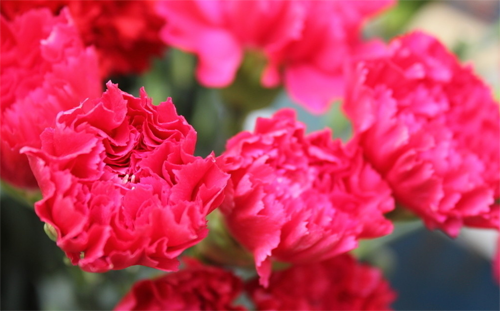
Carnation growing methods:
1. Ventilation and light
It prefers dry air, good ventilation and plenty of sunlight, and dislikes high temperatures and high humidity. The optimum growing temperature is 19-21°C.
Apart from the high temperatures of over 30°C in summer, it should be given direct sun in the other seasons, with plenty of sun exposure and 6-8 hours of light guaranteed every day. In midsummer, when carnations are in a semi-dormant state, care should be taken to avoid scorching sun exposure.
2. Potting soil and fertilisation
The growing soil should be good at retaining nutrients, airy and well-draining, and rich in humus; a clayey soil with good nutrient retention that is slightly alkaline is best.
3. Fertiliser and water management
Apply sufficient base fertiliser containing potassium, calcium, nitrogen and phosphorus at the bottom of the pot first. Water once a day on sunny days to keep the potting soil moist. This is because carnations fear both waterlogging and drought.
During the growing period, apply alternately once every half month a dilute urea solution, ash from burnt wheat straw, or sauce residue fertiliser.
Notes: Carnations should not be given strong fertiliser; apply dilute fertiliser frequently. The potting soil must not become waterlogged, otherwise the roots rot easily.
4. How to make it flower (and flower more)
First, encourage branching by removing the growing tip when the plant is 15-20 cm tall (see introduction to topping).
Generally keep 6-7 lower side buds, then pinch out the growing tips once more, finally giving the plant 12-14 side branches. When buds form, keep only the top bud on each branch, and remove all the lower axillary side buds and side shoots. The second pinching must be done before mid-August.
In this way the potted carnation will have a graceful shape and abundant, brightly coloured flowers. Generally, after transplanting, if water and fertiliser are suitable, the temperature is right and light is sufficient, it will flower within 3 months.
Variegated carnations often differ according to the texture and colour of the single-coloured flowers, with 5-6 variegated flower types such as white, yellow, light green and light red, and the markings on the petals all differ, while the leaves show mottling or slight mosaic symptoms.
Carnation propagation methods:
Seed sowing, layering and cuttings can all be used, but cuttings are the main method (reply: cuttings).
Cuttings can be taken at any time except the hot summer, and the best results are obtained from late January to early February. For the cuttings, choose side shoots 7-10 cm long growing from the leaf axils in the middle of the branch. When taking the cuttings use the "bud-breaking method", that is, hold the side shoot and break it downwards along the main branch so that the base of the cutting carries a node scar, which makes rooting easier.
Take the cuttings immediately after collection, or moisten them with water before inserting. The cutting medium is ordinary garden soil mixed with 1/3 rice-husk ash, or sandy soil. After inserting, water frequently to maintain humidity and shade the cuttings. At a room temperature of 10-15°C, they will root in about 20 days, and can be transplanted and planted out after one month.
Layering is carried out in August-September. Choose a long branch, cut the bark on the part touching the ground with a knife, and cover it with soil. After 5 to 6 weeks it will root and survive.
Carnation pest and disease control:
Common carnation diseases include calyx rot, rust, grey mould, bud rot and root rot. Zineb can be used to control calyx rot, and 5-carboxin to control rust.
To control other diseases:
Zineb, carbendazim or captan can be used to treat the soil before planting. When red spider mites or aphids cause damage, generally use a 40% dimethoate emulsion at 1000 times dilution to kill them.
Carnation floral meanings:
1. Pink: symbolises a mother's eternal love.
2. Light red symbolises praise
3. Deep red represents a deep love.
4. White symbolises pure love and good luck
5. Variegated carnations symbolise regret. Purple carnations express being free-spirited.
6. Green carnations are mainly used on St. Patrick's Day, 17 March each year, to commemorate St. Patrick, the patron saint of Ireland.
7. Yellow carnations represent: you disappoint me, rejection, disdain, long-lasting friendship, and so on.
That is all for carnation growing and propagation methods and floral meanings. On Mother's Day you should give your mother carnations; whether buying or selling, it is all love.
What are the carnation growing methods?
✿ Related reading recommendations
✿ Yellow flag iris ✿ Kalanchoe propagation methods ✿ Why osmanthus trees do not bloom
(◕‿◕✿) For flowers and bonsai, plant growing, please follow the Meilele flowers and bonsai section!
.......
Carnations are long-day plants that like plenty of sunlight. Apart from the seedling stage and full flowering stage, there is no need to worry about damage from strong light, and with supplementary light the flower diameter and colour intensity can be increased. Light intensity has an obvious positive correlation with cut flower yield per unit area. Today the editor will briefly introduce the carnation growing methods.
.......
Carnation growing methods: carnations are fibrous-rooted plants that require loose, airy soil with good water retention and nutrient retention. The seedbed soil is best as peat or other media based mainly on peat, with sufficient fertiliser mixed into the medium, including nitrogen, phosphorus, potassium and some trace elements.
.......
.......
Water heavily three days before planting to fully moisten the soil. The medium should be at least 20 cm thick to ensure the carnation mother plants have enough soil layer to grow roots, absorb nutrients and grow and develop normally. Seedbeds or raised beds should be built according to the specifications of the greenhouse or plastic tunnel; a bed height of 80-100 cm is suitable, and a bed depth of 25-30 cm is good, and must not be less than 20 cm.
.......
.......
For carnation growing methods, varieties are selected according to market requirements and the local growing environment, introducing excellent varieties with high yield, good quality, vigorous growth, strong disease resistance and good stress resistance, and carefully tending them according to the characteristics of each variety.
.......
.......
Then take vigorous cuttings, root them to obtain high-quality strong seedlings, establish a cutting nursery, and produce commercial seedlings.
.......
.......
For carnation growing methods: when a large number of white roots grow from the base, it shows the mother plant has established. At this point water should gradually be controlled to ensure a well-developed root system. Apply fertiliser once every 7-10 days according to seedling condition, and spray once with an insecticide and a fungicide. When the plant reaches 7 leaves and 1 heart, pinching can begin; depending on the branching ability of the variety, leave 5-7 pairs of leaves to allow side shoots to grow later for taking cuttings.
.......
.......
Normally it is not used for raising seedlings, but can be used as tissue culture material for rejuvenation and seed preservation. When the side shoots reach 7 leaves and 1 heart, cuttings can begin to be taken; generally leave 3-4 pairs of leaves on the mother plant, bind every 25-30 cuttings into a bundle with a rubber band, place them in a cardboard or plastic box, and store them in a cold store at 1-2°C for later use.
.......
.......
Carnation growing methods: common carnation diseases include calyx rot, rust, grey mould, bud rot and root rot. Zineb can be used to control calyx rot, and 5-carboxin to control rust. To control other diseases, zineb, carbendazim or captan can be used to treat the soil before planting. When red spider mites or aphids cause damage, generally use a 40% dimethoate emulsion at 1000 times dilution to kill them.
.......
Conclusion: Carnations were once used to treat fever, and in the Elizabethan era they were also used as a spice additive in wine and ale to replace the more expensive cloves. Morocco, Monaco, Czechia, Spain and many other countries use the carnation as their national flower. That is all for today's introduction to carnation growing methods by the editor. Thank you for reading.
[Article source]Flowers and Bonsai
✿ Flowers and Bonsai ✿
✿ Characteristics of peonies ✿ How to grow azaleas ✿ Are cactus balls poisonous ✿ Black datura ✿ How to grow lucky bamboo in soil
✿ Uses of cactus ✿ How to eat yacon ✿ What is cistanche ✿ The harm of water hyacinth ✿ Price of oldenlandia diffusa
✿ Characteristics of osmanthus trees ✿ Golden monkey cactus ball ✿ Price of oriental lilies ✿ Complete collection of peony pictures ✿ Do mimosa plants bloom
✿ Floral meaning of pink roses ✿ How to grow cyclamen ✿ Forget-me-not flower pictures ✿ Red carnation pictures ✿ What are betel nuts
✿ **Tianshan snow lotus ✿ How to grow money trees ✿ Thousand-hand Guanyin pictures ✿ Rose growing techniques ✿ Rubber plant growing methods
✿ Characteristics of mimosa ✿ White magnolia pictures ✿ Sago palm leaves turning yellow ✿ Lucky bamboo in water pictures ✿ Aloe vera pictures
What are the growing methods for potted carnations?
Carnations belong to the Caryophyllaceae family, Dianthus genus, and originate from the Mediterranean region. They are one of the most widely used flowers in the world today. Many households grow carnations, but are not very familiar with how to grow them. Now the editor will teach you the growing methods for potted carnations.
1. If growing in water: the salinity of the water should not be too high, and the pH value is best kept between 6.5 and 7.0, that is, slightly acidic to neutral. It needs a lot of fertiliser, so apply fertiliser once every 2-3 weeks during the vigorous growth stage; if in a pot or container, only a small amount of fertiliser is needed.
2. Light: copper coin grass likes warmth and humidity, and is best grown in half-day sun or shade, avoiding direct sunlight, and ideally receiving 4-6 hours of scattered sunlight each day. If there is no sunlight indoors, artificial light can be used instead.
3. Soil and temperature: loose, well-draining growing soil is best, and the suitable temperature for water culture is 22-28°C. Copper coin grass is sensitive to cold; the suitable temperature is 10-25°C, and in winter it should not be lower than 5°C.
4. Propagation method: division or cuttings. It is easy to grow; keep the soil moist and it will root in about 1-2 weeks. Because it tolerates moisture and is an emergent-type plant, it is also suitable for growing in water basins and ponds. For water culture, change the water once a week and add a special nutrient solution for foliage plants.
1. To prevent carnation leaves from withering, control light and temperature well: some flower lovers report that leaves wither and so on during growing. This problem is mainly caused by temperature and light conditions not being controlled well. When the temperature is above 30°C, wilting symptoms occur easily. The most suitable environmental temperature for carnation growth is 13-25°C, and light conditions should be controlled at 6-8 hours per day. This can ensure normal growth of potted carnations. Liking strong light is an important characteristic of carnations. Whether overwintering indoors, over-summering in pots or forced cultivation in a greenhouse, sufficient light is needed, and they should be placed in a sunny position exposed to direct light.
Carnation
Variegated carnation
2. To avoid root rot in carnations, master the watering principle: why do some potted carnations develop root rot? Potted plants share a common trait: they like a well-ventilated, airy and well-draining environment. Overwatering easily causes root rot, so the number of waterings must be controlled well. Avoid waterlogging. In the rainy season, loosen the soil and drain it. Apart from the peak growing and flowering season, when watering should be timely, water less at ordinary times, just enough to keep the soil moist. If conditions allow, the air humidity can be kept at around 75%. (For those with a humidifier at home, this should not be hard to control.) Again, a reminder of the carnation watering principle: do not water until the pot surface is dry, and when watering, water thoroughly; avoid waterlogging.
3. To help carnations grow healthily, pay attention to fertilising: if you choose to grow carnation plants, note that you should choose a clayey soil that is well-draining, rich in humus, good at retaining nutrients and slightly alkaline. Before planting, apply sufficient base fertiliser containing potassium, calcium, nitrogen and phosphorus at the bottom of the pot (or apply sufficient baked fertiliser and bone meal). During the growing period, continue to apply liquid fertiliser, generally once every 10 days or so with rotted, dilute fertiliser water, and apply one top dressing after cutting flowers. Do not fertilise during the high-temperature period in summer, otherwise the plant easily withers and dies.
4. Methods to encourage carnations to branch more and bloom more: to encourage branching, remove the growing tip when the plant is 15-20 cm tall. Generally keep 6-7 lower side buds, then pinch out the growing tips once more, finally giving the plant 12-14 side branches. When buds form, keep only the top bud on each branch, and remove all the lower axillary side buds and side shoots. The second pinching must be done before mid-August. After the first flowering, promptly cut off the flower stalks, leaving only two buds at the base of each branch. Through repeated pinching in this way, the plant shape becomes graceful and the flowers abundant and brightly coloured.
5. Carnation propagation methods: carnations are most suitable for propagation by cuttings. There is no limit on the timing of cuttings; apart from excessively hot weather, they can be propagated in other seasons. Among these, cuttings taken in early February have the highest survival rate.
Striped carnation
Carnation floral meanings and the symbolic significance of carnations
Carnations represent great maternal love. They carry the meaning "Mother, I love you". They are the flower of mothers: representing deep family affection; kind, selfless maternal love; warm blessings. Carnations of different colours have different floral meanings and symbolic significance.
White carnation floral meaning: represents pure love. Sweet and lovely, innocent. A gift that brings women good luck, purity, pure friendship, my living love, my love forever, faith, elegant love, true feeling, respect.
Pink carnation floral meaning: expresses wishing mother to remain forever young and beautiful; others: represents I will never forget you, beauty, youth, passion.
Red carnation floral meaning: expresses wishing mother health and longevity. Others: my heart aches for you, appreciation, worship, infatuation, family affection, passion.
Yellow carnation floral meaning: expresses thanks to mother. Others: you disappoint me, rejection, disdain, long-lasting friendship.
Beige-red carnation floral meaning: sadness
Deep red carnation floral meaning: passionate love
Peach-red carnation floral meaning: loving you
Variegated carnation floral meaning: rejecting your love
Purple carnation floral meaning: wilfulness, unpredictable
Marked carnation floral meaning: rejection, I cannot be with you
Striped carnation floral meaning: sorry
Multi-coloured carnation
Carnation benefits and effects:
1. Carnations have the effects of beautifying the face, whitening the skin and removing spots and wrinkles, and can be used to regulate female endocrine disorders.
2. Carnations contain various trace elements needed by the human body, can improve blood circulation, promote the body's metabolism, and have the effects of strengthening the kidneys and benefiting essence, and treating consumptive disease, cough and excessive thirst.
3. Carnations have the effects of clearing the heart and removing dryness, reducing inflammation and relieving irritability. They have a clear effect on treating headaches and toothaches.
4. Carnations can calm the nerves and quench thirst, promote body fluids and moisten the throat, strengthen the stomach and relieve indigestion, regulate blood lipids, and help with weight loss.
Carnation notes: please place in a cool, dry place indoors, and prevent children from taking it themselves.
When brewing carnations, suitable pairings are: forget-me-not, stock, rose queen, peony, wintersweet.
Introduction to carnation brewing and drinking methods: take 3-4 carnation flowers, brew with boiling water for three minutes and it is ready
After reading the growing methods for copper coin grass introduced to you, will you still worry about not knowing how to grow copper coin grass? After enjoying the copper coin grass pictures in the article, do you also like this easy-to-grow, small and lovely potted foliage plant? Why not plant a pot indoors and give your old home a touch of green vitality and artistic atmosphere!