Thyme: Cultivation and Growing Methods, Benefits and Uses
Thyme is a plant, and it's fragrant too. Having one at home would be really nice. Let's take a look at how thyme is cultivated and grown, and what benefits and uses thyme has.
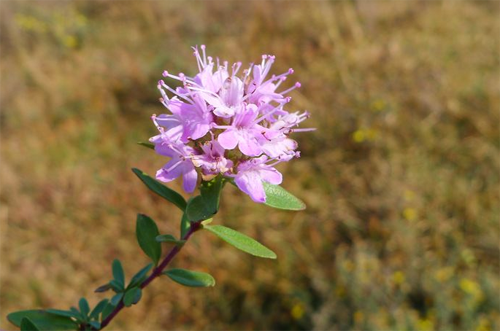
Thyme cultivation and growing methods:
1. Choosing potting soil
It likes a sunny environment and fears waterlogging the most, so potting soil is generally a 1:1 mix of peat soil and perlite. Using humus soil mixed with fine sand is also a good option.
2. Temperature
Its optimal growing temperature is 20-25 degrees, so in summer it definitely needs ventilation, shade and cooling. If your thyme plant is too lush, you also need to prune excess branches before flowering to avoid them being too dense and affecting ventilation.
3. Proper fertilizing
Thyme does not need much fertilizer. Generally, applying organic fertilizer twice each in spring and autumn is enough. Of course, diluted fertilizer works too.
Summer temperatures are high, and it is not thyme's optimal growing season, so do not fertilize then. The same goes for winter.
If your thyme flowers and sets seed smoothly, the plant tends to wither after fruiting, so you can prune some branches for cuttings.
Thyme propagation methods:
It is generally propagated by sowing, though cuttings or division also work.
1. Sowing
Sowing can be done in spring or autumn, ideally around April. Its seeds are small; soak the seeds in water for 4-6 hours, then scatter them evenly over slightly moist sandy soil. You can set up plastic film to keep them warm and moist.
Generally after 10-15 days you can remove the film, by which time they will have sprouted. Still keep the potting soil slightly moist, and water carefully, as seedlings tend to fall over.
Let the seedlings get a little morning sunlight, gradually adapting to more light.
2. Division propagation
Division propagation requires thyme plants that have been grown for more than 3 years. Division is also best done in April, though it also works when autumn turns cool. Dig out the mother plant, separate and cut apart the small plantlets, and each one must have 4 or 5 small buds.
After settling in, they can be transplanted, and an appropriate amount of organic fertilizer or compost can be added as a base fertilizer.
3. Cutting propagation
Thyme cuttings root and sprout very easily, so this is the simplest and most effective propagation method, suitable for many flower enthusiasts to try, and it can be done in spring, summer or autumn.
Generally, cut a 5-7 cm long vigorous stem section, and each section should have 3-5 growing nodes for better rooting and sprouting.
Layering propagation also works and is even simpler. Press a stem section with growing nodes into the soil, and once it roots, cut it off and plant it.
Thyme's benefits and uses:
Some people also call thyme "dijiao", "shan hujiao" or "shexiangcao". It is most common in Asia and Europe. Its leaves are delicate and small, and its stems are slender. It not only repels mosquitoes (crush the stems and leaves, mix with water and spray, quite effective), but its medicinal value is also excellent (it has some effect on colds, coughs, headaches, toothaches, indigestion and high blood pressure).
Long ago, thyme was used as a spice and medicine in daily life. If you see a patch of thyme in bloom, you will already smell the rich fragrance, yet it is not pungent. It is a very mild, rich fragrance.
Thyme flowering period:
Right now is thyme's peak flowering period (July-August). How does it feel to see those pink-purple flowers?
That's all for the introduction to thyme's benefits, uses and growing methods. Hurry and add some fragrance to your home.
Thyme Cultivation and Growing Methods
Plants of the genus Thymus are also called dijiao, dihuajiao, shanjiao, shan hujiao, shexiangcao and so on in China. Thyme is a subshrub, and its stems and leaves are fragrant. It is often planted in flower borders, flower beds, rock gardens and herb gardens, or used as ground cover in sunny spots. It is very suitable as an edible seasoning, and its medicinal value is very high.The thyme cultivation environment should have plenty of light, otherwise the plant will grow leggy. It has low requirements for soil but needs good drainage. Peat moss or potting soil mixed with perlite can be used. The most suitable growing temperature is 20°C to 25°C. During cultivation, special attention should be paid to high summer temperatures. When temperatures are higher, the plant can be pruned slightly to improve ventilation, and placed in a cool spot to spend the summer.
For fertilizing, organic fertilizer can be used as a base fertilizer. During the vigorous growth periods in spring and autumn, dilute Huabao 1000 times and water it in every 7-10 days. In summer the plant is weaker, so it is best not to fertilize. Before flowering, branches and leaves can be cut at any time for use, otherwise after flowering and setting seed the plant easily dies. If a large amount is harvested, it can also be dried and stored.
Thyme can be propagated by sowing, cuttings, layering and division, and all are suitable except in summer. If propagating by seed, because the seeds are very small, broadcasting is better. First water the medium thoroughly, then scatter the seeds evenly on top. When 4-6 true leaves have grown, they can first be moved to a smaller container (such as a plug tray), and when the root system has developed well, move them to a 3-inch pot to settle in. When settling in, 5-10% organic Dabutie can be added to the potting soil. For cuttings, terminal buds can be taken as cuttings, preferably with 3-5 nodes, but be careful not to take already lignified branches, as their rooting ability is poorer.
Thyme Cultivation
Thyme, scientific name: Thymus spp. English name: Thyme Family: Lamiaceae. Parts used: cut the top portion about 5-10 cm long before flowering; if it needs to be preserved, it can be dried and then stored in the freezer. Flavor characteristics: mild, slightly bitter, a little pungent, with a strong grassy aroma. Home uses: 1. Fresh branches, leaves and flowers can be cut directly and placed in a vase, where they can give off fragrance. Soaking them in water to make an infusion can produce a simple disinfectant. 2. Dried stems and leaves can be used as a spice for smoked meat, or wrapped in a small cloth bag and placed in a corner of the room to repel insects. Thyme Cultivation and UsesI. Overview and Cultivation History
Its place of origin is widely distributed around the Mediterranean, with the most economic cultivation in southern Europe. The history of thyme use is very old. The English word Thyme evolved from Greek, meaning having courage and being suitable for offering to the gods. At that time, praising a person for having courage could be expressed by saying he had the scent of thyme. In cooking, thyme is called "the harmonizer", meaning it can bring the flavors in food together. This may be because its flavor is mild and not too pungent, and it also has antibacterial and preservative effects. Ancient Egypt used it as one of the ingredients in preservative fragrant oil to preserve mummies. Locally, most people have rarely heard of thyme, let alone seen it, because its plant is small, its leaves are small, and it lies on the ground, looking like a weed, yet it is not as hardy as a weed. Too much watering or accidental damage can easily kill it. But its fragrance is relatively soft. For people not used to the strong smell of other herbs, it is suggested to start with thyme. Thyme leaves are small and sparse, with rolled-back leaf margins.
II. Characteristics
Plant height varies by variety, about 20-50 cm. Except for broadleaf thyme, the leaves of other varieties are all very small, oval-shaped, slightly fleshy, with some types having short fine hairs. The leaf margins curl slightly toward the back. The flowers are very small, pink or white, gathered 7-8 together at the leaf axils at the tips of branches. Old branches appear light brown due to mature lignification. The whole plant has a fragrant scent. There are more than a hundred varieties of thyme. Currently common varieties in Taiwan, China include common thyme, creeping thyme, lemon thyme and variegated thyme. Among them, there are relatively many varieties of creeping thyme, and some literature introduces it separately from thyme.
III. Cultivation Methods
The suitable growing temperature for thyme is between 20-25°C. This habit means that when cultivating it in Taiwan, China, the season must be chosen carefully. If it is summer, the plant usually performs weakly. Only when cultivated in cool areas, or placed in a shaded spot to spend the summer, and then moved to a spot with ample sunlight after autumn turns cool, is it more suitable for thyme's growth and development. In terms of growing medium, thyme's thick, somewhat fleshy leaves make it intolerant of moist media, so if peat soil is used as the growing material, about 20% of a drainage-friendly medium component should be added. Watering follows the same principle: it is better to let it dry slightly before watering than to keep it constantly moist. Otherwise the roots cannot grow strong and function, the medium remains wet all the time, aeration is poor, and the plant naturally cannot grow well.
In particular, thyme grows slowly and does not need much fertilizer. If peat is used as the medium, adding about 5-10% decomposed organic fertilizer is enough. After the plant grows larger, cut branches for use, and when new shoots begin to grow, apply 1,000-times liquid fertilizer every 1-2 weeks as appropriate. Growth weakens in summer, and fertilizing at this time easily causes root rot and plant death. Thyme propagation mainly includes sowing, cuttings, layering and division. Seeds are all imported from abroad. The sowing period is between autumn and spring. After thoroughly watering clean medium, broadcasting is preferable. After sowing, place it in a shaded spot. Before germination, the medium must have sufficient moisture. After germination, when 2-3 pairs of true leaves have grown, it is best to first transplant to a 128-cell plug tray, and after full development, transfer to a 9 cm pot to settle in. It is worth noting that some varieties, such as variegated thyme, cannot be propagated by sowing, otherwise the offspring will not have the variegated leaf trait.
The cutting method roots extremely easily and is very easy to propagate. For mass production, in order to achieve consistent quality, cut 3-5 nodes, about 5 cm long, with terminal buds as cuttings. Cuttings without terminal buds can survive, but root slowly and have fewer roots. In addition, do not cut already lignified branches for cuttings, as the rooting rate is also poor. When taking cuttings, insert them into a 128-cell plug tray to make it easier to transplant after they survive. The layering and division methods work because branches touching the ground automatically grow roots, and directly cutting them off gives an independent plant, making them more suitable for home gardeners. IV. Harvest and Use. Thyme is used by cutting branches and leaves, which also serves as pruning work. If branches are not pruned, they mature and flower, and after setting seed the plant easily dies. Therefore, harvesting combined with renewal is necessary, and it can also encourage the grown branches to be uniform in length, making it easy to grab and cut by hand at the next harvest. Just be careful not to cut into the woody part for the sake of harvest volume. At least cut at a place where 4-5 leaves are retained, because the aged basal part of the branch has poor regenerative ability, and the whole plant can easily die.
Harvested branches can be rinsed once with clean cold water, shaken to remove excess water, and then used. If they are to be stored long-term, place them in a plastic bag with the cut ends facing down, do not seal it, and refrigerate. Thyme is mainly used as fresh branches and leaves. It can be eaten directly raw, used as a spice in kitchen preparation, or distilled into essential oil, and processed for use as bath products. Pharmacologically, thyme can improve nasal and throat discomfort. In folk medicine it is used to help digestion, promote urination and expel roundworms. The famous mouthwash Listerine contains thyme ingredients, but the total daily intake should not exceed 10 grams.