What are the cultivation methods and alternative names of the Money Tree?
Just hearing the name "Money Tree" is quite something - it means bringing in wealth. With such an auspicious meaning, everyone loves to grow it. What are the cultivation methods of the Money Tree? What are its alternative names?
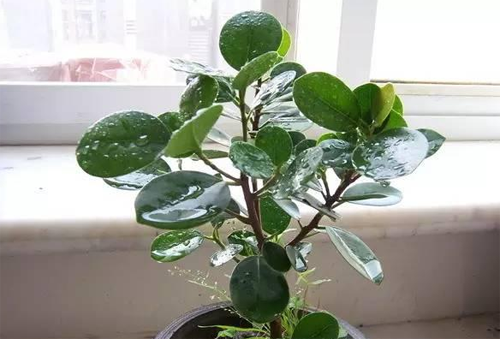
Money Tree cultivation methods:
I. Shading
The shading time and shading degree should be determined according to the local temperature and climate conditions at the time, ensuring that the seedlings are not harmed by sunscald.
In autumn, gradually extend the light duration and light intensity until full light is received, in order to increase the lignification degree of the seedlings.
II. Daily Management
Regularly loosen the soil, weed, and water to keep the bed surface moist. After leaf fall in late autumn, most seedlings can reach 2m in height, with a ground diameter of about 2cm. Transplant in the second spring; before transplanting, shorten the roots slightly.
It is not very demanding about light. It can grow well in bright or relatively dark places. In summer, maintain high air humidity and pay attention to shading. In winter, a relatively dry environment can be maintained but bright light is needed.
The best cultivation substrate for the Money Tree is fertile, loose, organic-rich, well-aerated, microacidic soil with strong water and fertilizer retention but no waterlogging.
III. Propagation Methods (Seed Propagation)
Mainly by seed propagation.
1. Seed Collection
The fruit of the Money Tree matures from September to October. Select excellent individual trees that grow well, have straight trunks, open crowns, plump fruits, and are in their prime age as mother trees for seed collection. Collect promptly when the fruits show reddish-brown or orange-yellow color and the capsules have not yet split, otherwise they will fall off on their own.
Seeds from different provenances vary greatly in cold resistance, so try to use local seeds for seedling cultivation.
2. Seed Storage
The seed coat of Money Tree seeds is hard and not easily permeable to water. If not treated for germination, spring sowing the next year often results in no germination or very low germination rate. Therefore, it is best to sow in autumn of the same year, allowing the seeds to complete the germination stage in the soil, which saves the steps of seed storage and germination promotion.
Mix the disinfected seeds with wet sand, place them in a pit, keep the sand slightly moist, and take out the seeds in March of the next year for direct sowing.
For dry-stored seeds, about 40 days before sowing, soak them in 80°C warm water, then mix with wet sand to promote germination. When the number of cracked seeds reaches more than 30%, they can be sown.
3. Sowing
The sowing site requires loose and breathable soil with good water retention and drainage, certain fertility, and free of pests and pathogens.
For spring sowing, sterilize. After sowing the seeds, cover with a layer of 1-2cm thick loose fine soil to prevent the seeds from drying out and losing water. Then water lightly once to maintain soil moisture, prevent weed growth and soil compaction.
IV. Pest and Disease Protection
1. Freeze Damage
When the winter temperature drops below 5°C, combined with wet potting soil, the tender leaves are prone to freezing and collapsing. In severe cases, it can cause tuber rot, and it is very difficult to recover.
Prevention method: During overwintering, the greenhouse temperature should be maintained no lower than 10°C, and the potting soil should be kept slightly dry.
2. Sunscald
In hot summer, or on clear days after long rain, or for potted plants that have been kept indoors for a long time and just moved outdoors for restorative care, direct exposure to sunlight can easily cause their tender leaves to be sunburned, resulting in partial loss of green color and whitening, or the entire leaf being sunburned, with the necrotic part later turning brown and black.
3. Brown Spot Disease
This disease mostly occurs on leaves. The lesions are nearly circular, grayish-brown to yellow-brown, with slightly darker edges. The disease is prone to occur under conditions of high temperature and high humidity with poor ventilation.
Prevention method: When a small number of diseased leaves are found, remove and destroy them promptly. In the early stage of the disease, use 50% carbendazim wettable powder at 600 times dilution or 40% chlorothalonil suspension at 500 times dilution, spray the leaves once every 10 days, for 3-4 consecutive times, with good control effect.
After summer begins, move the plants to a semi-shaded environment promptly. In late spring and early summer after long rain, provide shade for potted plants early.
4. Scale Insects
In environments with poor ventilation and insufficient light, the leaves of the Money Tree are prone to damage from scale insect feeding.
Prevention method: During the peak hatching period of nymphs, spray 20% buprofezin wettable powder at 1000 times dilution, or Supracide at 1000 times dilution, or JieSiJing at 500-800 times dilution. Generally spray 1-3 consecutive times with 7-10 day intervals, with good insecticidal effect.
Alternative names of the Money Tree:
Money Ficus, String of Coins, Doctor Tree, Coin Tree, etc. People like it not only for its round leaves but also for its decorative effect!
The cultivation methods and alternative names of the Money Tree have been introduced here. Why not plant one quickly and bring wealth to your home.
Money Tree Cultivation Methods_How to Grow Money Tree
Introduction: Do you know the cultivation methods of the Money Tree? Below is the relevant content about Money Tree cultivation methods compiled by YJBYS editor. Welcome to read and refer!
Money Tree Cultivation Methods
1. Soil: The Money Tree requires deep, loose and fertile soil. For pot cultivation, generally use leaf mold or peat soil, garden soil mixed with about 1/4 river sand or perlite. To make it fertile, add a small amount of cake fertilizer as base fertilizer.
2. Planting: Select strong seedlings with well-developed and intact root systems and plant them in pots in late autumn or before spring germination. Before planting, place a tile over the drainage hole at the bottom of the container, and fill part of the container with nutrient soil. After planting, add more soil so that the roots are in close contact with the soil, with the soil surface level with the pot rim. After watering thoroughly and settling, keep the soil surface about 5 cm below the pot rim as a watering lip. Newly potted plants should first be placed in a semi-shaded area for one week, then gradually transitioned to a sunny location for normal care.
3. Watering: It grows well in environments with high air humidity and sufficient soil moisture. Be careful not to let the potting soil dry out, otherwise it will cause massive leaf drop. Under low winter temperatures, water should be appropriately reduced. If using plastic containers, pay attention to drainage. Keep the soil moist and water promptly before it dries out completely. In dry weather, spray the plant to increase humidity; during the plum rain season, prevent water accumulation in the pot.
4. Sunlight: The Money Tree prefers semi-shade and should be placed under bright scattered light for cultivation. When the light is suitable, the leaves are glossy green and vibrant, and can be enjoyed for a relatively long time. In winter, it can be moved near a south-facing window for cultivation, so that it receives more sunlight and the leaves become glossy. It is best to move the pot outdoors to well-ventilated conditions with appropriate light for a period of cultivation every spring and autumn, but during outdoor care, be sure to avoid direct sunlight exposure, otherwise the leaves are prone to turning yellow, reducing ornamental value.
5. Temperature: The Money Tree is not cold-tolerant. In winter, room temperature should be kept above 10°C; if room temperature stays below 8°C for a long time, the leaves will gradually turn yellow; if the temperature drops below 0°C, the leaves will fall off and the stems and branches will dry up and die. Therefore, maintaining a suitable temperature in winter is very important.
6. Fertilizing: During the growing season, apply liquid fertilizer once every 1-2 weeks. From May to September, apply 20% cake fertilizer water twice a month. For variegated varieties, if there is too much nitrogen fertilizer and weak light, the patches on the leaves will become less distinct.
7. Repotting: Repot once every spring. If using plastic containers, pay attention to drainage. Use peat soil, leaf mold, perlite mixed with a small amount of base fertilizer for the potting soil. Fine sandy soil can also be used for pot cultivation.
8. Pests: Mainly leaf spot disease and anthracnose, which can be sprayed with 10% antibacterial agent 401 acetic acid solution at 1000 times dilution. Pests mainly include scale insects, which can be killed by spraying 40% omethoate emulsifiable concentrate at 1000 times dilution. In addition, red spider mites, thrips, and leaf miners harm the leaves of Schefflera, and can be killed by spraying 10% permethrin emulsifiable concentrate at 3000 times dilution.
9. Pruning: The Money Tree tends to produce leggy branches, so mature plants need regular shaping and pruning to maintain a neat and beautiful plant shape. For perennial old branches, when the plant shape becomes too large, heavy pruning can be done before new buds sprout each year in conjunction with repotting, cutting off the upper branches and leaves and part of the old roots.
10. Propagation Methods
(1) Cutting method: In late June, select the middle-lower section of semi-lignified branches of the current year's Money Tree, cut into cuttings about 10 cm long, keep 2 leaves at the upper end, cut off 1/2 of the small leaflets, and roots will form in 40-60 days after insertion.
(2) Seeding method: Harvest mature fruits in December, peel off the Money Tree seeds and store them until spring sowing the next year. Transplant once when seedlings are 5-7 cm, and they can be planted in the field the following year.
The Money Tree has glossy green leaves and is one of the good household potted plants, with relatively high ornamental value. It is suitable for placing in studies, living rooms, and other places. The cultivation methods of Schefflera have been introduced here, hoping to be helpful to everyone.
Precautions for Growing Schefflera
1. The cultivation environment should have suitable temperature, appropriate drought and waterlogging conditions, and timely watering.
2. Light duration must be ensured.
3. Successfully rooted cuttings should not be repotted in a hurry; wait until growth is obvious before repotting.
4. In summer, spray water on the leaf surface.
Brief Introduction to the Functions of Schefflera
Schefflera, although a relatively unfamiliar plant name, has feng shui functions beyond your imagination. Below are its feng shui functions.
1. Lucky color for people whose Five Elements belong to Fire. People whose Five Elements belong to Fire should mainly use purple and pink, avoid black, and the number is best at two or seven pots. Schefflera is a very good choice.
2. It has a certain exorcism function. Schefflera is also known as Big Leaf Umbrella, with palmate compound leaves, leathery, dark green, alternate, total petiole about 30cm long, evergreen shrub or small tree, branches relatively thick, initially with stellate hairs, leaves oily green, palmate compound leaves, leaflets 5-8, ovate or obovate-elliptic, leathery, entire margin. There is a saying: potted plants with wider leaves and larger leaf area have good exorcism effects. It seems that placing Schefflera in places with evil energy is also good.
3. Schefflera helps feng shui play its role. Schefflera is also a relatively beautiful plant, playing a very good role in beautifying and greening the home environment. Just think, if a person lives in a beautiful house with clean air, can they not be in good spirits? Is a home environment that can make family members feel good not a good feng shui residence?
Schefflera's feng shui functions are far more than these. If you want to discover more functions, buy one and experience it deeply!
Schefflera Varieties
1. Schefflera 'Henri', leaves large and mixed with yellow spots.
2. Schefflera arboricola, evergreen shrub. Leaflets 7-9, oblong, entire margin. Produced in Hainan, Taiwan, China, Guangxi.
3. Schefflera actinophylla, evergreen tree. Palmate compound leaves, leaflets 5-8, glossy, with obvious veins. Native to Australia.
4. Schefflera brevipedicellata, shrub. Leaflets 5-11, apex caudate-acuminate, sometimes sickle-shaped. Produced in Yunnan, Guizhou, Sichuan and Hubei.
5. Schefflera taiwaniana, evergreen small tree. Palmate leaves, leaflets 4-7, apex caudate-acuminate, entire margin, with petioles.
Money Tree Cultivation Methods_How to Grow Money Tree
Money Tree A cash cow Money Tree Illustrated Guide: How to Grow Money Tree / How to Propagate Money Tree
Money Tree ProfileMoney Tree A cash cow
Alternative names: Big Leaf Umbrella, Money Ficus, Lantern Tree, Goldenrain Tree, Mountain Bladder, Lantern Flower, String of Coins, Doctor Tree, Coin Tree
Classification: Shrub Flowers
Family and Genus: Plantae, Angiosperms, Dicotyledons, Urticales, Ulmaceae, Pteroceltis
Full Bloom Period: Spring
The Money Tree is of the Araceae family, genus Xuelu (Xanthosoma), with elliptic leaflets; there is also Money Ficus, of the Moraceae family, genus Ficus, with nearly round leaves) It is a perennial herbaceous flower introduced from abroad in recent years, with a plant height of 50 cm to 80 cm. On the underground corm grow pinnate compound leaves resembling Zamia cycads or ferns, with fleshy petioles, having 7 to 10 pairs of leaflets, elliptic leaflets, like pairs of neatly arranged copper coins. The spathe is reddish-brown. There is a book of the same name and a movie of the same name "Money Tree" directed by Stephen Herek. A legendary treasure tree; shake it and money falls down. Old Beijing...
Money Tree Cultivation Methods and Precautions Introduction to Money Tree
The Money Tree is of the Araceae family, genus Xuelu, with elliptic leaflets; there is also Money Ficus, of the Moraceae family, genus Ficus, with nearly round leaves) It is a perennial herbaceous flower introduced from abroad in recent years, with a plant height of 50 cm to 80 cm. On the underground corm grow pinnate compound leaves resembling Zamia cycads or ferns, with fleshy petioles, having 7 to 10 pairs of leaflets, elliptic leaflets, like pairs of neatly arranged copper coins. The spathe is reddish-brown.
There is a book of the same name and a movie of the same name "Money Tree" directed by Stephen Herek.
A legendary treasure tree; shake it and money falls down. In old Beijing customs, there was a custom of making a "Money Tree" at the end of the year to pray for the new year. In the Jiangnan region, according to old customs, on the first day of the Lunar New Year, every household hangs a "Money Tree" in front of the door, symbolizing that wealth will roll in in the new year. A type of mingqi (burial object) used in Han dynasty tombs, also used as a metaphor for a person or thing that brings in wealth.
Morphological Characteristics of the Money Tree
The Money Tree is a deciduous shrub or small tree, 3-6 m tall, rarely up to 10 m; young branches grayish-green, hairless, old branches dark gray; buds cylindrical, 8-10 mm long, bud scales broadly lanceolate, about 5 mm long, about 1.5 mm wide, slightly red, with a small pointed tip at the apex, with ciliate margins.
Leaves of the Money Tree are often clustered at the branch tips, papery, oblong to oblong-elliptic, 3-4 (--5) cm long, 2-2.5 cm wide, apex obtuse-acute, with a short protruding tip, base broadly cuneate or cuneate, margin with obtuse serrations, hairless on both sides, midrib concave on the upper surface, together with lateral veins indistinct on the upper surface, distinct on the lower surface, quaternary veins distinct on the lower surface; petiole stout, 0.8-1 (--15) mm long, grooved, hairless.
Flowers numerous, forming umbel-like racemes; flowers very slender, 2.5-4 cm long, hairless; flowers pendulous; calyx 5-lobed, lobes triangular, about 2.5 mm long, ciliate; corolla broadly campanulate, 1 cm long and wide, flesh-red, mouth 5-lobed; stamens 10, inserted at the base of the corolla, filaments 4.5 mm long, enlarged below the middle, pubescent, anthers 2-lobed, 1.5 mm long, awn about 1 mm long; ovary spherical, with longitudinal striations, sparsely covered with white short hairs, style about 5.5 mm long, sparsely pubescent.
Capsule of the Money Tree ovoid, 6-9 (--8) mm in diameter, loculicidal into 5 valves, valves about 6 mm long, about 3.2 mm wide, with a slight longitudinal groove in the middle of the valve. Seeds about 6 mm long, slightly glossy, wrinkled, winged, numerous seeds per locule, seeds attached to the upper part of the central axis.
The Money Tree blooms in May and fruits from June to October.
Ecological Habits of the Money Tree
The Money Tree is a sun-loving tree species, prefers light, slightly tolerant of semi-shade; cold-tolerant (Huangshan Goldenrain Tree is less so); drought-tolerant and barren-tolerant, also tolerant of low humidity, saline-alkali soil and short-term waterlogging. Deep-rooted, with strong roots, strong sprouting ability, medium growth rate, slower when young, gradually faster later, widely adaptable, not strict about soil, can grow in both slightly acidic and alkaline soils, prefers growing in calcareous soil. Strong wind resistance, can withstand temperatures as low as -25°C, and has strong resistance to dust, sulfur dioxide and ozone. Few pests and diseases, easy cultivation and management.
The Money Tree can grow well in bright or relatively dark places. In summer, maintain high air humidity and pay attention to shading. In winter, a relatively dry environment can be maintained but bright light is needed. The best cultivation substrate is fertile, loose, organic-rich, well-aerated, microacidic soil with strong water and fertilizer retention but no waterlogging. Apply compound fertilizer once a month during the growing season.
Cultivation Techniques of the Money Tree
Cultivation and management of the Money Tree are relatively simple. When transplanting, appropriately shorten the main root and thick lateral roots, which can promote the growth of more fibrous roots and make it easier to survive.
Cultivation Key Points
Deep, moist soil is most suitable as the cultivation soil. Prefers light, can tolerate semi-shade, cold-tolerant. Has deep roots, strong sprouting ability, drought-tolerant, barren-tolerant, can tolerate short-term waterlogging, and has strong resistance to smoke and dust.
I. Shading
The shading time and shading degree should be determined according to the local temperature and climate conditions at the time, ensuring that the seedlings are not harmed by sunscald. In autumn, gradually extend the light duration and light intensity until full light is received, in order to increase the lignification degree of the seedlings.
II. Thinning and Replanting
When seedlings grow to 5-10cm tall, thin them out. After thinning to a plant spacing of 10-15cm, apply topdressing combined with watering, leaving about 12 seedlings per square meter. Thinning requires removing small ones and keeping large ones, removing inferior ones and keeping superior ones, removing dense ones and keeping sparse ones, with all seedlings evenly spaced, and preferably done on cloudy and rainy days. Combined with thinning, replant missing spots to ensure uniform distribution of seedlings.
III. Daily Management
Regularly loosen the soil, weed, and water to keep the bed surface moist. After leaf fall in late autumn, most seedlings can reach 2m in height, with a ground diameter of about 2cm. Dig up the seedlings and grade them. Transplant in the second spring. Before transplanting, shorten the roots slightly. After transplanting, cut off the stem from the root collar.
Money Tree Cultivation Methods: Seedling Stage Management Techniques
The shading time and shading degree should be determined according to the local temperature and climate conditions at the time, ensuring that the Money Tree seedlings are not harmed by sunscald. In autumn, gradually extend the light duration and light intensity until full light is received, in order to increase the lignification degree of the seedlings.
Thinning and Replanting
When seedlings grow to 5-10cm tall, thin them out. After thinning to a plant spacing of 10-15cm, apply topdressing combined with watering, leaving about 12 seedlings per square meter. Thinning requires removing small ones and keeping large ones, removing inferior ones and keeping superior ones, removing dense ones and keeping sparse ones, with all seedlings evenly spaced, and preferably done on cloudy and rainy days. Combined with thinning, replant missing spots to ensure uniform distribution of seedlings.
Regularly loosen the soil, weed, and water to keep the bed surface moist. After leaf fall in late autumn, most seedlings can reach 2m in height, with a ground diameter of about 2cm. Dig up the seedlings and grade them. Transplant in the second spring. Before transplanting, shorten the roots slightly. After transplanting, cut off the stem from the root collar.
Daily Care
The Money Tree is not very demanding about light. It can grow well in bright or relatively dark places. In summer, maintain high air humidity and pay attention to shading. In winter, a relatively dry environment can be maintained but bright light is needed. The best cultivation substrate for the Money Tree is fertile, loose, organic-rich, well-aerated, microacidic soil with strong water and fertilizer retention but no waterlogging.
Propagation Methods of the Money Tree
The Money Tree can be propagated by seeding, small-leaf cuttings, tissue culture, and other methods.
Seed Propagation
Mainly by seed propagation; tillering or root cuttings are also possible. Harvest when fruits ripen in autumn, dry in the sun promptly and remove the shells. Because the seed coat is hard and not easily permeable to water, if not treated, spring sowing the next year often results in no germination. Therefore, sow after removing shells in autumn, or use wet sand stratification treatment before spring sowing. Generally, ridge sowing is used, with a ridge spacing of 60-70cm. Because the seed emergence rate is low, the seed quantity used is large, with a sowing rate of 30-40kg/mu.
Seed Collection
The fruit of the Money Tree matures from September to October. Select excellent individual trees that grow well, have straight trunks, open crowns, plump fruits, and are in their prime age as mother trees for seed collection. Collect promptly when the fruits show reddish-brown or orange-yellow color and the capsules have not yet split, otherwise they will fall off on their own. But it should not be collected too early either, otherwise the seed germination rate will be low.
Since seeds from different provenances vary greatly in cold resistance, try to use local seeds for seedling cultivation.
Fruit Processing
After collecting the fruits, remove the peel and fruit stalks, and dry in the sun promptly or spread out in the shade to dry. After the capsules split, beat to thresh, and clean the seeds by screening. Seeds are black, spherical, about 0.6cm in diameter, with a seed yield of about 20%, a thousand-grain weight of about 150g, and a germination rate of 60%-80%.
Seed storage and pre-sowing treatment
The seed coat of the goldenrain tree seed is hard and not easily permeable to water. If it is not subjected to germination-promoting treatment, spring sowing the following year often results in no germination or a very low germination rate. Therefore, it is best to sow in autumn of the same year, allowing the seeds to complete the germination-promoting stage in the soil, which saves the steps of seed storage and germination promotion. After a winter, the seedlings emerge early and uniformly the following spring, growing robustly.
However, with autumn sowing, the seeds remain in the field for too long, making management of the sowing area more troublesome. Therefore, the stratification germination-promoting method is also used in production.
In late autumn, choose a spot with high, dry terrain, good drainage, and shelter from wind and facing the sun, and dig a pit. The pit width is 1-1.5 m, and the depth should be above the groundwater level and below the frozen layer, about 1 m. The pit length depends on the quantity of seeds. At the bottom of the pit, a layer of gravel or coarse sand about 10-20 cm thick can be spread, and a bundle of straw is inserted in the pit for ventilation. Mix the disinfected seeds with moist sand and place them in the pit. The volume ratio of seeds to sand is 1:3 or 1:5, or alternate layers of seeds and sand. Each layer should be about 5 cm thick. The sand moisture should be such that it can be formed into a ball by hand without releasing water, and when the hand is released and touched, it disperses. Fill until about 20 cm from the ground, then cover with 5 cm of river sand and 10-20 cm of straw or similar material, and dig drainage ditches around the perimeter. In March of the following year, remove the seeds and sow directly.
For dry-stored seeds, about 40 days before sowing, soak the seeds in warm water at 80°C and then mix with moist sand to promote germination. When the number of split seeds reaches more than 30%, they can be sown in drills.
Sowing
Goldenrain tree is generally grown in field seedling beds. The sowing site requires loose, breathable soil with good water retention and drainage, a certain level of fertility, and no underground pests or pathogens. For spring sowing, the sowing site is best plowed 1 to 3 times in autumn and winter to promote soil weathering, store water and preserve moisture, and eliminate weeds, pests, and diseases. The land preparation should be level and fine. In arid and low-rainfall areas, it is advisable to irrigate bottom water before sowing. The germination rate of goldenrain tree seeds is relatively low, so a larger seeding rate should be used, generally 50-100 g per sq m.
Sow in March in spring. Apply base fertilizer on the selected plot, and scatter carbofuran granules or phoxim granules at 3000 g to 4000 g per mu for pest control. Use wide-row drilling, which is beneficial for seedling ventilation and light penetration and also facilitates management. After sowing, cover with a layer of loose, finely crushed soil 1-2 cm thick to prevent the seeds from drying out and losing water or being harmed by birds and animals. Then water lightly once, and cover with materials such as grass or straw to increase ground temperature, maintain soil moisture, and prevent weed growth and soil compaction. After about 20 days, when the seedlings have all emerged, remove the rice straw.
Pest and disease control of the goldenrain tree: freezing injury
When the winter temperature drops below 5°C, combined with wet potting soil, it easily causes the plant's tender leaves to freeze and collapse, and in severe cases can cause the tubers to rot, making it very difficult to restore vitality.
Control method: During overwintering, the greenhouse temperature should be maintained at no lower than 10°C, and the potting soil should be kept slightly dry.
Sunburn
In the hot summer, or in clear weather after a long period of rain, or for potted plants that have been kept indoors for a long time and have just been moved outdoors for restorative care, direct exposure to sunlight can easily cause their tender, plump leaves to be sunburned, resulting in part of the leaves losing green color and turning white, or the entire leaf being sunburned, with the necrotic parts later turning brown and black.
Brown spot disease
This disease mostly occurs on leaves. The lesions are nearly circular, grayish brown to yellowish brown, with slightly darker edges. The disease is prone to occur under conditions of high temperature and high humidity with poor ventilation.
Control method: When a small number of diseased leaves are found, remove and destroy them promptly. In the early stage of the disease, spray the leaves with 50% carbendazim wettable powder at 600 times dilution or 40% chlorothalonil suspension at 500 times dilution, once every 10 days, for 3-4 consecutive times, with good control results.
After the beginning of summer, promptly move the plants to a semi-shaded environment. In late spring and early summer, after long rain and the first clearing, provide shade for potted plants as early as possible.
Scale insects
In environments with poor ventilation and insufficient light, the leaves of the money tree are susceptible to damage from scale insect feeding.
Control method: During the peak hatching period of the nymphs, spray with 20% buprofezin wettable powder at 1000 times dilution, or supracide at 1000 times dilution, or jieshijing at 500-800 times dilution, generally for 1-3 consecutive sprays with an interval of 7-10 days each time, with good insecticidal effect.
Distribution range of the goldenrain tree
The goldenrain tree is native to Tanzania, and is mainly distributed in northern and central China, as well as in Japan and Korea. Currently, the goldenrain tree bases in Jiajun Landscape in Hunan, Jiangsu goldenrain tree bases, and Zhejiang goldenrain tree bases all carry out large-scale artificial cultivation.
Habitat distribution
Ecological environment: 1. Grows in sparse mountain forests at an altitude of 400-**** m.
2. Grows in hilly areas at an altitude of 100-300 m, near villages, or in sparse mountain forests at 600-900 m.
Resource distribution: 1. Distributed in Hubei, Hunan, Guangdong, Guangxi, Sichuan, Guizhou, Yunnan, and other places.
2. Distributed in Jiangsu, Anhui, Zhejiang, Jiangxi, Hubei, Hunan, Guangdong, Guangxi, Guizhou, and other places.
Uses and purposes of the goldenrain tree: potted ornamental
Cultivation methods of the goldenrain tree. The goldenrain tree has a dignified and neat form, and its leaves, flowers, and fruits are all ornamental.
Indoor display
The goldenrain tree is a very popular indoor plant, suitable for placement in companies and lobbies. It can play a role in praying for wealth. Of course, in ancient China it was believed that the goldenrain tree retained the primitive religious concepts of tree worship from the ancestors of the Shang and Zhou periods, and was also endowed with the secular auspicious concept of praying for wealth and blessings. It was believed that this tree would generate wealth and bear money, which would regenerate after being shaken off. The goldenrain tree is also a tree of longevity; whoever possesses it will have disasters dispelled and enjoy wealth and long life, with prosperous descendants.
Greening effect
In daily greening projects, we often choose to plant goldenrain trees on both sides of roads, mainly because the goldenrain tree is beautiful, can effectively absorb noise, and is cold-resistant, easy to plant, highly adaptable to the environment, and can also absorb smoke and dust along roadsides, thus making it favored in greening projects.
Economic value
The goldenrain tree can be used to extract tannin extract, its flowers can be used as a yellow dye, and its seeds can be pressed for oil. It is a good tree species for planting in industrial pollution areas.
Medicinal or dietary therapeutic value of the goldenrain tree
The medical information and health dietary information on Huhuawang are for reference only and cannot be used as a basis for diagnosis or medical treatment. Any health issues should be consulted with professional medical personnel, and the treatment of any disease should follow a doctor's advice.
Ultimate flower-protecting mission: Love yourself, start from reality, and strictly follow a doctor's advice. For illness, do not be careless, do not delay, do not give up hope, face it bravely, warm the silent world with love, and care for the flower field within your heart with your heart.
Medicinal value
Nature and flavor: bitter; cold
Functions and indications: clear the liver and improve vision; promote qi and relieve pain. Mainly for eye pain with tearing; hernia pain; waist pain.
Usage and dosage: Oral administration: decocted in water, 9-15 g.
Excerpted from: "Chinese Materia Medica"
Landscape uses of the goldenrain tree
Cultivation methods of the goldenrain tree. The goldenrain tree has a dignified and neat form, and its leaves, flowers, and fruits are all ornamental. It is especially suitable for greening tree-lined roads and sidewalks.
The goldenrain tree has a proper tree form, with dense and elegant branches and leaves. In spring, the young leaves are mostly red; in summer, yellow flowers cover the tree; in autumn, the leaves turn yellow, and the fruits are purple-red, shaped like lanterns, very beautiful. The goldenrain tree has strong adaptability and distinct seasonal appearance, making it an ideal tree species for greening and foliage viewing. It is suitable as a shade tree, street tree, and landscape tree.
The goldenrain tree grows particularly fast and is used in considerable quantities in landscape greening. It is an excellent tree species for street trees, afforestation plants, park greening, and residential area greening. Its greening effect is good, the results are shown quickly, and its economic price is high.
Cultural background of the goldenrain tree: the ancient goldenrain tree
The "money tree," also called the coin tree, is a treasured tree in mythology and legend. It evolved from the "sacred tree" of the Shang Dynasty and was produced, developed, and spread in economically developed areas of ancient times. As a unique cultural phenomenon in ancient China, the money tree retained the primitive religious concept of tree worship from the ancestors of the Shang and Zhou periods, while also endowing it with the secular auspicious concept of praying for wealth and blessings. Legend says there is a kind of tree that generates wealth and bears money; when shaken off, it can regenerate. This tree refers to the money tree. The money tree is also a tree of longevity; whoever possesses it will have disasters averted and difficulties removed, enjoy wealth and long life, continuous financial resources, and prosperous descendants...
The largest money tree
On July 2, 2014, Professor Liu Keming, chief expert in plant taxonomy of the province, discovered a golden willow with a diameter of 1.04 m, a height of more than 40 m, and a tree age of nearly 500 years while conducting a survey of agricultural wild plant resources in Yangjialing, Beichong Village, Qiaoshi Township, Jianghua Yao Autonomous County.
Professor Liu Keming introduced: At present, the largest known golden willow in the country is a twin-trunk money tree by the Jinsha Spring at Shangchan Hall on Jiuhua Mountain in Chizhou City, Anhui Province, with a tree height of more than 30 m and a diameter of 1 m. The money tree discovered in this county this time exceeds the twin-trunk money tree in both height and diameter, and is very likely the largest money tree ever discovered in the country.
Origin
One theory says it originated from the Shang Dynasty bronze tree unearthed at Sanxingdui in Sichuan; another says it originated from the multi-branched lamp, a popular artifact of the Warring States period, and various sacred tree models of the Han Dynasty. Scholars holding the latter view are in the majority. Many scholars also point out that the animal and coin patterns on the branches and leaves of the money tree may have a source relationship with the bronze branch pieces unearthed at Yanyuan in Sichuan.
Cultural attributes
One theory is that it was used for sacrifices within the family scope of the deceased during their lifetime; the second is that it was a ritual implement of early Daoism; the third is that it was a special funerary object. Current academic circles consider the third theory to be the most well-founded, and acknowledge that the money tree may carry multiple meanings. The most important is to guide the soul of the deceased into the immortal realm after death ("guiding the soul to ascend to heaven"), and secondarily it is also an expression of folk prayers for wealth. At the same time, the money tree may also have had the function of protecting the descendants of the deceased's family.
Cultural relic money tree
As a historical relic, the money tree carries certain exotic features.
Period: Eastern Han period
Unearthed time: Unearthed in 1990 from Han Tomb No. 2 at Hejiashan, Mianyang City, Sichuan Province.
Appearance of the cultural relic
Total height 198 cm. The whole is assembled by linking and hanging a total of 29 kinds of components, including the base, trunk, and crown. The base is made of red pottery, and the tree is cast in bronze. The crown can be divided into seven layers. The top layer is decorated with a phoenix bird as the tip of the tree; the trunk and leaves of the two layers below it are integrated, decorated with patterns of the Queen Mother of the West, strongmen, and bi discs; the lower four layers are inserted with twenty-four branches and leaves extending in all directions. They are decorated with patterns such as dragon heads, vermilion birds and dogs, elephants and elephant handlers, vermilion birds and deer, and strings of coins.
The trunk diameter is about 1 cm, the longest leaf is about 15 cm, and the shortest is 10 cm. Each leaf is about 2 mm thick. The tree height should be about 1 m, with three directions and eight branches. The so-called three directions means that the branches of the money tree are divided into three layers with a total of eight branches and leaves, distributed symmetrically. Particularly interesting is that there are figures on the trunk, about 5 cm high and about 2.5 cm wide. On each side there is a flying dragon, about 6 cm long.
The human figure is standing, wearing a robe, with both hands hanging down and clasped in front of the waist. The overall shape is beautiful and dignified. Looking closely at the branches and leaves, every two pieces form a pair. Some resemble banana leaves, with round square-holed coins cast on the leaf surface, each coin connected to the next, and a figure cast in the posture of bending over and extending an arm to pick up money. The outer edges of the leaf are like the rays of the sun, extending many fine threads of varying lengths. Some are oval-shaped, with one end having a ring the size of a ping-pong ball, flying dragons cast on both sides, the dragon heads supporting coins, and the two dragons connected by coins, while the outer side of the leaf is wrapped in short spines like those of a hedgehog.
Flower language of the goldenrain tree
Flower language of the goldenrain tree: dignified and wealthy, rolling in wealth.
In the old customs of the Jiangnan region, on the first day of the Lunar New Year, every household hangs a "money tree" in front of the door, symbolizing that wealth will roll in in the new year.
Pictures of the goldenrain tree