Poinsettia Leaves Turning Yellow and Bracts Not Turning Red: Causes and Solutions
Poinsettia is a plant that many people love to grow, and it only looks good when it looks red. But it turns out the poinsettia you grow at home has yellow leaves, and not only yellow leaves, but the bracts also fail to turn red. How frustrating! Let's take a look at what to do when poinsettia leaves turn yellow and what to do when the bracts won't turn red?
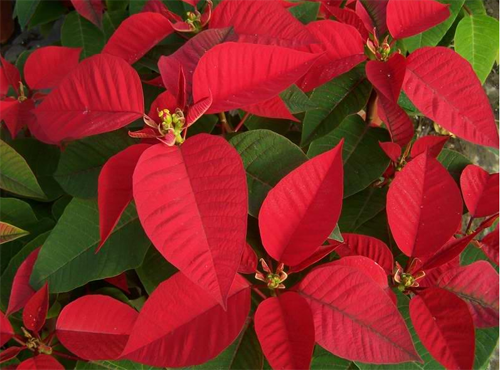
What to do when poinsettia leaves turn yellow:
1. Control watering
Yellow leaves are mostly caused by overwatering. Water accumulating in the pot makes it hard for the poinsettia roots to get enough oxygen, and they turn yellow from being suffocated. So from the moment you notice yellow leaves, reduce watering until the potting soil turns pale before watering again.
2. Cut off rotted roots
Yellow leaves on a poinsettia are usually just a symptom; root rot is the underlying cause. So carefully lift out the poinsettia roots to inspect them, and if you find rotted roots, cut them off promptly to prevent bacteria from continuing to infect other parts.
3. Loosen the soil
Use a small trowel to loosen the potting soil, which increases water evaporation and oxygen penetration, and is definitely good for improving the yellow-leaf symptoms in poinsettia.
4. Increase light
Although poinsettia is a short-day plant, if it never gets light for a long time, the leaves will not only fail to stay green but will also easily turn yellow. The right thing to do is to immediately move the pot to a place with plenty of light to promote photosynthesis.
5. Raise the room temperature
In winter, keep the room temperature above 15°C and turn on more heating, which is good for the poinsettia's growth and will greatly reduce the yellow-leaf symptoms.
What to do when poinsettia bracts won't turn red?
1. Long-term lack of light
Solution: With insufficient light, the poinsettia not only struggles to grow but also easily gets sick, so the lack of red bracts is a minor issue; it's lucky there are no symptoms like yellow leaves or root rot. Hurry and move your poinsettia to a place with plenty of sunlight, and those red bracts will surely appear soon.
2. The flowering period hasn't arrived
Solution: The poinsettia flowering period can last from December to February of the following year. If its flowering period hasn't arrived yet, meaning it is still in the growth period, green leaves may be constantly emerging, so growers naturally see fewer red bracts.
3. Insufficient fertilizing
Solution: Insufficient fertilizing is fatal to the growth of poinsettia. A poinsettia lacking fertilizer tends to be short and weak. Give it some special plant nutrient fertilizer right away, as this is very good nutrition for it to develop and grow red bracts.
That's all for the ways to deal with poinsettia leaves turning yellow and bracts not turning red. Go and grow one at home right away!
Causes of Poinsettia Leaves Turning Yellow and What to Do About It
When growing poinsettia, it's fairly normal for the leaves to be green or red. But if the leaves turn yellow, it means something has gone wrong. What are the causes of poinsettia leaves turning yellow? What should you do when poinsettia leaves turn yellow?
Cause of poinsettia leaves turning yellow: potting soil too dry
When growing poinsettia, if you water too little, or if the weather is dry and the light is intense, the leaves can easily turn yellow. This is basically related to air humidity. In the high-temperature summer or in autumn, the poinsettia needs to be placed in plenty of sunlight, but it's best to water it thoroughly and also replenish water in time by misting to raise air humidity.
Cause of poinsettia leaves turning yellow: not repotting in time
When growing poinsettia, a relatively small pot is usually chosen at first planting, but after growing for a while, the plant gradually grows much larger with dense branches and leaves. At this point, the small pot can affect the poinsettia's continued growth, and the potting soil loses nutrients, which leads to yellow leaves.
So when growing poinsettia, you need to repot it in time according to its growth condition, and loosen the soil regularly so that nutrients and water can better nourish the roots and avoid soil compaction.
Cause of poinsettia leaves turning yellow: temperature too low
When growing poinsettia, you need to pay attention to temperature, because poinsettia likes a warm climate and is rather afraid of cold. When exposed to cold, the plant is easily chilled and develops yellow leaves. When growing poinsettia in winter, a relatively high temperature is needed, between 15°C——18°C is fine. It is generally warmer indoors, and you need to avoid cold drafts; if necessary, turn on the heating.
Cause of poinsettia leaves turning yellow: too much watering
Poinsettia leaves turning yellow may be caused by overwatering. Overwatering leads to water accumulating in the pot. At this point, the poinsettia roots lack oxygen and may rot, all of which can cause yellow leaves. So when growing poinsettia, you need to water reasonably and avoid water accumulation while ensuring sufficient moisture. If you find root rot, cut off the rotted roots promptly to prevent further infection.
Cause of poinsettia leaves turning yellow: insufficient light
Poinsettia can be said to be a short-day plant, but during cultivation it's best to maintain suitable light and not keep it out of sunlight for long periods, as this makes it lose its green color and easily turn yellow. So it's best to place the poinsettia in a spot with relatively ample light for care, which can promote its photosynthesis and keep the leaves emerald green.
Causes of Poinsettia Leaves Turning Yellow and What to Do About It
As the name suggests, poinsettia's ornamental value lies in its fiery red color, but sometimes growers may not know much about the poinsettia's growth habits, resulting in yellow leaves caused by improper care. So what are the causes of poinsettia leaves turning yellow? Below, we'll introduce what to do when poinsettia leaves turn yellow.
Causes of poinsettia leaves turning yellow
After the beginning of autumn, the basal leaves of poinsettia easily turn yellow. The main reasons:
1. Potting soil too dry
Because the weather is drier after autumn while the sunlight is still intense, the potting soil easily dries out. Therefore, for a poinsettia placed on a balcony or in a sunny spot, you should water it thoroughly in the morning and give it one more watering in the evening.
2. The pot is too small
The pot was small at first planting. After growing through spring and summer, the plant has become larger with more branches and leaves, and the potting soil lacks nutrients, causing the leaves to turn yellow. Therefore, you should repot in time after the beginning of autumn. Poinsettia likes warmth and fears cold, and in winter it is also prone to yellow leaves when chilled, so caring well for poinsettia in winter requires attention to cold protection. For a poinsettia bought from a flower market, wrap it well with newspaper and such on the way home to avoid cold drafts; for a poinsettia grown at home, move it into a greenhouse in time in winter, keep the indoor temperature at 10°C-18°C, and pay attention to watering in time, which can reduce yellowing and dropping of leaves.
What to do when poinsettia leaves turn yellow
Poinsettia needs sufficient light to grow well; only in the high-temperature period of summer should it be slightly shaded to lower the microclimate temperature.
Watering should follow the principle of watering when dry and letting it dry between waterings; do not water while the surface soil is still moist.
When attacked by whiteflies, the leaves develop small yellow spots, then the whole leaf withers, turns yellow and drops. Spray pesticides such as imidacloprid and pirimicarb in time for control.
If the indoor temperature can be kept above 15°C in winter, then while controlling pests and diseases, you can carry out short pruning or pinching, and you can also see beautiful bracts and inflorescences around Christmas.