How to Grow a Rubber Plant? Detailed Guide to Care Methods, Precautions and Propagation by Cuttings
The rubber plant, known as the "Black Prince," is an excellent foliage plant. What are the care methods and precautions for the rubber plant? And what about its cutting propagation method?
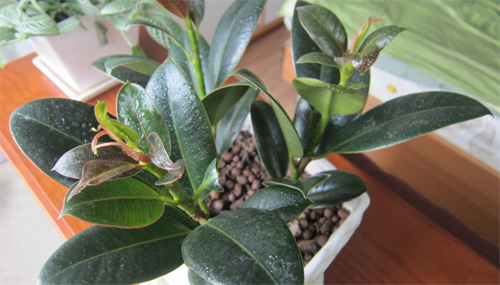
Care methods and precautions for the rubber plant:
1. Potting soil
Choose fertile sandy soil, rich and loose soil, and select a relatively large flower pot, as it grows very fast.
2. Watering
The rubber plant likes a slightly moist, somewhat dry soil environment. It needs the most water in summer, so water more, once or twice a day is enough; it needs less water in winter, so water less, just sprinkle water on the leaves.
3. Fertilizing
In addition to the base fertilizer applied at planting, a thin liquid fertilizer can be applied once in spring and autumn; do not fertilize in hot or cold weather.
4. Light:
The rubber plant likes light and is also shade-tolerant. With good ventilation, it can be exposed to more light, but not direct scorching sun.
5. Temperature: The growing temperature is 15°C~30°C. It is not cold-tolerant, and the minimum should not be below 5°C.
6. Disease prevention:
It rarely gets sick, occasionally there may be white grubs; if there are few, just wipe them off with a cloth strip, if there are many, buy medicine from a pharmacy to kill them.
7. Pruning:
For pruning the rubber plant, you can cut off a section of the old branches each autumn before the new buds sprout.
8. Repotting:
Repot after the weather warms up each year, cut off some old and residual roots, replace with new soil, and moderately prune the branches to encourage branching.
Note: If the leaves get dusty, promptly wipe them off with a moist soft cloth, which is good for growth.
Rubber plant cutting propagation method:
Propagation is mainly by cuttings, carried out between March and April. Cut off a branch with 1~2 leaves. The sticky sap on the wound can be washed off with warm water, dip it in charcoal powder, then bury the leaf stem into the soil, with half of the leaf buried in the soil.
After filling in the soil around the leaf stem, frequently spray water on the newly planted rubber plant to keep it moist.
That's all for the rubber plant's care methods and cutting propagation method. Why not quickly get one for your home? As a foliage plant, this is the first choice.
Care Methods and Precautions for the Rubber Plant
The rubber plant is a kind of green plant bonsai that can be used to beautify the environment and decorate the home. The rubber plant can absorb carbon dioxide and other harmful gases in the air and improve indoor air. Placing a pot of rubber plant in an office or living room will make the indoor air fresher. The small green potted plant is lovely and pleasant. Let's take a look at the care methods and precautions for the rubber plant below.
Care Methods and Precautions for the Rubber PlantI. Care methods and precautions for the rubber plant——Temperature
The temperature for the rubber plant should be relatively warm, which is better. The rubber plant likes a warm and humid environment and is not very resistant to cold. In winter, the temperature should not be below 5°C, otherwise the rubber plant will definitely suffer cold damage. Once it is below 5°C, the rubber plant's leaves will begin to drop and slowly die.
II. Care methods and precautions for the rubber plant——Light
The rubber plant likes light, especially after sprouting it cannot do without strong light. In winter and spring, it also needs sufficient light, while in summer and autumn it does not need strong light, otherwise the leaves will be damaged, so proper shading is still needed.
III. Care methods and precautions for the rubber plant——Watering
The rubber plant should be watered, but waterlogging must be avoided. Soil that is too wet will cause poor soil aeration, ultimately leading to root rot. In winter, water should be reduced, otherwise the leaves will wither.
IV. Care methods and precautions for the rubber plant——Fertilizing
The rubber plant can be fertilized with liquid fertilizer, and regular fertilizing once a month is more suitable.
Care Methods and Precautions for the Rubber Plant, Rubber Plant Pictures
The rubber plant has beautiful leaves and also purifies the air. It is a very good household potted plant, but growing the rubber plant requires skill. Next, let's learn about the care methods and precautions for the rubber plant together.
Care Methods for the Rubber Plant
1. Temperature: The first key point in the care methods for the rubber plant is the temperature issue. The best temperature for the rubber plant is 20-25°C. Even above 30°C it can still grow well, but in winter if the temperature is too low, the rubber plant will produce a large number of fallen leaves. Its cold tolerance is very poor.
2. Sunlight: In the care methods for the rubber plant, sunlight is also a treasure. Giving it sufficient sunlight will let it grow vigorously. From May to September, provide proper shading.
3. Fertilizing: The presence of fertilizer is like calcium supplementation, it can enhance its "physical health." In the care methods for the rubber plant, fertilizing is also one of the key points. It can reduce the occurrence of spots and make the leaves brighter. Simply using nitrogen fertilizer is enough, and remember to stop fertilizing in winter.
4. Pruning and repotting: When spring arrives, it is time to prune the rubber plant. Cut off the forked branches inside the crown, inward-growing branches and thin weak branches, to maintain its internal ventilation, good light penetration and overall shape. Usually, in the care methods for the rubber plant, it must be repotted once every 2 years, adding leaf mold and other materials for a new mix. It prefers loose loam soil with good drainage.
5. Propagation method: When propagating the rubber plant, cuttings are usually used, and summer is the best time. Choose a branch from the previous year on the rubber plant, about 20cm long. It will take root within one month after cutting, and can be potted in 50 days. This rubber plant propagation method has an extremely high survival rate and extremely fast growth; wait until late spring and early summer to cut the cuttings, then seal the wound with clay, cut off the lower leaf, bring the upper two leaves together and tie them with plastic rope, and do a good job of shading and ventilation.
Precautions for Growing the Rubber Plant
During the growing season, the rubber plant should be watered sufficiently, often keeping the potting soil moist. In the hot summer season, water once each morning and evening, and frequently spray water on the leaves to clean them and increase air humidity. During the growing season, apply 1~2 times a month a compound flower fertilizer mainly based on nitrogen fertilizer or thin well-rotted cake fertilizer water. Household potted plants should be placed near a south-facing window in a spot with sufficient light, and attention should be paid to air circulation. In spring and autumn, it can be placed on a balcony or in a courtyard in a semi-shaded place for a period of care, but in summer it should be properly shaded to avoid direct strong light. The rubber plant grows relatively fast, and for household cultivation, small to medium-sized plants are better. Therefore, when the plant grows to about 95 cm tall, you can top it in early spring at a height of 55~65 cm to encourage more side branches to sprout, making the plant shape fuller and more dignified; otherwise, if allowed to grow naturally, the crown will be hollow and the branches will grow leggy, reducing its ornamental value. Young plants should be repotted once every other year; mature plants can be repotted once every 2~3 years or given 3~5 topdressings each year to promote lush branches and leaves. The wintering temperature should be kept above 11°C. Long-term low temperature or waterlogged potting soil can easily cause root rot and leaf drop. In northern regions, from early summer to mid-autumn each year, it can be cared for outdoors.
The above isCare Methods and Precautions for the Rubber PlantThat's all. The rubber plant is a very good household green plant, but when growing it, try not to let children touch it.
Recommended reading:
① What Is the Money Tree? Introduction to the Money Tree's Care Methods and Precautions
② Care Methods and Precautions for String of Pearls_Propagation Methods for String of Pearls
③ How to Grow the Dragon Blood Tree: Care Methods and Precautions for the Dragon Blood Tree
④ When Does the Goldfish Plant Bloom, Care Methods for the Goldfish Plant
⑤ Common Problems in Growing Snake Plants and How to Handle Them (Softening, Yellowing, Wilting, Rotting Leaves)