How to grow the Peace Tree and why its leaves turn yellow
Chinese people's favorite plants to grow are the auspicious ones, and the Peace Tree sounds very auspicious from its name alone, so many people love growing it. Let's take a look at how to grow the Peace Tree. Why do its leaves turn yellow?
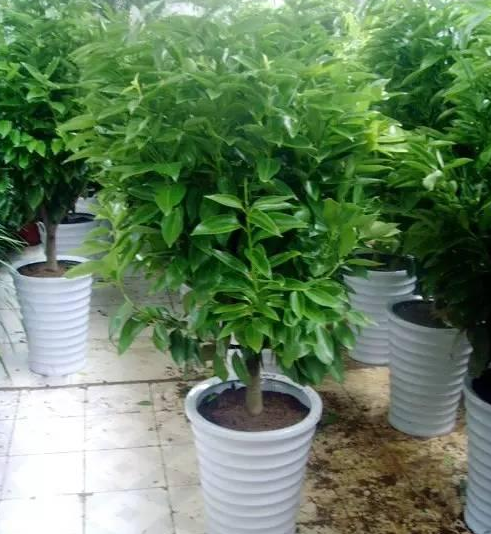
How to grow the Peace Tree:
1. Choosing the potting soil:
The potting soil must be a loose, fertile, well-draining humus soil or sandy soil; alkaline soil and clay soil are the worst choices. Gardeners in the north should remember to supplement with alum fertilizer water, or use compost soil.
2. Suitable temperature:
The most suitable temperature for the Peace Tree's growth is 28~30°C, and the minimum temperature must not fall below 5°C.
If winter is too cold and there is no heating, you can mound soil over it, or cover it with a bag.
3. Appropriate light:
The Peace Tree's demand for light is relatively high, and it needs plenty of scattered light. It greatly fears harsh direct sun, so under the fierce summer sun the tree should be given effective shade protection.
4. Appropriate watering:
Spring and summer are the growing seasons; always keep the potting soil moist but not soggy, and frequently spray water on the leaves and the growing environment to maintain air humidity.
When watering, you can add a little vinegar to raise the soil's acidity, especially for northern soils that are relatively lacking in acid. Of course, choose vinegar with no sodium chloride content; check the ingredients yourself.
5. Loosening the soil and repotting:
For potted Peace Trees, it is best to loosen the soil once a month during the growing season, being careful not to injure the roots. Small Peace Trees can be repotted once a year, while large ones can be repotted once every 2~3 years.
When repotting, you can trim off some of the dead roots beforehand to ensure normal growth of the potted plant.
Why the Peace Tree's leaves turn yellow:
1. Too much or too little watering
Those gardeners who like to water the Peace Tree every day, or several times a day, are simply torturing it. If you see the young leaves turning yellow while the old leaves are fine, that means overwatering, and you need to control the water.
If the potting soil has been dry for a long time or the environment is too dry, its old leaves will turn yellow, followed by leaf drop. At this point you need to replenish water, and check whether the potting soil has become compacted.
2. Too much fertilizer
Fertilizing too often or accidentally giving a strong fertilizer will make the young leaves thick and fleshy, but they soon turn yellow. At this point you should water it with clean water several times to dilute the soil's fertilizer concentration.
3. Never fertilizing
If you have never given fertilizer, or rarely fertilize, then you will see that the young leaves are very weak and the young stems also turn yellow. At this point you can supplement with a little diluted liquid fertilizer every half month. Apply a dilute cake fertilizer water or alum fertilizer water once a month.
After autumn begins, you can spray a 0.3% potassium dihydrogen phosphate solution twice, and stop fertilizing in winter.
That's all for the Peace Tree's growing methods and how to deal with the causes of yellowing leaves. If you want to grow a Peace Tree well, it is really not easy at all!
How to grow the Peace Tree: solutions for yellowing leaves of the Peace Tree
The Peace Tree can be grown in many forms. This article mainly discusses indoor home growing. In indoor flower growing, you generally need to pay attention to and grasp 6 aspects: the choice of potting soil when planting, watering, temperature and light control during growing, fertilizing and care, and pest and disease control. The editor will introduce the Peace Tree's growing methods from these aspects. First, the editor will briefly introduce the Peace Tree's basic information.
I. Introduction to the Peace Tree
The Peace Tree's real name is Lanshu cinnamon (Cinnamomum kotoense), and Peace Tree is only its nickname. The tree is an evergreen plant of the Lauraceae family, native to Lanyu Island in Taiwan, China. The Peace Tree's branches and trunk are upright, yellowish-green in color, smooth and without fuzz. The Peace Tree's leaves generally grow opposite each other or nearly opposite, with the upper surface bright green and having a metallic-like sheen, while the underside is grayish-green. The Peace Tree has many growing uses: it can be used as a potted ornamental plant, and it can also be a very beautiful landscape plant. In addition, it also has effects such as purifying indoor air and absorbing renovation pollution. So what are the Peace Tree's growing methods? Below, the editor will specifically introduce the Peace Tree's growing methods for everyone.
II. How to grow the Peace Tree
Real photo of a potted Peace Tree
For growing a potted Peace Tree, you should mainly, according to its ecological habits, effectively control plant growth factors such as light, water, soil and fertilizer. The Peace Tree likes warm, humid, sunny environments, and is relatively shade-tolerant, but not tolerant of drought, severe cold or saline-alkaline conditions. So, based on the Peace Tree's growth habits, what should be noted in its growing methods?
1. Choosing the potting soil: For a potted Peace Tree, the potting soil should preferably be a loose, fertile, well-draining, organic-rich acidic sandy loam, which is also the potting soil requirement for most indoor flower growing. If the soil is heavily clayey or low in acidity, it will cause the plant's leaves to turn yellow and its sprouting and renewal to decline, thereby affecting the plant's lifespan.
2. Suitable temperature for growing: The best temperature for the Peace Tree's growth is 22°C to 30°C, and the minimum temperature must not fall below 5°C. If there is freezing or consecutive frost days, good insulation work should be done to prevent the bark from splitting from frost and the branches and leaves from withering; in severe cases it may freeze to death.
Peace Tree leaves with a metallic sheen
3. Sunlight requirements: All plant growing needs good light for photosynthesis to promote effective growth. As a light-loving plant, the Peace Tree naturally needs enough light, but at the same time it greatly fears harsh direct sun, so under the fierce summer sun the tree should be given effective shade protection. You can also place the pot in a weaker-light spot indoors, and it will still grow well, because the Peace Tree is relatively shade-tolerant. In addition, plants that have grown for three to five years should be protected from harsh direct sun, while plants that have grown for six to ten years can take a bit more light to promote effective growth.
4. How to handle watering: During the Peace Tree's growing seasons in spring and summer, always keep its potting soil moist, and frequently spray water on the leaves and the growing environment to maintain good air humidity. In addition, when watering, you can add a little vinegar to raise the soil's acidity, especially for northern soils that are relatively lacking in acid; you can add vinegar to the water to adjust the soil's acidity.
5. Fertilizing knowledge for growing: For a newly planted potted plant, after it sprouts, you can fertilize once a month, but during fertilizing you must apply it diluted and lightly, and must not apply it too concentrated or in excessive amounts, otherwise it easily burns the roots of the plant and causes the leaves to wither and yellow until they die. In addition, before winter begins you can apply some potassium dihydrogen phosphate solution to enhance the plant's cold resistance.
Photo of a potted Peace Tree
6. Loosening the soil and repotting: During the growing season of a potted Peace Tree, it is best to loosen the soil once a month to always keep its root system in a well-aerated state. Small Peace Trees can be repotted once a year, while large Peace Trees can be repotted once every 2~3 years. When repotting, you can trim off some of the dead roots beforehand to ensure normal growth of the potted plant.
III. Causes of yellowing leaves on the Peace Tree and solutions
In indoor flower growing, yellowing leaves are a fairly common phenomenon, and the same is true in indoor growing of the Peace Tree; it is hard to avoid yellowing leaves. The main reasons for the Peace Tree's leaves turning yellow or dropping off are the following aspects:
First, due to accidents or special circumstances, the plant's root system is seriously damaged, causing the leaves to turn yellow.
Second, the indoor temperature is below 5°C, and freeze damage causes the Peace Tree's leaves to turn yellow and drop.
Third, overwatering causes root rot at the bottom, which in turn causes the plant's leaves to turn yellow and drop.
Photo of yellowing Peace Tree leaves
Fourth, the water quality is too alkaline, causing the leaves to slowly turn yellow; this situation is more common in the north, especially in places such as **.
Fifth, improper fertilizing, applying too much or too concentrated fertilizer, causes the nutrient feeder roots to lose water, shrink and die.
Sixth, prolonged exposure to the fierce sun causes the leaves to dry out and turn yellow.
In response to the above causes of yellowing leaves on the Peace Tree, the way to solve the yellowing leaves is: when you find the tree's leaves turning yellow, first check whether its root system is growing normally. If you find parts of the root system are rotten, promptly cut away the rotten parts. The already withered branches and leaves should also all be cut off, and then replant it.
When replanting, you can spread some moist fine sand around the cut parts of the root system to promote healing of the wounds and the sprouting of new roots, and be careful to water less and spray more. After the newly planted plant grows new leaves, you can carry out the relevant fertilizing work, and appropriately increase sunlight exposure to promote growth.