What to Do When a Rubber Plant Drops Its Leaves? Get the Watering Frequency Right
The rubber plant (Ficus elastica) has a kind of super magic that many people love; just looking at this glossy green plant lifts your mood considerably. Let's see what to do when a rubber plant drops its leaves, and how often to water it:
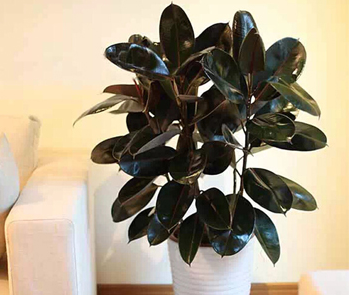
What to do when a rubber plant drops its leaves:
Reason 1: Insufficient light
The rubber plant loves sun. If it is kept in a dark spot for a long time with insufficient light, photosynthesis works poorly, and the leaves drop because they lack nutrients.
Solution: Place the rubber plant in a spot with plenty of sunlight and try to avoid too short a light period. But in summer, when the sun is intense, it is best to keep it indoors where sunlight can still reach it.
Reason 2: Temperature too low
The rubber plant loves high temperatures and grows best at 20-25°C. In winter, room temperature is generally below 20°C, and at this time leaf drop is very normal.
Solution: Turn on the heating in winter and keep the room temperature between 20-25°C to avoid large-scale leaf drop on the rubber plant.
Reason 3: Pest infestation
The rubber plant is prone to anthracnose, caused by the pathogen Gloeosporium elasticae. After infection, round or oval gray spots appear on both sides of the leaf veins, and over time the spots merge into a single patch, damaging the leaves and causing them to drop.
Solution: Remove diseased branches to reduce the pathogen, pay attention to indoor ventilation, and appropriately spray the leaves with Bordeaux mixture, potassium permanganate, chlorothalonil or carbendazim. If the disease is severe, take new cuttings for propagation.
How often to water a rubber plant:
1. Watering schedule in summer
If the rubber plant is kept indoors, it receives light for a short time and loses water slowly, so it does not need frequent watering; watering once every 7 days is enough. If it is kept outdoors, it receives light for a long time and the leaves dry out easily; to keep the leaves moist, water once every 3 days.
2. Watering schedule in winter
In winter, the rubber plant needs to be kept indoors, and watering once every half month is enough, or you can skip watering altogether and simply wipe the leaves with a damp cloth. If the heating is on indoors, it is best to place a basin of water next to the rubber plant to increase indoor air humidity and keep the rubber plant from becoming too dry.
3. Everyday watering schedule
When the everyday temperature is neither below 15°C nor above 30°C, water when the surface of the potting soil turns white or the leaves become too dry, to replenish the moisture in the leaves and keep the potting soil moist. When watering, remember not to pour too much, so as to avoid root rot in the rubber plant.
That covers how to handle leaf drop in the rubber plant and its watering schedule. Go and grow your own rubber plant into a beautiful tree!
Why rubber plant leaves turn yellow, and what to do when a rubber plant drops its leaves
The rubber plant is a common potted plant. Because of its distinctive leaf shape, quite a few gardeners grow it. When growing a rubber plant, it is inevitable to run into problems like yellowing leaves and leaf drop, which greatly reduces its ornamental value. But when your rubber plant's leaves turn yellow or drop, don't panic; analyze the causes of the yellowing. Below are 5 common causes of leaf drop and yellow leaves in rubber plants.
Analysis of why rubber plants turn yellow and drop leaves. 1. Leaves turn yellow because the plant has not been repotted for a long timeA rubber plant usually needs repotting once a year, and the pot should be a little bigger each year; after 6~8 years of growth, it can be repotted once every three years. If it is not repotted for a long time, the soil becomes compacted and its aeration is poor, which causes the fibrous roots of the rubber plant to suffocate and die, so they cannot absorb water and nutrients, leading to leaf drop.
SolutionWhen the spring temperature reaches above 15°C, repot promptly. Trim away the dead roots and shake off most of the old soil. Remove the yellowed leaves, cut the stems back, and replace with fertile soil. After repotting, keep the potting soil moist and loosen the soil once every 15~20 days, so that repeated watering does not compact the potting soil and cause root rot or root shrinkage.
2. Yellow leaves caused by malnutritionThe rubber plant likes heavy feeding and heavy watering; going a long time without fertilizer or water causes malnutrition, leading to yellowing leaves and leaf drop.
SolutionAdd base fertilizer when repotting, promptly remove yellow leaves, and fertilize once every half month, mainly with phosphorus and potassium fertilizer. During care, regularly check how moist the potting soil is, replenish water in time, and spray the leaf surface morning and evening every day. Make sure the water temperature is roughly the same as the soil temperature, so that too great a difference does not cause poor growth of the plant.
3. Yellow leaves caused by too much watering or fertilizingAlthough the rubber plant likes water and fertilizer, too much watering or fertilizing can cause problems, especially during August~September, when the weather is rather muggy: too much watering makes water accumulate easily in the pot. Or, if you water too much during overwintering, when the plant is dormant and transpiration is weak, the water in the pot cannot drain away in time. Or else, applying raw fertilizer, heavy fertilizer or concentrated fertilizer by mistake will all cause water damage or fertilizer damage to the plant.
SolutionCut off the rotted roots; white milky sap will flow from the cut. Then use plant ash to dry up the sap and reduce water evaporation, and replant once the cut has dried. After replanting, be careful to control watering and fertilizing, and you can spray the leaf surface morning and evening.
4. Yellow leaves caused by lack of ventilationIf a room is not ventilated for a long time, the environment becomes muggy and a large amount of harmful gases accumulate. Even though the rubber plant can purify the air, it is hard for it to cope with such a situation.
SolutionOpen the windows in time for ventilation and keep the indoor air fresh. In winter, you can open the windows at noon when the temperature is higher to refresh the indoor air.
5. Yellow leaves caused by diseaseIf the care environment is unsuitable, the rubber plant is easily troubled by gray mold, which needs to be prevented and treated promptly.
SolutionRemove and destroy diseased leaves as soon as you find them, and promptly sweep up fallen leaves. Appropriately increase indoor light and raise the room temperature. When diseased leaves are found, promptly spray a 600-fold solution of wettable chlorothalonil powder, once every 7~10 days, for 2~3 times in a row, which can effectively control the spread of the pathogen.
Analysis of the causes of leaf drop in rubber plants and solutions. What to do when a rubber plant drops its leaves?
The rubber plant is an evergreen foliage plant with large, glossy, round to oval leaves; the leaf surface is dark green and its ornamental value is high, making it a famous potted foliage plant. It is extremely suitable for indoor beautification arrangements. Small and medium-sized plants are often used to beautify living rooms and studies; medium and large plants are suitable for placing on both sides of the entrance hall of large buildings and in the center of the lobby, looking majestic and spectacular and evoking a tropical scene. But at the same time, some small problems can arise, such as yellowing and leaf drop after being grown for a while. So what should you do? Today let's introduce the causes of leaf drop in rubber plants and the solutions.
1. Soil compaction caused by not repotting for a long time
A rubber plant usually needs repotting once a year, and the pot should be a little bigger each year; after 6~8 years of growth, it can be repotted once every three years. If it is not repotted for a long time, the soil becomes compacted and its aeration is poor, which causes the fibrous roots of the rubber plant to suffocate and die, so they cannot absorb water and nutrients, leading to leaf drop.
Solution
When the spring temperature reaches above 15°C, repot promptly. Trim away the dead roots and shake off most of the old soil. Remove the yellowed leaves, cut the stems back, and replace with fertile soil. After repotting, keep the potting soil moist and loosen the soil once every 15~20 days, so that repeated watering does not compact the potting soil and cause root rot or root shrinkage.
2. Going a long time without watering or fertilizing
The rubber plant likes heavy feeding and heavy watering; going a long time without fertilizer or water causes malnutrition, leading to yellowing leaves and leaf drop.
Solution
Add base fertilizer when repotting, promptly remove yellow leaves, and fertilize once every half month, mainly with phosphorus and potassium fertilizer. During care, regularly check how moist the potting soil is, replenish water in time, and spray the leaf surface morning and evening every day. Make sure the water temperature is roughly the same as the soil temperature, so that too great a difference does not cause poor growth of the plant.
3. Too much watering or fertilizing
Although the rubber plant likes water and fertilizer, too much watering or fertilizing can cause problems, especially during August~September, when the weather is rather muggy: too much watering makes water accumulate easily in the pot. Or, if you water too much during overwintering, when the plant is dormant and transpiration is weak, the water in the pot cannot drain away in time. Or else, applying raw fertilizer, heavy fertilizer or concentrated fertilizer by mistake will all cause water damage or fertilizer damage to the plant.
Solution
Cut off the rotted roots; white milky sap will flow from the cut. Then use plant ash to dry up the sap and reduce water evaporation, and replant once the cut has dried. After replanting, be careful to control watering and fertilizing, and you can spray the leaf surface morning and evening.
4. Improper ventilation
If a room is not ventilated for a long time, the environment becomes muggy and a large amount of harmful gases accumulate. Even though the rubber plant can purify the air, it is hard for it to cope with such a situation.
Solution
Open the windows in time for ventilation and keep the indoor air fresh. In winter, you can open the windows at noon when the temperature is higher to refresh the indoor air.
5. Infection with gray mold
If the care environment is unsuitable, the rubber plant is easily troubled by gray mold, which needs to be prevented and treated promptly.
Solution
Remove and destroy diseased leaves as soon as you find them, and promptly sweep up fallen leaves. Appropriately increase indoor light and raise the room temperature. When diseased leaves are found, promptly spray a 600-fold solution of wettable chlorothalonil powder, once every 7~10 days, for 2~3 times in a row, which can effectively control the spread of the pathogen.
That is all for today on the causes of leaf drop in rubber plants and the solutions. To learn more about rubber plants, please keep following Duorou Huapu, and we will provide you with more related information.