Can Dracaena angustifolia be kept indoors, and can it be grown in water?
When it comes to this Dracaena angustifolia, many people still like it; its long leaves are green all year round. Let's see whether Dracaena angustifolia can be kept indoors? Can Dracaena angustifolia be grown in water:
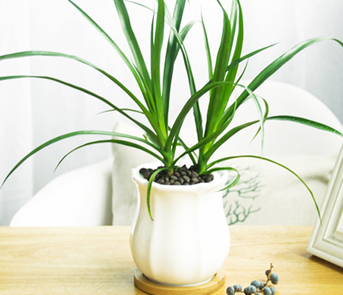
Can Dracaena angustifolia be kept indoors:
Dracaena angustifolia can also be placed indoors, but growers had best choose a smaller-sized Dracaena angustifolia so that it does not take up too much indoor space.
Dracaena angustifolia itself is a master at removing pollution; it can absorb waste gases indoors, thereby purifying indoor air and raising indoor humidity. So placing Dracaena angustifolia at the entrance of the living room, in a corner of the hall or beside the stairs is not only helpful for regulating people's heart and stomach health, but also very much in line with feng shui, and can bring good fortune to the family.
If the bark on the stem of Dracaena angustifolia is cut open, it will secrete a resin like blood plasma, namely "dragon's blood" or "xuejie"; this resin is a precious medicinal material with three major effects: stopping bleeding, promoting blood circulation and enriching the blood, and it can treat constipation, diarrhea, stomach pain and other diseases.
Can Dracaena angustifolia be grown in water:
Generally speaking, growing Dracaena angustifolia in water can also be tried, but its survival rate may not be as high as that of other water-grown plants. Dracaena angustifolia grows rather slowly and roots rather slowly; during water culture, if problems arise in care, it cannot grow new roots.
To change soil-grown Dracaena angustifolia to water culture, the roots need to be washed clean and properly trimmed, then placed in clean water and given time to adapt and grow new roots. Before rooting, change the water once a day; after rooting, change the water once a week, that is, pour off half the water and add half fresh water to maintain water quality balance. If Dracaena angustifolia is found to have not rooted for a long time, a little rooting powder can also be added to the water to stimulate it to grow roots quickly.
Dracaena angustifolia can be kept indoors, and it is quite good for people's health; it can also be grown in water, but it will not grow well.
How to grow Dracaena angustifolia? Can Dracaena angustifolia be grown in water?
Dracaena angustifolia has a beautiful form and is very suitable as a potted tree species to embellish the home environment. However, what growers are also very concerned about is how to grow Dracaena angustifolia? Can Dracaena angustifolia be grown in water? Can it survive from cuttings? Let's take a detailed look below!
How to grow Dracaena angustifolia:
1. Temperature: The most suitable growing temperature for Dracaena angustifolia is 20-28°C; in winter the growing environment should be kept at least above 8°C, otherwise Dracaena angustifolia is very likely to stop growing or be damaged by freezing.
2. Soil: Dracaena angustifolia likes loose, well-drained soil rich in humus. If the potting soil is too hard or too dry, loosen the soil promptly to keep it airy.
3. Watering: Potted Dracaena angustifolia should not be watered too much; in the peak growing season, watering once a week is enough, and less in the dormant period. At the same time, water can often be sprayed on the leaves to maintain relatively high humidity.
4. Fertilizing: Growing Dracaena angustifolia requires light fertilizer applied frequently; fertilizing once every 2-3 months is relatively suitable. For fertilizing, either solid compound fertilizer or farmyard manure can be chosen.
Can Dracaena angustifolia be grown in water:
Generally speaking, growing Dracaena angustifolia in water can also be tried, but its survival rate may not be as high as that of other water-grown plants. Dracaena angustifolia grows rather slowly and roots rather slowly; during water culture, if problems arise in care, it cannot grow new roots.
To change soil-grown Dracaena angustifolia to water culture, the roots need to be washed clean and properly trimmed, then placed in clean water and given time to adapt and grow new roots. Before rooting, change the water once a day; after rooting, change the water once a week, that is, pour off half the water and add half fresh water to maintain water quality balance. If Dracaena angustifolia is found to have not rooted for a long time, a little rooting powder can also be added to the water to stimulate it to grow roots quickly.
Can Dracaena angustifolia survive from cuttings:
1. Cut a stem segment. Use a sharp knife to cut a section of stem from Dracaena angustifolia; it is best if it has young buds, as it will survive more easily.
2. Dry the stem segment. Place the cut stem segment in a dry, ventilated place to dry slightly, to avoid infection of the cut.
3. Prepare the potting soil. Mix new potting soil and apply sufficient base fertilizer, or buy special flower soil, and put it into a flowerpot of suitable size.
4. Replant. Insert the cut Dracaena angustifolia stem into the soil; be careful not to insert it too deep, and keep the surrounding soil loose to avoid squeezing.
5. Later care. After planting, the stem segment needs careful care; do not water for the first 2-3 days, then water a small amount every 3-4 days. When it is found to be revitalized again (such as sprouting new side buds), resume fertilizing and other care measures.
Tip: Generally, about 1 month after cuttings are taken, the Dracaena angustifolia cuttings begin to sprout and root.
Introduction to Dracaena: indoor foliage Dracaena genus
Indoor foliage - Dracaena genus
Dracaena genus
[Allusion]
Plant longevity star: Dracaena grows very slowly; within a year the trunk thickens by less than 1 cm, and it takes several hundred years to grow into a tree and several decades to bloom once, but in the plant kingdom its lifespan is the longest, reaching eight thousand years, so botanists praise it as the "plant longevity star", and it is therefore very precious and rare.
Origin of the name Dracaena: After being injured, Dracaena exudes a blood-colored liquid. Folk legend says that the blood-colored liquid flowing from Dracaena is dragon's blood, because Dracaena was born when a giant dragon and an elephant fought and blood spilled over the earth. This is the origin of the name Dracaena. If the bark on the stem of Dracaena is cut open, it secretes a dark red sticky liquid like blood plasma, which is a precious Chinese medicine. Ancient people also used the resin of Dracaena as a raw material for preserving corpses, because this resin is a very good preservative. It is also a raw material for making paint.
[Varieties and cultivation and propagation measures]
One, Dracaena fragrans:
[Characteristics]: Also called Brazilian iron, Brazilian wood. The stem is upright, and the leaves are clustered at the top of the stem, 40-90 cm long and 6-10 cm wide, with slightly blunt tips, curved into a bow shape, with bright yellow or milky white stripes; the leaf margins are bright green and have wavy undulations, glossy; the flowers are small, yellow-green, and fragrant.
[Light]: Indoor potted plants should be placed in a bright place; insufficient light will cause the leaves to fade, but do not place them in direct sunlight;
[Temperature]: The suitable growing temperature is 20°C to 28°C, the dormancy temperature is 13°C, and the overwintering temperature is 5°C. If the temperature is too low, yellow-brown spots will appear on the leaf tips and leaf margins, and in serious cases the tender branches or the whole plant may be damaged by freezing;
[Water]: Brazilian wood does not need much water, but has relatively high humidity requirements. The potting soil should be kept moist, and water should often be sprayed on the leaves to increase the air humidity of the surrounding environment, but the potting soil should not be waterlogged, so as to avoid poor ventilation causing root rot. In spring, summer and autumn, on sunny days water once every 2 to 3 days, and spray water on the leaves 1 to 2 times a day. After late autumn, the amount of watering should be controlled, keeping the potting soil slightly moist; in winter watering should be controlled, keeping the potting soil half dry and half moist. If too much water is poured, root rot and leaf scorch will occur;
[Soil]: Suitable for loose, well-drained, fertile river-sand loam rich in humus. For potting Brazilian wood, garden soil, leaf mold, peat soil and river sand can be used in a ratio of 3:2:2:3, or 2/3 fertile pond mud dried and finely crushed mixed evenly with 1/3 coarse river sand to make the growing medium.
[Fertilizer]: The demand for fertilizer is not strict; during the growing period, either chemical fertilizer or organic fertilizer liquid can be applied as a top dressing, but when applying chemical fertilizer, use small amounts many times, and water promptly after fertilizing. In addition, when repotting and changing soil each year, a certain amount of rotted organic fertilizer can be added as base fertilizer, which can ensure good growth.
[Propagation]:
1. Cuttings: In May-June, choose mature and robust stems, cut them into 5-10 cm sections, and insert them upright or flat on a cutting bed using coarse sand or vermiculite as the medium, maintaining a room temperature of 25-30°C and 80% air humidity; they can root in about 30-40 days, and after 50 days can be directly potted.
2. Water culture method: Insert the cut stem sections into water; the cut surface should be smooth. The upper end can be coated with wax to prevent water evaporation, which is especially important in the dry season; immerse the lower end, cut at a 45° slant, 2-3 cm into the water, keep the temperature above 25°C, and keep the water and container clean. Tips with leaves root relatively quickly, and can root and be potted in 3-4 weeks; stem sections root relatively slowly, and sometimes need 2-3 months to grow new roots and new shoots.
3. Notes on water culture:
3.1. Pay attention to changing the water: Changing the water is the key to whether water culture succeeds, especially when first inserted in early summer; changing the water once every other day can increase its oxygen content, until the roots grow. After it adapts to water culture, water can be changed or added once a week or once a month according to the season (specific theoretical knowledge: during the growth process, plant roots continuously carry out respiration, consuming oxygen in the water; the oxygen in the water will gradually decrease, leading to the failure of water culture. When Dracaena plants are grown in water, apart from water cuttings and potted plants whose roots are washed for water culture, which need daily water changes, for plants that have already rooted in water and adapted to water culture conditions, the interval between water changes should be adjusted according to seasonal changes. The higher the air temperature and the higher the water temperature, the less dissolved oxygen in the water, and at the same time the stronger the respiration of the plant, the more oxygen in the water is consumed; also, when the temperature is high, microorganisms reproduce quickly, which easily causes deterioration of water quality; the lower the air temperature and the lower the water temperature, the more dissolved oxygen in the water, and at the same time the weaker the respiration of the plant, the less oxygen in the water is consumed).
3.2. Water temperature: In summer, when the water temperature is above 35°C, the roots of water-grown Dracaena marginata are prone to rot. At this time, nutrient solution should be stopped and only clean water used for growing, and the number of water changes should be increased to keep the water clear.
[Flower language]: Firm and unyielding, steadfast, long life and wealth, good fortune and happiness.
[Common cultivated varieties]:
Golden-edged Dracaena fragrans
Golden-hearted Dracaena fragrans
Two, Dracaena cambodiana:
[Characteristics] Tree-like, 3-4 m tall. Leaves clustered at the top of stems and branches, almost overlapping, stem-clasping, sessile. Panicle, the inflorescence axis hairless or nearly hairless. Distributed in southwestern Hainan, growing on dry sandy soil in leeward areas. Also distributed in Vietnam and Cambodia. A national third-class protected endangered species.
[Light, temperature, water, fertilizer, soil] See Dracaena fragrans
[Propagation] See Dracaena fragrans
Three, Dracaena godseffiana
[Characteristics]: Also called spotted dracaena. An evergreen shrub of the Dracaena genus, with an upright plant, up to 1 m tall; leaves opposite or in whorls of 3, elliptic-lanceolate or long ovate, with many creamy yellow or milky white small spots distributed on the leaf surface, like scattered stars; it blooms in summer, with racemes, fragrant, small flowers tubular, and can bear red berries after flowering.
[Light, temperature, water, fertilizer, soil] See Dracaena fragrans
[Propagation] See Dracaena fragrans
[Water culture] See Dracaena fragrans
Four, Dracaena marginata
[Characteristics] The main stem is upright, with a graceful posture; the scattered leaf clusters are shaped like an umbrella. The leaf color is variegated and extremely beautiful; it is the most common indoor foliage plant.
[Light, temperature, water, fertilizer, soil] See Dracaena fragrans. Differences: it requires acidic soil rich in humus and well drained, and avoids alkaline soil; when planted in alkaline soil the leaves tend to turn yellow, new leaves lose color, and it is not drought-tolerant.
[Propagation]
Cuttings: Dracaena marginata has poor branching ability, so mother plants for cutting material must be cultivated. From June to October, cut the top branches, 8-10 cm long, with 5-6 leaves, cut them short, insert them into a sand bed, and keep moist; the suitable temperature is 24-27°C, not lower than 20°C. After sowing, they root and sprout in 30-40 days, and when the new branches grow to 4-5 cm they are potted. The cuttings should be treated with 0.2% indolebutyric acid for 2 seconds, which can increase the rooting rate and shorten the number of days to rooting.
Layering: In May-June, air layering is commonly used. Select a robust main stem, make a ring-shaped cut 20 cm from the top, 1 cm wide, cover with moist moss, and wrap with plastic film, keeping the room temperature above 20°C; roots develop after about 40 days, and after 60 days it can be cut off and potted.
[Water culture] See Dracaena fragrans
[Common cultivated varieties]
Red-edged Dracaena marginata:
Rainbow Dracaena marginata:
Five, Dracaena reflexa:
[Characteristics] The leaves are narrower than those of Dracaena fragrans, and the leaf margins are more wavy.
[Light, temperature, water, fertilizer, soil] See Dracaena fragrans
[Propagation] See Dracaena fragrans
[Water culture] See Dracaena fragrans
[Common cultivated species]
Golden-hearted Dracaena reflexa
Golden-edged Dracaena reflexa
Six, lucky bamboo:
[Light, temperature, water, fertilizer, soil] See Dracaena fragrans. Differences: tolerant of waterlogging and cold. The suitable growing temperature is 20-28°C, and it can tolerate a low temperature of 2-3°C, but in winter frost must be prevented.
[Propagation] See Dracaena fragrans
[Water culture]
1. Remove leaves from the base and cut a slanted opening: Before putting into the vase, remove the leaves from the base of the cuttings, and use a sharp knife to cut the base into a slanted opening, to increase the area for absorbing water and nutrients. Change the clean water once every 3 to 4 days; a few small pieces of charcoal can be put in to prevent rot. Do not move the position or change the direction within 10 days, and after about 15 days silvery-white fibrous roots can grow.
2. Change water to adding water: After rooting, it is not suitable to change the water; after the water evaporates, only add water promptly. Frequent water changes easily cause yellow leaves and withered branches. The water added is best well water; if tap water is used, it should first be stored in a container for one day. The water should be kept clean and fresh; dirty water, hard water or water mixed with oil cannot be used, otherwise the roots will easily rot.
3. Fertilize promptly: To prevent water-grown lucky bamboo from growing leggy, do not apply chemical fertilizer; it is best to inject a few drops of brandy into the bottle about every 3 weeks and add a small amount of nutrient solution; alternatively, dissolve half an aspirin tablet crushed into powder or one VC tablet in 500 g of water, and drip a few drops in when adding water, which can keep the leaves emerald green (not needed after roots grow).
4. Avoid wind: Do not place lucky bamboo next to a television or in places where an air conditioner or electric fan often blows, so as to avoid drying of the leaf tips and leaf margins.
Seven, Dracaena angustifolia:
[Characteristics] Tree-like, 5-15 m tall; bark grayish white, smooth, grayish brown when old, peeling off in flakes; young branches have ring-shaped leaf scars. Leaves clustered at the top of stems or branches, overlapping each other, sword-shaped, thinly leathery, 50-100 cm long, 2-3 cm wide, slightly narrowing toward the base and then widening, stem-clasping, sessile, red at the base and at the top of stems and branches.
[Light, temperature, water, fertilizer, soil] See Dracaena fragrans. Differences: strongly drought-tolerant, strongly sun-loving, a calcium-loving tree species; acidic soil should be improved by adding lime.
[Propagation] See Dracaena fragrans
Every year from February to April, choose branches of Dracaena angustifolia that have grown for more than 2 years and are 1.5-3.0 cm in diameter. Cut the upper end of the branch flat, and cut the lower base into a slant of 40-50 degrees, making cuttings 30-40 cm long; the cut surfaces at both ends are required to be smooth, without fuzz. Immerse the upper end of the cutting 0.5-1.0 cm into heated melted paraffin, and take it out immediately, so that the upper cut surface is sealed by the paraffin. Place the lower cut surface of the cutting in a 100PPM rooting powder aqueous solution and soak for 1-2 hours before taking cuttings.