What to do when the leaves of the lucky plant turn yellow, and can it be eaten?
When it comes to this lucky plant, although it is green all year round, some problems can still arise during cultivation. Let's take a look at what to do when the leaves of the lucky plant turn yellow. Can the lucky plant be eaten?
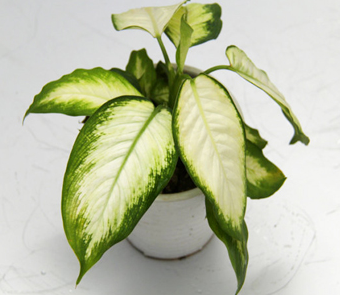
What to do when the leaves of the lucky plant turn yellow:
1. Overwatering: too much water can cause a lack of oxygen in the soil, hindering the normal respiration of the lucky plant's root system and causing the leaves to turn yellow. Therefore, watering should be controlled, and the soil should be loosened.
2. Drought and dehydration: not watering for a long time will affect the lucky plant's absorption of nutrients, causing yellow leaf symptoms due to malnutrition. It is advisable to water a small amount first and spray water, then switch to normal watering after the plant gradually recovers.
3. Prolonged lack of fertilizer: not fertilizing for a long time will lead to a lack of nitrogen and other nutrient elements in the soil, making the lucky plant's leaves thin and yellow. It is advisable to apply more diluted, fully decomposed liquid fertilizer or compound flower fertilizer.
4. Excessive fertilization: excessive fertilization will cause the new leaves to be thick and fleshy, and the old leaves to have dry tips and turn yellow. At this point, fertilization should be stopped and the amount of watering increased so that the fertilizer flows out from the drainage holes at the bottom of the pot.
5. Scorching heat and high temperature: too strong light and too high temperature can easily scorch the leaves of the lucky plant. At this point, it should be moved promptly to a well-ventilated, shady place.
6. Excessive shade: if light is lacking for a long time, the photosynthesis of the lucky plant will weaken, less chlorophyll will be synthesized in the leaves, and the plant will naturally have yellow leaves. Therefore, appropriate lighting conditions should still be ensured, especially in winter.
Can the lucky plant be eaten?
Besides being ornamental, the lucky plant can also be eaten. Its common way of being eaten is to eat it after making it into dried form. For example, when stir-frying dried lucky plant, you can soak it in cold water for a moment, take it out, heat oil in a pan, then pour it into the pan and stir-fry, add an appropriate amount of salt, then add a little water, stir-fry quickly and remove from the pan. The lucky plant made this way has a light fragrance, is chewy and refreshing, and greatly increases the appetite.
Besides being stir-fried, the lucky plant can also be used in soups, and it has dietary therapeutic value for clearing heat and detoxifying, strengthening the heart and promoting diuresis, and cooling the blood and stopping bleeding. You might as well give it a try.
That is all for the methods of dealing with the yellow leaves of the lucky plant. The lucky plant can be eaten, and there are quite a few ways to eat it.
Reasons for the leaves of the lucky plant turning yellow, and what to do when the leaves of the lucky plant turn yellow
People like the lush greenness of the lucky plant, and like the feeling of spring that the lucky plant brings to the whole home. But a lucky plant with yellow leaves is not only unattractive, but also affects the family's mood. Why do the leaves of the lucky plant turn yellow? Many people are at a loss about this. Next, for those whose lucky plant leaves have turned yellow, we will tell everyone some reasons for the yellowing and methods of handling it, hoping that everyone can pay attention during later cultivation.
In fact, the leaves of the lucky plant turning yellow is a very common phenomenon during cultivation, and everyone does not need to feel troubled by it. There are many reasons for the leaves of the lucky plant turning yellow. With just a little attention and some simple handling, you can be free from worry.
Like people, the lucky plant undergoes metabolism and will age normally. Sometimes the leaves of the lucky plant turning yellow is the result of normal aging. In the face of aging problems, there is no need to worry too much; you only need to promptly prune some yellow leaves, damaged leaves and aged parts to maintain the normal growth of the lucky plant. The lucky plant is a fleshy-rooted plant and does not like too much water. Some people care too much for the flowers and plants at home and think that giving the plants enough water is the best care for them, not knowing that too much water will cause the roots of the lucky plant to rot, causing the leaves of the lucky plant to turn yellow. For the lucky plant, an appropriate amount of water is enough to let it live well. Of course, in the dry and high-temperature environment of summer, the lucky plant will also have yellow leaves, so it is necessary to keep the pot soil moist.
The lucky plant is a shade-loving plant. Strong sunlight in summer will cause the edges of the lucky plant's leaves to scorch or even wither and turn yellow, scorching the leaf surface and affecting the ornamental effect. In spring, summer and autumn, shade should be provided as much as possible. The growth temperature of the lucky plant must not be lower than 5 degrees, otherwise it is prone to cold damage, causing the leaves of the lucky plant to turn yellow. In winter, the lucky plant should be moved into a greenhouse and placed facing the sun, keeping its temperature above 10 degrees. In this way, new leaves can grow again the following year.
Another relatively common reason for the leaves of the lucky plant turning yellow is excessive fertilization. Many people mistakenly think that giving more nutrients will make it grow vigorously, but too many nutrients simply cannot be absorbed, and instead damage the root system of the lucky plant. In winter, when the lucky plant enters dormancy, fertilization should not be carried out, while in other seasons it can be fertilized once every half a month to a month. Pests are the natural enemy of every plant. Pest infestation will cause bacteria to multiply in large numbers on the leaves, making the leaves black, affecting the plant's photosynthesis, and causing the leaves to turn yellow. For a small number of pests, scraping them off with a bamboo strip is enough, and when there are many pests, an appropriate amount of pesticide can be sprayed to suppress the pests. The leaves of the lucky plant should be kept clean and tidy. Long-term accumulation of dust will affect the plant's photosynthesis and cause the leaves of the lucky plant to turn yellow, so wiping the leaf surface frequently is very necessary.
The reason the lucky plant is loved is that it can maintain lush greenness for a long time. Yellow leaves greatly affect the ornamental effect, which is something every person growing a lucky plant does not want to see. The reasons for the leaves of the lucky plant turning yellow are roughly the several mentioned above. As long as you care for the lucky plant according to the methods described above, you will no longer worry about the phenomenon of the lucky plant's leaves turning yellow.
What to do when the leaves of the lucky plant turn yellow, reasons and solutions for the leaves of the lucky plant turning yellow
People like the lush greenness of the lucky plant, and like the feeling of spring that the lucky plant brings to the whole home. What should you do when you encounter yellow leaves while growing the lucky plant? Below we will tell everyone the reasons and solutions for the leaves of the lucky plant turning yellow.
Reasons for the leaves of the lucky plant turning yellow: 1. Normal aging
If cared for properly, the leaves of the lucky plant turning yellow is normal metabolism. As the plant grows, the lower leaves begin to age and turn yellow.
Solution: There is no need to worry about the leaves of the lucky plant turning yellow due to normal aging, but the yellow leaves, damaged leaves and some old leaves at the lower part of the plant should be pruned promptly.
Reasons for the leaves of the lucky plant turning yellow: 2. Overwatering
The lucky plant has a fleshy root system and is most afraid of water accumulation and waterlogging. Therefore, it cannot be watered too much, otherwise it is easy to cause root rot, which leads to the leaves of the lucky plant turning yellow.
Solution: Usually just water an appropriate amount. Do not water if the pot soil is not dry; it is better to keep it on the dry side than too wet. Except that the pot soil must be kept moist in summer, watering in spring and autumn should not be too frequent. But the air must be kept humid, because if the air is dry, adverse phenomena such as the leaves of the lucky plant turning yellow are also likely to occur.
Reasons for the leaves of the lucky plant turning yellow: 3. Too strong sunlight
The lucky plant likes a semi-shaded environment and avoids direct strong light in summer. Direct strong light easily causes the edges of the lucky plant's leaves to scorch or even wither and turn yellow. Too strong light easily causes sunburn, and too weak light makes it difficult to bloom and bear fruit, affecting the ornamental effect.
Solution: In spring, summer and autumn, the lucky plant should be shaded by more than 60%, and in winter shaded by 40%.
Reasons for the leaves of the lucky plant turning yellow: 4. Too low temperature
The suitable growth temperature is l5 - 18°C, and the lowest temperature must not be lower than 5°C, otherwise cold damage is likely to occur, causing the leaves to turn yellow.
Solution: In winter, the dormant lucky plant should be moved into a greenhouse and placed in a sunny place, keeping the temperature above 10°C, and new leaves can sprout again the following year.
Reasons for the leaves of the lucky plant turning yellow: 5. Excessive fertilization
Excessive fertilization is another common reason for the leaves of the lucky plant turning yellow, mainly causing fertilizer damage and damaging the root system of the lucky plant.
Solution: During the growing season, apply liquid fertilizer once every 10-15 days to the lucky plant, and fertilization should be stopped in winter.
Reasons for the leaves of the lucky plant turning yellow: 6. Infection by insects and diseases
Brown soft scale pest infestation can also cause the leaves of the lucky plant to turn yellow. When brown soft scale harms the leaves of the lucky plant, it generally gathers on the leaf surface or tender leaves, pierces and sucks the plant's sap, and at the same time excretes sticky liquid. Its excrement easily causes sooty mold bacteria to multiply in large numbers, making the stems and leaves black, affecting the plant's photosynthesis, causing weak growth, yellow leaves, and hindering ornamentation.
Solution: If there are few affected plants, or not many insects, generally scraping off the insect bodies with a bamboo strip and the like is enough. If during the insect hatching period, spray with 1000 times dilution of 40% dimethoate emulsifiable concentrate (or 1000 times dilution of 40% omethoate emulsifiable concentrate), and spraying with 1000 times dilution of 5% phosmet emulsifiable concentrate can also kill them.
Reasons for the leaves of the lucky plant turning yellow: 7. Leaves too dirty
Usually attention should be paid to keeping the leaves of the lucky plant clean and tidy. If too much dust accumulates on the leaves and affects photosynthesis, it will also cause the leaves of the lucky plant to turn yellow.
Solution: At regular intervals, pay attention to wiping the leaves with a clean damp cloth and the like to keep the leaves clean.