What are the cultivation methods and precautions for Monstera deliciosa?
Monstera deliciosa grown indoors rarely blooms; it is a well-known foliage plant. So what are the cultivation methods for Monstera deliciosa? What precautions should be taken during cultivation? After reading the following content, you will know everything.
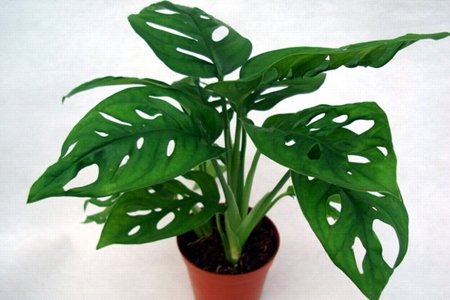
Cultivation methods for Monstera deliciosa:
1. Best propagation time: Monstera deliciosa can be propagated by stem node cuttings in both spring and autumn, with cuttings in spring from April to May and in autumn from September to October giving the best results.
2. Best growing soil: When cultivating Monstera deliciosa, keep it in fertile, loose, highly water-absorbent, well-retaining, slightly acidic loam soil, with leaf mold or peat soil being best. For the pot of Monstera deliciosa, a large pot is suitable for cultivation; insert a 1.3-1.5 m wooden stick into the pot, plant the Monstera deliciosa, first to prevent lodging, and second so it grows lushly attached to the pole.
3. Growing humidity requirements: The soil for cultivating Monstera deliciosa only needs to be kept moist. In summer, spray water frequently to maintain relatively high air humidity, and keep the leaves clean regularly to facilitate photosynthesis.
4. Best growing temperature: Monstera deliciosa likes warmth and moisture and grows well at normal room temperature. It is not cold-tolerant, and the overwintering temperature must be above 5°C.
5. Best growing light: Monstera deliciosa is shade-tolerant and avoids direct sunlight; as a potted plant, it is most suitable placed in a bright spot indoors.#p#Subtitle#e#
Precautions for cultivating Monstera deliciosa:
1. Fertilizer application: During the normal growth period of Monstera deliciosa, apply a dilute liquid fertilizer once about every 2 weeks.
2. Key points of propagation:
(1) Layering propagation: This can be done from May to August, and after about 3 months it can be separated from the mother plant and become a new plant.
(2) Cutting propagation: Every spring, cut off the node-bearing part from the stem, preferably with 2 nodes and leaves, and insert it directly into the planting pot, water thoroughly, and place it in a warm, humid, shaded place; it will take root in about one month.
(3) Pruning essentials: Monstera deliciosa is a large foliage plant with thick stems and large leaves. Especially when dividing mature plants, a frame should be set up and tied to prevent lodging and deformity. After the shape is set, remove the support. At the same time, after the shape is set, when the stem nodes and leaves grow too densely and the branches and vines grow too long, pay attention to pruning the whole plant, striving for a natural and beautiful appearance.
(4) Watering essentials: During the growth period of Monstera deliciosa, water must be sufficient, and the culture soil must be kept moist regularly, watering once every 2-3 days; in dry weather, water should also be sprayed on the leaf surface to keep the air humid.
(5) Pot soil replacement: Repot once a year. The best time for repotting is between March and April. When repotting, remove the old soil, cut off dead roots, and then add decomposed organic fertilizer or phosphorus and potassium fertilizer as base fertilizer in the pot.
(6) Pest and disease control: Monstera deliciosa is highly susceptible to scale insects, and the stems and leaves are most vulnerable to scale insect attack. They can be cleaned with an old toothbrush and then sprayed with a 1000-fold solution of 40% omethoate. Common diseases of Monstera deliciosa include leaf spot, gray spot and stem blight, and timely prevention and control should be noted.
Cultivation methods for Monstera deliciosa, precautions for cultivating Monstera deliciosa
Monstera deliciosa is an anti-radiation plant. With its elegant, upright, graceful and noble feel, it attracts the attention of many flower enthusiasts, and more and more people include it among potted indoor ornamental plants. Below, the editor introduces the cultivation methods for Monstera deliciosa.
Cultivation methods for Monstera deliciosa:
1. Light: Monstera deliciosa originally grows in tropical rainforests and likes a warm and moist environment. It must not be placed in a scorching sunlight environment, which would cause dead leaves. In summer, it needs to be placed in a spot with scattered light.
2. Temperature: It is suitable for growing in warm places with sufficient moisture. It is shade-tolerant but not cold-tolerant. In winter, the room temperature must not be lower than 5°C, or it will be damaged by frost, and it can be moved into a greenhouse. Below 10°C its growth will slow down, and the best temperature range is between 20-25°C.
3. Watering: Because the leaves are relatively large, which causes rapid water loss, it needs to be watered frequently to keep the soil moist; it must not become waterlogged and cause root rot. In summer, spray water on its leaf surface 3-5 times a day to avoid stunted growth of branches and leaves. Control the amount of water reasonably; water more on dry hot days and during the vigorous growth period, and water as little as possible in winter and for seedlings.
4. Fertilizing: The growth of Monstera deliciosa requires sufficient fertilizer. During the vigorous growth period, apply fertilizer once about every two weeks, and pay attention to controlling the amount of fertilizer to maintain its ornamental appearance.
5. Pests and diseases: Its diseases generally include stem blight, leaf spot, gray spot and other conditions, and it often suffers from scale insect damage. Prevention and control should be strengthened in daily care, usually by cleaning the surface with an old toothbrush and then spraying with a 1000-fold solution of 40% omethoate.
Precautions for cultivating Monstera deliciosa:
1. Likes warmth and avoids severe cold: Monstera deliciosa is native to the tropical rainforests of Mexico, likes a warm environment, and avoids freezing and severe cold weather. It will not suffer cold damage above 5°C, and grows well above 12°C.
2. Likes shade and avoids strong light: Monstera deliciosa has strong shade tolerance. In a semi-shaded environment, it grows quickly, has vigorous growth, well-developed aerial roots, thick leaves, and bright dark green leaf color.
3. Likes moisture and avoids waterlogging: Monstera deliciosa likes to grow in a moist ecological environment. In the south, where there is a lot of rain, if waterlogging lasts too long, root rot, stem rot and leaf rot will occur.
4. Likes fertile soil and avoids poor soil: Monstera deliciosa likes fertile soil, especially fertile sandy loam. Although it can grow in poor red-yellow soil, its growth becomes weaker, its shape becomes deformed, its leaves become smaller, and its leaf color fades, affecting the ornamental effect.
5. Likes soil fertilizer and avoids chemical fertilizer: Monstera deliciosa is often given organic fertilizer, such as cake fertilizer, artificial organic fertilizer, livestock and poultry manure residue, farmyard manure, etc. Its growth is then strong, with leaves as large as plates, thick leaf texture, and dark green glossy leaf color, and especially the tortoise-shell pattern becomes clearer and more distinct.
If you want to learn more related information, you can continue to follow No.1 Home Network.
What are the cultivation methods and precautions for Monstera deliciosa?
Plant information: Monstera deliciosa is an evergreen climbing plant of the genus Monstera in the Araceae family, and can also be called split-leaf philodendron, Ceriman, and Swiss cheese plant. The stem is stout, the leaves have long petioles and are dark green, and the spadix inflorescence is present. Monstera deliciosa likes warmth and is not cold-tolerant, and avoids high temperatures. It is native to humid tropical rainforest environments such as Mexico, and is now widely cultivated as an ornamental plant in northern China, often placed in places such as windowsills and living rooms. This article introduces the cultivation methods for Monstera deliciosa, as well as related information on cultivation precautions.
[Cultivation methods for Monstera deliciosa]
Monstera deliciosa blooms in summer. The cultivation methods for Monstera deliciosa are mainly divided into two types: cuttings and sowing.
Cutting propagation
Cutting propagation of Monstera deliciosa is mainly done in spring and autumn. Cuttings taken in spring from April to May and in autumn from September to October have the best effect.
• Select robust-growing Monstera deliciosa branches, cut off the basal leaves and long aerial roots to facilitate rooting.
• Mix peat with leaf mold, insert the trimmed branches, and to keep the temperature from being too low, cover with plastic film.
• When Monstera deliciosa roots and sprouts, strengthen fertilizer and water management, water and fertilize appropriately to ensure sufficient nutrients, and finally prepare flower pots, containers, etc. for transplanting for commercial use.
Sowing propagation
• The most important thing when propagating Monstera deliciosa by sowing is artificial pollination, which can increase the survival rate and germination rate of planting.
• Soak the seeds before sowing and disinfect them at high temperature, use the spot sowing method, and ensure indoor temperature and humidity to facilitate seed germination; after 15 days of germination, they can be transplanted.
[Precautions for Monstera deliciosa]
Pay attention to the growing environment
Monstera deliciosa is a plant that avoids direct scorching sunlight and is not cold-tolerant, so special attention must be paid to the growing environment of Monstera deliciosa in both summer and winter.
Pay attention to a humid environment
Monstera deliciosa is suitable for growing in a humid environment, so during the growth of Monstera deliciosa, be sure to keep the pot soil moist and ensure sufficient water to facilitate its growth.
Pay attention to repotting
Monstera deliciosa has very strong vitality and grows quickly, and generally needs to be repotted every year. During repotting, old soil and dead roots can be removed, and base fertilizer and culture soil, etc. can be added to the bottom of the pot.
Fertilize appropriately
Monstera deliciosa is a flower that likes fertilizer, so fertilizer should generally be applied once about every half month, and human urine mixed with water can also be applied as a light fertilizer.
Summary: The introduction of the cultivation methods and precautions for Monstera deliciosa ends here. Monstera deliciosa has a graceful posture, peculiarly shaped and glossy leaves, and high ornamental value, and is loved by people. We hope this article can be helpful to friends in need. To learn more related information about plants, please continue to follow us.