How to grow potted roses? Learn six key techniques
In daily life, many friends grow flowers at home because they love them, such as potted roses. But how do you grow potted roses? Let us take a look at the cultivation methods for potted roses.
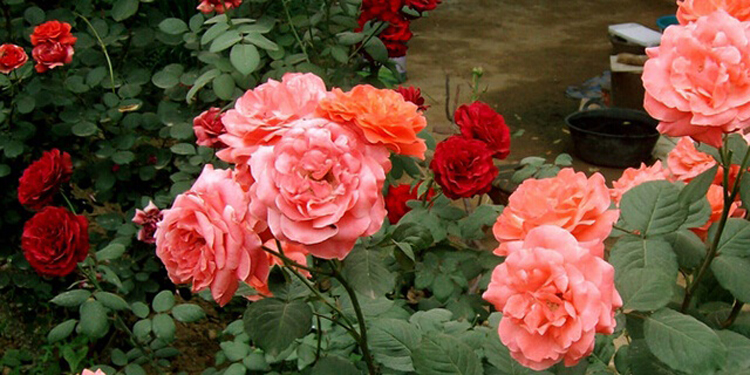
1. Soil
When growing roses in pots, the soil does not need to be too strict. Generally, loose soil that is fairly rich in nutrients, rich in organic matter, well-draining and slightly acidic is enough, and basically all of this can be found on the market now.
2. Temperature
Roses are fairly sensitive to temperature and prefer a warm and comfortable growing environment. The suitable temperature for their growth is about 15 to 26 degrees. The plant's cold tolerance is poor; when the winter temperature is below 5 degrees, it will enter dormancy, and when the summer temperature is above 35 degrees, it will also enter dormancy.
3. Watering
Roses have a relatively high demand for water, especially during the growing season, that is, in summer, when the water requirement is very large. In addition to watering once in the morning and once in the evening every day, you can also spray clean water around the plant and on the leaves to keep the space around the plant humid.#p#Subheading#e#
4. Fertilizing
Since roses bloom often and many times, the flowers have always had a relatively high demand for fertilizer. So in summer, more fertilizer is needed, fertilizing once every ten days; in winter, growth slows down, so reduce fertilizing.
5. Pruning
Roses bloom easily, but they also wither very easily. After the flowers wither, the plant will gradually decline. To maintain the plant's vitality, promptly prune away the withered branches, leaves and flowers on the plant, and appropriately shorten the excess strongly growing branches.
6. Prevention and control
Although roses have strong vitality, they still cannot avoid the possibility of disease, so pest and disease prevention and control work is still needed during cultivation. Moreover, roses encounter relatively many pests and diseases, so preventive work is imperative.
Cultivation methods and techniques for large-scale rose growing
Growing plants has become a great pleasure in people's lives. It not only enriches people's spare-time hobbies, but also beautifies and purifies the environment people live in and broadens people's horizons. Why not do such a good thing! The rose is also one of the plants; it belongs to a kind of rose plant and blooms in all four seasons, so people call it "monthly red." Its ornamental value is truly high. It relatively prefers to grow in a sunny, ventilated environment. Its requirements for the growing environment are not especially high, but there are still many points to note, so that beautiful roses can be grown. Below, the editor will introduce the cultivation methods and techniques for large-scale rose growing.
Introduction to roses
The rose is a kind of rose plant. It is called the queen of flowers. It is an evergreen and semi-evergreen low shrub and opens in all four seasons of the year. Its flower colors are very many, including red, pink, white, yellow, mixed colors and so on. The flower colors are very gorgeous, and they also carry a certain fragrance. It is called an ornamental plant, and its medicinal value is also very high. It is a kind of flower plant loved by people. When roses open, the flower forms are also very many, including single-petaled, double-petaled, high-centered with rolled edges and other beautiful petal forms. Its varieties are also very many; today there are already tens of thousands of rose varieties in the world. Generally, its flowering period is from August to April of the following year. The flowering period is very long, and the flowers are large and very eye-catching. When opening, they open from the inside outward, in a spreading form, and have a very rich fragrance. They are generally used for horticultural planting and cut flowers.
Characteristics of roses
Roses have very strong adaptability and are very easy to grow. They are relatively cold-tolerant and suitable for both ground planting and pot planting. They have the effect of beautifying courtyards, decorating gardens, arranging flower beds, and matching flower hedges, flower stands, flower baskets and bouquets. They can also be used to extract essence and can be used as medicine, with good antibacterial effects. In daily life, they are often the first choice of flower type for couples to give. Their flower appearance is very elegant, and their postures are varied. In more than fifty cities in China, they have all become city flowers.
Cultivation methods and techniques for large-scale rose growing
Roses do not have especially high requirements for climate and soil, and prefer loose, fertile, organic, slightly acidic, well-draining soil. They like to grow in an environment with sufficient sunlight and circulating air. Their temperature requirements are also not especially high: 15-26 degrees Celsius during the day, 10-15 degrees Celsius at night. In winter, if the temperature is below 5 degrees Celsius, they enter a dormant state; in summer, if the temperature is above 30 degrees Celsius, they enter a semi-dormant state. Sustained temperatures like this will make the petals very small and dull, losing a certain ornamental value. They are generally distributed in Hubei, Sichuan, Gansu, Shanghai, Changzhou, Tianjin, Zhengzhou, Nanjing, Beijing and other places. Their varieties are very many, including shrub roses, ground-cover roses, miniature roses, floribunda roses, tree roses, miniature roses, large-flowered hybrid tea roses, climbing roses, usable roses and other varieties.
1. Rose cultivation method - soil: when planting roses, if choosing open-field planting, choose slightly acidic soil with sufficient sunlight and good air circulation, and plant in a high-terrain environment. If choosing pot planting, sandy soil rich in humus, slightly acidic and fertile is best. It is not suitable for growing in alkaline soil. When it sprouts in spring every year, it needs to be repotted once, which is beneficial to the growth of the rose.
2. Rose cultivation method - light: roses love sufficient sunlight. There should be at least more than six hours of sufficient sunlight shining on them each day, and exposure to the scorching sun should also be avoided, otherwise it will affect flower color and fragrance.
3. Rose cultivation method - watering: in the process of growing roses, watering requires technique. When watering, water when the soil looks dry, do not water if it is not dry, and when watering, water thoroughly. Water must not accumulate in the flowerpot; it fears being flooded, and this will cause root rot. In summer, watering is needed every day, but do not use too much at one time; water frequently and little by little. In winter, water less, and keeping it half-moist is enough.
4. Rose cultivation method - fertilizing: roses love to grow in fertile soil, so fertilize frequently. Especially in the growing season, apply a light fertilizer solution once every ten days, but do not overdo it, otherwise it will harm the seedlings. For fertilizing, livestock manure, bean cakes, oil residue and so on are generally used. This kind of fertilizing can keep rose petals glossy and make the leaves relatively thick.
5. Rose cultivation method - pruning: after roses bloom, prune the dried flower buds, leaving only one flower bud on each branch, so that the flowers open more fully and gorgeously, and the fragrance is also more rich. When pruning, cut off the remaining flowers, thin and weak branches, and crossing and overlapping branches. This kind of pruning can also extend the flowering period.
6. Rose cultivation method - temperature: roses are suitable for growing in a cool and warm environment, generally 18-28 degrees Celsius. They fear high temperatures. During high temperatures, place the flowerpot in a shady environment for cultivation, in a place with good ventilation. This can reduce the harm of pests and diseases, and the roses can also grow vigorously.
Summary: the above is the cultivation methods and techniques for large-scale rose growing introduced by the editor. The rose is a flower that is very easy to plant. Its adaptability is very strong, and when growing it, not too much thought needs to be spent.
More related information: Podocarpus price How to plant Boston ivy Eucommia tree pictures Masson pine bonsai pictures Chayote pictures
Techniques for distinguishing roses from rugosa roses
Rose (scientific name: Rosa chinensis Jacq.): called the queen of flowers, also known as "monthly red," it is an evergreen, semi-evergreen low shrub that blooms in all four seasons, generally red, or pink, occasionally white and yellow. It can be used as an ornamental plant and also as a medicinal plant, and is also called rose. There are three natural varieties. Modern roses have diverse flower forms, including single-petaled and double-petaled, as well as beautiful forms such as high-centered with rolled edges. Their colors are gorgeous and rich; there are not only single colors such as red, pink, yellow and white, but also mixed-color, silver-edged and other varieties. Most varieties are fragrant. There are many rose varieties; there are already nearly ten thousand in the world, and China also has more than a thousand.
The natural flowering period is from August to April of the following year. The flowers are large, open from the inside outward, are spreading in form, and have a rich fragrance. They can be widely used for horticultural cultivation and cut flowers. Roses have strong adaptability and are cold-tolerant and [cold-tolerant]. Whether ground-planted or pot-planted, they are suitable for beautifying courtyards, decorating gardens, arranging flower beds, and matching flower hedges and flower stands. Roses are easy to cultivate and can be used as cut flowers, for making bouquets and various flower baskets. Rose flowers can be used to extract essence and can also be used as medicine. They also have relatively good antifungal and synergistic anti-drug-resistant-fungus activity. Red cut flowers have even become one of the must-give gifts between lovers and have become the theme of love poetry.
China is one of the places of origin of roses. Rose flowers are elegant and beautiful, with diverse postures, and open in all four seasons. They are deeply loved by people. In China, 52 cities have chosen it as their city flower. In May 1985, the rose was rated as the fifth of China's top ten famous flowers.
Rugosa roses have beautiful flower shapes and bright colors. They are a symbol of love and also the first choice flower for Valentine's Day, and are also often used in celebrations such as weddings. But did you know that the so-called "roses" sold in flower markets and flower shops are all modern roses? Although they have the bloodline of rugosa roses, they are not true rugosa roses in the botanical sense.
The rugosa rose in the botanical sense is also called wandering flower and thorny rose flower. It is a deciduous shrub of the genus Rosa in the family Rosaceae. Its flowers are divided into single-petaled, double-petaled or semi-double-petaled, and the flower colors include purple-red, pink, white and so on, with a rich fragrance. The flowering period varies according to the climate of different places, opening successively from April to July. Its fragrance is rich, and it is often cultivated on a large scale, used to extract aromatic oil, make perfume, cosmetics, or as a spice, for medicinal use and for food. In recent years, people have also bred the four-season rose, also called purple-branch rose. In the north, its flowering period can last from April all the way to November, and the flowers are rich and fragrant. After the leaves fall, its stems are purple-red.
Because the rugosa rose has a short flowering period, single flower colors, slender branches, and many dense thorns, apart from parks, botanical gardens and flower enthusiasts, it is rarely cultivated as an ornamental flower and tree anymore. It has been replaced by modern roses. Among them, cut-flower varieties have the advantages of sturdy and upright flower stems, rich flower colors, huge flowers, beautiful flower forms, and the ability to bloom in all four seasons. They are called "roses" and are often used in place of true rugosa roses as ceremonial flowers, used on occasions such as wedding celebrations and gift exchanges between lovers, and have gradually formed a series of flower meanings. For example, pink represents first love and eternal love, white represents respect and pure love, and red represents passionate love. The number of flowers given also has different meanings. For example, 1 flower represents special affection and you are the only one; 9 flowers represent everlasting and long-lasting, staying together forever; 10 flowers represent total devotion, perfect in every way, and so on.
Modern roses were successfully bred by European horticulturists through repeated hybridization of Chinese roses, rugosa roses, wild roses and so on. Their flower colors include white, red, pink, yellow, purple, green, black and many other colors. The strength of the fragrance varies by variety, and under suitable conditions they can bloom throughout the year. They are roughly divided into six major categories: hybrid tea roses, floribunda roses, grandiflora roses, miniature roses, climbing roses and shrub roses. There are even more varieties than can be counted, and new varieties are introduced every year.
The reason "rose" (modern rose) is used instead of rugosa rose is that the word "Rosa" in English is the general term for plants of the genus Rosa in the family Rosaceae, and the roses, rugosa roses, wild roses and so on within the genus can all be represented by "Rosa." Among these three, the rugosa rose has the greatest fame and is also the most loved by people, so Hong Kong, China, Taiwan, China and Chinese-speaking countries such as Singapore translated "Rosa" as rose. But the true rugosa rose has many thorns, small flowers, single flower colors and a short flowering period. Therefore, the modern rose, with upright flower branches, no thorns or few thorns, rich flower colors, and the ability to bloom in all four seasons, replaced the rugosa rose and is widely used on various social occasions. Thus people use the name "rose" to refer to the rose.