Care Methods and Hydroponic Tips for Rohdea japonica
When it comes to Rohdea japonica, it is quite common, and many people like it very much. Let's take a look at how to grow Rohdea japonica and how to grow it hydroponically:
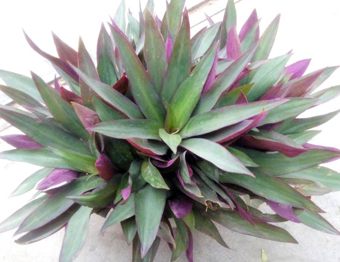
How to grow Rohdea japonica:
1. Soil: Use sandy loam rich in humus as the growing medium, with a pH between 6 and 6.5. If you don't want to mix it yourself, you can buy special potting soil for plants.
2. Light: In summer, place it in a shaded spot to avoid strong light; in winter, place it in a sunny, well-ventilated spot.
3. Temperature: Try to keep it between 6-18°C, which is most favorable for the growth of Rohdea japonica, avoiding sunburn in summer and frost damage in winter.
4. Fertilizing: Apply decomposed liquid fertilizer once every 20 days or so, and apply an additional fertilizing every 10 days during the peak growing season, which can make the leaves greener and more glossy.
5. Repotting: Try to repot Rohdea japonica once a year, choosing spring or autumn. When repotting, remove aged rhizomes and lingering dead leaves, and prepare suitable soil.
How to grow Rohdea japonica hydroponically:
1. Rinse the soil off the roots and remove dead roots.
2. Prepare a suitable transparent vase, wash it clean, and set it aside.
3. When growing hydroponically, do not submerge all the roots in water; leave 1/3 or 1/4 above the water surface.
4. During hydroponic growth, change the water once every 3-4 days.
5. Once Rohdea japonica grows new roots, promptly remove the old roots.
6. After new roots have grown, you can change the water once every 15 days and add foliage plant nutrient solution, but be careful not to replace all the water.
That's all for the hydroponic and soil-growing methods of Rohdea japonica. Why not give this method a try right away?
How to Grow Rohdea japonica and Hydroponic Methods for Rohdea japonica
Rohdea japonica is a very common green plant in the home. Because of its good symbolism, easy cultivation, and suitability for hydroponics, it is very popular. So, how should we grow Rohdea japonica? How do we grow it hydroponically? Below, we will introduce the cultivation methods for Rohdea japonica, as well as the hydroponic methods for Rohdea japonica.
How to Grow Rohdea japonica
1. Temperature
The suitable growing temperature for Rohdea japonica is 25-30°C, with good results at 30°C during the day and 25°C at night. Its possible growth range is 18-30°C from February to September, and 13-18°C from September to February of the following year. Since it is very intolerant of cold, it should be moved into a greenhouse in mid-October. If the winter temperature is below 10°C, the leaves are prone to frost damage. In particular, when the winter temperature is below 10°C, excessive watering can also cause leaf drop and rot at the stem tip. If low temperatures cause the plant to drop leaves but the stem has not rotted, then after the temperature rises again, it can still grow new leaves.
2. Water
Rohdea japonica likes moisture and fears dryness. The potting soil should be kept moist. During the growing season, it should be watered thoroughly, and water should be sprayed around the plant and misted onto the plant. If water is not sprayed for a long time, the leaf surface becomes rough and loses its luster. In summer, maintain air humidity at 60%-70%, and in winter at around 40%. Soil moisture is best kept alternating between dry and wet. In summer, water more; in winter, watering should be controlled, otherwise if the potting soil is too wet, the roots rot easily and the leaves turn yellow and wither. For those kept indoors for viewing, wipe the leaf surface frequently with a soft cloth to keep the leaves clean and make them bright and radiant.
3. Light
Rohdea japonica is shade-tolerant and afraid of sun exposure. If the light is too strong, the leaf surface becomes rough, and the leaf margins and leaf tips are prone to scorching, or even large areas of sunburn. If the light is too weak, the yellow-white patches will turn green or fade. It grows best under bright, indirect light, and the leaf color is more vivid and beautiful. About 40%-60% sunlight is most ideal for growth. In spring and autumn, besides being able to see sunlight in the morning and evening, it should be shaded around midday and throughout summer. Varieties with more green leaves are more shade-tolerant and cold-tolerant; therefore, the more creamy-white markings a variety has, the less chlorophyll it has, and special attention should be paid to making the light brighter, and to keeping it warm at low temperatures.
4. Growing Medium
The growing soil for Rohdea japonica is preferably fertile, loose, well-drained loam rich in organic matter. For potting soil, use a mixed soil of leaf mold and coarse sand, for example, mix 2 parts leaf mold, 1 part sawdust or peat, and 1 part sand. For potted plants, 15-20 cm pots are commonly used. After potted plants have grown for 1-2 years, there are more basal shoots, and division propagation can be carried out along with repotting. If the plant grows relatively tall, you can cut off the aboveground part while leaving 2-3 nodes at the base; the remaining stem nodes can still sprout and branch, maintaining a good plant shape.
5. Fertilizing
June to September is the vigorous growth period for Rohdea japonica. Apply cake fertilizer water once every 10 days. After autumn begins, apply phosphorus and potassium fertilizer 2 more times. From spring to autumn, applying nitrogen fertilizer once every 1-2 months can promote glossy leaf color. If the room temperature is below 15°C, stop fertilizing.
6. Pest and Disease Control
The main problems are bacterial leaf spot, brown spot, and anthracnose, which can be sprayed with a 500-fold dilution of 50% carbendazim wettable powder. Sometimes root rot and stem rot occur; besides paying attention to ventilation and reducing humidity, a 800-fold dilution of 75% chlorothalonil wettable powder can be sprayed for control.
Hydroponic Methods for Rohdea japonica
1. Root-washing method
This can be done in all four seasons, but the best times are spring and autumn, because the temperature is suitable then, Aglaonema modestum grows relatively vigorously, and potted plants easily adapt to hydroponic conditions after root washing. The specific operation method:
① Choose a robust, well-grown Aglaonema modestum that has already been cultivated in soil (or another substrate) and has formed an ornamental value.
② Take the plant out of the pot and remove the soil around the roots.
③ Rinse the soil off in water, cut off some old roots, and to prevent root rot in the early hydroponic stage and promote new root formation, soak in 0.5% potassium permanganate for disinfection.
④ Place the treated Rohdea japonica plant into the prepared container, pour in tap water that covers 2/3 to 1/2 of the root system, and cultivate new roots.
2. Water-cutting method
Generally carried out in spring and autumn, because late autumn and early spring cannot reach the temperature required for rooting, and in the high-temperature summer season the cuttings are susceptible to microbial infection and rot. Of course, under conditions with heating and cooling, Aglaonema modestum can be water-cut in all four seasons.
When water-cutting, select a strong branch about 1 cm in diameter, retain the aerial roots on the stem nodes, cut it into 10 cm long sections, disinfect the cut with potassium permanganate (you may dip it in rooting powder or soak the base of the cutting in 100 mg/L auxin for 0.5 h), let the sap flowing from the wound dry, then insert it into plain sand or water. Keep it at around 25°C with relatively high air humidity. After 20 days, the base of the cutting can root and sprout, forming a plant material suitable for hydroponics.
During the healing and rooting period of water cuttings, respiration is relatively vigorous, so there must be a sufficient oxygen supply. Therefore, at the beginning of water cutting, change the water frequently to keep the water clean and meet the cuttings' oxygen needs. When changing the water, rinse the cuttings and the container clean with fresh water, and especially strengthen the rinsing of the cut. After rooting, it can be transferred to normal hydroponic care.
3. Division method
Division is usually carried out when growth begins in spring. Spring division reduces damage to the plant and allows the divided plants to restore normal growth relatively quickly. When dividing Aglaonema modestum, first take the plant out of the pot, shake off most of the potting soil, untangle the tangled root system, and expose the tiller shoots and roots. Then, as needed, use a sharp knife to divide it from the stem base into several clumps. Disinfect the wounds (apply plant ash or sulfur), wash clean, and then carry out hydroponic care.
The above are the cultivation methods for Rohdea japonica and the hydroponic methods for Rohdea japonica that we have introduced for everyone. Is everyone clear now? For more home knowledge, please stay tuned.
How to Grow Hydroponic Rohdea japonica and What Are the Uses of Rohdea japonica
Although many people place a few pots of plants in the home, for the sake of neatness, hygiene, and easy care, many people choose hydroponic plants, and arranging them in the home also gives a very good ornamental effect. So, how do you grow hydroponic Rohdea japonica? What are the uses of Rohdea japonica? Below, we will introduce the hydroponic cultivation methods for Rohdea japonica, as well as the uses of Rohdea japonica.
How to Grow Hydroponic Rohdea japonica
1. Selection of plant material
For hydroponic Rohdea japonica, of course you must first select good plant material. Generally there are now two main methods. One is to take branches from planted Rohdea japonica for water cutting, which can sprout new roots in about 10 days. You can also use the root-washing water-culture method, that is, wash the roots of soil-grown Rohdea japonica and then grow it hydroponically. You can rinse it repeatedly under tap water, but be careful not to damage the roots.
2. Selection of water quality
For the water used in hydroponic care of Rohdea japonica, choose disinfected tap water that meets national drinking water standards, in which the salt concentration<300ppm>; the total concentration of added inorganic salts should be<500ppm>~<300ppm>; the total concentration of added inorganic salts should be<500ppm>~<300ppm>; the total concentration of added inorganic salts should be<500ppm>~<300ppm>; the total concentration of added inorganic salts should be<500ppm>
3. Selection of water amount
For root-washed Rohdea japonica, no nutrient solution is needed in the early hydroponic stage. This is because the roots are injured (they will inevitably be injured to some extent when the soil is removed), and the water should not be added too much; it is enough to just slightly cover the roots. The water quality should be clean; it is best to choose rainwater or tap water that has been left to stand.
4. Use of nutrient solution
For hydroponic Rohdea japonica, nutrient solution can be added after about 3 weeks. At first, use only a small amount, and afterward apply it as appropriate according to growth. The pH of the hydroponic nutrient solution should be 6.0 to 7.0, and its height in the bottle should not exceed 50% of the root height. Replace with new nutrient solution 1 to 2 times per week; the higher the ambient temperature, the more frequently the new nutrient solution should be replaced. This is because the amount of dissolved oxygen in the nutrient solution should be increased as much as possible.
5. Humidity care
Rohdea japonica likes relatively high humidity and dislikes dryness. During the growing period, water should often be sprayed onto the stems and leaves.
6. Safety maintenance
The sap in the stems and leaves of plants in the genus Rohdea is toxic. During hydroponic care and propagation, special attention should be paid to preventing children from touching it, so as to avoid accidents.
What Are the Uses of Rohdea japonica
1. Beautifying the home
The leaf posture of Rohdea japonica is elegant and beautiful, suitable for accenting the living room or study. Small potted young plants can be placed on a desk or windowsill for viewing; medium-sized potted plants can be placed in a corner of the living room or beside the sofa as decoration, filling the room with natural vitality. In autumn and winter, paired with the red flowers and fruits of Rohdea japonica, it adds even more color.
2. Ornamental value
The leaves of Rohdea japonica are broad and deep green, and its berries are bright red and round, very beautiful. It has always been a flower valued both for foliage and fruit, with very high ornamental value.
3. Air purification
Rohdea japonica is very famous for its unique air-purifying ability. It can absorb indoor toxic gases and exhaust gases from the air and release oxygen, playing a purifying role. The higher the concentration of pollutants in the air, the more it can exert its purifying ability. It is very beneficial for children and elderly people with relatively weak immunity.
4. Gift-giving
The flower language of Rohdea japonica is health and longevity. It is often used to describe the elderly, hoping they will be healthy and blessed with a long life. Rohdea japonica is evergreen all year round and full of vitality, so generally on the occasion of an elderly person's grand birthday, children and grandchildren will present a pot of Rohdea japonica to wish the elder health and longevity like Rohdea japonica, hoping the elder will be strong and as youthful as Rohdea japonica.
5. Home feng shui
In the eyes of Chinese people, Rohdea japonica represents good fortune, family prosperity, and household peace, among other auspicious feng shui meanings. Placing Rohdea japonica in the home not only has a decorative and ornamental effect, but can also create good home feng shui and bring good luck to family members.
6. Medicinal use
Rohdea japonica is the plant Rohdea japonica of the genus Rohdea in the Liliaceae family. Its rhizome or whole plant is used as medicine. Rohdea japonica is also known as zhan she jian, dong bu diao cao, tie bian dan, and jiu jie lian. Rohdea japonica has the effects of clearing heat and detoxifying, strengthening the heart, and promoting diuresis. Rohdea japonica is used for preventing and treating diphtheria, myocarditis caused by diphtheria, sore throat, bacillary dysentery, and heart failure due to rheumatic heart disease.
The above are the hydroponic cultivation methods for Rohdea japonica and the uses of Rohdea japonica that we have introduced for everyone. Is everyone clear now? For more home knowledge, please stay tuned.