How to Grow Oxalis? Full Guide to Cultivation Methods and Blooming Period
Oxalis is something many people now love to grow, and its flowers are quite beautiful too. Let's look at how to grow oxalis and how long its blooming period lasts:
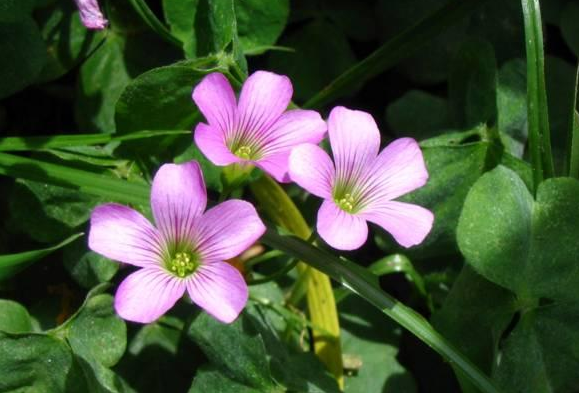
How to grow oxalis:
1. Sowing time
Oxalis propagates through tubers. The tuber sowing time generally starts from June to July each year. Bulbs of autumn-planted varieties will begin to sprout one after another, sprouting around July, and can be planted after sprouting.
From July to September, it is best to wait until the bulbs have sprouted before planting, because during this period the temperature is relatively high and humidity is relatively high. Planting before sprouting can easily cause the bulbs to rot in the soil.
After October, most bulbs have already sprouted. At this point, bulbs that have not sprouted can also be planted, because some varieties only sprout after planting.
2. Planting depth
Generally, the soil covering thickness for bulbs is 1-2 times the bulb diameter, which helps with sprouting. If they are tiny sesame-sized bulbs, you can skip covering with soil, or sprinkle a thin layer of soil on the surface and keep the soil moist.
If the sprouts are already very long at planting time, you can just let the sprout tips show slightly when filling in soil. For trailing oxalis, pay even more attention to depth when burying the bulbs. Generally, fill in half the soil first, then continue adding soil as the sprout tips grow, until reaching the pot rim. This way, the grown stems and vines are less likely to fall over.
3. Watering method
After the bulbs are planted, water thoroughly once. After that, you can manage them normally with the "water when dry, let dry between waterings" approach. Under normal circumstances, avoid direct sunlight before the bulbs sprout.
This helps with sprouting. Oxalis is a sun-loving plant. After sprouting, give as much light as possible, and the plants will grow lushly with many flowers.
4. Dormancy
Autumn-planted oxalis varieties generally go dormant from April to July. During this period, if you notice most leaves turning yellow, you can stop watering. After the above-ground parts completely wither, wait another 1-2 weeks before lifting the bulbs.
If you don't want to lift the bulbs, that's fine too. Place the pot in a shaded area, keep the potting soil dry, do not water, and wait until after September to water. The bulbs will wake up again this way.
5. How to store oxalis bulbs
After digging up oxalis bulbs, they need to be stored in a cool, ventilated place to rest for a period, then they will wake up on their own.
There is no need for cold storage, because low temperatures only disrupt their dormancy rhythm, making them mistakenly think autumn has arrived, causing them to wake up even earlier. But bulbs that wake up at this time simply cannot adapt to the high outdoor temperatures.
6. About fertilizer
Whether to add base fertilizer at planting time is optional. During the bud and flowering stages, apply liquid fertilizer (blue fine granules), using it once every 7-10 days as recommended online.
Note that the fertilizer must be very, very dilute. What I use is just barely showing a hint of blue. When I first started fertilizing, I didn't pay attention and some varieties whose roots hadn't developed well got burned.
7. About soil and water
Generally, a mix of peat soil, perlite, and vermiculite is fine. The ratio is flexible. You can also add some clay pellets to increase soil aeration. If you don't have the above growing media, ordinary garden soil can be used as a substitute. The key is that the soil must be loose and aerated.
If the leaves are drooping during the day, it indicates fairly severe water shortage. Generally, water thoroughly after the potting soil dries. Choose to water on sunny mornings or at midday when temperatures are higher. During consecutive sunny days or with dense planting, increase watering frequency.
8. Soil selection
I use garden soil mixed with coconut coir, which is relatively loose and good for bulb development. Put the coconut coir in a pot, let it soak in rainwater, then pour off the water to remove excess salt before mixing it with garden soil.
Beginners are advised to use dedicated soil for dedicated purposes, and apply a light fertilizer in moderation when reusing it the next year. You can switch to new soil, but don't discard the old soil - it can be used to grow other plants.
If you find that watering has washed away the topsoil, add more promptly. This also helps the plants stand upright rather than sprawl. If you notice new plants emerging, you can also add soil appropriately to protect the roots and stems.
9. About pests
After bulb-type oxalis is planted and just grows its cute little leaves, it's recommended to regularly check inside the pots when growing outdoors, and remove pests early.
Be on guard against aphid damage in spring. They will occupy the entire flower buds. I've tried spraying with diluted laundry soap water, using it again after 2-3 weeks, until the aphids are completely eliminated.
Occasionally you'll see red spider mites, not many. When you see them, act quickly and squash them. If the infestation is severe, you may need to consider giving the oxalis a "buzz cut."
When you have many bulbs, you can try various cute scalloped pots, long trough pots, etc. Of course, I've seen some flower enthusiasts grow them just fine in yogurt cups or small black square pots, but I suggest choosing ones with a certain depth to benefit bulb development.
10. About other daily care:
Yellow leaves at the bottom can be trimmed off to help new leaves grow. Since I don't want to collect seeds, and to avoid consuming nutrients, I use small scissors to cut off spent flowers and flower stems without buds almost every day.#p#Subtitle#e#
Oxalis blooming period:
A single oxalis flower mostly lasts 2-3 days. Ones that are no longer open appear wrinkled and drooping, which is still fairly easy to recognize. However, sometimes when you're dazzled by the flowers you'll still cut the wrong ones, so everyone should pay attention.
That's all for the introduction on how to grow oxalis and its blooming period. Hurry up and make your flowers multiply.
Flower Encyclopedia - Oxalis
Oxalis, also known as sour grass, dove's sour, and sour vinegar sauce, is a herb in the Oxalis genus, with the entire plant covered in soft hairs. It is widely distributed in China, and also found in temperate and subtropical Asia, Europe, the Mediterranean, and North America.
The rhizome is slightly thickened. The stem is slender and weak, much branched, upright or creeping, with roots growing at the nodes of creeping stems. Leaves are basal or alternate on the stem; stipules are small, oblong or ovate, with densely long soft hairs along the edges, fused with the petiole at the base, or on the same plant the lower stipules are obvious while the upper ones are not. The whole plant is used medicinally; it can reduce fever, promote urination, reduce swelling, and disperse blood stasis. The stems and leaves contain oxalic acid, which can be used to polish mirrors or wipe copperware to give them luster. Cattle and sheep that eat too much of it can be poisoned to death.
Growth habits:
It prefers sunny, warm, and humid environments. In hot summer regions, it should be given half shade. It has fairly strong drought resistance and is not cold-tolerant. In North China, it needs to be grown in a greenhouse in winter. South of the Yangtze River, it can overwinter outdoors. It likes shady and humid environments and has strong adaptability to soil. It can grow in ordinary garden soil, but grows most vigorously in sandy loam rich in humus. It has a short dormancy period in summer. It opens when sunlight is extremely bright. It grows on hillside grass patches, along river valleys, roadsides, field edges, wastelands, or in shaded and humid places under forests.
Cultivation and care techniques:
Oxalis is a perennial herbaceous plant in the Oxalidaceae family, growing in clumps, 15 to 20 cm tall, blooming continuously through spring, summer, and autumn, with the most abundant blooms during the cool periods of spring and autumn. Because oxalis is low-growing, grows fast, and has a long blooming period, it is quite spectacular when in bloom and is widely used in landscaping.
Land preparation
Oxalis prefers well-drained sandy soil. Clay soil is not good for growth, so soil should be appropriately replaced. During land preparation, apply organic fertilizer and compound fertilizer, finely sieve, rake level, and compact, maintaining a slope of about 5 degrees to facilitate drainage. Oxalis is afraid of waterlogging, so be sure to leave sufficient drainage outlets to avoid water accumulation during the rainy season.
Planting
Oxalis sprouts early and sheds leaves late. Early spring and late autumn are suitable for cultivation. Do not transplant during peak blooming period. Planting spacing is 15 x 15 cm. After planting, water thoroughly. It establishes easily, blooms upon sprouting, and shows results the same year.
Watering
Sprinkler irrigation or drip irrigation is preferable. It's best not to use flood irrigation. Aim for soil that is moist but not wet, which benefits oxalis growth.
Weeding
During land preparation, sieve out grass roots to reduce weeds. Strengthen management in spring to allow the lawn to grow rapidly and enhance its competitiveness against weeds. Promptly remove the few weeds that sprout - pull them out as soon as you see them. Through a year of good management, weeds will no longer grow.
Pest and disease control
Oxalis grows densely, and the lower part has poor ventilation and light penetration. High temperature and humidity can easily cause powdery mildew, with leaves turning yellow and moldy. You can spray fungicides such as triadimefon and thiophanate. Additionally, red spider mites begin to cause damage in early May. Because oxalis leaves are dense, control is difficult, so prevention must be the priority. Start spraying acaricides when temperatures rise in April; do not wait until red spider mites have already broken out.
Oxalis Oxalis corniculata L. Oxalis gallery: How to grow oxalis / How to propagate oxalis
Oxalis profileOxalis Oxalis corniculata L.
Oxalis cultivation methods and precautions, introduction to oxalis
Oxalis, a perennial herb, with sparse soft hairs all over; stems creeping or ascending, much branched. Leaves alternate, palmate compound leaves with 3 leaflets, obcordate, leaflets sessile. Flower colors are varied, with red and yellow being the most common. It prefers sunny, warm, and humid environments. In hot summer regions, it should be given half shade. It has fairly strong drought resistance and is not cold-tolerant. It can grow in ordinary garden soil, but grows most vigorously in sandy loam rich in humus. It has a short dormancy period in summer. The whole plant is used medicinally, with effects of clearing heat and detoxifying, reducing swelling and dispersing diseases.
Because its flowers are yellow, oxalis is also called yellow-flowered oxalis in some literature from Taiwan, China. However, in some literature it refers to Oxalis pes-caprae. This is noted here for clarification.
Oxalis (Tang Bencao), sour grass (Guangzhou), dove's sour (Tang Bencao), sour vinegar sauce (Henan).
Morphological characteristics of oxalis
Stem: Herbaceous, stems upright or climbing vines.
Leaves: Leaflets are heart-shaped, about 0.3-1.5 cm long, 0.5-2 cm wide, usually three leaflets arranged around a central axis, occasionally multiple leaves growing together. Petioles are about 1-7 cm long. Stipules are very small but clearly distinct.
Fruit: The fruit is a conical capsule, about 5-20 mm, which bursts open and ejects seeds when mature.
Seeds: Immature seeds are white, mature seeds are brown. Seeds have rough protrusions similar to fingerprints and can easily attach to surfaces.
Flowers: Flowers are yellow, single-petaled, usually with 5 petals. Petals are about 0.7-1 cm long, pedicels about 0.6-1.5 cm long.
Herbaceous, 10-35 cm tall, entire plant covered in soft hairs. Rhizome slightly thickened. Stem slender and weak, much branched, upright or creeping, with roots growing at the nodes of creeping stems. Leaves basal or alternate on the stem; stipules small, oblong or ovate, with densely long soft hairs along the edges, fused with the petiole at the base, or on the same plant the lower stipules are obvious while the upper ones are not; petiole 1-13 cm long, with a joint at the base; 3 leaflets, sessile, obcordate, 4-16 mm long, 4-22 mm wide, apex concave, base broadly wedge-shaped, with soft hairs on both surfaces or hairless on the surface, with denser hairs along the veins, edges with appressed marginal hairs. Flowers solitary or several gathered in umbel-like inflorescences, axillary, the common peduncle pale red, nearly as long as the leaves; pedicels 4-15 mm long, extending after fruiting; 2 bracteoles, lanceolate, 2.5-4 mm long, membranous; 5 sepals, lanceolate or oblong-lanceolate, 3-5 mm long, with soft hairs on the back and edges, persistent; 5 petals, yellow, oblong-obovate, 6-8 mm long, 4-5 mm wide; 10 stamens, filaments white and semi-transparent, sometimes with sparse short soft hairs, fused at the base, long and short alternating, the longer ones with larger anthers that mature earlier; ovary oblong, 5 chambers, covered in short appressed hairs, style 5, stigma capitate. Capsule long cylindrical, 1-2.5 cm long, 5-angled. Seeds long ovate, 1-1.5 mm long, brown or reddish-brown, with transverse ribbed reticulate pattern. Flowering and fruiting period February to September.
Original morphology
Oxalis, perennial herb. Rhizome slender, stem slender and weak, often brown, creeping or ascending, much branched, covered in soft hairs. Common petiole 2-6.5 cm long; stipules obvious; 3 leaflets, obcordate, 4-10 mm long, apex concave, base broadly wedge-shaped, hairless on top, sparsely covered in appressed hairs on the underside, denser hairs along veins, edges with appressed marginal hairs; sessile. Flowers solitary or several forming axillary umbels; pedicels equal in length to petioles; flowers yellow, sepals long ovate-lanceolate, about 4 mm long, apex obtuse; petals obovate, about 9 mm long, apex rounded, slightly fused at the base; filament bases fused into a tube; styles 5. Capsule nearly cylindrical, 1-1.5 cm long, slightly 5-angled, with a beak, dehiscing elastically when mature; seeds dark brown, nearly ovate but flattened, with longitudinal groove lines. Flowering period May to August, fruiting period June to September.
Oxalis is a perennial herb, entire plant with sparse soft hairs; stems creeping or ascending, much branched. Leaves alternate, palmate compound leaves with 3 leaflets, obcordate, leaflets sessile. Flowers yellow, 1 to several forming axillary umbels; sepals oblong, apex acute, with soft hairs; petals obovate, slightly rolled outward; filament bases fused into a tube shape. Capsule nearly cylindrical, 5-angled, with short soft hairs, ejecting seeds when mature and splitting open. Seeds small, flat ovate, reddish-brown, with transverse grooves. Flowering and fruiting period April to August.
Ecological habits of oxalis
It grows on hillside grass patches, along river valleys, roadsides, field edges, wastelands, or in shaded and humid places under forests.
Distribution range of oxalis
Widely distributed throughout the country. It grows on hillside grass patches, along river valleys, roadsides, field edges, wastelands, or in shaded and humid places under forests. It is distributed in temperate and subtropical Asia, Europe, the Mediterranean, and North America.
Oxalis is widely distributed around the world, including Oceania, the Caribbean, Bermuda, China, Taiwan, China, Colombia, Canada, the Cayman Islands, Australia, Costa Rica, Guatemala, Indonesia, Hawaii, Japan, Malaysia, Guam, South Korea, the United States, Vietnam, Mexico, Mauritius, New Zealand, Papua New Guinea, Thailand, and more.
Medicinal or dietary therapeutic value of oxalis
The medical information and health dietary therapy information on Huahua Network is for reference only and cannot be used as a basis for diagnosis or medical treatment. Any health issues should be consulted with professional medical staff, and treatment of any disease should follow doctor's orders.
Ultimate flower-protecting mission: Love yourself, start from reality, and follow doctor's orders. For illness, don't be careless, don't delay, don't give up hope, face it bravely, warm the silent world with love, and care for the flower field in your heart with your heart.
The medical content on Huahua Network is for reference only and cannot be regarded as professional advice. Any health issues should be consulted with professional medical staff. Medicinal information (1)
The whole plant is used medicinally; it can reduce fever, promote urination, reduce swelling, and disperse blood stasis. The stems and leaves contain oxalic acid, which can be used to polish mirrors or wipe copperware to give them luster. Cattle and sheep that eat too much of it can be poisoned to death.
Medicinal material name: Yellow-flowered oxalis, sour grass, baby's breath, three-leaf sour, sour grass, sour rice grass, six-angle square
Chinese family name: Oxalidaceae
Latin family name: Oxalidaceae
Chinese genus name: Oxalis
Latin genus name: Oxalis
Chinese species name: Oxalis
Latin species name: Oxalis corniculata L.
Medicinal part: Whole plant
Morphological characteristics: Perennial herb, 15-22 cm tall, whole plant tastes sour. Roots slender or thick, stems slender and soft, lower part lying obliquely on the ground in a creeping manner, much branched, forming clumps, upper part slightly upright, green, slightly purplish, covered in hairs, with adventitious roots at the nodes. Leaves are trifoliate compound leaves with long petioles; 3 leaflets, obcordate, 5-13 mm long, 6-15 mm wide, apex concave, base wedge-shaped, entire margins, with short hairs along veins and edges on the underside; leaflets sessile. Umbels axillary, with 2-6 flowers, peduncles slender, purplish, hairy; sepals and petals both in 5s; 10 stamens, 5 long and 5 short, filament bases fused into a tube; ovary superior, 5 chambers; stigma 5-lobed. Capsule nearly cylindrical, with 5 longitudinal angles, hairy, splitting open on its own when mature, ejecting seeds. Flowering period July to August, fruiting period August to September.
Distribution: Various regions
Habitat: Roadsides, gardens, beside houses
Habit: Sun-loving
Propagation method: Seeds
Functions: Rheumatism, traumatic injuries, snake bites
Main indications: Colds and fever, nosebleeds, hepatitis, urinary tract infections, stones, neurasthenia, bacillary dysentery, erysipelas, traumatic injuries, carbuncles and sores
Medicinal information (2)
Scientific name: Oxalis corniculata Linn.
English name: Creeping Woodsorrel, Creeping Oxalis
Family name: Oxalidaceae
Aliases: Sour grass, sour sour grass, turtle dove sour, three-leaf sour, salt sour grass, sour basket, three-leaf sour grass, sour mother grass, dove sour grass, small sour thatch, sparrow woods grass, sour berry, red grandson's gift, sour chirp, field character grass, sparrow grass, sour mother grass, small sour sprout, sour grass, triangle sour, sparrow sour, turtle dove grass, sour taste grass, sour bewildering grass, three-leaf sour berry, sour spotted amaranth, salty sour grass, sour vinegar grass, sour dripper, ground-covering lotus, sour plum grass, three-leaf broken copper coin, yellow flower plum, old duck beak, yellow flower grass, six-leaf lotus, wild royal melon grass, royal melon sour, sky-soaring bubble, long blood grass, sour zhi grass, sour batch seeds, east sun fire grass, crystal flower, gourd sour, pigeon sour three-plum grass, old crow sour, seven-leaf grass, sun plum.
Traditional Chinese medicine properties
Introduction: Oxalis is truly as ordinary as can be. Push aside the grass and you can see it everywhere. Its leaves all grow at the top of the stem, and each stem has only three, like helicopter rotor blades, or the bamboo dragonflies children used to play with. The "cu" character in oxalis is the same as the one for vinegar. The Compendium of Materia Medica also says it "tastes like vinegar," and both the stems and leaves are like this. In the Newly Revised Materia Medica compiled during the Tang Dynasty, there is a record of "sour berry," which says this grass is harvested in May, dried in the shade, and can be used as medicine to treat difficult childbirth. The whole plant is used medicinally, with effects of clearing heat and detoxifying, reducing swelling and dispersing diseases. It can treat snake and insect stings, and can also treat blood in urine, urinary tract infections, jaundice and hepatitis, etc. It can be harvested in all four seasons, with the best medicinal effect when harvested in summer and autumn when there are flowers and fruits. Remove mud and sand, and dry in the sun. Nature and flavor, meridian entry: Sour, cool. Functions and indications: Clear heat and drain dampness, detoxify and reduce swelling. Used for colds and fever, enteritis, urinary tract infections, urinary tract stones, neurasthenia; externally used for traumatic injuries, venomous snake bites, carbuncles and sores, athlete's foot, eczema, burns and scalds. Usage and dosage: 0.5-2 liang; appropriate amount for external use, crush fresh product and apply to the affected area, or decoct in water for washing.
Medicinal material properties
Oxalis name explanations: Sour berry, three-leaf sour, triangle sour, sour mother, vinegar mother, sour basket, dove sour, sparrow woods grass, small sour thatch, red grandson's gift.
Odor: Sour, cold, non-toxic.
Medicinal value
The whole plant is used medicinally; it can reduce fever, promote urination, reduce swelling, and disperse blood stasis. The stems and leaves contain oxalic acid, which can be used to polish mirrors or wipe copperware to give them luster. Cattle and sheep that eat too much of it can be poisoned to death.
Oxalis (Tang Bencao)
[Source] The whole plant of the Oxalidaceae plant oxalis.
[Chemical composition] Stems and leaves contain large amounts of oxalate. Leaves contain citric acid and large amounts of tartaric acid; stems contain malic acid.
[Nature and flavor] Sour, cold.
Tang Bencao: Taste sour, cold, non-toxic.
Lü Chan Yan Bencao: Taste sour, slightly toxic.
Dian Nan Bencao: Nature cold, taste sour and slightly astringent.
[Meridian entry] De Pei Bencao: Enters the Hand Yangming and Taiyang meridians.
[Efficacy of oxalis] Clear heat and drain dampness, cool blood and disperse stasis, reduce swelling and detoxify.
Treats diarrhea, dysentery, jaundice, gonorrhea, leukorrhea with reddish or whitish discharge, measles, hematemesis, epistaxis, sore throat, boils, carbuncles, scabies and tinea, hemorrhoids, rectal prolapse, traumatic injuries, and scald and burn wounds.
Literature Discussion
"Tang Materia Medica": Mainly used for malignant sores and scrofulous fistulas, pounded and applied topically; kills various small worms. Eaten to relieve fever and thirst.
"Illustrated Materia Medica": Treats blood stasis and obstruction in women; wash clean, grind finely, and take with warm wine.
"Diannan Materia Medica": Treats chronic diarrhea with intestinal slackness, and chronic dysentery with reddish and whitish discharge; decoct with granulated sugar and take.
"Compendium of Materia Medica": Mainly treats various types of strangury, leukorrhea with reddish or whitish discharge; combined with Marchantia polymorpha and earthworm to treat strangury from urinary stones; decoct and wash for hemorrhoid pain and rectal prolapse; pound and apply for scald, burn, snake and scorpion injuries.
"Essential Materia Medica of Fresh Herbs": Kills parasites and relieves pain, dissipates heat and reduces swelling, regulates traumatic injuries, disperses blood stasis, decocted with wine and taken; also dries water and relieves itching.
"Medical Forest Compendium": Tonifies the lung, drains the liver, eliminates heat qi, removes blood stasis, and astringes yin.
"Classified Materia Medica": Used to treat malaria by stuffing into the nose; stir-fried with wine and applied for fish-mouth sores.
"Lingnan Collection of Medicinal Herbs": Treats measles, snake venom, and scabies.
"Luchuan Materia Medica": Reduces swelling and relieves pain, removes necrotic flesh. Treats ulcerated sores and carbuncles.
"Guiyang Folk Medicinal Herbs": Clears heat, promotes urination, and mends bones. Treats urinary retention and jaundice.
"Illustrated Chinese Medicinal Plants": Mixed with brown sugar, decocted and taken, to treat erysipelas-like redness (early stage of filariasis).
"Shaanxi Medicinal Plant Survey": Strengthens the stomach and relieves cough.
"Hunan Materia Medica": Treats fever with cough, pain from qi stagnation in the heart and stomach, swollen and painful sores, and toxic sores.
Usage and Dosage: Internal use: decocted, 2 to 4 qian (fresh: 1 to 2 liang); pounded for juice or ground into powder. External use: decocted water for washing, pounded and applied, pounded for juice application, mixed and applied, or decocted water for gargling.
Medicinal Uses
[Wa medicine] Ri xi da gu, Dai xi da gu: the whole plant treats bone fractures, traumatic injuries, venomous snake bites, jaundice-type hepatitis, and rheumatoid arthritis ("Zhong Wa Yao," "Dian Yao Lu"). Xi dui niao: used for insomnia with profuse dreams, traumatic injuries, burns, and respiratory inflammation.
[Yi medicine] Cujiangcao, A zha ji ji, A zha e ji, Wei sai rou bai, Suan jiang cao: the whole plant or root treats wind-cold common cold, irregular menstruation, bleeding hemorrhoids, toothache, lower back pain, fractures, heat accumulating in the large intestine, cold-induced body pain, and ulcerated leg sores ("Yi Zhi Yao Xu"). The whole plant is used for blood stasis swelling and pain, hemorrhoids with fistula and anal fissure, anorectal prolapse, and carbuncles and boils ("Ai Lao").
[Miao medicine] Ma han suan, Dong zhen mi: the whole plant treats malignant sores and hemorrhoid fistulas, various types of strangury, leukorrhea with reddish or whitish discharge, hemorrhoid pain and rectal prolapse, scald, burn, snake and scorpion injuries, blood stasis in women with obstruction of urination and defecation, itching from tinea sores, and swollen and painful teeth. Treats fever, cough, pain from qi stagnation in the heart and stomach, swollen and painful sores, and toxic sores ("Xiang Lan Kao"). E shu gai: the whole plant treats urinary retention, difficult labor, retained placenta, tinea, herpes zoster, and impetigo ("Gui Yao Bian").
[Dai medicine] Song xiang ga: used to clear heat and promote urination, cool the blood and disperse stasis, reduce swelling and detoxify ("Dai Yi Yao"). Song xiang ga: the whole plant treats palpitations and dizziness, excessive sweating and prostration, and rheumatoid arthritis ("Banna Dai Yao"). Song xiang ga: the whole plant is used for palpitations and dizziness, excessive sweating and prostration, and rheumatoid arthritis ("Dian Sheng Zhi").
[Bai medicine] The whole plant treats common cold with fever, enteritis, hepatitis, urinary tract infection, stones, and neurasthenia; externally used for traumatic injuries ("Dali Zi Zhi"). [Jingpo medicine] byviqzvin: used for enteritis, hepatitis, urinary tract infection, stones, and externally for traumatic injuries ("Dehong Yao Lu").
[Achang medicine] Cujiangcao: functions same as Jingpo ethnic group ("Dehong Yao Lu").
[De'ang medicine] Dao bu rang rui: functions same as Jingpo ethnic group ("Dehong Yao Lu").
[Shui medicine] Ma hong di: the whole plant treats bone fractures ("Shui Yi Yao").
[Dong medicine] Ma deng sheng: the whole plant treats nameless swellings and toxic sores ("Gui Yao Bian"). Dang tu song: the whole plant treats pediatric asthma [10].
[Maonan medicine] Wo zhun cao: the whole plant treats sandworm feet ("Gui Yao Bian"). Mal demh semt, San ba chen (Samp bav semt): the whole plant mainly treats wounds from dog bites, and sprains ("Dong Yi Xue").
[Yao medicine] Ka bi: the whole plant treats dysentery, difficult labor, retained placenta, impetigo, and knife and gun wounds ("Gui Yao Bian").
[Zhuang medicine] Lao ya suan: the whole plant treats sore throat, traumatic swelling and pain, postpartum hemorrhage, various types of bleeding, difficult urination and defecation, impetigo, eczema, venomous snake bites, and fractures ("Gui Yao Bian").
[Lisu medicine] A la cha bo: the whole plant is used for common cold with fever, enteritis, hepatitis, urinary tract infection, stones, and neurasthenia; fresh leaves are pounded and applied externally to the affected area to treat traumatic injuries, carbuncle swellings, and sores and furuncles ("Nujiang Yao").
[She medicine] The whole plant treats diphtheria, pharyngitis, tonsillitis, stomatitis, urethral infection, biliary ascariasis, pediatric night crying, puerperal fever, postpartum abdominal pain, early-stage mastitis, hemorrhoids, rectal prolapse, eczema, tinea, herpes zoster, nameless swellings and toxic sores, burns, and traumatic injuries ("She Yi Yao").
[Hani medicine] A mi wo qian: the whole plant treats common cold with fever, enteritis, hepatitis, urinary tract infection, and traumatic injuries ("Hani Yao").
[Tujia medicine] Suan wei xir: the whole plant treats common cold with fever, urinary tract infection, and traumatic injuries and sprains ("Tujia Yao").
Pharmacological Effects
It has antibacterial action against Staphylococcus aureus, but is ineffective against Escherichia coli; this plant is said to be toxic to sheep. The related species Oxalis ranunculoides can damage the kidneys of livestock, causing a marked increase in non-protein nitrogen in the blood.
Clinical Applications
1. Treatment of insomnia: Take 10 jin of Oxalis corniculata and 2 jin of pine needles, add 8000 mL of water, decoct for 1 hour, filter and remove the residue; separately take 1 jin of jujube, crush it, add 2000 mL of water, decoct for 1 hour, filter and remove the residue. Mix the two liquids, add an appropriate amount of sugar and preservative, and set aside. Take 15 to 20 mL each time, 3 times daily. Over 5000 cases were observed, with a certain sedative and sleep-inducing effect.
2. Treatment of infectious hepatitis: Take 1 liang of Oxalis corniculata and 1 liang of lean pork, stew and take. One dose daily, taken continuously for 1 week. More than 20 cases were treated (some cases were treated in combination with compound Chinese herbal formulas), all achieving a certain therapeutic effect.
Chemical Composition
The whole plant contains ascorbic acid, dehydroascorbic acid, pyruvic acid, glyoxalic acid, deoxyribonucleic acid, vitexin, isovitexin, vitexin-2''-O-β-D-glucopyranoside, as well as 17 compounds such as 2-heptenal, 2-pentylfuran, trans-phytol, and also contains neutral lipid, glycolipide, phospholipide, and fatty acids (C10-C14), a-tocopherol, and β-tocopherol.
Medicinal Name Verification
Oxalis corniculata: Suan ji (Li Dangzhi's "Yao Lu"), San ye suan cao ("Qian Jin Fang"), Cu mu cao, Jiu suan cao, Xiao suan mao ("Tang Materia Medica"), Que lin cao ("Wai Tai Mi Yao Fang"), Suan jiang, Chi sun shi ("Illustrated Materia Medica"), Cu jiu jiu, Tian zi cao ("Bai Yi Xuan Fang"), Suan jiang cao ("Lü Chan Yan Materia Medica"), Que er cao, Suan mu cao ("Yong Lei Qian Fang"), Suan jiao cao ("Diannan Materia Medica"), Xiao suan miao ("Pin Hui Jing Yao"), Suan cao ("Zhai Yuan Fang"), San ye suan, San jiao suan, Que er suan ("Compendium of Materia Medica"), Suan mi mi cao ("Compendium of Materia Medica, Supplement"), Ban jiu cao, Suan wei cao ("Essential Materia Medica of Fresh Herbs"), San ye suan jiang ("Illustrated Study of Plant Names"), Suan suan cao ("Classified Materia Medica"), Suan ban xian ("Lingnan Collection of Medicinal Herbs"), Xian suan cao, Suan cu cao ("Fujian Folk Medicinal Herbs"), Suan de liu ("Jiangsu Plant Medicinal Record"), Pu di lian ("Nanning Municipal Drug Record"), Suan mei cao, San ye po tong qian, Huang hua mei ("Jiangxi Folk Medicinal Herbs"), Lao ya ju, Man tian xing ("Guangxi Traditional Chinese Medicine Record"), Huang hua cao, Liu ye lian, Ye wang gua cao, Wang gua suan, Chong tian pao, Chang xue cao ("Hunan Materia Medica"), Suan zhi cao, Suan pi zi ("Mindong Materia Medica"), Dong yang huo cao, Shui jing hua ("Shanghai Commonly Used Chinese Herbal Medicines"), Pu gua suan, Bo gu suan ("Zhejiang Folk Commonly Used Chinese Herbal Medicines").
The source is the whole plant of Oxalis corniculata, a plant in the family Oxalidaceae. Oxalis corniculata - purple-flowered Oxalis corniculata. Purple-flowered Oxalis corniculata is also known as Yan suan zai cao (Taiwan, China); Da suan wei cao, Da lao ya suan, Di mai zi, Zi cu jiang cao, Da ye cu jiang cao, Da xian suan tian cao, Shui suan zhi, Yi li xue, Ge ye he, San jia dao, Tong chui cao.
Medicinal Information (Part Three)
Medicinal name: Cujiangcao (Oxalis corniculata).
Chinese pinyin: cu jiang cao.
English name: Creeping Woodsorrel Herb, Herb of Creeping Oxalis.
Latin plant animal mineral name: Oxalis corniculata L.[O.repens Thunb.].
Efficacy classification: Heat-clearing and dampness-drying medicine.
Family and genus classification: Oxalidaceae.
Nature and flavor: Sour; cold.
Meridian entry: Large intestine; small intestine meridians.
Functions: Clears heat and promotes dampness; cools blood and disperses stasis; detoxifies and reduces swelling.
Indications: Damp-heat diarrhea; dysentery; jaundice; strangury; leukorrhea; hematemesis; epistaxis; hematuria; irregular menstruation; traumatic injuries; sore throat; carbuncle swellings and boils; erysipelas; eczema; scabies and tinea; hemorrhoids; measles; scald and burn injuries; snake and insect bites.
Usage and dosage: Internal use: decocted, 9-15 g, fresh 30-60 g; or ground into powder; or fresh plant squeezed for juice to drink. External use: appropriate amount, decocted water for washing, pounded and applied, pounded for juice application, or decocted water for gargling.
Ecological environment: Grows in wasteland, fields, and roadsides.
Resource distribution: Distributed in most parts of the country.
Medicinal material source: The whole plant of Oxalis corniculata, a plant in the family Oxalidaceae.
Harvesting and storage: Can be harvested throughout the year; harvesting in summer and autumn when there are flowers and fruits gives better medicinal efficacy; remove mud and sand, sun-dry or use fresh.
Oxalis corniculata - Medication contraindications: This plant is said to be toxic to sheep.
Practical Selected Formulas
To treat watery diarrhea: Suan jiang cao 3 qian, infused, add brown sugar and steam to take. ("Yunnan Traditional Chinese Medicine Proven Formulas")
To treat dysentery: Grind Oxalis corniculata into powder, take 5 qian per dose, taken with boiled water. ("Hunan Materia Medica")
To treat damp-heat jaundice: Oxalis corniculata 1 to 1.5 liang. Decoct twice in water, take in divided doses. ("Jiangxi Folk Medicinal Herbs")
To treat blood strangury and heat strangury: Take the juice of Suan jiang cao, mix with honey and take. ("Lü Chan Yan Materia Medica")
To treat urinary retention and urinary strangury: Suan jiang cao 2 liang, sweet wine 2 liang. Decoct together in water and take, 3 times daily. ("Guiyang Folk Medicinal Herbs")
To treat obstruction of urination and defecation: Suan cao one large handful, Plantago asiatica one handful. Pound for juice, add 1 qian of granulated sugar, mix and take one cup; if no relief, take again. ("Zhai Yuan Fang")
To treat urinary retention with fullness and oppression in the chest: Suan jiang cao one handful. Grind and extract the natural juice, mix with an equal half of mellow wine, and take; for those who do not drink alcohol, use 3 cun of licorice and one jujube-sized piece of fresh ginger, chop, grind together, use 5 fen cups of well water, filter and take the juice mixed, which also works. ("Sheng Ji Zong Lu" - Suan Jiang Jiu)
To treat leukorrhea with reddish or whitish discharge: San ye suan cao, dried in the shade and ground into powder, take 3 qian-spoonfuls with warm wine on an empty stomach. ("Qian Jin Fang")
To treat measles: Suan wei cao 2 to 3 qian each time. Decoct in water and take. ("Lingnan Collection of Medicinal Herbs")
To treat epistaxis: Fresh Oxalis corniculata pounded into a paste, roll into small pills, and insert into the nasal cavity. ("Jiangxi Folk Medicinal Herbs")
To treat hematemesis and epistaxis: Oxalis corniculata 4 qian, a few grains of table salt. Decoct in water and take. ("Mindong Materia Medica")
To treat malaria: Oxalis corniculata 3 qian, decoct in water and take. ("Hunan Materia Medica")
To treat putrefaction of the gums: Fresh Oxalis corniculata with a small amount of table salt, pound and squeeze the juice, use sterilized cotton dipped in the juice to wipe and wash the affected area, 3 to 5 times a day. ("Jiangxi Folk Medicinal Herbs")
To treat sore throat: Fresh Oxalis corniculata 1 to 2 liang, a small amount of table salt. Pound together, wrap in gauze and hold in the mouth; or decoct in water for gargling. Also treats stomatitis. ("Mindong Materia Medica")
To treat asthma and cough: Fresh Oxalis corniculata 1 liang, add a small amount of rice, cook and take, taken continuously for 3 doses. ("Zhejiang Folk Commonly Used Chinese Herbal Medicines")
To treat boils: Fresh Oxalis corniculata, with a small amount of brown sugar, pound into a paste and apply to the affected area. ("Jiangxi Folk Medicinal Herbs")
To treat breast carbuncle: Oxalis corniculata 5 qian. Decoct in water and take; the residue is pounded and applied externally. ("Hunan Materia Medica")
To treat abdominal carbuncle swelling: Fresh Oxalis corniculata 2 liang. Place in a bowl and pound to extract the juice, mix with hot sweet wine, remove the residue and take. ("Jiangxi Folk Medicinal Herbs")
To treat itching from tinea sores: Rub with Que er cao, and it will heal after several applications. ("Yong Lei Qian Fang")
To treat hemorrhoids: Que lin cao one large handful, roughly cut. With 2 large sheng of water, boil down to 1 sheng, take all at once, and repeat the dose after 3 days. ("Wai Tai Mi Yao Fang")
To treat new and old traumatic injuries: 1. Oxalis corniculata root 3 qian, decoct with sweet wine and take. 2. Fresh Oxalis corniculata 4 parts, scallion heads 2 parts, fresh ginger 1 part, fermented glutinous rice 5 parts. Pound together, stir-fry until hot, wrap in cloth and iron onto the area, and when warm apply to the injured area. ("Jiangxi Folk Medicinal Herbs")
To treat wounds with bruising and swelling: Fresh Oxalis corniculata 2 liang. Rub onto the injured area; also use fresh herb 2 liang, add brown sugar 5 qian. Stew in boiled water and take. ("Mindong Materia Medica")
To treat scald and burn injuries: Fresh Oxalis corniculata washed clean and pounded, mix with sesame oil and apply to the affected area. ("Mindong Materia Medica")
Urinary bleeding with strangury. Pound Oxalis corniculata for juice, decoct with Wu Ling San and take.
Swollen and painful teeth. Take one handful of Oxalis corniculata, wash clean, add 49 seeds of Sichuan pepper (with pits removed), pound together, and shape into bean-sized pills. Insert one pill into the painful area each time, which is effective.
Overview
Oxalis corniculata originates from "Tang Materia Medica." "Compendium of Materia Medica": Cujiangcao, this small herb, is San ye suan (three-leaf sorrel), its flavor is like vinegar; it shares the name "Suan jiang" with Deng long cao (Chinese lantern) but is a different substance. Tang Shenwei's "Materia Medica" erroneously included the formulas of this herb under that entry. Zheng Qiao of Fujian wrote in "Tong Zhi" that the people of Fujian call it Sun shi, so the Chi sun shi in Su Song's "Illustrated Materia Medica" is this. Sun shi is also a corruption of Suan ji. "Compendium of Materia Medica, Supplement": Suan mi mi cao has two types, red and white. For reddish leukorrhea use the red one, for whitish leukorrhea use the white one, pound for juice, half a wine cup, mix evenly, add half a cup of Shaoxing wine, cook and take.
Macroscopic Identification
In segment-like pieces. Stems and branches covered with sparse long hairs. Leaves papery, wrinkled or broken, brownish-green. Flowers yellow, sepals and petals both 5. Capsule nearly cylindrical, with 5 ridges, covered with soft hairs; seeds small, flat-ovate, brown. Has a sour odor. Taste salty and sour-astringent.
Variety Classification of Oxalis corniculata: Main variety Red-flowered Oxalis corniculata
Perennial herb, plant height 10 to 20 cm, with spherical rhizome underground, white and transparent. Basal leaves, petioles relatively long, trifoliolate compound leaves, leaflets obcordate, arranged in a triangular pattern. Flowers emerge from the leaf cluster, umbel terminal, peduncle slightly higher than the leaf cluster, flowering period April to October. Flowers and leaves are both sensitive to sunlight, opening during the day and on sunny days, closing at night and on cloudy and rainy days. Capsule.
Yellow-flowered Oxalis corniculata
The stems of yellow-flowered Oxalis corniculata are mostly creeping, and may also grow obliquely, commonly seen growing along the ground; while Oxalis stricta always has erect stems (lodging does not count), appearing taller as a whole plant. In other morphological characteristics, the two are almost identical. And both are the most common wild Oxalis species.
Oxalis simplex
Oxalis simplex (Latin scientific name: Oxalis simplex): Each unfolded leaf, folded in half, is heart-shaped, and the tip bears only a single leaf, not a three-leaf Oxalis variety. Although the number of leaves is few, they grow larger and larger, like a complete heart of love. Very cute leaves, super adorable.
Iron Cross
After the German army discovered the true four-leaf clover in 1190, they used the four-leaf clover as inspiration to design the emblem and insignia of the German Crusader army, the cross beams and the Iron Cross warrior medal. The cross shape designed with the lucky clover as inspiration is considered a symbol of freedom, unity, solidarity, and peace. They believed that nothing bad could happen if they possessed a four-leaf clover.
Purple Oxalis
Species name: Oxalis corniculata
Latin name: Oxalis corniculata
Family name: Oxalidaceae
Genus name: Oxalis
Suitable regions: North China | Northeast China | East China | South China | Northwest China | Central China | Southwest China
Origin and distribution: Distributed throughout temperate and subtropical Asia, Europe, the Mediterranean, and North America; also distributed throughout China.
Growth type: Herbaceous | Lawn ground cover
Ornamental characteristics: Foliage ornamental
Landscape use: Lawn and ground cover
Propagation and Cultivation: 1. Land Preparation: Oxalis corniculata prefers well-drained sandy soil; clay soil is not conducive to growth, so appropriate soil replacement is needed. When preparing the land, apply organic fertilizer and compound fertilizer, sieve finely, rake level, compact, and maintain a slope of about 5 degrees to facilitate drainage. 2. Reserve Drainage Outlets in Flower Beds: Oxalis corniculata is afraid of waterlogging, so sufficient drainage outlets must be reserved to avoid water accumulation during the rainy season. 3. Cultivation: Oxalis corniculata sprouts early and sheds leaves late; early spring and late autumn are suitable for cultivation. Do not transplant during full bloom; planting spacing is 15 x 15 cm. After planting, water thoroughly; it establishes easily, blooms upon sprouting, and shows results in the same year. 4. Watering: Sprinkler irrigation or drip irrigation is preferable; flood irrigation is best avoided; keep the soil moist but not wet, which benefits the growth of Oxalis corniculata. 5. Pest and Disease Control. 6. Weed Removal: During land preparation, sieve out grass roots to reduce weeds. Strengthen management in spring to allow the lawn to grow rapidly and enhance its competitiveness against weeds. Promptly remove the small number of germinating weeds; pull out any weeds as soon as they appear. Through a year of good management, weeds will no longer grow.
Related species: Oxalis acetosella L.
Oxalis acetosella (Latin-Chinese Seed Plant Names), Shan cujiangcao (Jilin)
Perennial herb, 8-10 cm tall. Roots slender; rhizome horizontal, internodes with brown or white small scales 1-2 mm long and slender adventitious roots. Stem shortened and inconspicuous, base surrounded by remnants of imbricate-arranged scale-like petiole bases. Leaves basal; stipules broadly ovate, pubescent or glabrous, connate with the base of the petiole; petiole 3-15 cm long, with a joint near the base; leaflets 3, obcordate, 5-20 mm long, 8-30 mm wide, apex concave, lateral angles obtusely rounded, base cuneate, both surfaces pubescent or abaxial surface glabrous, sometimes both surfaces glabrous. Peduncle basal, single-flowered, nearly equal to or longer than the petiole; pedicel 2-3 cm long, pubescent; bracts 2, opposite, ovate, about 3 mm long, pubescent; sepals 5, ovate-lanceolate, 3-5 mm long, 1-2 mm wide, apex with a short point, persistent; petals 5, white or rarely pink, obcordate, 1-2 times the length of the sepals, apex concave, base narrowly cuneate, with white or purplish-red veins; stamens 10, alternating long and short, filaments slender, connate at the base; ovary 5-locular, styles 5, slender, stigma capitate. Capsule ovoid-globose, 3-4 mm long. Seeds ovate, brown or reddish-brown, with longitudinal ribs. Flowering period July-August, fruiting period August-September. 2n=22, 24.
Distributed in Northeast China, North China, Northwest China, and Southwest China, etc. Grows in mixed coniferous and broad-leaved forests and shrublands at an altitude of 800-3 400 m. Also distributed in North America, Japan, Korea, Russia, and to Central Europe.
The whole plant is used medicinally.
Oxalis acetosella (nominate subspecies) Oxalis acetosella L. subsp. acetosella
Perennial herb, 8-10 cm tall. Roots slender; rhizome horizontal, internodes with brown or white small scales 1-2 mm long and slender adventitious roots. Stem shortened and inconspicuous, base surrounded by remnants of imbricate-arranged scale-like petiole bases. Leaves basal; stipules broadly ovate, pubescent or glabrous, connate with the base of the petiole; petiole 3-15 cm long, with a joint near the base; leaflets 3, obcordate, 5-20 mm long, 8-30 mm wide, apex concave, lateral angles obtusely rounded, base cuneate, both surfaces pubescent or abaxial surface glabrous, sometimes both surfaces glabrous. Peduncle basal, single-flowered, nearly equal to or longer than the petiole; pedicel 2-3 cm long, pubescent; bracts 2, opposite, ovate, about 3 mm long, pubescent; sepals 5, ovate-lanceolate, 3-5 mm long, 1-2 mm wide, apex with a short point, persistent; petals 5, white or rarely pink, obcordate, 1-2 times the length of the sepals, apex concave, base narrowly cuneate, with white or purplish-red veins; stamens 10, alternating long and short, filaments slender, connate at the base; ovary 5-locular, styles 5, slender, stigma capitate. Capsule ovoid-globose, 3-4 mm long. Seeds ovate, brown or reddish-brown, with longitudinal ribs. Flowering period July-August, fruiting period August-September. 2n=22, 24.
Distributed in Northeast China, North China, Northwest China, and Southwest China, etc. Grows in mixed coniferous and broad-leaved forests and shrublands at an altitude of 800-3 400 m. Also distributed in North America, Japan, Korea, Russia, and to Central Europe.
The whole plant is used medicinally.
Shan cujiangcao (subspecies) Oxalis acetosella L. subsp. griffithii (Edgew. & Hook.f.) Hara
The main difference between this subspecies and the nominate subspecies is that the leaflets are obdeltoid or broadly obdeltoid; the capsule is elliptical or nearly spherical.
Distributed in East China, Central China, Southwest China, Shaanxi and Gansu. Grows in shaded and damp places such as dense forests, thickets and ravines at altitudes of 800-3,000 m. Also distributed in Nepal and India.
The whole plant is used as medicine; it can promote urination and relieve fever.
Oxalis acetosella L. subsp. japonica (Franch. & Sav.) H. Hara
Oxalis acetosella subsp. japonica (Flora Plantarum Herbacearum Chinae Boreali-Orientalis), also known as Dashan Oxalis and Jieye Oxalis (Latin-Chinese Names of Seed Plants)
The main difference between this subspecies and the original subspecies is that the leaflets are broadly obdeltoid; the capsule is long and cylindrical.
Distributed in Northeast China. Grows in shaded and damp mountain forests, thickets and along streams. Also distributed in Japan, Korea and the Russian Far East.
Oxalis acetosella L. subsp. leucolepis (Diels) C. C. Huang & L. R. Xu
The main difference between this subspecies and the original subspecies is that the plant is slender and weak, 5-12 cm tall; the lateral angles of the leaflets are broadly rounded; the flowers are small, 1-1.2 mm long.
Distributed in northwestern Yunnan, southwestern Sichuan and southeastern Tibet. Grows in shaded and damp forests, grasslands or thickets at altitudes of 2,600-3,800 m. The type specimen is from Dali, Yunnan.
Oxalis bowiei Herb. ex Lindl.
Perennial herb, 10-15 cm tall. Rhizome creeping, with thick fusiform tubers. Stem shortened and inconspicuous or absent, base surrounded by membranous scales. Leaves numerous, basal; petioles slender and weak, 7-10 cm long, pubescent, with a joint at the base; leaflets 3, broadly obovate or obovate-orbicular, 1.5-2 cm long, 2.5-3 cm wide, apex obtuse-rounded, slightly emarginate, base broadly cuneate, upper surface glabrous, abaxial surface sparsely pubescent. Umbels basal or nearly basal, distinctly longer than the leaves, 4-10-flowered, peduncles pubescent; bracts lanceolate, pubescent; pedicels unequal in length, 3-4 times as long as the bracts; sepals lanceolate, 10-12 mm long, 4-5 mm wide, margins ciliate; petals purplish red, broadly obovate, 2.5-3 times as long as the sepals, apex obtuse-rounded, base clawed; stamens 10, in 2 whorls, the inner whorl twice as long as the outer, filaments connate at the base; ovary pubescent. Flowering May-August, fruiting June-October.
Cultivated in Beijing, Jiangsu, Shaanxi, ** and other places. Native to South Africa, introduced into China as an ornamental flower.
Oxalis corniculata L. var. corniculata
Herb, 10-35 cm tall, the whole plant pubescent. Rhizome somewhat thickened. Stems slender and weak, much branched, erect or creeping, rooting at the nodes of the creeping stems. Leaves basal or alternate on the stems; stipules small, oblong or ovate, margin densely long-pilose, base connate with the petiole, or on the same plant the lower stipules conspicuous and the upper ones inconspicuous; petioles 1-13 cm long, with a joint at the base; leaflets 3, sessile, obcordate, 4-16 mm long, 4-22 mm wide, apex emarginate, base broadly cuneate, both surfaces pubescent or upper surface glabrous, more densely hairy along the veins, margins with appressed cilia. Flowers solitary or several aggregated in umbel-like clusters, axillary, peduncles reddish, nearly as long as the leaves; pedicels 4-15 mm long, elongating after fruiting; bracteoles 2, lanceolate, 2.5-4 mm long, membranous; sepals 5, lanceolate or oblong-lanceolate, 3-5 mm long, abaxial surface and margins pubescent, persistent; petals 5, yellow, oblong-obovate, 6-8 mm long, 4-5 mm wide; stamens 10, filaments white and translucent, sometimes sparsely short-pubescent, connate at the base, long and short alternating, the longer ones with larger and earlier-maturing anthers; ovary oblong, 5-locular, short-appressed-hairy, styles 5, stigmas capitate. Capsule long and cylindrical, 1-2.5 cm long, 5-angled. Seeds long-ovoid, 1-1.5 mm long, brown or reddish brown, with transverse rib-like reticulate markings. Flowering and fruiting February-September.
Widely distributed throughout China. Grows on hillside lawns, along river valleys, roadsides, field edges, wastelands or shaded and damp places under forests. Also distributed in the temperate and subtropical zones of Asia, Europe, the Mediterranean region and North America.
The whole plant is used as medicine; it can relieve fever and promote urination, reduce swelling and dissipate blood stasis; the stems and leaves contain oxalic acid, which can be used to polish mirrors or wipe copperware to give it luster. Cattle and sheep eating too much of it can be poisoned to death.
Oxalis corniculata L. var. stricta (L.) C. C. Huang & L. R. Xu
Oxalis corniculata var. stricta (Key to the Plants of Northeast China), also known as Suanliuliu (Liaoning)
The main difference from the original variety is that the stems are erect, unbranched or sparsely branched; stipules absent or inconspicuous.
Distributed in Northeast and North China. Grows under forests and in damp places in ravines. Also distributed in Northeast Asia, Russia, Europe, the Mediterranean region and North America.
Oxalis corymbosa DC.
Oxalis corymbosa (Flora of Guangzhou), also known as Da Suanwei Cao (Guangzhou), Tongchui Cao (Latin-Chinese-English Names of Seed Plants), Nantian Qi (Flora of Hubei), Zihua Oxalis (Flora of Taiwan, China), Duohua Oxalis (Xi'an)
Perennial erect herb. Without aerial stems, the underground part with spherical bulbs, the outer scales membranous, brown, with 3 rib-like longitudinal veins on the back, long-ciliate, the inner scales triangular, glabrous. Leaves basal; petioles 5-30 cm long or longer, hairy; leaflets 3, oblate-obcordate, 1-4 cm long, 1.5-6 cm wide, apex emarginate, lateral angles rounded, base broadly cuneate, upper surface green, hairy or nearly glabrous; abaxial surface light green, usually on both surfaces or sometimes only on the margins with small glands that turn brownish black after drying, especially on the abaxial surface and sparsely hairy; stipules oblong, apex narrowly acute, connate with the petiole base. Peduncles basal, dichasial cymes, usually arranged in umbel-like form, peduncles 10-40 cm long or longer, hairy; pedicels, bracts and sepals all hairy; pedicels 5-25 mm long, each pedicel with 2 lanceolate dry-membranous bracts; sepals 5, lanceolate, about 4-7 mm long, apex with 2 dark red oblong small glands, apical ventral surface sparsely pubescent; petals 5, obcordate, 1.5-2 cm long, 2-4 times as long as the sepals, pale purple to purplish red, darker at the base; stamens 10, the 5 long ones exceeding the style, the other 5 reaching the middle of the ovary, filaments long-pilose; ovary 5-locular, styles 5, rusty long-pilose, stigmas shallowly 2-cleft. Flowering and fruiting March-December. Distributed in Hebei, Shaanxi, East China, Central China, South China, Sichuan and Yunnan and other places. Native to the tropical regions of South America, introduced into various places north of the Yangtze River in China as an ornamental plant, and in various places in the south it has escaped to the wild, as in Japan. Grows in low-altitude mountains, roadsides, wastelands or paddy fields. Because its bulbs are very easily separated, it reproduces rapidly and is often a field weed. The whole plant is used as medicine to treat traumatic injuries, red and white dysentery, and to stop bleeding.
Oxalis pes-caprae L.
Perennial herb, 5-10 cm tall. Rhizome creeping, with tubers, aerial stems shortened and inconspicuous or without aerial stems, base with brown membranous scales. Leaves numerous, basal; stipules absent; petioles 3-6 cm long, with a joint at the base; leaflets 3, obcordate, about 2 cm long, 2-2.5 cm wide, apex deeply emarginate, base cuneate, both surfaces pubescent, with purple spots. Umbels basal, distinctly longer than the leaves, peduncles pubescent; bracts narrowly lanceolate, 2.5-4 mm long, about 1 mm wide, apex acute; pedicels nearly as long as or slightly longer than the bracts, pubescent, drooping; sepals lanceolate, 4.5-6 mm long, 1.5-2 mm wide, apex acute, margins white membranous, ciliate; petals yellow, broadly obovate, 4-5 times as long as the sepals, apex rounded, slightly emarginate, base clawed; stamens 10, in 2 whorls, the inner whorl twice as long as the outer, filaments connate at the base; ovary pubescent. Capsule cylindrical, pubescent. Seeds ovoid.
Cultivated in Beijing, Shaanxi, ** and other places. Native to South Africa, introduced into China as an ornamental flower.
Cultivation Techniques of Oxalis Artificial Cultivation Biological Characteristics
Effect of temperature on growth:
Oxalis corymbosa is native to Brazil in South America. It prefers shaded and humid environments and is not cold-tolerant. After 6 years of introduction and cultivation, no freezing of the bulbs has been found. In winter, apart from some stems becoming soft and a few leaves turning yellow, it basically remains evergreen. Each year from April to May and from late August to late October are the peak growth periods, and growth is slow in the hot summer.
Effect of light on growth:
Oxalis corymbosa is a light-loving plant and can grow both in full light in the open field and under tree shade, but under full light it grows robustly, the plants are full, and the flowers are numerous and abundant.
Effect of water on growth:
Oxalis corymbosa grows well under moist environmental conditions, grows poorly when drought and water shortage occur, and can tolerate short-term waterlogging.
Cultivation Techniques
Oxalis is a perennial herbaceous plant of the family Oxalidaceae, tufted, 15-20 cm tall, flowering continuously in spring, summer and autumn, with the most abundant flowering during the cool periods of spring and autumn. Because Oxalis is low-growing, grows quickly and has a long flowering period, and is very spectacular when in bloom, it is widely used in landscaping. In the cultivation and management of Oxalis, attention should be paid to the following aspects:
Potted maintenance
Oxalis corymbosa is a perennial herbaceous flower. It prefers a sunny and humid climate and is not cold-tolerant; in North China it needs to be brought indoors to overwinter. It has no strict requirements for soil, but grows vigorously in loose, fertile and well-drained sandy soil.
Oxalis corymbosa is generally propagated by division in early spring in April together with repotting. Cultivation is simple; during the growing period keep the potting soil moist frequently, and in summer pay attention to appropriate spraying to increase air humidity. Apply a dilute cake fertilizer solution about every half month, and it will have abundant flowers and luxuriant leaves.
In North China, move the plants indoors in early to mid-October and place them in a sunny place. In winter, control watering, as overly wet potting soil easily causes root rot, stop fertilizing, and keep the room temperature above 6°C for safe overwintering.
Cultivation of medicinal plants Biological Characteristics
It prefers a warm and humid climate and grows in shaded and damp places. It is suitable for cultivation in loose, fertile sandy loam or loam rich in humus.
Cultivation Techniques
Propagate by seeds. Sow in April, by broadcasting or drilling, and after sowing cover thinly with fine soil, just enough so that the seeds are not visible, and press lightly. Water frequently to keep the soil moist.
Field management
During the growing period, frequently pull out weeds and apply dilute human manure or ammonium sulfate, urea, etc. In case of excessive rain, drain accumulated water in time; in case of drought, irrigate in good time.
In summer it must not be exposed to the blazing sun, otherwise the leaves will turn yellow. As for the soil, it is best to use something fertile! Water normally. On the underside of Oxalis leaves, red spider mites sometimes appear, which is worth being vigilant about, as they cause the leaves to turn yellow and develop white spots! It likes light, but when exposed to the blazing sun in summer the leaf color performs poorly, so it is best to provide about 30% shade in summer. Watering should follow the principle of alternating between dry and wet, and it should not be allowed to dry out. Planting should not be too deep; it is enough for the tuberous roots to be fully covered with soil. As for fertilizing, it is best to apply dilute fertilizer water, not too concentrated. When there are weeds, remove them as soon as possible, otherwise they will affect its growth. For the soil, it is best to choose fertile sandy soil.
Two sets of planting guidelines:
1. The recommendations of the International Flower Bulb Centre are mainly aimed at Oxalis triangularis (also suitable for other purple-leaved varieties). Cover the bulbs lightly with moist vermiculite, place them in plastic bags and store them under environmental conditions of 3°C-5°C. If you want to control the growth of Oxalis, you can lightly soak the bulbs with a plant growth regulator. The specific method is: first dissolve 5 ppm of paclobutrazol in 1 liter of clean water, and soak the bulbs for 1 minute. Note that you cannot directly treat all bulbs with the growth regulator; a trial must be carried out beforehand. Water lightly after planting, and control the pH value of the growing medium within the range of 6.0-7.0.
After sprouting, it is recommended to apply Osmocote slow-release fertilizer at a ratio of 14:14:14, and continuously control the greenhouse environmental temperature at 20°C-21°C until the first flowering. After flowering, gradually lower the temperature to 17°C-20°C and keep the relative humidity at 60%-80%.
For potted Oxalis, the ideal storage, transport and retail temperature is 2°C-5°C. If this temperature cannot be reached, the temperature should be lowered as much as possible.
Oxalis triangularis has no requirement for breaking dormancy, but Oxalis tetraphylla needs a certain high temperature to break dormancy, while Oxalis adenophylla needs a low-temperature treatment of 2°C.
2. If using Oxalis seedlings from Proven Winners, the plants can cover a 4-5 inch pot within 4-6 weeks. If planted in early spring, growth can be completed in summer. The company recommends moderately reducing light, and the growing temperature in the greenhouse is 18°C-22°C. Growers can apply nitrogen fertilizer at a concentration of 150-200 ppm to the plants under a temperature condition of 10°C-15°C. Adjust the pH value to within the range of 5.8-6.2.
Propagation Methods of Oxalis Seedling Propagation
Oxalis mainly propagates by bulb propagation and division propagation, and there is also propagation by seeds. The connected stems of Oxalis corymbosa can be separated into 3 types: mother bulbs, bud bulbs and leaf bulbs. Among these 3 types of bulbs, the mother bulb has the ability to directly produce daughter bulbs, 2-2.5 cm in diameter, with residual leaf scars, and latent buds borne at the leaf scars, which can successively sprout and grow into bulbs. The bud bulb is a young bulb growing on the mother bulb, about 0.5-0.8 cm in diameter. The leaf bulb is a leafy bulb that grows from the bud bulb and has produced leaves, can flower, about 1.2-1.5 cm, and after it grows and develops it becomes a mother bulb. According to experiments, the propagation coefficient of a single bulb is high, and on average each single bulb can produce about 15-17 bulbs. The survival rates of mother bulbs and leaf bulbs planted individually in the open field are almost the same, but the propagation coefficient of leaf bulbs is the highest.
According to experiments, there is no great difference in the survival rate of Oxalis corymbosa cultivated in different periods; only the size and type of bulbs differ obviously. Under normal circumstances, Oxalis corymbosa is mainly propagated in spring and autumn. In order to increase the propagation coefficient, on the basis of bulb division propagation, the bulbs can also be cut into 2-6 pieces according to size for propagation. Bulbs cultivated for two years can produce 20-30 plants per plant, with a high survival rate and fast growth, and can flower in about one month.
Cultural Background of Oxalis Historical Inheritance Documentary Records:The stems and leaves of Oxalis contain a large amount of oxalate. It is also said that the leaves contain citric acid and a large amount of tartaric acid, and the stems contain malic acid. This plant is said to be poisonous to sheep. The related plant Ranunculus oxalis can damage the kidneys of livestock, causing a significant increase in non-protein nitrogen in the blood. Nature and flavor: sour, cold. Usage and dosage: internal use: decocted in water, 2-4 qian (fresh 1-2 liang); pounded for juice or ground into powder. External use: wash with decoction, apply pounded, smear with pounded juice, apply after mixing, or gargle with decoction.
Oxalis has two kinds, yellow-flowered and purple-flowered! What is generally called Oxalis refers to yellow-flowered Oxalis, while the one with purple flowers is called purple-flowered Oxalis. Oxalis belongs to the family Oxalidaceae, is native to tropical and subtropical regions, and is a perennial herbaceous bulbous plant. There are nearly three hundred native species in total around the world. It is a perennial creeping herb, with runners, leaves alternate, composed of 3 leaflets, leaflets obcordate, about 0.5-1 cm long, sessile, apex emarginate, tasting sour. Oxalis is the national flower of Ireland, and the Boy Scouts also use it as an emblem. Ordinary Oxalis has only three leaflets, and occasionally individual mutants with four leaflets appear, called "lucky clover." Legend says that if there is a four-leaf lucky clover, one can make a wish and it will come true. The reason lucky clover is special is actually just a mutation phenomenon, so lucky clover comes purely from mutation. Occasionally, individuals composed of four leaflets from mutation appear, commonly known as "lucky clover." Four-leaf Oxalis has always been regarded as a symbol of good luck. In fact, this is the same principle as some people having six fingers: a random mutation makes the plant grow a fourth "finger," just as a genetic mutation makes a person grow an extra finger. The United States Department of Agriculture has confirmed that the scientific name of the Oxalis that produces this four-leaf phenomenon is Trifolium repens L., also called white clover, which is a three-leaved perennial herbaceous plant that grows slowly, but among about every 10,000 plants, one will grow four leaves.
In any case, many countries indeed have legends about the four-leaf lucky clover. The early Celts of Wales believed that white clover could ward off evil demons. One saying is that the national flower of Ireland is white-flowered Oxalis. Oxalis, which belongs to the legume family, is the flower used to dedicate to Ireland's patron saint, Saint Patrick, and is the national flower of Ireland. In order to strive for independence, Ireland once fought a long bloody war against Britain. Therefore, its flower language is - patriotism. Another saying is white clover. The Republic of Ireland is located on the island of Ireland in the western Atlantic Ocean of Europe, with vast grasslands and pastures, accounting for about 80% of the country's land area. Animal husbandry holds a pivotal position in the national economy, and its excellent forage grass white clover stands out uniquely, so it is not hard to understand why it is expressed as a lofty national symbol.
Cultural Implication Lucky Grass
One saying is that the national flower of Ireland is white-flowered Oxalis, and the Boy Scouts also use it as an emblem.
Ordinary Oxalis has only three leaflets, and occasionally individual mutants with four leaflets appear, called "lucky clover." Legend says that if there is a four-leaf lucky clover, one can make a wish and it will come true. The reason lucky clover is special is actually just a mutation phenomenon, so lucky clover comes purely from mutation.
The United States Department of Agriculture has confirmed that the scientific name of the Oxalis that produces this four-leaf phenomenon is Trifolium repens L., also called white clover.
In any case, many countries indeed have legends about the four-leaf lucky clover. The early Celts of Wales believed that white clover could ward off evil demons. In 1620, Sir John Melton wrote: if anyone happens to find any grass with four leaves in the field, good luck will befall them.
The plant height of Oxalis varies from 10-40 cm depending on the variety. The purple-flowered variety has no obvious stem, and the leaves can be said to grow directly from the root crown, with long and slender petioles, while the leaf blade is composed of three obcordate leaflets, and occasionally individuals composed of four leaflets from mutation appear, commonly known as "lucky clover." The large-flowered yellow variety has plant characteristics similar to the purple-flowered one, but the small-flowered yellow variety is different: although it is in the same family and genus as purple-flowered Oxalis, it has long and slender creeping stems, the leaves are opposite on the stems, and the leaf blade is also composed of three leaflets, but the leaflets are somewhat smaller than those of purple-flowered Oxalis.
Flower Language of Oxalis Festival Flower Language
Oxalis November 21 Birthday flower: Oxalis (pink-flowered wood sorrel) Flower language: pungent taste. The leaves of Oxalis have a pungent taste and can be used as a salad dressing. Therefore, its flower language is - pungent. People born blessed by this flower appear harsh and cold on the surface, but are actually very kind-hearted. So as long as you remember to use sharp and sour words to blame others less often, you can avoid others misunderstanding you for a lifetime!
November 23 Birthday flower: Oxalis (wood sorrel) Flower language: Easter. In southern Europe, Oxalis is called "Hallelujah." Perhaps because it happens to bloom around Easter, its flower language is - Easter. People born blessed by this flower are very lively, talkative, and often laugh, and get along very harmoniously with others. But in front of the one you love, do not appear too smooth and sociable, lest you be mistaken for being frivolous.
November 26 Birthday flower: pink-flowered wood sorrel Flower language: neighbor. In Europe, Oxalis is the most common weed. No matter where you go, it will be in your field of vision, like a close neighbor. Therefore, the flower language of pink-flowered wood sorrel is - neighbor. People born blessed by this flower are easy to get close to, have many friends and wide social connections. But it is not easy for them to have deeply intimate confidants, so they should put more care into interacting with others in order to become universally charming.
November 30 Birthday flower: Oxalis (wood sorrel) Flower language: healthy foods. In Soviet Russia, people like to use the leaves of Oxalis to make tea. The slight sourness not only makes it tasty, but it also has great effects on easing fever and regulating blood, so it can be said to be a flower like a healthy food. Therefore, the flower language of this flower is - healthy food. People born blessed by this flower pay great attention to health and also fully understand the plans in life. At what age to marry, at what age to start a family, all are planned in their minds. However, the prerequisite is that they must find a good partner.
Oxalis pictures