Hyacinth Propagation Methods and Post-Bloom Care Tips
Many times, the hyacinths people grow are simply left to dry out and thrown away after blooming once, with no thought of getting them to bloom again the following year. So let's take a look below at how hyacinths are propagated, and how to handle hyacinths after they bloom.
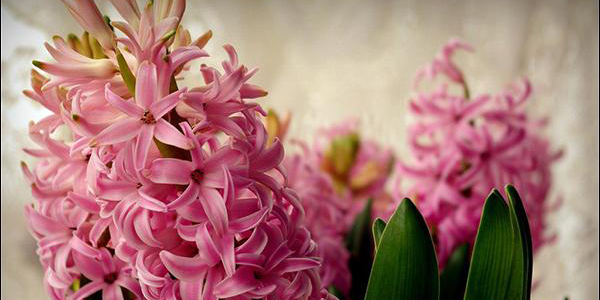
How hyacinths are propagated:
Hyacinth propagation methods can be broadly divided into bulb division and seed propagation, with bulb division being the main method. Every year in June, after the leaves turn yellow, dig up the bulbs, remove the soil, dry them in the shade, and store them in a cool, ventilated place; they can also be placed in the refrigerator, then planted again in autumn, and they will bloom in early spring the following year. Small bulbs need 3 years of cultivation before they will bloom.
1. The method of hyacinth bulb division propagation is:
① During the dormant season, dig up the bulbs and spread them flat indoors to dry in the shade.
② Select a large bulb, cut the base into a concave-shaped base plate, then cut a cross into the center of the bulb, cutting directly from the base of the bulb toward the terminal bud, to a depth reaching its middle.
③ After cutting, wait until the sap secreted from the cut is slightly dry, then disinfect with 0.1% mercuric chloride solution or sodium hypochlorite solution, and air-dry for 1-2 h.
④ Bury shallowly in soil; by the end of the following summer, many bulblets will grow around the cut on the bulb. Dig them out a year later, dry them, separate them, and plant them.
If indoors, plant them in a shallow pot, spread out in a single layer, and keep the room temperature at around 21°C to encourage callus tissue to form. As the bulb swells, gradually raise the temperature to 30°C with relative humidity around 85%. After about 3 months, many small bulbs will grow, which can be dug out, dried, separated, and planted. Of the cultivated bulblets, large ones will bloom in early spring the following year, while small ones need 2-3 years of cultivation before they bloom.
2. The method of hyacinth seed propagation:
This technique is mostly used when breeding new varieties. The main points are to collect seeds at the right time: if collected too early, the seeds are not fully developed; if too late, the seeds scatter easily. Collect and sow immediately; 4-5 years of cultivation are needed before blooming. Sow in autumn into the growing medium of a cold frame, cover with 1 cm of soil, and they will germinate at the end of January or the beginning of February the following year. Small bulbs cultivated from seedlings bloom after 4-5 years. Under ordinary storage conditions, seed viability can be maintained for 3 years. #p#Subtitle#e#
How to handle hyacinths after they bloom:
Because many people do not pay attention to cultivation methods, they generally throw the plant away after it blooms once. In fact, it can bloom every year, only the flower spike gets a little smaller each year, but once it shrinks to a certain point it stops degenerating, and it can even produce small bulbs that bloom successfully.
There are two main reasons for hyacinth degeneration. One is that after blooming, this plant enters the most important period for bulb swelling. In its place of origin the climate is mild, and the weather only clearly heats up after June, and the humidity is not low either. This gives it 2-3 months of suitable temperatures for growth after the flowers fade. In China's climate it already gets unbearably hot in early May, and rather dry and hot too, which pushes the plant into early dormancy before it can fully swell. This is the main reason for degeneration.
Do not throw away hyacinths after they bloom. Apply fertilizer promptly after flowering, take care that water does not get into the leaf crown, and after May place them in a cool, shaded spot, delaying as much as possible the process of the leaves turning from green to yellow. This can slow the degree of degeneration or even prevent it entirely. Even if they do degenerate, planting hyacinths of different colors together still gives a nice ornamental effect.
The above is an introduction to hyacinth propagation methods and how to handle hyacinths after they bloom. If you want the hyacinths in your home to bloom year after year, then after flowering you must pay attention to water and fertilizer supplementation, ensure normal growth of the hyacinths, and prevent them from degenerating.
How to handle potted hyacinths after they bloom? How to make hyacinths bloom again after flowering
More and more people like growing potted hyacinths, so do you know how to handle potted hyacinths after they bloom? Next, let us introduce in detail the post-bloom handling methods for potted hyacinths, to help everyone grow potted hyacinths better.
Post-bloom handling methods for potted hyacinths:
After potted hyacinths bloom, the leaves will gradually wither. You should cut off the withered leaves, dig out the bulb, and place it in a cool, dry spot. During the high temperatures of mid-July, it can be placed in the refrigerator (kept at 15°C) to prevent rot. Take it out at the end of September and plant it in a pot filled with ordinary growing medium, placing a few granules of compound fertilizer at the bottom of the pot. Then place it on a balcony so it undergoes at least 5-7 weeks of natural low temperatures, keeping the potting soil moist during this time. 30-40 days before the Spring Festival, move it indoors to a spot with ample light, water frequently, and keep the potting soil moist but not waterlogged. Room temperature is best at around 20°C. When the temperature is high, water a little more; when low, find ways to raise the temperature. In this way it can bloom again by the Spring Festival. One flowering bulb can be cultivated this way for about 2-3 years.
If it is a water-grown hyacinth, first of all, after the hyacinth blooms and fades in spring, you only need to continue growing it in water. This process lasts roughly until early June, by which time you will notice the hyacinth's leaves have already turned somewhat yellow and withered. This shows the hyacinth has entered its summer dormancy period.
Then what you need to do is trim off the hyacinth's leaves and roots, leaving only the bulb. After completing this step, put the bulb in a dark, ventilated place to air-dry, and by no means expose it to the sun. If after two or three days you find the hyacinth bulb has dried, then simply wrap it well in newspaper or similar material and put it in the refrigerator's crisper compartment. Putting the bulb in the refrigerator is to keep it from rotting due to high temperatures or sun exposure. In the refrigerator the bulb will begin its winter dormancy, waiting for the arrival of real winter.
The last and most important step is replanting. Around November, as the weather gradually turns cool, it is time to take the hyacinth out of the refrigerator. Place the removed bulb on a vase neck that suits it, then add water. When adding water, note that the water needs to come to within 1CM of the bulb; too much or too little will affect re-rooting. After adding the water, place it in complete darkness at a temperature kept at around 5°C. After 25 days of this, you will find a miracle has occurred: the hyacinth has roots again and vitality again. After that, simply care for it using the usual cultivation methods, and your hyacinth will bloom again.
How to handle hyacinths after they bloom: the correct post-bloom handling method for hyacinths
How many times a year hyacinths bloom is something many friends do not know. In fact, hyacinths bloom only once a year, and most friends throw them away after growing them for a year. Actually there is no need to, as long as they are handled properly the re-blooming effect is still quite good. So how should hyacinths be handled after they bloom? Let's find out together.
Post-bloom handling method for hydroponic hyacinths
1. Continue water culture: after the hydroponic hyacinth's flowers fade, continue growing it in water until early June, when the temperature gradually rises, and the hyacinth's leaves will turn yellow and it will enter the summer dormancy period.
2. Cut off the leaves: cut off all the yellowed leaves of the summer-dormant hyacinth, and cut off all the roots as well.
3. Refrigerate the hyacinth: place the bulb in a cool, ventilated place to air-dry for 1 to 2 days (absolutely do not sun it). Once thoroughly dried, wrap the bulb well in newspaper, put it in a jar, and place it in the refrigerator's crisper compartment (not the freezer).
4. Temperature requirements: during the summer, the temperature must not exceed 10°C, otherwise the bulb easily rots.
5. Replanting: when November comes and the temperature gradually turns cool as deep autumn arrives, take out the hyacinth bulb that has been stored all summer, place it on the mouth of a suitable container, add water to about 1CM from the bottom of the bulb, then place it in complete darkness in a cool spot at 5°C to encourage rooting. After about 25 days roots will sprout, and once the roots have grown to 2CM, you can care for it using the normal hyacinth cultivation method until it blooms. Generally, with this cycle, hyacinths can be grown for about 3 years; by the 4th year the original bulb will basically no longer bloom.
Post-bloom handling methods for soil-grown and water-grown hyacinths
1. Keep the bulb: after soil-grown hyacinths finish blooming, cut off all the leaves, flower stems, and so on, keeping the bulb. Then bury the bulb in sandy soil and wait for the summer dormancy period to arrive.
2. Replanting: around July 20, dig it out, put it in the refrigerator's crisper compartment, keep it at 4°C, and carry out low-temperature sprouting. Once the growing point sprouts, continue burying it in sandy soil, watering once every 15 days, and wait until December to pot it for cultivation. The management is quite simple, with no special techniques involved.
The above is what Xiao Qi shared abouthow to handle hyacinths after they bloomIf you do not want to buy new hyacinths next year, you might as well learn these methods.