How to Grow Hymenocallis? A Complete Guide to Its Cultivation Methods
The Hymenocallis plant is fresh green and robust, with slender and graceful form, making it an excellent flowering and foliage plant. So how do you grow Hymenocallis? Today, the editor will introduce the cultivation methods for Hymenocallis.
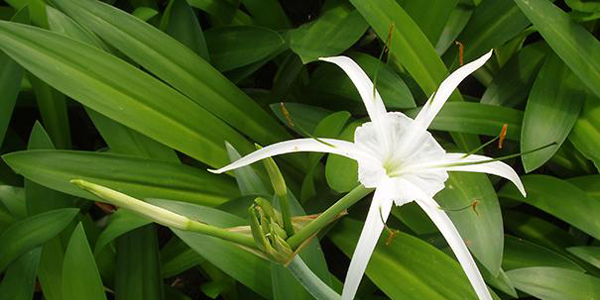
How to grow Hymenocallis:
To know how to grow Hymenocallis, you first need to understand its growth habits. Hymenocallis likes ample light and a warm, humid climate, and is not cold-tolerant. Hymenocallis is not demanding about soil and prefers fertile soil; it can be grown in pots with leaf mold, or planted in clayey soil.
The overwintering temperature for potted Hymenocallis is above 15°C. During the growing period, water and fertilizer should be sufficient. Hymenocallis planted in the open ground needs its bulbs dug up in autumn and stored dry indoors. With just a little care, Hymenocallis will grow and bloom year after year.
Cultivation methods for Hymenocallis:
1. Soil: Hymenocallis is not demanding about soil; it can be grown in pots with leaf mold, or planted in clayey soil. Potted Hymenocallis can be done in early spring, commonly using a mix of equal parts peat soil, fertile garden soil and river sand. The planting depth for Hymenocallis is such that the top of the pseudobulb is level with the pot soil. For ground planting, choose deep, fertile, well-drained clayey soil, and planting in early May is preferable.
2. Watering: Hymenocallis likes a moist soil environment and is not drought-tolerant. During the growing period, especially in high summer temperatures, water should be supplied abundantly to keep the pot soil moist and not let it become too dry. Hymenocallis also dislikes waterlogging; after rain during the plum rain season, promptly pour off any accumulated water in the pot. In winter, watering should be moderated to keep the pot soil relatively dry. When temperatures are low and humidity is high, the pseudobulb is prone to rotting.
3. Light: Hymenocallis likes a semi-shaded environment and has strong shade tolerance. When summer light is too intense, it should be appropriately shaded or the pot moved to a semi-shaded spot. If placed in too shady a spot for a long time, the leaves of Hymenocallis will become thinner and the leaf color darker, making the plant's form unattractive. Hymenocallis dislikes strong direct sunlight, otherwise the leaves turn yellow with scorched tips. From May to September, shading should be provided, or the plant placed in a spot with ample scattered light. At other times, give it plenty of sunlight.
4. Temperature: Hymenocallis likes warmth and is not cold-tolerant. The most suitable temperature for growth is 21-27°C. Below 15°C, the growth of Hymenocallis stops; below 10°C, the leaves turn yellow and wilt; at 5°C, the above-ground part dies. The overwintering temperature for potted Hymenocallis is above 15°C. If the above-ground part dies, it can enter dormancy in the form of underground bulbs, and when the temperature rises the following spring, it can still sprout new leaves and grow. #p#Subtitle#e#
5. Fertilizing: During the growing period, fertilize Hymenocallis once every half month. After Hymenocallis enters the bud stage, increase the application of phosphorus and potassium fertilizer to make the flowers larger. Fertilizing should be paused while Hymenocallis is blooming. After flowering, apply fertilizer mainly of nitrogen and potassium to promote stem and leaf growth and pseudobulb enlargement. If the growing environment is rather shady, reduce the supply of nitrogen fertilizer and increase phosphorus and potassium fertilizer, which can make the plant grow robustly without leggy growth. Stop fertilizing in winter.
6. Pests and diseases: In seasons of high temperature and high humidity or low temperature, Hymenocallis is prone to brown spot disease, and attention should be paid to its control. When harmed by brown spot disease, small round brown spots appear on the leaves, then gradually expand; the spot edges are dark brown and the centers gray-black, until the spots connect and the leaves die. When only a few are found, pick off the diseased leaves and destroy them. In severe cases, spray with a 500-fold dilution of 75% mancozeb wettable powder for control.
7. Pruning: After Hymenocallis flowers fade, promptly cut off the flower scape to prevent seed formation from consuming nutrients and affecting the plant's growth. If indoor space is small, the above-ground leaves can be cut off before winter arrives, the pot placed in a dry, shaded spot, and the room temperature kept at 5-10°C, until the following spring when it is repotted and grown in sunlight.
8. Repotting: Potted Hymenocallis should be repotted once every 2-3 years in April of spring. It likes fertile, moist, organic-rich, well-drained clayey soil. The growing medium can be prepared from materials such as leaf mold, garden soil, peat soil and plain sand. Planting should not be deep, with the top of the pseudobulb level with the pot soil. But when planting offset bulbs, they can be planted slightly deeper.
Hymenocallis has a peculiar flower shape, with petals in ribbon-like strands, pure white petals and emerald green leaves, very elegant and fresh. Grown in pots indoors, it can beautify the home.
How to Grow Hymenocallis: Cultivation Methods for Hymenocallis
Hymenocallis has graceful foliage, blooms from June to July, with white flowers and a unique flower shape, standing elegantly, suitable for potted display. In warm regions, it can be used for courtyard landscaping or in flower borders and flower beds. So how do you grow Hymenocallis? Below, the editor will share the cultivation methods for Hymenocallis.
How to grow Hymenocallis
To know how to grow Hymenocallis, you first need to understand its growth habits. Hymenocallis likes ample light and a warm, humid climate, and is not cold-tolerant. Hymenocallis is not demanding about soil and prefers fertile soil; it can be grown in pots with leaf mold, or planted in clayey soil.
The overwintering temperature for potted Hymenocallis is above 15°C. During the growing period, water and fertilizer should be sufficient. Hymenocallis planted in the open ground needs its bulbs dug up in autumn and stored dry indoors. With just a little care, Hymenocallis will grow and bloom year after year. Hymenocallis has a peculiar flower shape, with petals in ribbon-like strands, pure white petals and emerald green leaves, very elegant and fresh. Grown in pots indoors, it can beautify the home environment.
Cultivation methods for Hymenocallis
Soil: Hymenocallis is not demanding about soil; it can be grown in pots with leaf mold, or planted in clayey soil. Potted Hymenocallis can be done in early spring, commonly using a mix of equal parts peat soil, fertile garden soil and river sand. The planting depth for Hymenocallis is such that the top of the pseudobulb is level with the pot soil. For ground planting, choose deep, fertile, well-drained clayey soil, and planting in early May is preferable.
Watering: Hymenocallis likes a moist soil environment and is not drought-tolerant. During the growing period, especially in high summer temperatures, water should be supplied abundantly to keep the pot soil moist and not let it become too dry. Hymenocallis also dislikes waterlogging; after rain during the plum rain season, promptly pour off any accumulated water in the pot. In winter, watering should be moderated to keep the pot soil relatively dry. When temperatures are low and humidity is high, the pseudobulb is prone to rotting.
Light: Hymenocallis likes a semi-shaded environment and has strong shade tolerance. When summer light is too intense, it should be appropriately shaded or the pot moved to a semi-shaded spot. If placed in too shady a spot for a long time, the leaves of Hymenocallis will become thinner and the leaf color darker, making the plant's form unattractive. Hymenocallis dislikes strong direct sunlight, otherwise the leaves turn yellow with scorched tips. From May to September, shading should be provided, or the plant placed in a spot with ample scattered light. At other times, give it plenty of sunlight.
Temperature: Hymenocallis likes warmth and is not cold-tolerant. The most suitable temperature for growth is 21-27°C. Below 15°C, the growth of Hymenocallis stops; below 10°C, the leaves turn yellow and wilt; at 5°C, the above-ground part dies. The overwintering temperature for potted Hymenocallis is above 15°C. If the above-ground part dies, it can enter dormancy in the form of underground bulbs, and when the temperature rises the following spring, it can still sprout new leaves and grow.
Fertilizing: During the growing period, fertilize Hymenocallis once every half month. After Hymenocallis enters the bud stage, increase the application of phosphorus and potassium fertilizer to make the flowers larger. Fertilizing should be paused while Hymenocallis is blooming. After flowering, apply fertilizer mainly of nitrogen and potassium to promote stem and leaf growth and pseudobulb enlargement. If the growing environment is rather shady, reduce the supply of nitrogen fertilizer and increase phosphorus and potassium fertilizer, which can make the plant grow robustly without leggy growth. Stop fertilizing in winter.
Pests and diseases: In seasons of high temperature and high humidity or low temperature, Hymenocallis is prone to brown spot disease, and attention should be paid to its control. When harmed by brown spot disease, small round brown spots appear on the leaves, then gradually expand; the spot edges are dark brown and the centers gray-black, until the spots connect and the leaves die. When only a few are found, pick off the diseased leaves and destroy them. In severe cases, spray with a 500-fold dilution of 75% mancozeb wettable powder for control.
Pruning: After Hymenocallis flowers fade, promptly cut off the flower scape to prevent seed formation from consuming nutrients and affecting the plant's growth. If indoor space is small, the above-ground leaves can be cut off before winter arrives, the pot placed in a dry, shaded spot, and the room temperature kept at 5-10°C, until the following spring when it is repotted and grown in sunlight.
Repotting: Potted Hymenocallis should be repotted once every 2-3 years in April of spring. It likes fertile, moist, organic-rich, well-drained clayey soil. The growing medium can be prepared from materials such as leaf mold, garden soil, peat soil and plain sand. Planting should not be deep, with the top of the pseudobulb level with the pot soil. But when planting offset bulbs, they can be planted slightly deeper.
Friends who don't know how to grow Hymenocallis, as long as you follow the cultivation methods for Hymenocallis shared by the editor above, you will surely be able to grow healthy and beautiful Hymenocallis.
How to Grow Hymenocallis: Cultivation Methods and Precautions for Hymenocallis
Hymenocallis is also called spider lily. Hymenocallis not only has ornamental value but also high medicinal value, and can also be grown on a large scale as an economic crop. Now let's learn together how to grow Hymenocallis, its cultivation methods and precautions.
1. Planting: Potted growing can be done in early spring, commonly using a mix of equal parts peat soil, fertile garden soil and river sand. The planting depth is such that the top of the pseudobulb is level with the pot soil. For ground planting, choose deep, fertile, well-drained clayey soil, and planting in early May is preferable.
2. Fertilizing: During the growing period, fertilize once every half month. After entering the flowering period, apply manure once every 7-10 days. If phosphorus and potassium fertilizer can be appropriately supplemented, the flowers will bloom even more vigorously.
3. Watering: After Hymenocallis is moved outdoors in spring, as temperatures rise, gradually increase the amount of watering. In midsummer, it is best to spray once in the morning and then water thoroughly in the afternoon, keeping the soil constantly moist and the ambient humidity relatively high. After moving it indoors in winter, watering should be controlled; as long as the pot soil is kept slightly moist, it can get through the cold winter.
4. Temperature and light: When summer light is too intense, it should be appropriately shaded or the pot moved to a semi-shaded spot. From December in winter to March of the following year, the above-ground part withers; the pseudobulbs are stored indoors in dry sawdust or river sand, requiring a room temperature of 15-20°C and humidity of about 50%, avoiding excessive humidity that causes the pseudobulbs to rot.
5. Propagation: Hymenocallis is propagated by dividing the bulbs. This is done in spring together with repotting. In winter, place it in a sunny spot in a greenhouse and control watering appropriately; in summer, place it under a shade shed, and once it enters the flowering period, supply water fully. If grown in the open ground, place the bulbs in a warm, well-lit spot in a greenhouse in April to encourage root activity. The planting site should be chosen in a spot with ample light and humus-rich sandy or clayey loam. Deep-plow in the previous autumn and apply base fertilizer; the following spring, plow again, apply base fertilizer once more, and prepare the soil into beds. Plant in late May, with a soil-covering depth of 3-5 cm and bulb spacing of 15-20 cm. When frost comes in late autumn and the leaves turn yellow, harvest the bulbs promptly, dry them, and store them at around 8°C.
6. Pest and disease control: The main diseases of Hymenocallis are leaf spot and leaf scorch. When only a few are found, pick off the diseased leaves and destroy them. In severe cases, spray with a 500-fold dilution of 75% mancozeb wettable powder for control.
How to grow Hymenocallis, its cultivation methods and precautions - have you all learned them? To learn more information about Hymenocallis, please follow Huobao Agricultural Materials News.