Reasons for Yellowing Leaves of Pennywort and How to Care for It
Pennywort has a cute form, with plants clustering together into a clump, dotted with emerald green leaves, giving it good ornamental value, so pennywort is simply perfect for growing as a potted plant. So, how do you grow pennywort?
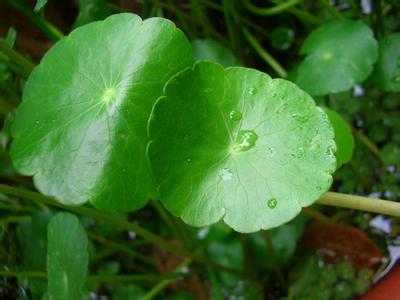
1. Notes on Growing Pennywort
(1) Pot and Soil
Potted pennywort should have its pot and soil changed about every two years, and spring is a suitable time for repotting. When planting potted pennywort, the planting depth should be similar to the depth of the plant; do not choose a pot that is too large. After repotting, water it, and once thoroughly watered, place it in a ventilated spot for more than ten days.
(2) Water
The leaves of potted pennywort have a luster, with a very good green waxy coating, and the transpiration effect of the leaves is very high, so potted pennywort is not moisture-tolerant, and because transpiration is fast it becomes very short of water. When watering, also pay attention to watering when dry and stopping when wet; after thoroughly watering potted pennywort, wait until the surface of the potting soil has dried out before watering again. In summer, the potting soil is best kept alternately wet and dry, and you can spray water on the leaf surface to cool the leaves.
(3) Fertilizing
Potted pennywort does not like too much fertilizer, so thin, diluted fertilizer water is suitable for growing potted pennywort. Fertilizing potted pennywort can make the plant grow more luxuriantly and the color more vivid. When fertilizing, the potting soil must be completely dry first.
2. Growth Habits of Pennywort
(1) Pennywort is robust by nature, easy to plant, reproduces quickly, and can grow both in water and on land.
(2) Pennywort likes warmth and moisture, and should be kept in a semi-shaded spot; direct sunlight is taboo. There are no strict requirements for the growing soil, but soft, well-drained growing soil is best, or it can be grown directly in water. The optimal growing temperature is 22-28°C.
(3) Pennywort does not need a very large pot; it can also be planted in a larger bowl, and a relatively shallow narcissus pot will do. For soil, generally use vegetable garden soil, mix in an appropriate amount of river sand, and add a small amount of organic fertilizer as base fertilizer.
(4) Pennywort is afraid of cold. For pennywort placed outdoors in winter, all the water can be poured out, and it can be placed in a south-facing, sunny, wind-sheltered spot to winter safely. However, in winter some leaves will gradually wither, and the underground roots will sprout again the following spring. In cold northern regions without heating, you can cover it with a cover, pour out the water, and keep it moist; as long as the room temperature is not lower than 0°C, it will likewise continue to grow the following year.#p#Subtitle#e#
3. The Symbolism of Pennywort
Pennywort has round leaves, like mini lotus leaves, quite cute, and like ancient copper coins, symbolizing reunion and continuous good fortune. Moreover, the name carries the two characters "tong" (copper) and "qian" (money), so its symbolism is naturally different: a home with pennywort has rolling wealth, and therefore it is regarded as a symbol of wealth.
4. Reasons for Yellowing Leaves of Pennywort
(1) Watering with "half water", that is, watering not thoroughly, without watering until water seeps out from the bottom of the pot.
(2) Being exposed to cold in winter, the root system has already been frostbitten.
(3) After winter, being rushed outdoors and placed in a warm spot to bask in the sun, it is temporarily unable to adapt to the sudden change in climate.
(4) The potting soil has been too wet or too dry for a long time, without watering as soon as it dries.
(5) Being placed in a poorly ventilated environment for a long time.
(6) The leaf surface has not been sprayed and cleaned for a long time, dust accumulates, hindering photosynthesis.
(7) Lack of potassium; adding an appropriate amount of plant nutrient solution will do.
How to Grow Pennywort and What to Do When Pennywort Leaves Turn Yellow
Pennywort can be placed beside a desk or computer, or in the living room. Its plump leaves and pleasant name make it loved by many flower lovers. How do you grow pennywort? What should you do when pennywort leaves turn yellow? Let's explain below.
How Do You Grow Pennywort?
1. Pennywort's requirements for water quality: ordinary tap water is fine. Change the water frequently. In summer, change the water every 3-4 days, with the water level at half the bottle. In winter, change the water once a week. In winter, the leaves transpire less, so change 1/3 of the water each time.
2. Pennywort's requirements for light: this plant relatively likes light. I generally place pennywort where sunlight can reach, such as a windowsill. In summer, the light duration can be longer. 4-5 hours is a must. In winter, if there is little light, you can use a UV lamp or fluorescent lamp to replace sunlight.
3. Pennywort's requirements for temperature: I am from the south, and growing pennywort hydroponically is effortless. The southern climate is very suitable for growing pennywort. Keeping the normal temperature at 10-26 degrees is very suitable. Too hot or too cold is not suitable for pennywort growth.
4. How pennywort prevents pests: pennywort's natural enemy is the water snail, which eats pennywort's roots and tender shoots. If you see this small creature in the water, do not show any mercy. A large outbreak can kill your pennywort.
5. Fertilizing pennywort: personally, I do not really recommend fertilizing pennywort, because the nutrients produced by its own photosynthesis are enough. Of course, if you want it to be more luxuriant, you can apply a moderate amount of fertilizer; ordinary fertilizer can be dissolved in the water basin and allowed to absorb on its own, but note that the amount should not be too concentrated; a small amount is enough.
6. Pennywort's propagation method: pennywort is generally propagated by division. In summer, use scissors to cut at the point where the stolon has rooted, and transplant the front plant into another water basin to propagate. In addition, in summer pennywort will produce small flowers, and the seeds produced afterward can also be used to propagate new plants.
Notes on Growing Pennywort:
1. Get the water, soil, and sunlight right: pennywort has round wavy-edged leaves and long stems, and blooms small yellow-green flowers in summer and autumn; it can be grown both in water and on land. It likes warmth and moisture, and a semi-sunny or shaded growing spot is best; direct sunlight is taboo. There are no strict requirements for growing soil, but soft, well-drained growing soil is best. Propagation can be done by division or cuttings; it is easy to grow, and keeping the growing soil moist will allow rooting in about 1-2 weeks. Because the plant can tolerate moisture and is an emergent type, it is also suitable for growing in water basins and ponds. If grown in water, be sure to change the water once a week and add a special nutrient solution for foliage plants.
2. Choose well-drained growing soil: pennywort does not need a very large pot; it can also be planted in a larger bowl, and a narcissus pot for growing narcissus will also do. Use ordinary vegetable garden soil, mix in an appropriate amount of river sand, and add a small amount of organic fertilizer as base fertilizer. When planting pennywort, it can be planted flat, with the rhizome just slightly covered so it is not visible; avoid planting too deep. Then place it in a semi-shaded spot for a week, and wait for new leaves to grow before exposing it to sunlight.
3. Get the temperature right: pennywort is afraid of cold. For pennywort placed outdoors in winter, all the water can be poured out, and it can be placed in a south-facing, sunny, wind-sheltered spot to winter safely; only some leaves will wither and die, and the underground roots will sprout again the following spring. In cold northern regions without heating, you can make a cover to cover the whole pot, pour out the water, and keep it moist; as long as the room temperature is not lower than below zero, it will likewise continue to grow the following year.
Reasons for Yellowing Leaves of Pennywort:
1. Watering with "half water", that is, watering not thoroughly, without watering until water seeps out from the bottom of the pot.
2. Being exposed to cold in winter, the root system has already been frostbitten.
3. After winter, being rushed outdoors and placed in a warm spot to bask in the sun, it is temporarily unable to adapt to the sudden change in climate.
4. The potting soil has been too wet or too dry for a long time, without watering as soon as it dries.
5. Being placed in a poorly ventilated environment for a long time.
6. The leaf surface has not been sprayed and cleaned for a long time, dust accumulates, hindering photosynthesis.
Solutions:
1. If grown fully hydroponically, it is prone to nutrient deficiency and does not grow as well as in soil. If grown fully in soil, it often does not get enough water; water it every day until water comes out of the bottom of the pot. Growing it half in water and half in soil is best.
2. It needs plenty of sun; even a little shade will prevent it from growing well.
3. The rhizome grows extremely fast and will keep coiling up and piling up in the pot. Over time it absorbs too many nutrients, and the leaves instead do not get enough nutrients. So every so often, such as every two or three months, the roots must be cleaned and the pot changed. Discard the excess roots, keeping just a small section. Pennywort is a tough plant that is very easy to keep alive. A small section of stem with a bit of root can grow into a large pot.
4. Applying a little fertilizer every month will make it grow better.
Pennywort - How to Grow Pennywort | How to Care for Pennywort | Yellowing Leaves of Pennywort
Pennywort
Pennywort is a perennial creeping emergent or hygrophytic herbaceous plant, often curling into a clump. Its stems are slender, rooting at the nodes, and grow densely. The stems are slender, rooting at the nodes. The leaves are round or kidney-shaped, densely covered on the underside with appressed T-shaped hairs, with entire margins; the corolla is bell-shaped and yellow. The flowering period is April. The fruiting period is July, with nearly spherical capsules. It is propagated by sowing and division, and has a very strong spreading ability, making it an excellent groundcover plant. Pennywort is robust by nature, easy to plant, reproduces quickly, and can grow both in water and on land. The runners are well developed, with roots and leaves growing from the nodes. The leaves are round and peltate, with long petioles and wavy margins, and it blooms small yellow-green flowers in summer and autumn.How to Grow Pennywort
1. Pennywort's requirements for water quality: ordinary tap water is fine. Change the water frequently. In summer, change the water every 3-4 days, with the water level at half the bottle. In winter, change the water once a week. In winter, the leaves transpire less, so change 1/3 of the water each time.
2. Pennywort's requirements for light: this plant relatively likes light. I generally place pennywort where sunlight can reach, such as a windowsill. In summer, the light duration can be longer. 4-5 hours is a must. In winter, if there is little light, you can use a UV lamp or fluorescent lamp to replace sunlight.
Yellowing Leaves of Pennywort
The reasons for yellowing leaves of pennywort are roughly these:
1. Watering with "half water", that is, watering not thoroughly, without watering until water seeps out from the bottom of the pot.
2. Being exposed to cold in winter, the root system has already been frostbitten.
3. After winter, being rushed outdoors and placed in a warm spot to bask in the sun, it is temporarily unable to adapt to the sudden change in climate.
The Uses of Pennywort
The roots, stems, and leaves of pennywort can be used as a vegetable dish; they can also be used as a Chinese medicinal herb to dispel wind, firm the intestines, and clear the eyes and relieve summer heat.
Used parts: the whole plant can be used as medicine, and it has a diuretic effect.
Collection time: collected in summer and autumn.
Properties: slightly cold in nature, bitter and pungent in taste; clears heat and removes dampness, detoxifies and promotes urination. Other names: bengdawan, horse hoof grass, gotu kola, bloodwort, pennywort, luodeda.
How to Grow Pennywort
Pennywort is not strict about water quality and can be grown in relatively soft fresh water. It has strong adaptability to the pH of the water body, but it is best to keep it at 6.5-7.5, that is, it can grow well in water from slightly acidic to slightly alkaline. Its demand for fertilizer is relatively high, and during the vigorous growth stage it is enough to apply fertilizer once every 2-3 weeks. After the plant differentiates flower buds, phosphorus fertilizer can be appropriately increased. Pennywort likes an environment with sufficient light; in a shaded environment the leaves are prone to rot, so it is best to let it receive more than 4 hours of scattered sunlight every day. A special fluorescent lamp can also be used, giving the plant 8-10 hours of artificial light every day, and it can also grow normally.
How to Grow Pennywort Hydroponically
How do you grow pennywort hydroponically? It is recommended to choose one that has already rooted. Growing it half in soil and half in water means using a leak-proof container, pressing the roots of the pennywort down with mud, sand, or pebbles, then adding water to the container, dripping in a few drops of hydroponic nutrient solution, and then placing it in a spot with good sunlight; pennywort is very easy to grow.
Is Pennywort Toxic?
Is pennywort toxic? Can it be kept in the bedroom? Pennywort is not toxic; the whole plant can be used medicinally, and pennywort can be kept in the bedroom. Pennywort flowering is even less toxic; its flowering period is around April, and it blooms small white tiny flowers. Pennywort is one of the beautiful and easy-to-grow aquatic plants; it can be grown indoors in pots or hanging baskets, making the home appear fresh and natural and making the mood relaxed and happy.
Pennywort Flower Language
Pennywort's flower language: wealth rolling in!
The meaning of pennywort: according to our culture, which pays attention to symbolism and homophones, pennywort has round leaves, like mini lotus leaves, quite cute, and also like ancient copper coins, symbolizing reunion and continuous good fortune. Moreover, the name carries the two characters "tong" (copper) and "qian" (money), so its symbolism is naturally different: a home with pennywort has rolling wealth. Therefore, it is regarded as a symbol of wealth, so growing pennywort at home has both symbolic meaning and avoids the vulgarity of using golden copper coin decorations, while pennywort's shape is special and also shows a noble air.
Pennywort Flowering
Does Pennywort Bloom?
Pennywort does bloom, with small white-pink flowers. Its flowering period is April, and it also bears fruit, with the fruiting period in July and nearly spherical capsules. It likes warmth and moisture, and a semi-sunny or shaded growing spot is best; direct sunlight is taboo. There are no strict requirements for growing soil, but soft, well-drained growing soil is best. The most suitable water temperature for pennywort is 22-28 degrees. It tolerates shade and moisture, is slightly drought-tolerant, and has strong adaptability.
Related Encyclopedia
Pocket scale non-woven bag rush pith moso bamboo shoot crab claw Redmi Note 3 YKK zipper YBS zipper large mountain cherry creeping wall plum wild senna winter plum green pine wristwatch Omega Longines famous watch children's building blocks flint zhejiang cymbidium curly stick soursop