How to grow tulips? A detailed guide to cultivation methods
Tulips have bright, eye-catching colors, with a great variety of hues, and the charming flowers also carry a captivating fragrance that deeply intoxicates people. So how do you grow tulips? Below we will take a look at tulip cultivation methods.
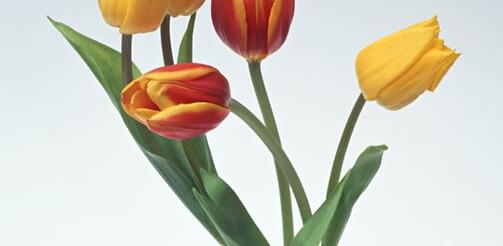
Tulip introduction:
Tulip, scientific name: Tulipa gesneriana, is a herbaceous plant of the genus Tulipa in the family Liliaceae. Although the tulip is called the national flower of the Netherlands, the tulip's place of origin is the high mountain regions of Tibet, China, Iran and Turkey. Tulips like sunny, wind-sheltered and moist environments, and the Mediterranean climate is just right for tulip growth, so tulips are currently planted on a large scale in the countries around the Mediterranean.
Tulips generally bloom in March and April each spring, with the flowering period from April to May. When in bloom, tulips have rich flower colors, including white, pink, carmine, purple, brown, yellow, orange and so on, in varying shades, with both single-color and bicolor tulips. Tulip flower shapes are also quite varied, including cup-shaped, bowl-shaped, egg-shaped, spherical, bell-shaped, funnel-shaped and lily-flowered. One tulip with red spots sprinkled on the petals is called “King's Blood.” In 1999 the Dutch discovered a new tulip variety, and later in 2014 China's First Lady Peng Liyuan named it “Guotai.”#p#Subtitle#e#
How to grow tulips:
The commonly used tulip cultivation methods are bulb division and seed propagation. When growing tulips, you first need to prepare tulip bulbs. The bulbs must be fresh and healthy, without any signs of damage or rot; otherwise, even if the tulip can survive, it will eventually rot and die before blooming.
Next we need to prepare the tulip pot and soil. Tulips like moisture and fertilizer, and growing them in a slightly acidic sandy loam rich in humus, loose and fertile, with good drainage, is best. Tulip pots are no different from ordinary pots; as long as there is a hole in the bottom it is fine, and this is to give the tulips air and water drainage. In addition, although tulips like water, the soil should not be too wet; if the soil is too wet you can put it under the sun to dry out a little.
Then you can prepare to plant. Note that tulips are generally planted around November each year. When planting, first remove some of the brown skin on the bulb and then plant it into the soil. Note that some people mistakenly think the deeper the tulip bulb is buried the better, but this is not so; instead, it leaves the bulb unable to breathe, trapped in the soil. When planting, you can leave part of the bulb exposed outside, but if you plant it this way, when watering you must be careful and gentle so that the water does not wash the bulb out of the soil.
After planting, tulips must not be exposed to light until the tulips have successfully grown roots, which takes about half a month; by then you can gently shake the bulb, and if it does not move, it is ready. At this point you can move the potted tulip into the sunlight. Because of the sunlight, the soil moisture evaporates, so remember to water, but not too much. Gradually the tulip will sprout, and by March or April of the following year the tulip will bloom.
Tulips are relatively precious flowers, so when growing them you should always observe the growth of the flowers and solve any problems promptly once they appear.
How to grow potted tulips and what cultivation methods there are
You are surely familiar with the tulip; it is the national flower of Turkey, Kazakhstan and the Netherlands, it comes in many colors, and its unique appearance is very attractive. A potted tulip placed at home will make people feel delighted. So how do you grow potted tulips? What cultivation methods are there?
The cultivation methods for potted tulips can be described from the following six aspects:
1. Soil: Tulips require planting soil that both retains water and allows air through, with salinity that is not too high and soil that is not too acidic; the pH value should be no less than 6. Using peat, decomposed soil and sand mixed at 1:1:1 as the growing medium gives relatively good results.
2. Sunlight: Sufficient sunlight is essential for tulip growth. Insufficient light will cause poor plant growth, leading to bud drop, weakened plants, lighter leaf color and a shorter flowering period. But within half a month after potting, tulips should be appropriately shaded to help the bulbs grow new roots. In addition, when sprouting, the elongation of flower buds is inhibited by light; after shading, flower bud elongation can be promoted, preventing excessively fast early vegetative growth and legginess. After emergence, light should be increased to promote stem elongation, form flower buds and promote coloring. After the flower buds have fully colored in the later stage, direct sunlight should be prevented to prolong the flowering time.
3. Temperature: Tulips like a climate that is warm in winter and cool in summer, with an optimum growing temperature of 9-13°C. They are highly cold-resistant and can withstand low temperatures of -35°C in winter.
4. Watering: After planting, water thoroughly so that the soil and bulb are fully and closely combined, which helps rooting. After sprouting, watering should be appropriately controlled. When the leaves gradually extend, water can be sprayed on the leaf surface to increase air humidity. During the flower stem sprouting stage and bud stage, a sufficient water supply must be guaranteed to promote full flower development. After flowering, watering should be appropriately controlled.
5. Fertilizing: Tulips do not have high fertilizer requirements. If growth is weak, some nitrogen fertilizer can be applied. After the root system has developed well, apply 2 kg of calcium nitrate per 100 sq m, spread in three applications, with an interval of more than one week between each.
6. Pests and diseases: The pathogens of tulip pests and diseases can be carried by bulbs or by the soil and infect the bulbs, mostly occurring in high-temperature and high-humidity environments. The main diseases include stem rot, soft rot, color-breaking disease, damping-off and blind buds, while the main pest is mostly aphids. Carry out thorough soil disinfection before planting, choose virus-free bulbs for cultivation as much as possible, promptly dig out and destroy diseased plants when found, and watering 1~2 times with fungicide during greenhouse growth gives better results; good ventilation should be maintained to prevent high temperature and high humidity; when aphids occur, 3% natural pyrethrin diluted 800 times can be sprayed to kill them.
Flowers all have life. Planting a pot of tulips at home seems to add a lot of vitality to the home, and the colors of tulips also make our field of view more colorful, so potted tulips are your best choice.
How to grow tulips: an introduction to tulip cultivation methods
Li Bai's famous line “Lanling fine wine, tulips” lets us feel the beauty and fame of the tulip. The tulip is the national flower of many European countries. Tulip flowers are beautiful and moving, and the flowering period is also very long. Below we will introduce how to grow tulips and take a look at an introduction to tulip cultivation methods.
How to grow tulips An introduction to tulip cultivation methods1. How to grow tulips——SoilThe soil requirement for tulips is that it must both ensure water permeability and ensure air permeability, and the alkalinity and acidity of the tulip soil must not be too high; neutral soil is best.
2. How to grow tulips——LightAfter tulips sprout, whether healthy flower buds can grow depends on sunlight exposure; sufficient light can make the plant grow more healthily. Of course, at the same time you must also control it so that direct sunlight does not hit the tulips and cause adverse growth effects.
3. How to grow tulips——TemperatureTulips like a warm winter environment, but in the high-temperature environment of summer they like a cool and ventilated climate. The normal constant temperature for tulips is best kept at around 13 to 9 degrees. Tulips have relatively good cold resistance and strong cold tolerance in winter.
4. How to grow tulips——WateringBefore planting tulips, water thoroughly first; the close combination of soil and root system is more conducive to later rooting and sprouting. After sprouting, watering should be appropriately controlled, and some water can be sprayed on the leaf surface to increase humidity and provide sufficient water supply.