How to care for a Clivia after it blooms? This is the right way to do it
Clivia crossed the ocean from the tropical regions of southern Africa to reach our country and is deeply loved by our people. Because its growing environment is special, let's follow along with the editor below to learn about how to care for a Clivia after it blooms.
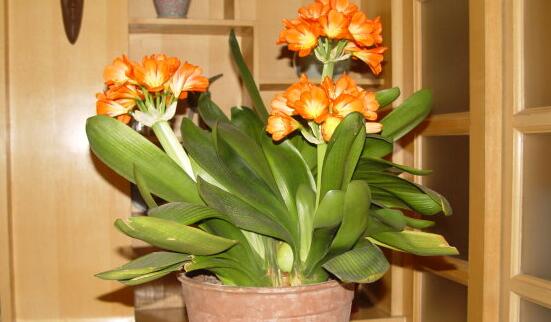
Characteristics of Clivia:
Clivia has one special trait, which is that its roots and leaves are connected in a certain way. When new roots grow, new leaves will inevitably grow too, and when new leaves grow, new roots will inevitably grow too. So even if the roots of a Clivia rot away for various reasons, as long as the leaves of the Clivia are not wilted, and during care you always pay attention to keeping the soil at suitable moisture, remember not to water too much or too little, and do not water too frequently, then the roots will grow new roots again, and the Clivia can still survive. Of course, when the leaves are damaged, the roots will likewise be affected. But as long as one of the roots or leaves of the Clivia is not completely withered, the Clivia can still live on healthily.
Flowering season of Clivia:
Clivia usually blooms once a year, with the flowering period around the Spring Festival. Of course, if the temperature is suitable, some bloom twice a year, but this situation is very rare. When Clivia blooms, the flowers range from red-yellow to bright red, usually with multiple flowers arranged in an umbel, and the flower shape is very beautiful. When blooming, the leaves of Clivia are generally more than twelve.
During the flowering period of Clivia, do not apply too much fertilizer. This can make the flower colors more brilliant. Of course, the leaves of the Clivia can also synthesize the nutrients needed for flowering through their own photosynthesis, making the flowers large in form and bright in color. After flowering, do not water the Clivia too much and cause the potting soil to become too wet. Overly wet potting soil easily causes the root system of the Clivia to rot, thereby affecting the absorption of water and nutrients, causing the flowering Clivia to lose water and nutrients and the flowers to wither and drop. You should water after the potting soil dries, which is beneficial to the normal flowering of the Clivia. #p#Subtitle#e#
What to do after Clivia blooms:
After the Clivia blooms, the flowers wither, leaving only a thick flower stalk. If pollination is successful, seeds will form on the stalk. After the Clivia sets seed, apply a diluted multi-element fertilizer once every two weeks to ensure the nutrients needed for leaf growth and for the seeds to continue growing to maturity. But be careful not to apply fertilizer with high concentration or raw fertilizer, otherwise not only will the leaf tips of the Clivia turn yellow, but the seeds that have already formed will also fall off.
If you are not collecting seeds, remove the flower stalk in time, generally cutting it off near the base. Be careful not to let the sap flow into the center of the two rows of leaves of the Clivia. You can wrap it with a paper towel and take it off after it dries, so as to avoid consuming nutrients as much as possible. If the pot is too small and there are offsets growing, you can repot and change the soil to carry out division propagation. If seeds have formed on the flower stalk and you need to collect them, postpone repotting and changing the soil until after the seeds are picked. At the same time, also pay attention to timely replenishing nutrients for the Clivia after flowering. This ensures that the Clivia can bloom normally when the flowering period arrives the following year.
Clivia, this beautiful and elegant gentleman among flowers, brings us not only its beauty when blooming, but also the influence of its elegant posture on our character. I hope it can bring everyone some insight.
How to grow Clivia well: Ten elements for Clivia growth
Ten elements for Clivia growth
Caring for Clivia; whether it lives depends on water, whether it looks good depends on fertilizer, and careful dry cultivation with slow growth is the essence of growing Clivia
Most people know that; it is not easy to kill a Clivia, and it is even harder to grow one well. From sowing and raising seedlings to a mature Clivia blooming, a single Clivia takes nearly four years. Daily care requires a suitable environment, soil changing, watering, fertilizing, light control, temperature, humidity, temperature difference control, ventilation, and many other links. If any one of these links is neglected, it will directly affect its normal growth,
But one thing is certain: Clivia has extremely strong vitality and also very strong adaptability to the environment. For example; placing a Clivia on cool, damp ground or in an indoor bathroom for 100 days will not kill it, and it can still grow. Yet there are also people who like to care for it very carefully and still manage to kill it. What does this show? Everyone knows that plant growth cannot be separated from soil, light, temperature, water, fertilizer, and so on. None can be absent, and too much is also no good. Too much water causes root oxygen deficiency, root rot, and drowning; lack of water causes withering and death; no fertilizer means no fine specimens; too much fertilizer burns it to death; no light is no good; too strong light scorches it to death; below 10 degrees it does not grow; above 35 degrees it goes dormant; below zero degrees it freezes to death. Therefore, to care for Clivia, you must understand its habits and physiological characteristics in order to grow it well,
1. Growing environment
Clivia grows in the tropical primeval rainforest of South Africa, where it is like spring all year round, with year-round temperatures of 10-25 degrees, humidity above 60%, an obvious day-night temperature difference of 8-10 degrees, soil that is natural humus soil, nourished by natural rainwater, and a clean environment, growing in a natural environment with good ventilation and dappled shade under trees. Nowadays people move it indoors or into flower cellars for cultivation, which requires creating a similar natural environment for it, letting it return to nature, so that it can grow healthily, and only then can its appearance and characteristics be revealed,
2. Potting soil
Soil; it is the foundation of Clivia growth and the prerequisite for growing Clivia well. If the nutrient soil is not formulated correctly, no matter how skilled you are, you cannot grow Clivia well. Clivia originally grows in the humus soil of South African tropical rainforests, so artificially prepared nutrient soil must approximate the soil composition of the natural environment: loose, fertile, breathable, and well-draining, suitable for the fleshy roots of Clivia to grow. Its main medium material is well-rotted oak leaves, (humus soil), and the ingredients include fresh pine needles, buckwheat husks, charcoal powder, small stones, and so on. Ratio; humus soil 80%, pine needles 10%, buckwheat husks 5%, charcoal powder 3%, small stones 2%. The above is the nutrient soil ratio for mature Clivia. For small seedlings, the proportion of humus soil needs to be larger, which is beneficial to seedling growth. Spring and autumn are different, and the ingredient ratios are also different. Follow the principle of loose in spring and firm in autumn. In summer high temperatures, add more ingredients so it drains quickly, dries quickly and gets wet quickly, which helps protect the roots and also prevents the plant from becoming leggy. When changing soil in autumn, keep more humus soil and increase nutrients to help with stalk emergence, flowering, and propagation.
3. Water, whether it lives depends on water,
1. Function;
Water is a necessary condition for plant survival, the raw material for Clivia photosynthesis, and also the carrier for absorbing and transporting nutrients. Chemical elements such as nitrogen, phosphorus, and potassium in the soil can only be absorbed by the plant's roots after dissolving in water. The organic matter produced by the leaves must be dissolved in water before it can be transported to the various organs and tissues of the plant. Water is an important component of the plant body. If water is lacking, the plant will wilt, and the leaves will droop and die. Clivia requires water with a neutral pH, that is, pH 6.5-7,
2. What kind of water is best for watering flowers
Magnetized water, rainwater, snow water, river water, well water, tap water (tap water must be left to stand for three days to release chlorine before use). Stagnant water and dirty water cannot be used,
3. Principles;
Watering principles; water when dry, stop when wet, and when watering, water thoroughly. It must not be too dry, and it must not be too wet. Too dry will cause the roots to shrink, and when they meet water they will rot. Dry cultivation does not equal dry growing. The limit of dry cultivation is that the roots must not shrink. The potting soil must not be completely dry for more than 2 days, otherwise the soil will draw moisture back from the roots and cause the roots to shrink. Nor can it be too wet for a long time; too wet means lack of oxygen in the soil and root rot. The humidity limit is related to season and temperature. During the growing period, water demand is high; normally water once every 5-7 days, and during the growing period water once every 2-3 days. In high temperatures, being too wet can help lower the temperature. In low temperatures, disease periods, and dormancy periods, being too wet for 5-7 days can easily cause root rot. Keeping the soil slightly moist is best. Better dry than wet,
4. How water manifests in the potting soil
(1) The moisture content of the soil in the flowerpot is not uniform; generally it is dry on top and wet below. The surface of the potting soil is very dry
but the middle of the potting soil is moist, and down to the bottom it is still wet. Especially in large flowerpots of 8 inches or more
The pattern of water in the potting soil is; the first stage when watering is fully wet - the second stage is dry on top - moist in the middle - wet below - the third stage is completely dry on top and in the middle - moist below - the fourth stage is completely dry - give water. The second and third stages are the most suitable growing stages for Clivia
(2) Testing methods
Lift it by hand; very heavy means fully wet; neither light nor heavy means; dry on top - moist in the middle - wet below, moderate humidity; when relatively light; completely dry on top and in the middle - moist below; when very light it is already completely dry. At this point it needs watering
(3) Clivia flower soil is very special. Its main components are fallen leaves, pine needles, buckwheat husks, and so on, which drain very well. It may look as if water is leaking from the bottom and it has been watered thoroughly, but in fact it has not. Do not be impatient, do not give half-hearted watering. It must be watered repeatedly many times, especially dry soil. Large pots need even more repeated watering. In addition, regular soaking-style watering by setting the pot in water is also needed,
5. Reference watering cycles
For small seedlings, small pots, sunny days, high temperatures, stalk emergence, peak growing season, vigorous roots, and good soil permeability, shorten the watering cycle
For mature Clivia, cloudy days, large pots, low temperatures, high humidity, flower bud maturity period, sick condition, and poor soil permeability, all extend the cycle,
Mature Clivia prefer dryness, small seedlings prefer moisture. At low temperatures, strictly control the amount of water, better dry than wet
6. Watering differs for large, medium, and small pots
Under the same conditions, small pots dry faster than large pots, soil with good permeability dries faster than soil with poor permeability, and high temperatures require more water than low temperatures. In normal growing periods, a 12-inch pot takes 3 days, a 20-inch medium pot 5-6 days, and a 28-inch large pot 7-10 days
Normally, small seedlings and medium seedlings need more water. When watering, water the flowers together with the pots. Large Clivia have more soil and a higher water content, and the bottom does not dry easily,
7. Alternating dry and wet,
That is, alternating dry and wet. But do not absolutely copy this rigidly. During the growing period, keep it a bit wetter, and at other times a bit drier, but dryness and wetness must not be excessive. Combine thorough and non-thorough watering. It cannot always be thorough, and even less can it always be non-thorough. Always thorough means nutrients are lost quickly. Normally a large pot will not dry out for 7-10 days.
8. Watering seasons
The time of watering is related to the season. In spring and winter, northern indoor spaces have heating, and the temperature is relatively high from 9 o'clock to 15 o'clock. Morning is the time when the temperature is lowest in the day, so it is best to water in the morning. It should also be flexibly controlled according to changes in season, climate, and temperature. In spring it should be slightly more, in summer it should be frequent and thorough, and heavy watering must flush out mold. In autumn and winter, water when dry and stop when wet. In Northeast China indoors, before the heating is supplied and after it stops, strictly control watering, better dry than wet. At the same time, check every day and replenish water for individual carriers that are short of water,
9. For adult Clivia, "do not water with plain water"
Each time add a little liquid fertilizer. This is good for Clivia growth, and has obvious effects in increasing leaf thickness and strength, (do not add during high-temperature dormancy)
10. Water temperature and soil temperature when watering
When watering, also pay attention to water temperature. The water cannot be too cold; about 20 degrees is best. This point is very important. The fleshy roots of Clivia are most afraid of cold. A shock of cold water easily causes disease and root rot. Water temperature and soil temperature should be close, and the temperature difference between the two should not be too large; watering time is best in the morning and evening. Do not water at noon in summer when the temperature is high. A large temperature difference between the flowers and the water is not good for flower growth
11. Watering the plant
Small seedlings can be watered over the whole plant, which is good for seedling growth. Mature Clivia, those with emerging stalks, and those with stalks already up cannot be watered over the whole plant. When watering, avoid the heart of the plant, as it very easily causes heart rot and stalk rot, with serious consequences.
12. Watering time
Watering time is best at 7-8 in the morning. At noon the temperature is high, and watering with a large temperature difference between hot and cold is very harmful to flower growth. Watering in the evening does great harm to the flower roots. If the flower roots are soaked for more than ten hours without light, they easily rot
13. Advantages and disadvantages of spraying water on leaves and surface
The water used must be clean, otherwise it will pollute the leaf surface. Spraying water on the leaf surface and top layer has advantages; (1) increases surrounding humidity (2) surface spraying helps Clivia root development (3) surface spraying helps lower temperature during high heat (4) keeps the leaf surface clean and enhances photosynthesis
Disadvantages; spraying water on the leaves increases humidity and favors bacterial infection, inducing leaf spot disease and anthracnose,
It will pollute the leaf surface, and water marks will remain on the leaves. These need to be wiped off, which is troublesome
14. Summer watering
Watering is the key to safely getting Clivia through summer: water frequently, and watering is also an effective means of cooling and increasing oxygen, as well as a basic skill for safely passing the summer. Some people say that Clivia should not be watered unless dry, and when dry it should be watered thoroughly. This statement is incorrect. Once Clivia dries out completely, the fleshy roots are damaged, and after damage it is very hard to recover. At the same time, after complete drying it is very hard to water thoroughly. Once watered thoroughly, it either becomes leggy or the roots rot. The higher the temperature and the hotter and drier the weather, the more attention must be paid to "frequent watering" and thorough watering.
15. Do not give half-hearted watering,
Clivia is very prone to half-hearted watering. It may seem thoroughly watered with water flowing out the bottom, but it is not; this is a false thorough watering. In fact, Clivia soil is very special, relatively loose with large gaps, and water will drain away through the gaps. Even after watering until it leaks five or six times in a row, the potting soil will not be thoroughly watered. So watering Clivia requires patience. Water slowly and many times until thoroughly watered, (to verify thorough watering, use a toothpick to move aside the surface soil and check). If it cannot be watered thoroughly for a long time and only gets half-hearted watering, the Clivia will suffer root rot and deformation, seriously affecting normal growth.
16. Accumulated over time;
Some people say that growing Clivia can be understood in a moment, but watering takes three years of skill. This shows the difficulty of watering. Whether it lives depends on water. Watering is a crucial part of growing Clivia: when to water, how much to water, whether to water thoroughly or let it leak through, watering differs by season, during the growing period, when temperature is suitable, and in high-temperature periods 2-3 days is not too much; in low temperatures and dormancy, ten days to half a month is not too little. Watering during the growing period and dormancy period is completely different. During the growing period, heavy watering can be used and water cannot be lacking. During high-temperature dormancy, better dry than wet; heavy watering will cause root rot. Plant size also determines different degrees of dryness and wetness: mature Clivia tend toward dry, small seedlings tend toward wet. Small seedlings 2-3 days, at most no more than 5 days; mature Clivia 7-10 days. Watering also differs with temperature, flowering period, and fruit-setting period. It differs with the moisture retention of the soil, and it differs with the placement of the flowers. In a location with sufficient light and good ventilation, the potting soil dries easily, so watering also differs. The same pot of Clivia has completely different watering needs across the 365 days of the four seasons. For example, a 12-inch pot in midsummer high temperatures needs 2-3 days, and maintaining humidity helps lower temperature; during the growing period, water demand is high, so 3-5 days is not too much; in low temperatures and dormancy, 7-10 days is not too little. Therefore, watering Clivia cannot be explained clearly in just a few words, nor can it all be made clear in books. It is understood and controlled only through the accumulation of practical experience over time,
17. Clivia watering methods; soaking by setting the pot in water and watering by setting the pot in water
The most scientific way to supply water to Clivia
First; soaking by setting the pot in water. This method is especially suitable for home care. Home care involves few plants, and even fine Clivia in flower cellars are also soaked by setting the pot in water. Soaking by setting the pot in water has several major benefits: 1. The plant roots receive water evenly, 2. It does not waste resources, 3. There is less soil loss, 4. There is less nutrient loss. Fertilizing should especially use soaking by setting the pot in water, for even fertilizer uptake. The standard for soaking is until the surface soil of the potting soil shows moisture.
Second; watering by setting the pot in water; fill a basin with water, place the flowerpot in the basin and water continuously. Use a toothpick to move aside the surface soil and check while watering until thoroughly watered.
Third; water control; move the thoroughly watered flowerpot onto a spare rack to drain, with a container below to catch the water for reuse without wasting resources
4. Fertilizer, whether it looks good depends on fertilizer, and the essence of growing Clivia well lies in using fertilizer
No fertilizer means no fine specimens, little fertilizer will not kill the Clivia, too much fertilizer will certainly harm the flowers, and precise, just-right application reveals true skill
During the growth and development of Clivia, it needs a large amount of nutrient elements. Once these nutrient elements are lacking, poor development will occur. Relying only on the content in the soil cannot meet the plant's needs. It depends on artificial supplementation to reasonably provide nutrient elements such as nitrogen, phosphorus, and potassium so that the plant can grow healthily and as you wish. The key to growing Clivia lies in using fertilizer: what fertilizer to use, at which stage to use it, and how much to use. This is the essence of growing skill
2. Nitrogen fertilizer; nitrogen fertilizer is the main component of the protein in the Clivia plant body. It is the most basic substance constituting the plant body. Without nitrogen, protein and protoplasm cannot be produced. Nitrogen is the main raw material for forming chlorophyll, and chlorophyll is a necessary substance for photosynthesis. Therefore, when nitrogen supply is good, the plant grows vigorously, the leaves are broad and thick, the color is green and the plant is strong, the fruit-setting rate is high, and the seeds are plump. When nitrogen is deficient, the plant grows slowly, is short and weak, the leaves are narrow and thin, the flowering period is late, fruit setting is low, and the lower leaves turn yellow. But when nitrogen fertilizer is applied too much, the leaves become soft and thin and droop, disease resistance weakens, and pests and diseases easily occur. The application of nitrogen fertilizer to Clivia must follow the principle of appropriate amount. Common nitrogen fertilizers for Clivia include: rotted bean cake, sesame, hemp seed, fish offal, pig trotters, and blood, which is also a good nitrogen fertilizer. These fertilizers must be fully fermented and rotted for two years before use.
3. Phosphorus fertilizer; phosphorus fertilizer is the main component constituting the cytoplasm and nucleus of the Clivia plant. It can promote cell division and reproduction. It makes new roots and seedlings develop and grow quickly, and mature Clivia bloom earlier and set more fruit, with plump seeds. Phosphorus can enhance photosynthesis. Phosphorus can make stems and leaves tough and increase disease resistance. When the plant lacks phosphorus, roots and seedlings grow slowly, and the old leaves at the stem base turn purplish red or dark green. It affects the growth and development of reproductive organs. It causes delayed flowering, few fruit seeds, and poor plumpness. Common phosphorus fertilizers for Clivia include: bone meal, fish scales, bones, rice bran, and so on. They can be used after fermentation and rotting.
4. Potassium fertilizer; potassium fertilizer is one of the elements with relatively high content in the Clivia plant body. Potassium exists in the form of potassium carbonate and is easily soluble in water. Potassium fertilizer is also called root fertilizer; it can promote the absorption of nitrogen and promote protein formation. Potassium can promote enzyme activity, accelerate sugar synthesis and starch accumulation in the plant body, increase the fiber content in the plant body, promote the development of vascular elements, and enhance the strength of the mechanical tissue of the cell wall. It can make the leaves thick and upright, with clear and raised veins, improving variety quality. When potassium is deficient, the leaves are soft, the veins do not stand out, and old leaves easily develop yellow-brown spots. Later, brown spots also appear on the leaf tips and leaf margins, turning brown and withered, appearing scorched. But it cannot be excessive; excess turns the leaves yellow-brown and inhibits plant growth
Common potassium fertilizers for Clivia include: plant ash, charcoal ash, rice husk ash, and so on.,
The growth of Clivia cannot be separated from the three elements nitrogen, phosphorus, and potassium. Nitrogen fertilizer mainly promotes rapid plant growth, luxuriant stems and leaves, and broad leaves, with an obvious effect on leaf growth. Phosphorus fertilizer mainly promotes bright flower color, plump fruit, a high fruit-setting rate, and an early flowering period. Its effect on flowers and fruit is obvious. Potassium fertilizer increases leaf rigidity and promotes robust root growth, with an obvious effect on roots. The three elements nitrogen, phosphorus, and potassium are essential nutrient elements for the Clivia plant body, and each has a unique role. They cannot replace one another and should be applied in combination.
5. Potassium dihydrogen phosphate; it is a quick-acting fertilizer with fast fertilizer effect and short duration. Slightly improper application can cause side effects such as root burn and yellow leaves. Try not to use it in cultivation. Occasionally spraying it on the leaves as a supplement is acceptable, or conduct small trial use to gain experience before using it. Spraying it on the leaves of small seedlings has a good effect, but the amount must be small, otherwise it will burn the seedlings and produce the opposite effect
6. Seasonal fertilization
In summer high temperatures, fertilizer decomposes in large amounts. In summer there is generally no fertilizer deficiency, only excess fertilizer. Excess fertilizer burns the root hairs, so heavy watering is needed to flush out the fertilizer. In summer high temperatures from July to September, when the temperature exceeds 30 degrees, the plant will go dormant and stop growing, so applying fertilizer again will cause root rot and death. In spring, the peak growing season, thin fertilizer can be applied frequently. In autumn and winter, when dormancy ends and the weather turns cool, it begins to grow again. One month after changing the soil, the root system is basically established, and a suitable amount of liquid fertilizer can be applied. At the beginning, the fertilizer amount should not be too large, because the solid fertilizer is still working. When starting to apply liquid fertilizer, the interval should be longer, (about 20 days), and later the interval gradually shortens, (about 15 days)
7. Stage-based fertilization
For small seedlings with two to five leaves, thin fertilizer should be applied frequently, once every 15 days. For medium seedlings with 6-13 leaves, they enter a rapid growth period, and fertilizer and water must keep up. Do not water with plain water; each time add a little liquid fertilizer. Around the flowering period, stalk emergence, bud formation, flowering, and fruiting require large amounts of nutrients. Phosphorus and potassium fertilizer need to be supplemented, about once every 10 days
8. Fertilization taboos; do not apply concentrated fertilizer, do not apply chemical fertilizer. Do not fertilize during high temperatures, (above 30 degrees), low temperatures, (below 15 degrees), dormancy periods, or weak and diseased periods. Do not fertilize within 20 days of changing soil. Do not fertilize during the seedling-raising period. Do not fertilize one-leaf small seedlings. Do not fertilize at noon, (around 25 degrees). Do not fertilize without light. Unfermented and unrotted raw fertilizer cannot be applied, otherwise it easily causes scorching of leaf tips and margins and root rot. (Because if not rotted, it will undergo a second fermentation in the pot, causing the flower soil to heat up rapidly to about 50 degrees and burn the roots)
9. Fertilization methods;
It must be diluted with water, (animal-based fermented types 30-40 times, plant-based fermented types 15-20 times), and applied by setting the pot in the solution. Soaking by setting the pot in the solution is the first choice, because fertilizer uptake is even and roots are not damaged. Pouring causes loss and waste, and secondly uneven fertilizer uptake. For applying base fertilizer and side fertilizer, the method is; when changing soil, bury cooked hemp seed and sesame at the bottom or above the roots. Remember that fertilizer must not contact the roots, otherwise it will burn them.
10. Absorption;
Due to the biological characteristics of Clivia and its fleshy roots, the absorption area is concentrated at the hair-like structures on the new root hairs and root tips, so it cannot withstand fertilizer that is too strong or too concentrated. Root hairs are easily burned and shed, losing absorption function. Therefore, to supplement fertilizer for Clivia, it must be fully fermented, mild, and easy to absorb.
12. Fertilization amount
Thin fertilizer applied frequently: small seedlings 50:1, medium seedlings 40:1, mature Clivia 30:1
Interval; 15-20 days (growing period)
13. Fertilizer application notes
(1) The nutrient supply for potted Clivia is mainly ensured by artificial topdressing. In different seasons and at different growth stages, different fertilizers are topdressed. (a) When changing soil in autumn, add oil crops such as hemp seed and sesame as solid fertilizer, which has the characteristics of long-lasting fertilizer effect and slow, uniform nutrient release. Oil plants also make the leaves shiny. (b) Appropriately and timely supplement liquid fertilizer, supplementing whatever is lacking, under artificial control
(2) Light. When fertilizing during the growing periods of autumn, winter, and spring, choose sunny weather. Only under photosynthesis can the plant fully decompose and absorb nutrients. If there is no light and the temperature is low, the plant cannot decompose and absorb nutrients. At this time, supplying fertilizer very easily causes fertilizer damage and root rot.
(3) Clivia is a plant that grows in all four seasons. As long as the temperature is suitable, it will grow normally. It does not have a self-regulating absorption function. That is to say, as long as you fertilize, it will absorb. At low temperatures it grows slowly, and at high temperatures it grows quickly. Therefore, entering summer it is prone to leggy growth (becoming leggy). Scientifically controlling fertilizer application is very important, otherwise improper fertilization will cause leaves to be uneven in length, width, and thickness. With too much fertilizer, the leaves become wider and thicker, and the leaves also easily wrinkle. With too little fertilizer, the leaves become narrower and thinner, and it can also lead to no flowering or flowering without fruit setting.
(4) Clivia is a herbaceous flower with fleshy roots that rot easily. Whether soybean, hemp seed, or animal-based fermented materials, all must be fermented before they can be converted into substances the plant can absorb. Otherwise, they have no effect at all, and instead cause root burn and root rot due to the heat generated by a second fermentation in the pot, and also breed mosquitoes and flies that pollute indoor air,
(5) Add orange peel when fermenting liquid fertilizer. The aromatic tincture in orange peel can improve some of the fertilizer odor. After it rots and ferments, it is also fertilizer, which is beneficial for plant absorption. It can also increase acidic substances and improve the pH of the flower soil.
(6) Fertilize according to soil dryness and wetness. Fertilizing moist soil makes it easier for the fertilizer to spread in the soil, with good effect,
(7) Potassium fertilizer nourishes roots, and root care is the first priority. If the roots are well cared for, all aspects of appearance will be revealed. If it is gold, it will shine. Appropriately supplement potassium fertilizer due to flower growth, but it cannot be excessive; excess will instead inhibit flower growth.
(8) Fertilization must stop below 10 degrees, above 30 degrees, during the summer dormancy period from July to September, and during disease periods. The normal stages when Clivia lacks fertilizer are the two growing periods and bud formation, when fertilizer needs to be supplemented. Other stages do not need fertilizer supplementation,
13. Targeted fertilization
(1) Nitrogen fertilizer
Mainly used for flower seedlings under three years old, to make the leaves thick, wide, thick, and with raised veins; mature Clivia should not be fertilized with it before bud formation (December-January), to prevent only leaves growing without bud formation.
(2) Phosphorus fertilizer
Applied before bud formation to promote flower bud formation. At this time a certain amount of potassium fertilizer is also needed.
(3) Potassium fertilizer
Mainly applied after flower pollination, with the focus on ensuring the formation and growth of the fruit embryo. The amount must not be too large, otherwise it will inhibit plant growth
(4) When using bone meal, the permeability of the flower soil must be increased, and it must not directly contact the flower roots. Use a small amount at the bottom of the flowerpot, cover with soil, then plant the flower. After the flower soil buries 2/3 of the flower roots, apply a small amount along the pot edge. This way it is not easy to burn the roots.
(5) Short-leaf varieties should not have hemp seed base fertilizer or side fertilizer added. Adding thin diluted fertilizer once every fifteen days is sufficient
(6) Rather add less base fertilizer than advocate adding more, as it will compact the soil, because liquid fertilizer can be applied during normal management.
(7) If you do not grow many Clivia at home, using sesame oil mixed with water as fertilizer is best. For one pot of flowers, 100 milliliters of oil per year is enough. Watering flowers with sesame oil is hygienic. The best time to fertilize is during the growing period, generally starting in early May and ending in mid-September, watering once every two weeks."
(8) Understanding of fertilizer. It is determined by the four factors of light, water, air, and temperature. That is to say, fertilizer in the soil can only be decomposed and absorbed by plants when light, temperature, moisture, and aeration are good and microorganisms are active. Only then can it eat well, drink well, and grow well as people wish
The balance of fertilizer use is very important. No matter how much nitrogen you apply, without potassium your Clivia will not absorb the phosphorus.
Fermentation of water and fertilizer
1. Liquid fertilizer must be fermented by yourself. Know yourself and your enemy. If conditions are good, it can be fermented by category, separately fermented according to the main proportions of nitrogen, phosphorus, and potassium content, for convenient use. Sesame, hemp seed, soybean, blood, and pig trotters have high nitrogen content. Bones, fish scales, and bone meal have high phosphorus content. Plant ash and charcoal ash have high potassium content.
For comprehensive fermentation, ferment bones, pig trotters, bone meal, plant ash, sesame, hemp seed, soybean, and so on together. Fermentation ratio: in a 10 kg bucket, cooked sesame, hemp seed, and soybean 1000 grams each, bone meal 200 grams, plant ash and charcoal ash 500 grams each, pig trotter bones 2000 grams. You can also add fish scales, pig trotters, blood, and bones with the salt removed, various waste oils, waste milk, and so on. Comprehensive fertilizer must be fermented for more than two full years before use. Comprehensive fertilizer is the most commonly used and has the highest usage rate. You can ferment more of it, preferably more than two buckets. Ferment in cycles so there is never a break in fertilizer supply,
2. The main point of fermenting water and fertilizer is that it must be fully fermented. It is best to go through winter freezing and summer sun exposure, and be fully fermented for more than two full years, becoming dark brown, with no foul odor, turning into a light liquid with no strange smell. When used, the odor dissipates quickly, (odor that has not fermented well persists for a long time). Before use, add orange peel, apple peel, edible vinegar, distilled spirits, and so on, which can improve and reduce the odor. They can also increase acidic substances and adjust the pH of the flower soil, making it weakly acidic.,
3. The fermentation tool can be a 5 kg round plastic bucket with a double-layer lid. Put the fermentation materials in the bucket, add water, and it is best to ferment it in a bright, relatively warm place. Before use, open the lid and let the odor dissipate for 10-20 days. When using, dilute with water at 50:1 for animal types and 30:1 for plant types, and it is basically odorless and harmless.
5. Light
Light is an extremely important condition for Clivia growth. Clivia is a plant that greatly loves light. The longer the light duration, the better the growth. The more sufficient the light, the more chlorophyll decreases and the lighter the leaf color becomes, and the higher the Clivia quality and various parameters: hard leaves, raised veins, upright and tall. If light is less than 3 hours, all indicators of the plant will be greatly reduced, obviously with soft leaves, dark color, no veins, and dull appearance. Light requirements
Different varieties have different light requirements. Variegated Clivia are weaker than green Clivia, light-colored Clivia are weaker than dark-colored ones, and mature Clivia are weaker than small seedlings. One-year-old seedlings have strong adaptability to light, and light can inhibit seedling leggy growth. During the growing period, with proper water and fertilizer, shading may not be needed: three-year-old plants are weaker than two-year-old plants, and mature Clivia are weaker than three-year-old plants. During bud formation and the flowering period, light duration can be appropriately increased,
Light intensity and temperature are inseparable. At temperatures of 10-20°C with sufficient light, the chlorophyll in Clivia will increase through photosynthesis. At temperatures between 20-30°C, Clivia has the highest photosynthetic efficiency. When the temperature exceeds 35°C, photosynthesis in Clivia tends to stop. If the light is not shaded at this time, the leaves will be scorched and sunburned to death.
During the day, plants mainly rely on photosynthesis to produce nutrients, and at night they use nutrients for vegetative growth. In summer, the days are long and the nights are short. Nutrient utilization rate is not high, which affects plant growth. Proper shading to shorten light duration allows the plant to effectively accumulate nutrients, which can more effectively ensure Clivia growth while also controlling excessive elongation.
Clivia grows in the dappled light of tropical rainforests, where sunlight cannot directly hit the leaves. Artificial cultivation requires controlling light. During summer high temperatures and strong light, shading is necessary from 8 AM to 4 PM. In spring and autumn, shading is also needed from 10 AM to 2 PM. From mid-September to June, full-day light is acceptable. Clivia has two peak growing seasons, from September to November and from March to May, because the light duration is long, reaching 8-10 hours or more, with temperatures between 15-25°C. Both temperature and light are suitable for rapid growth of Clivia.
Second, the angle of light determines the upright angle of the leaves. If you want the leaves to be upright, you not only need angled light, but more importantly, you need overhead light. This increases the leaf surface area receiving light and enhances photosynthesis. Only then will the leaves be upright and straight. Without overhead light pulling the leaves upright, the uprightness will be greatly reduced. Clivia leaves have a strong phototropic tendency, similar to sunflowers. This is why Clivia grown on windowsills is less upright than those grown in cellars - it lacks the pulling effect of overhead light.
Six, Temperature
Clivia is a semi-heliophilous flower that prefers dappled weak light, warm and humid conditions, clean and pollution-free air, in tropical rainforests that are like spring all year round, with an annual average minimum temperature not below 15°C and maximum temperature not exceeding 25°C. The development of Clivia's various growing organs has adapted to this natural environment that is neither too cold nor too hot, humid and warm.
(1) When the temperature exceeds 32°C, it will go dormant and stop growing, with all organs naturally entering a dormant state.
When the temperature drops below 10°C, the plant's growth and development slow down, and it may even grow duck-tongue-style mutated leaves. Below 5°C, growth and development will be inhibited and stop. When the temperature drops below 0°C, it will freeze to death.
(2) Leaf growth states differ at different temperatures. In summer high temperatures, leaves tend to grow long and spindly - thin, narrow, and elongated. In spring, autumn, and winter, especially in winter, newly grown leaves are wide, thick, and short. Temperature control is a key measure for growing good Clivia.
Temperature also has a great influence on the flowering period. If the temperature is too high, the flowering period is shorter; if the temperature is low, the flowering period is longer. In summer at high temperatures above 30°C, the flowering period may last 15-20 days. In winter, at temperatures of 10-15°C, the flowering period can reach over 30 days. The most suitable temperature for the flowering period is 15-25°C.
(3) Clivia plants of different sizes have different temperature requirements. Seedlings require relatively higher temperatures. This is because the seedlings are small with vigorous growth power, and higher temperatures are beneficial for rapid growth during the seedling stage. Seedlings need a smaller temperature difference. The growth temperature for seedlings should be controlled at 20-30°C. Below 15°C, new leaf growth is slow. For one-year-old seedlings, the temperature should be controlled at 20-25°C. For plants over two years old, the temperature should be controlled at 15-25°C. For mature Clivia, especially during the winter stalk-emergence season, the temperature can be between 10-25°C, artificially creating a larger temperature difference, which is extremely beneficial for the flower stalk to emerge and prevents the phenomenon of stuck stalks.
(4) Temperature has a direct impact on both photosynthesis and respiration. Within the suitable temperature range, the plant's metabolic function is related to the temperature level. At high temperatures, metabolism accelerates and the plant grows rapidly; at low temperatures, metabolism slows down and the plant's growth rate also slows.
Seven, Temperature Difference
This refers to the difference between the highest and lowest temperatures in the cultivation environment, and also refers to the temperature difference between day and night. Temperature difference can regulate the plant's absorption rate of nutrients, which is more beneficial for the plant's growth and development. It is beneficial for the full absorption of nutrients by Clivia leaves. It is beneficial for the accumulation of various nutrients. Temperature difference is a major condition for the robust growth of Clivia. The most suitable temperature difference is 6-10°C between day and night, with temperature controlled between 15-25°C. For mature Clivia during stalk emergence, the most suitable temperature is 10-20°C. A larger temperature difference is beneficial for stalk emergence. Without an 8-10°C temperature difference, 80% of Clivia will experience stuck stalks.
There is often a big difference between Clivia grown on windowsills and balconies versus those cultivated in cellars. Cellars have large temperature differences, while windowsills have small temperature differences. Especially in winter, Clivia grown on windowsills has almost no temperature difference. Plants cultivated in cellars are superior to those on windowsills in terms of leaf brightness, color, and several other aspects. Plants grown on windowsills have poorer leaf gloss, color, and fineness, and are prone to stuck stalks, while cellars almost never have stuck stalk problems. However, one thing is certain: Clivia grown on windowsills and balconies have shorter, harder, and more rigid leaves than those grown in cellars (balconies are better than windowsills).
Eight, Humidity
The optimal humidity is 60-80%. Clivia originally grows in tropical rainforests where relative humidity is relatively high. Based on this characteristic, if you want to grow Clivia well, you must create a similar rainforest-like environment, frequently spraying water to maintain humidity at 60-70% ecological environment. Especially in winter when indoor environments are relatively dry, more attention should be paid. Spring, autumn, and summer should not be neglected either.
With high humidity, the Clivia appears glossy; with low humidity, it appears waxy.
For home cultivation of Clivia, humidity is key. With humidity, the leaf surface is fine and the brightness is good. With humidity, the head shape width can reach the optimal state. With humidity, the plant's transpiration can be balanced. Good roots - strong roots lead to lush leaves.
If the humidity is as low as 40%, you need to spray water to increase humidity.
At 60% relative humidity, the leaf surface brightness and fineness will be relatively good.
When the humidity is greater than 80%, the transpiration of Clivia leaves will be greatly inhibited, and the following situations will occur:
1. Easy root rot, heart rot, and leaf rot.
2. Easy to breed mold, causing various leaf spot diseases, anthracnose, etc.
3. Affects pollination and fruit setting during the flowering period.
4. Not conducive to leaf surface vein popping and wax membrane (gloss) formation.
Nine, Ventilation
Clivia grows in well-ventilated tropical rainforests. If you want to grow Clivia well, you must create a well-ventilated environment so that Clivia can thrive. With strong roots and hard boards, the leaves are upright. Clivia most dreads stuffy, hot, and unventilated conditions. Especially in hot summers, bacteria in the pot soil multiply rapidly at high temperatures, and the pot soil becomes severely oxygen-deficient. In 3-5 days, the fleshy roots will rot. However, more ventilation is not always better. What Clivia dreads even more is cold wind and cross-drafts. Even spring wind should not blow directly on it. In summer high temperatures, some people use fans, but they should not blow directly at the leaves. They can blow at the area below the flower pot. 1. It can cool the environment. 2. The pot soil can also be cooled, which is beneficial for Clivia growth.
Ten, Cultivation Skill
People often say three parts variety, seven parts cultivation. Cultivation skill is more important than dry cultivation. Dry cultivation is not the same as dry growing. The essence of cultivation skill is the control of soil, fertilizer, water, light, temperature, and humidity.
(1) Cultivation skill: This means comprehensively understanding and mastering Clivia's growth habits, artificially creating a warm, slightly moist, and suitably lit environment similar to its natural habitat, precisely controlling the entire process of watering, fertilizing, and soil changing, and also proficiently mastering cultivation, propagation, breeding, and seedling techniques, so that the quality, character, and appearance of different Clivia varieties are fully manifested.
(2) Modern Clivia grows, reproduces, and evolves under the influence of human factors. It can be said that a good variety only provides the basic conditions for becoming a premium Clivia. If it cannot be matched with excellent cultivation skill, and is forced with heavy water and heavy fertilizer, the leaves will become wider, the veins will be stretched wider, the veins will not protrude, the board will not be thick, the shape will not be good, and all indicators will be greatly reduced. If matched with excellent cultivation skill, with internal and external factors perfectly combined, then cultivating premium Clivia is not a luxury. It can be definitively said that premium Clivia comes from experts. Conversely, if cultivation skill is excellent but the variety is mediocre, it is also impossible to produce premium Clivia. A mediocre variety, combined with inferior cultivation skill, will only produce substandard products.
(3) Cultivation skill requires "three hearts": dedication, a calm heart, and perseverance. Dedication is the prerequisite for growing good Clivia. A calm heart - doting, seeking quick results, will all be counterproductive. Growing Clivia should be combined with cultivating one's character. Perseverance: cultivating a good variety cannot be accomplished in 3-5 years; it requires persistent effort. Only by becoming an expert can you achieve twice the result with half the effort and make your wishes come true.
(4) The three stages of growing Clivia: Love Clivia, understand Clivia, know Clivia - grow Clivia, observe Clivia, appreciate Clivia - nourish life, nourish the heart, nourish character, leisurely and joyful within it. Growing Clivia requires first cultivating one's mind and will, only then can one achieve fruition. How can you grow a pot of high-standard Clivia?
One, Cultivating Premium Clivia
Friends who have just entered the Clivia world often hear many different opinions. After some time, they will find that various viewpoints differ, and some theories even contradict each other, leaving them at a loss and confused. With a little carelessness, one can easily be misled or even deceived. How can one take a shortcut on the path of growing Clivia? Through my own practice, I have summarized the following experiences:
(One) Cultivation Skill
Cultivation skill is mainly reflected in soil mixing, fertilizing, watering, and disease prevention. It is the foundational work of growing Clivia. No matter how good the Clivia is, if you cannot grow it well, it cannot show its proper appearance. Senior members of the Clivia world have summarized many successful experiences through decades of practice. Based on the experiences of predecessors and through practical research, I have developed a simple and easy-to-learn method - the "Foolproof Growing Method."
1. Culture Medium Formula
Clivia is a plant with semi-aerial roots and semi-aquatic roots, so the water permeability and air permeability of the culture medium are very important. The main reason many friends' Clivia develop root rot is excessive water. My formula is:
Broadleaf soil 30%; coniferous soil 30%; sand 15%; charcoal 10%; degreased bone particles 5%. The sand should be the size of sorghum grains, the charcoal the size of corn kernels. Use charcoal and bone particles with a diameter of 1 cm at the bottom of the pot, and place bone particles in the middle of the pot.
The characteristics of this formula are: it does not easily retain water, has good air permeability, a short wet-dry cycle, and is easy for root growth; phosphorus and potassium fertilizer and trace elements are in a saturated state, so no additional supplementation is needed normally.
2. Watering
For Clivia cultivated with the above formula, the watering method is very simple. Regardless of the season, when the pot soil surface is dry to 1 cm, water thoroughly. It is best to use aged water.
3. Fertilizing
Fertilizing should follow the principle of balancing nitrogen, phosphorus, and potassium. Usually, the leaf spreading and leaf elongation we see, aside from variety reasons, is mostly caused by excessive nitrogen fertilizer. It is like a person with a slim figure - if you feed them rich meat and fish every day, they will gain weight. How can balance be achieved? This is a very complex problem. Through my research, I found that using charcoal as potassium fertilizer and degreased bone particles as phosphorus fertilizer does not burn roots, and putting large amounts into the culture medium does not produce side effects on Clivia growth. Therefore, when mixing soil, let phosphorus and potassium fertilizer be in a saturated state. In this way, among the three unknowns of nitrogen, phosphorus, and potassium, phosphorus and potassium become constants, thus simplifying the complex problem. Normally, only nitrogen fertilizer needs to be given.
So how should nitrogen fertilizer be given? How much to give and how to determine it? There are mainly three methods of fertilizing: solid base fertilizer, liquid water fertilizer, and foliar fertilizer. The usual methods are burying base fertilizer and watering with fertilizer. I believe: from the perspective of easily controlling the amount of fertilizer given, watering with fertilizer is better than burying base fertilizer. Since everyone's concentration of composted nitrogen fertilizer is different, a unified standard cannot be given. You can only experiment from dilute to concentrated to find the best fertilizer-water ratio, with the principle of not burning roots. Remember: better less than more! In addition, fertilize in all four seasons, once every half month, which can maintain the stability of leaf growth.
4. Disease Prevention
Clivia diseases are mainly pest damage and fungal damage. Prevention should be the priority. Each time, add an appropriate amount of "Fungus and Insect Killer" to the fertilizer water for effective prevention. Normally, you only need to use a brush to deal with cotton bugs.
The above is the main content of the "Foolproof Growing Method." Its characteristics are: simple daily management, no root rot, good root system, less prone to diseases, and stable growth throughout the four seasons.
(Two) Recognizing Flowers
To cultivate premium Clivia, you must first understand what makes a good Clivia. What kind of Clivia used as a base makes it easy to cultivate premium Clivia? Simply put, Clivia whose comprehensive indicators approach the apex of the "Ten Standards" is premium Clivia. This is very general. In reality, where do we start? How do we approach this apex? Using reverse thinking, I proposed the "Three-Way Water Theory." Following the logic of raising questions, analyzing questions, and solving questions, we call the Clivia we want to cultivate the ideal Clivia, and then dissect its components. First, the ideal Clivia should have the best Clivia quality. Among all the varieties we see today, which Clivia has the best quality? I think the Technician is the best. This should tell us that the ideal Clivia should have Technician components. Second, the ideal Clivia should have good uprightness. Which variety currently has the best uprightness? That would be Short Leaf. Therefore, the ideal Clivia should have Short Leaf components. Third, the ideal Clivia should have good veins, head, and base. We naturally think of Round Head. That is to say, the ideal Clivia should have Round Head components. From this we can conclude that the ideal Clivia should have at least the genetic components of these three varieties: Short Leaf, Technician, and Round Head.
Currently, pure Short Leaf, pure Technician, and pure Round Head are already very rare. Even if there are some, most are from distant generations and cannot be used as base Clivia. Instead, you should choose Clivia with higher brightness, fineness, thickness, and hardness that contain Short-Technician, Short-Round, Short-Round-Technician, or Short-Technician-Round components as base Clivia. By complementing the advantages among Clivia containing these four combined genes, it is easy to cultivate higher-quality Clivia. In addition, high-quality Technician components will also exhibit yellow body or flower body, which is even more ideal.
(Three) Pollination
The cultivation of new varieties is currently mainly carried out through sexual hybridization. Among the above four base Clivia, proceed according to the principle of complementary advantages. After breeding offspring, select the ideal ones as the next generation's base Clivia, and similarly hybridize or backcross according to the principle of complementary advantages. Repeating this cycle and progressing step by step will inevitably bring Clivia quality ever closer to the ideal goal. If you need to stabilize genes, you need to repeatedly self-pollinate, though it takes 5-7 generations to basically complete.
Two, Clivia Hybridization Experience
It is best not to use Horizontal Clivia as the father plant. Horizontal Clivia itself is unstable, and the offspring will show too many variations during cultivation.
Most Pockmarked Face varieties have Horizontal Clivia pollen in their lineage.
The father plant's advantages should be more than the mother plant's.
To cultivate Yellow Short, use one with a Technician base as the mother plant and Short Leaf as the father plant. If Short Leaf is used as the mother plant and Technician as the father plant, the offspring will also produce a small amount of Yellow Short, but the effect is not as good as the former.
Now good Clivia are all produced using Short Leaf as the mother plant. The father plant's hardness must be stronger than the mother plant to produce more offspring resembling the father! Otherwise they resemble the mother!
If Short Leaf has a pointed head shape, it can be pollinated with Thick-Board Round Head to improve the head shape, but it is best not to pollinate with Round Head Flower Face, because the genes are too mixed! There are many Flower Face varieties. Monk Flower Face has many variables and is unstable. Flower Face produced by Technician and dark-colored Clivia is relatively stable.
The so-called Flower Face nowadays is not worth much in Northeast China. Because rigidity is poor and Clivia quality is poor. Flower Face that can reach the Clivia quality of the former Tiebei is now too rare! This is why Flower Face cannot be seen in famous masters' famous varieties and premium appreciation. Today's Flower Face can only be used for ornamental purposes and cannot be used as parent plants! Also do not backcross with Monk, because Monk has poor Clivia quality and poor rigidity.
Round Head Monk is best pollinated with Short Leaf pollen! This can enhance the rigidity of the offspring.
Offspring of Tiebei pollinated with Short Leaf can produce light-colored Flower Face Short Leaf.
Without Technician and Oil Craftsman lineage, it is forever impossible to cultivate high-quality Clivia. Technician and Oil Craftsman are not extinct, but have undergone improvement. Although improved varieties have become wider and shorter, in terms of Clivia quality they decline with each generation. Relatively pure Technician and Oil Craftsman are now rare. Relatively pure old Technician and Oil Craftsman varieties have stable genes and are essential tools for directional breeding.
Technician and Oil Craftsman are cross-hybridized with Short Leaf, with Technician and Oil Craftsman as the mother plant and Short Leaf as the father plant. The pointed tip of Technician and Oil Craftsman is very difficult to breed out! Even using Round Head, it cannot be bred out in one cross. You can use Short Leaf Round Head with rigidity exceeding Technician, or Round Head Short Leaf with rigidity exceeding Technician, to improve it. If "Yellow Technician" is used as the father plant, the offspring are prone to Flower Face, so "Yellow Technician" can be called the father of Clivia Flower Face. The Yellow Technician currently circulating in society are mostly Nth-generation hybrid seedlings cultivated with Yellow Technician as the father plant. Purebred "Yellow Technician" is extremely rare. To improve the irregular horizontal veins of Technician, cross with varieties that have regular horizontal veins, such as Round Head Short Leaf.
Anshan Clivia is a Japanese cross and also has many premium specimens, but the genes are unstable, with excess width and shortness but insufficient veins.
Japanese Clivia is better used as the mother plant! The father plant should preferably be a domestic Clivia with good rigidity, high brightness, and protruding veins, because Japanese Clivia has stable genes. When used as the mother plant, its head shape and width can be preserved. The purpose of pollinating with domestic Clivia is to borrow the domestic Clivia's brightness, veins, and rigidity.
If domestic Clivia is used as the mother plant and pollinated with Japanese Clivia, then the domestic Clivia should not have too thick a board. Too thick a board affects rigidity. A very thin board has good rigidity but the veins will not pop up. Generally, when veins pop up, especially those with pits, the leaves are thick, but the rigidity is poor.
If you want to produce high-quality Japanese crosses, it is recommended to use Short Leaf with good veins and high brightness as the mother plant and pollinate with Japanese Clivia, which can produce flowers similar to Morning Star. If Japanese Clivia cross is used as the mother plant, use domestic Clivia with strong rigidity, popping veins, and bright color as the father plant.
Seedlings from young mature Clivia resemble their parents more, while seedlings from older mature Clivia are more chaotic and may show atavism. My finding is: use older pollen and younger mother plants. Older pollen has stable genes and a high fruit-setting rate, while younger pollen is unstable but used as the mother plant has strong vitality.
Three, Clivia Planting
The first generation of Tiebei was produced by hybridizing Gong Zhanyuan Monk as the mother plant and Yellow Technician as the father plant. The improved flower length dropped to 40 cm. The head shape gradually became pointed. Leaf width 10 cm. Gloss waxy-bright, veins obviously protruding. This is Tiebei Zhang first generation. The disadvantage is long leaves, not upright, and unsatisfactory head shape. So after hybridizing with Short Leaf as the father plant, the leaves dropped to 35 cm, leaves upright, flower shape beautiful, head shape acute-pointed, vein spacing not wide. Pigmentation relatively poor. This is Tiebei second generation. The third generation was produced by hybridizing Round Head Monk with second-generation Tiebei, and the head shape became the most ideal ovate. The fourth generation used third-generation Tiebei pollinated with Flower Face Monk pollen, leaves dropped to 30 cm. Leaf width 12 cm, leaf surface bright, head shape ovate, color light green, with green veins on yellow ground showing prominent veins, plant shape like a fan, upright and elegant. Wax Membrane Flower Face: This is a progeny bred from a hybrid combination using "Monk" as the mother plant and "Yellow Technician" as the father plant. Its characteristics: fine Clivia quality, large vein spacing, light color, green veins on yellow ground or green veins on green ground, gloss like wax, dignified and elegant, verdant and delicate, giving people a feeling of fresh eyes and clear mind, with high ornamental value. The degree of flower face is related to the Clivia quality and color depth of the father and mother plant leaves selected during hybridization, and is related to light and humidity. The appearance of "Wax Membrane Flower Face" has both the innate nature of the hybrid combination and the acquired cultivation conditions of light and humidity. Having both conditions is the secret to cultivating "Wax Membrane Flower Face." "Wax Membrane Flower Face" is also an important indicator for Clivia appreciation and evaluation. This is not Japanese Clivia. A passage from Mr. Yuan Qinglin:
"Flower Face" refers to Clivia whose leaf veins are clear and distinct, with veins (referring to leaf veins) and ground (referring to leaf flesh) having clearly distinguished light and dark colors - showing prominent veins.
"Flower Face" Clivia already appeared as early as the 1960s. Comrades Gong Zhanyuan, Liu Renduo, Zhang Wenyue, and others selected Clivia with different traits as mother or father plants and cultivated many "Flower Face" Clivia with different traits.
Factors for the appearance of "Flower Face" Clivia:
When combining hybrids, the leaf colors of the selected mother and father plants must be one dark and one light, so that the offspring will show "Flower Face" as a result of parental inheritance. Sufficient light duration is needed. There must be a certain level of humidity.
There is another very controversial viewpoint: the thinner the leaf flesh (or thick veins and thin flesh), the more vivid and obvious the "Flower Face." Clivia's self-account:
1) Before you adopt me, you need to know that my life is infinite, I never die, so some people call me the Longevity Flower. But my youth can only last about 10 to 15 years. However, I will continue to be with you through asexual reproduction by budding.
2) When giving me commands, please give me advance notice. Don't randomly water or fertilize me. Although I will definitely revive, your patience and understanding can help me grow faster and more luxuriantly.
3) Please treat me well, because the one in the world who cherishes and needs your love the most is me. Don't cover me for too long, and don't shut me away. I need ventilation and need to communicate with you. Because you have your life, your friends, your work and entertainment, and I, I only have you as a friend.
4) Talk to me often. Although I cannot understand your language, I recognize your voice. You know how happy I am when you come home, because I have been straining my ears waiting for your footsteps.
5) Please note: the kindness you show me, I will never forget it. If it is cruel, it may affect me forever, even cause my death.
6) Please don't hit me or scold me. Remember, I show resistance, but I will not bite you.
7) When you think I am lazy, no longer growing, leaves are stagnant, or not blooming, before scolding me, please think about whether I might have some problem. Maybe I am too dry, too wet, too much fertilizer, lacking fertilizer, too much light, too little light, too many bugs or fungi, or the substrate or water source is too poor.
8) When I am old and no longer as cute as when I was a little baby or in my youth, please still take care of me, treat my illnesses, separate my buds, cut off my old stems and old roots, and I will be reborn. Please still be good to me, because we will all have a day when we grow old.
9) When I am already very old, when my health has faded and I can no longer live normally, please don't try every way to keep me alive, because I am already failing, and I will continue to exist through my buds. I know you don't want me to leave either, but please accept this fact and be with me in the final moments. I beg you, do not say "I can't bear to watch it die" and walk away, because at the last moment of my life, I will be reborn in a new form. I will be with you forever.
The Correct Soil Mixing Method for Clivia
Flower and Bonsai Network Introduction: Today, Flower and Bonsai Network's editor shares with you an article about the correct soil mixing method for Clivia. Friends who like flowers, let's take a look together.
I believe many flower enthusiasts have grown Clivia. Some grow them very well, with not only glossy green leaves but also blooming every year. But some flower enthusiasts just cannot get them to bloom no matter how they grow them. Besides daily care issues, flower soil is also a very important point. That is, if you want to grow Clivia well, so that it doesn't rot roots or yellow leaves and blooms every year, this soil mixing is very important.
Soil mixing method: Soil mixing ratio oak leaves 7 : pine needles 1 : coarse sand 1, with the remaining charcoal, hemp seeds, perilla seeds, and sunflower seeds in appropriate amounts.
Oak leaves need some processing, made smaller. It is recommended to tear the oak leaves apart, and they must be fully decomposed before use.
If conditions permit, make the charcoal yourself. If conditions do not permit, buy some. It also needs to be broken into smaller pieces.
The remaining hemp seeds, perilla seeds, and sunflower seeds should all be used roasted. Mix them all together, and then they are ready to use.