What are the cultivation methods and precautions for nasturtium?
Nasturtium is a very common flower. It is a perennial semi-trailing or prostrate plant in the Tropaeolaceae family, genus Tropaeolum. Below, let's take a look at nasturtium and learn about its cultivation methods and precautions.
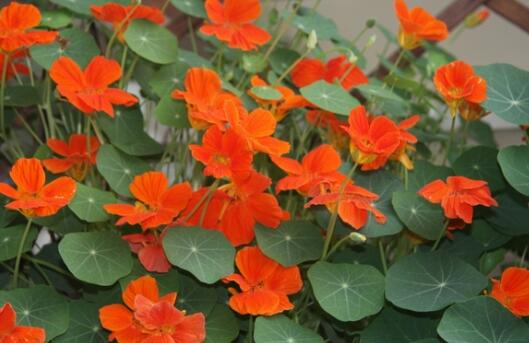
Nasturtium introduction:
Nasturtium, also known as garden nasturtium, Indian cress, monk's cress, and greater nasturtium, among other names, is a perennial semi-trailing or prostrate plant in the Tropaeolaceae family, genus Tropaeolum. Nasturtium is a perennial grown as an annual. Its leaves are alternate, with petioles twisted upward and attached peltately near the center of the leaf blade. Its flowers are solitary or in cymes of 2 or 3, with five petals in shapes including elliptic-obovate and obovate. Under suitable conditions, nasturtium can bloom all year round, though it mainly blooms in summer and autumn. Each flower can stay open for 8 to 9 days. Its flower colors are rich, including purplish red, orange-red and creamy yellow, among others. The flower shape is elegant and charming, and the fragrance is sweet and alluring.
Cultivation methods and precautions for nasturtium:
Germination - Normally, nasturtium is grown from seed. So the first step is to germinate the nasturtium seeds. First, prepare some high-quality nasturtium seeds, place them in a clean container, and soak the seeds in some clean water at a suitable temperature. After 24 hours, take the seeds out and place them in a plastic box with some paper towels on the bottom, spray with some clean water, then cover with the paper towel and the lid and germination can begin. During germination, keep the room temperature above 20 degrees; after 3 days it will be ready.
Seedling raising - Once the nasturtium seeds have germinated, you can move on to the next step, which is raising seedlings. For seedling raising, you can use small black square seedling trays. Fill the tray with a properly mixed growing medium, then plant the seeds into the small black squares. After 3 to 5 days, the nasturtium will sprout and break through the soil. Note that the growing medium here is mainly a three-part mix, made from peat, perlite and vermiculite in a 1:1:1 ratio. #p#subtitle#e#
Pinching - After seedling raising is complete, the nasturtium can grow smoothly. When the nasturtium has grown 5 or 6 leaves, another task is needed. This is topping and pinching, which promotes the nasturtium to produce more new branches, so that in the days ahead it can bloom more. Note that when pinching, keep 4 large leaves.
Planting out - The last thing to do is to plant out the nasturtium. This is usually when the room temperature is gradually rising, and the temperature should be around 10 degrees Celsius. As before, add some three-part mix as the planting soil for the nasturtium. After planting out is complete, if possible, you can pinch the nasturtium again.
Finally, a reminder: after the nasturtium has finished flowering, be sure to reduce watering. Too much moisture will cause the nasturtium's roots to become wet and rot.
Nasturtium Cultivation methods and precautions for nasturtium [step-by-step illustrated guide]
Everyone has probably heard of nasturtium, but many people are very unfamiliar with garden nasturtium. In fact, garden nasturtium is also a very common flower. It is a perennial semi-trailing or prostrate plant in the Tropaeolaceae family, genus Tropaeolum. It is just that people's lack of knowledge about garden nasturtium has led to the phenomenon of seeing it without recognizing it. Because of this, many people, when talking about the cultivation methods and precautions for garden nasturtium, also look completely blank. So below, let's take a look at garden nasturtium and learn about its cultivation methods and precautions.
Nasturtium introduction
Nasturtium, also known as garden nasturtium, Indian cress, monk's cress, and greater nasturtium, among other names, is a perennial semi-trailing or prostrate plant in the Tropaeolaceae family, genus Tropaeolum. Nasturtium is a perennial grown as an annual. Its leaves are alternate, with petioles twisted upward and attached peltately near the center of the leaf blade. Its flowers are solitary or in cymes of 2 or 3, with five petals in shapes including elliptic-obovate and obovate. Under suitable conditions, nasturtium can bloom all year round, though it mainly blooms in summer and autumn. Each flower can stay open for 8 to 9 days. Its flower colors are rich, including purplish red, orange-red and creamy yellow, among others. The flower shape is elegant and charming, and the fragrance is sweet and alluring.
Cultivation methods and precautions for nasturtium
Germination - Normally, nasturtium is grown from seed. So the first step is to germinate the nasturtium seeds. First, prepare some high-quality nasturtium seeds, place them in a clean container, and soak the seeds in some clean water at a suitable temperature. After 24 hours, take the seeds out and place them in a plastic box with some paper towels on the bottom, spray with some clean water, then cover with the paper towel and the lid and germination can begin. During germination, keep the room temperature above 20 degrees; after 3 days it will be ready.
Seedling raising - Once the nasturtium seeds have germinated, you can move on to the next step, which is raising seedlings. For seedling raising, you can use small black square seedling trays. Fill the tray with a properly mixed growing medium, then plant the seeds into the small black squares. After 3 to 5 days, the nasturtium will sprout and break through the soil. Note that the growing medium here is mainly a three-part mix, made from peat, perlite and vermiculite in a 1:1:1 ratio.
Pinching - After seedling raising is complete, the nasturtium can grow smoothly. When the nasturtium has grown 5 or 6 leaves, another task is needed. This is topping and pinching, which promotes the nasturtium to produce more new branches, so that in the days ahead it can bloom more. Note that when pinching, keep 4 large leaves.
Planting out - The last thing to do is to plant out the nasturtium. This is usually when the room temperature is gradually rising, and the temperature should be around 10 degrees Celsius. As before, add some three-part mix as the planting soil for the nasturtium. After planting out is complete, if possible, you can pinch the nasturtium again.
Conclusion: The above is an introduction to the cultivation methods and precautions for nasturtium. I believe everyone now has some understanding of it. Finally, a reminder: after the nasturtium has finished flowering, be sure to reduce watering. Too much moisture will cause the nasturtium's roots to become wet and rot.
[You may be interested in]
?Cross-stitch finished product prices ?Living room cross-stitch pictures ?Cross-stitch wholesale market ?Daylily flower meaning ?Lacquer painting pictures
?Complete flower meanings with pictures ?Lucky bamboo grown in water pictures ?What brand of quilt is good ?Grass head doll ?Dichondra repens
Cultivation methods and precautions for nasturtium [step-by-step illustrated guide]
Everyone has probably heard of nasturtium, but many people are very unfamiliar with garden nasturtium. In fact, garden nasturtium is also a very common flower. It is a perennial semi-trailing or prostrate plant in the Tropaeolaceae family, genus Tropaeolum. It is just that people's lack of knowledge about garden nasturtium has led to the phenomenon of seeing it without recognizing it. Because of this, many people, when talking about the cultivation methods and precautions for garden nasturtium, also look completely blank. So below, let's take a look at garden nasturtium and learn about its cultivation methods and precautions.
Nasturtium introduction
Nasturtium, also known as garden nasturtium, Indian cress, monk's cress, and greater nasturtium, among other names, is a perennial semi-trailing or prostrate plant in the Tropaeolaceae family, genus Tropaeolum. Nasturtium is a perennial grown as an annual. Its leaves are alternate, with petioles twisted upward and attached peltately near the center of the leaf blade. Its flowers are solitary or in cymes of 2 or 3, with five petals in shapes including elliptic-obovate and obovate. Under suitable conditions, nasturtium can bloom all year round, though it mainly blooms in summer and autumn. Each flower can stay open for 8 to 9 days. Its flower colors are rich, including purplish red, orange-red and creamy yellow, among others. The flower shape is elegant and charming, and the fragrance is sweet and alluring.
Cultivation methods and precautions for nasturtium
Germination- Normally, nasturtium is grown from seed. So the first step is to germinate the nasturtium seeds. First, prepare some high-quality nasturtium seeds, place them in a clean container, and soak the seeds in some clean water at a suitable temperature. After 24 hours, take the seeds out and place them in a plastic box with some paper towels on the bottom, spray with some clean water, then cover with the paper towel and the lid and germination can begin. During germination, keep the room temperature above 20 degrees; after 3 days it will be ready.
Seedling raising- Once the nasturtium seeds have germinated, you can move on to the next step, which is raising seedlings. For seedling raising, you can use small black square seedling trays. Fill the tray with a properly mixed growing medium, then plant the seeds into the small black squares. After 3 to 5 days, the nasturtium will sprout and break through the soil. Note that the growing medium here is mainly a three-part mix, made from peat, perlite and vermiculite in a 1:1:1 ratio.
Pinching- After seedling raising is complete, the nasturtium can grow smoothly. When the nasturtium has grown 5 or 6 leaves, another task is needed. This is topping and pinching, which promotes the nasturtium to produce more new branches, so that in the days ahead it can bloom more. Note that when pinching, keep 4 large leaves.
Planting out- The last thing to do is to plant out the nasturtium. This is usually when the room temperature is gradually rising, and the temperature should be around 10 degrees Celsius. As before, add some three-part mix as the planting soil for the nasturtium. After planting out is complete, if possible, you can pinch the nasturtium again.
Conclusion: The above is an introduction to the cultivation methods and precautions for nasturtium. I believe everyone now has some understanding of it. Finally, a reminder: after the nasturtium has finished flowering, be sure to reduce watering. Too much moisture will cause the nasturtium's roots to become wet and rot.