What varieties of campanula are there? An introduction to growing methods
There are many varieties of campanula, and they come in different colors too. They can be grown at home as small potted plants and have a very nice ornamental effect! So, how do you grow campanula? Let's take a look below at the growing methods for campanula.
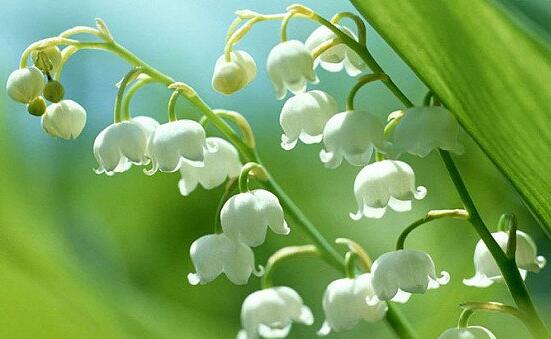
Growing methods for campanula:
(1) Key points for cultivating campanula
The suitable growing temperature is generally around 5 to 20 degrees. Plant out from early to mid-September, with a bed width of 50 cm and a plant spacing of 25 cm in a single row. Or grow in pots, using 6-7 inch pots to overwinter in a cold frame. Fertile neutral soil is best. In the following spring when buds sprout, apply a balanced fertilizer of the three main elements as appropriate. Apply complete fertilizer 3-5 times.
(2) Sowing time for campanula
Generally it can be sown all year round. The suitable germination temperature for campanula is 18-25°C. The seeds are very fine, so they can be sown in peat flats or pots. Cover the seeds with soil about 2-3 times the diameter of the seed. After sowing, seedlings emerge in 10-20 days. Once the true leaves unfold, thin the seedlings until the plants no longer touch each other. Sunlight must be sufficient and the temperature should not be too high. Apply fertilizer 2-4 times as they grow. When there are 3-4 true leaves, transplant them. Potted plants should be repotted once every spring, and the branches should be cut back to encourage side branches so that they bloom more.
The value of campanula:
(1) Landscape ornamental use
It is an evergreen shrub with unusual orange-red flowers that have red veins and are shaped like wind chimes, beautiful and lovely. It is suitable for flower hedges and potted ornamental display. Its branches are soft, its green leaves dance, and its flowers are shaped like wind chimes, brightly colored, swaying in the wind, beautiful and lovely. It is suitable for courtyard cultivation or as a medium-to-large potted plant, placed in places such as the living room or balcony. It is suitable for flower hedges and potted ornamental display.
(2) Industrial uses
The stem bark can be used to extract fiber, which can be processed and woven into cables, gunny sacks, and other uses.
(3) Medicinal value
Nature and flavor: leaves and flowers: pungent, cold.
Effects: leaves and flowers: invigorate the blood and remove stasis, relax the muscles and unblock the collaterals. Used to treat bruises and injuries.#p#Subtitle#e#
Varieties of campanula:
(1) Campanula punctata
This is a relatively common variety, distributed in Northeast China, North China, Northwest China, Southwest China, Shaanxi Province, Gansu Province, Henan Province, Hubei Province, Sichuan Province and other provinces and regions. The whole plant can be used as medicine. The flowers are terminal and drooping, with a white corolla marked with purple spots, rarely pale purple, tubular bell-shaped.
(2) Campanula glomerata
Also called clustered bellflower, the flowers grow in clusters, with a purple, blue-purple, or blue corolla, tubular bell-shaped, with the ends of the flowers split open. It also has good medicinal value.
(3) Campanula americana
Native to moist woodlands of North America, with a relatively tall plant form, blue to white, swaying in the wind, growing in clumps among mountain rocks.
(4) Campanula rapunculoides
A biennial herbaceous plant. This is an edible campanula; its roots and leaves can be made into salad, and the flowers are white or purple. Although it is edible, this variety is rarely grown in China.
(5) Campanula calcicola
Mainly distributed in northwestern Yunnan and southwestern Sichuan in China. The root is carrot-shaped, the stems grow in clusters, and the difference lies in the darker color of the leaf bases. It flowers before August to October.
Cultivation methods and precautions for Cytisus canariensis campanula
This beautiful woody plant can be pruned in the early stages of growth to make it grow in a fixed direction. The leaves of Cytisus canariensis campanula resemble maple leaves, and bell-shaped flowers grow at the leaf nodes. Hybrid varieties have flowers in colors such as red, pink, yellow, and white. Cytisus canariensis campanula has a long flowering period and is suitable as a main plant, especially when placed in front of a window, where the effect is even better.
Microclimate: warm, sunny.
Size: height and width can reach 1 m within three years. Pinching is necessary to keep the plant growing bushy.
Fertilizing: apply standard liquid fertilizer every two weeks in summer.
Potting: repot with potting soil every spring; if the pot is 24 cm, switch to fertilizing on the soil surface.
Precautions: reduce watering in winter, and prune messy stems in spring.
Similar varieties: golden bell (a-butilor pictum thompsonii) with yellow-green variegated leaves; the flowers may be single-colored, bicolored, or composed of two different shades of the same color.
A complete guide to campanula growing methods and tips
Campanula is also called flowering maple. Because its flower branches are long, the flowers are distributed along the flower branches, and the flowers take the shape of wind chimes, like a string of wind chimes swaying in the wind, it is called campanula. Campanula has a lovely appearance and is often used for garden ornamental planting. It likes warm and humid environments and is suitable for growing in breathable, slightly sandy soil. However, many friends do not know much about how to grow campanula and just plant it based on their own feelings. This is not only bad for the growth of campanula, but may also lead to the death of the plant. Below, the editor will teach everyone how to grow campanula.
Morphological characteristics of campanula
Biennial herb, cold-tolerant, averse to heat, prefers sunny, fertile, sandy loam with good drainage, but needs a large amount of water during the growing period. It can grow well in neutral or alkaline soil. It blooms when the plant reaches more than 1 m tall. The plant form is sturdy, the flowers are bell-shaped like wind chimes, the flower colors are bright and elegant, the petals are closed, orange-yellow, drooping. Its branches are soft, its green leaves dance, and its flowers are shaped like wind chimes, brightly colored, swaying in the wind, beautiful and lovely. It is very popular in Europe and is a common herbaceous flower in small courtyards in late spring and early summer, often used to express healthy, gentle love. Some species have 5 petals, with flowers ranging from white to deep orange; the flowers droop and are often cultivated for ornamental display. In China it is still at the introduction stage, but it can be seen in flower markets and artistic cut flowers.
Campanula looks like lily of the valley, but campanula is a plant in the Campanulaceae family and its corolla is larger. Lily of the valley is a plant in the Liliaceae family, its corolla is smaller, and it droops.
Key points for cultivating campanula
The suitable growing temperature is generally around 5 to 20 degrees. Plant out from early to mid-September, with a bed width of 50 cm and a plant spacing of 25 cm in a single row. Or grow in pots, using 6-7 inch pots to overwinter in a cold frame. Fertile neutral soil is best. In the following spring when buds sprout, apply a balanced fertilizer of the three main elements as appropriate. Apply complete fertilizer 3-5 times.
Sowing time for campanula
Generally it can be sown all year round. The suitable germination temperature for campanula is 18-25°C. The seeds are very fine, so they can be sown in peat flats or pots. Cover the seeds with soil about 2-3 times the diameter of the seed. After sowing, seedlings emerge in 10-20 days. Once the true leaves unfold, thin the seedlings until the plants no longer touch each other. Sunlight must be sufficient and the temperature should not be too high. Apply fertilizer 2-4 times as they grow. When there are 3-4 true leaves, transplant them. Potted plants should be repotted once every spring, and the branches should be cut back to encourage side branches so that they bloom more.
Cultivation techniques
Propagation methods
Propagate by cuttings, taking cuttings from June to August. Use vigorous 1-2 year old branches or semi-lignified young shoots of the current year as cuttings, 10 cm-12 cm long, remove the lower leaves, insert them into the soil to 1/2 or 1/3 of their depth, and keep them moist.
Growing methods
Propagate by cuttings. Use vigorous 1-2 year old branches or semi-lignified young shoots of the current year as cuttings. Prune the plant to encourage branching, which is good for flowering. In areas of China north of the Yangtze River, cultivate in a greenhouse. Young plants can be tip-pruned to improve light conditions, increase side branches, expand the crown, and promote flowering.[3]
Two-year-old golden bell flowers grown from cuttings can reach about 2 m in height, with a main stem diameter of 2-3 cm. The stem is gray-green, and the stems of perennial plants are gray or gray-brown. The ability to sprout new shoots in spring is very strong. Branches sprout from the leaf axils, and the current-year branches are emerald green, with a relatively low degree of lignification, and the branches are soft. Golden bell flowers have two kinds of leaves: one is ovate, 10 cm long, with a long petiole, and the entire petiole is uniform in thickness; the other is palmate, 12-18 cm. The leaves are arranged in a whorled state, with 4-9 leaves per whorl. In places with good light or on vigorous plants, the leaves are generally palmate; in places with poor light or on slightly weaker plants, the leaves are ovate.
Watering and fertilizing
It is suitable for growing in fertile, moist, well-drained sandy loam. Cuttings take root after 25-35 days. Water after inserting the cuttings, shade them, frequently spray water on the leaf surface, and pay attention to pinching to encourage many side branches, continuously improve light conditions, promote a full crown, and produce large, beautiful flowers.
Campanula is native to South America and is an evergreen shrub in the Malvaceae family, genus Abutilon. It likes warm, humid, and sunny environments, and also tolerates partial shade. It is suitable for growing in sandy soil rich in humus, loose and breathable. It is cultivated in Fujian, Zhejiang, Jiangsu, and other places in China. In areas with suitable conditions, it blooms year-round and stays evergreen in all four seasons. Its excellent traits are very rare among ornamental plants and it is greatly loved by people. In addition, campanula also has industrial value and medicinal value. The stem bark can be used to extract fiber for woven products, and the leaves and flowers have effects such as invigorating the blood and removing stasis, and relaxing the muscles and unblocking the collaterals.
The above is the campanula growing method compiled for you by the editor. I wonder if you have learned it? If you want to extend the flowering period of campanula, what you must pay attention to is the frequency of watering, which should not be too frequent. The flower language of campanula is blessings and thanks from afar. Such a warm flower is very suitable for giving on Thanksgiving to someone you need to thank, on Mother's Day to your own mother, on Teachers' Day to a respected teacher, or to an elder who has helped you. All are good choices.