How to plant and care for Conophytum for the best results
The distinctive, compact Conophytum genus has quite a few devoted fans. From sowing to mature plants, here is how to grow Conophytum well; other Aizoaceae can also use this as a reference. Today, we bring you the Conophytum planting method and share how to plant Conophytum. Let's look at the details together.
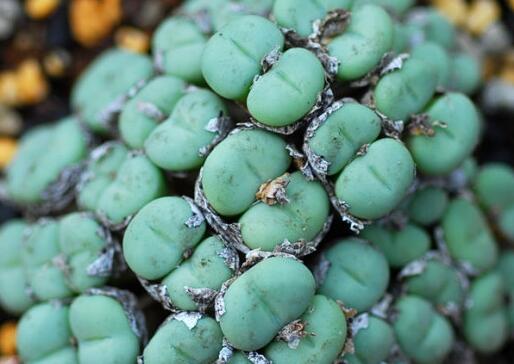
Conophytum planting method:
1. About the soil mix for Conophytum
For my own Conophytum growing, I use a combination of organic substrate + inorganic substrate mixed together. Among the organic substrates, commonly used ones include peat and coconut coir. Commonly used inorganic substrates include perlite, vermiculite, sand and gravel, lava rock, and so on. My most commonly used formula is the all-purpose mix of peat + perlite + vermiculite at 1:1:1, plus a small handful of rainbow stone or granular soil. Of course, this is not a fixed standard. For example, when sowing and raising seedlings, the rainbow stone can be omitted, and the proportion of peat can be appropriately increased; if you think the cost of rainbow stone or granular soil is too high, you can completely replace it with small stones, coal cinders, or coarse sand; if you want something more advanced, the perlite and vermiculite portion can be completely replaced with rainbow stone or granular soil~
2. About the light for Conophytum
During the growing season, Conophytum does not need as much light as Lithops and the like, and too strong light will cause Conophytum to sunburn. However, if there is not enough light, it will also affect the flowering and reproduction of Conophytum. Generally, Conophytum can grow very well behind glass or plastic film. During the seedling stage, the root-regrowth stage after transplanting, or the dormant stage, Conophytum only needs a place with bright, scattered light.#p#Subtitle#e#
3. Sowing and raising Conophytum seedlings
What is mainly discussed here about sowing is temperature, which is also the biggest difference between sowing Conophytum and sowing Sedum and Lithops. Most Conophytum sowing requires the maximum temperature not to exceed 20 degrees; for ones like Bulb / Maughanii / advanced medals, it is even recommended not to be higher than 15 degrees. Under this premise, a temperature difference of 5~10 degrees is also needed. In my case, I generally just check the forecast maximum temperature and if it is roughly suitable, that is enough. As for creating the temperature difference, the method I usually use is to put them in the refrigerator's cold storage compartment at night (5 degrees). There is no need to worry at all that the Conophytum seedlings will freeze. When most of the seedlings have emerged, they can be placed in a place with scattered light for care.
Regarding raising seedlings, first, be careful not to put the small seedlings under strong light; place them in a place with bright, scattered light. Second, maintain a certain soil moisture, do not let water accumulate, but do not let it get too dry either. Third, pay attention to ventilation and prevent infection by stray fungi; you can use carbendazim for regular monthly spraying. Fourth, when the small seedlings grow larger and become crowded, be sure to transplant them in time. Generally, if you pay attention to the above points, the seedlings will still grow very quickly and healthily~#p#Subtitle#e#
4. Care of mature Conophytum plants
Growing season: Conophytum has vigorous growth periods in spring and autumn. Because growing environments differ, there is no hard rule saying how often to water. In these two seasons, as long as you follow the principle of watering thoroughly after the soil dries out, it is fine. During this period, you can apply a little light fertilizer to promote growth.
Dormant period: When winter temperatures are too low and summer temperatures are too high, Conophytum will enter a dormant state. It is often said that you cannot water during dormancy, but this is not absolute either. Especially for small Conophytum, if you do not water for one or two months, they will dry up and die right before your eyes~ So giving a little water periodically is still very necessary. The premise is not to water onto the Conophytum body; just water the soil~
Skin-shedding period: Under normal conditions, Conophytum generally begins shedding skins when spring enters summer. Some Conophytum can finish shedding before summer, but some Conophytum will carry the old skin through the whole summer. This is related to the variety, so there is no need to force it, and there is no need to forcibly perform a “cesarean section” on Conophytum~ However, Conophytum that has finished shedding before summer or that has been given an early cesarean must absolutely not be placed under strong light, otherwise it will sunburn very easily~ It is also worth mentioning that Conophytum can be completely cut off from water in the early stage of skin shedding, but in the later stage of skin shedding, giving a little water can help the newborn babies grow faster and break through the skin~
Flowering period: Conophytum blooms in autumn. At this time, you can apply a little light fertilizer to promote growth, and when watering, do not pour water directly onto the flowers. After flowering, if you want to save seeds yourself, you can use a size 0 brush to pollinate the Conophytum; for the method, refer to Lithops (self-pollination is not required)#p#Subtitle#e#
5. Division propagation and root regrowth of Conophytum
Besides seed propagation, Conophytum mainly relies on division propagation. Dividing large clusters of Conophytum not only helps the remaining Conophytum cluster grow better, but also quickly produces many adult plants. Generally, the best time for division propagation is autumn. In autumn, I feel Conophytum is like an unkillable cockroach, extremely able to take a beating. Division generally uses cutting or slicing. Cutting means using scissors to directly cut off a single Conophytum head with a bit of stem; slicing means using a blade or fishing line to directly cut a clustered Conophytum with roots into two or several parts.
The cut Conophytum must have its wounds thoroughly dried. I generally dry them for one or two weeks or even longer, until the Conophytum becomes somewhat shriveled and wrinkled. After that, they can be inserted into moist soil and placed in scattered light to regrow roots. When are the roots considered well grown? When you see the originally shriveled Conophytum become plump, that means the Conophytum has begun to regrow roots and grow~
[Care Information] Introduction to the Conophytum genus
Conophytum belongs to Aizoaceae. The entire genus has more than 400 species, and the vast majority of varieties originate in South Africa. They like cool, dry, and sunny environments, fear extreme heat, fear waterlogging, tolerate drought, and are not cold-tolerant.Conophytum has many varieties and certain differences in form. Their common features are that the plants are small and stemless, with a pair of very fleshy opposite leaves growing directly above the roots. The leaf shapes include spherical and inverted conical. Their lower parts are united into one whole, and the top has a fissure of varying depth. The color is usually dark green, emerald green, yellow-green, and so on. Some varieties also have patterns or spots on the leaves. The body surface is either smooth or has fine nipple-like protrusions. The dot-and-line color patterns differ for each kind, possessing a thousand and one “expressions,” and after watering, the swollen bodies change “expression” again, which is very interesting.
The flowers grow out from the fissure on the top surface, and the flowers grow from the fissure at the top of the leaves. The diameter is 0.8 cm to 3 cm. Flower colors include white, yellow, orange, pink, red, purple-red, and so on. The flowering period is in autumn and winter, usually opening during the day when the weather is clear and sunny, and closing in the evening. If it encounters rainy weather or the growing place has insufficient light, it is very difficult for it to bloom. In addition, there are also fragrant varieties and varieties that open at night.
Conophytum and Lithops, which is also in Aizoaceae, are somewhat similar in form, and beginners often mistake them for the same variety. In fact, the way to distinguish them is very simple: Conophytum is generally green, and most have no patterns, or the patterns are not obvious; Lithops has a body shape similar to a stone and a color similar to a stone.
Conophytum fears damp heat in summer and cold in winter, has a short growing period, grows slowly, and is relatively difficult to propagate. In most areas of our country, it is not easy to grow well. But this type has many kinds and peculiar forms, and has a strong attraction for beginner succulent lovers. Therefore, it is also relatively popular.
There are many varieties of Conophytum. Seen from the side of the fleshy leaves, they can be roughly divided into three categories:
1. Saddle-shaped: the fissure is not obvious, with only a very short shallow groove in the center of the top, forming a spherical, flattened-spherical, or top-shaped plant body. The main varieties include Qingji, Yuyue, Xiaowenyu, and so on.
2. Spherical: the fissure is relatively obvious, wide but not deep, and the raised parts on both sides are relatively rounded and blunt. The main varieties include Qunbiyu, Koudi, Aduofu, and so on. 3. Clip-shaped (scissors-shaped): the fissure is relatively deep, the two sides rise relatively high, and they are mostly conical. The main varieties include Shaojiang, Wuzi, Xiaogongzhu, and so on.
Growth habits of the Conophytum genus
The growth and dormancy of Conophytum is also the easiest to judge among succulents. Dormant Conophytum turns grayish-white and begins to shrivel. The dormant period generally runs from late May to late August, about 3 months as the standard, with some differences depending on location and variety. The growing period usually begins in the summer vacation period! In this season, with 1-2 waterings, the dormant Conophytum will break through the grayish-white old skin and begin vigorous growth and reproduction. Conophytum propagation is carried out by splitting heads, and the number of split heads reflects good management in the previous year. Poorly grown or old plants are harder to split. Head increase proceeds by the so-called mouse-multiplication method: 1 head after 5 years becomes more than 30 heads, after 7 years 100 heads, and after 10 years more than 1000 heads. At this time, Conophytum looks its most beautiful. Looking at the richly colored flowers, the peculiar growth process, and the clustered beauty after head increase, the “mouse-multiplication” mode of increase is also one of the grower's pleasures.
At the same time, it should be noted that the growth and dormancy times of Conophytum are also different. For those with only a few weeks of growing period, one must take into account their nearly 40-week dormant period. The cultivation method used for these varieties is to water occasionally to keep them in a semi-dormant state. In addition to the relationship of cold and heat, their production cycle mainly also consists of the relationship of dry and wet; such a cycle may be 200 days or 150 days. Do not consider it only by human cycles; take the native plant's own cycle as the standard.
Planting management of Conophytum
Watering: In summer, when temperatures are high, the plants are in a dormant state. They can be kept in a cool, ventilated place for care, and only when the soil is excessively dry should a small amount of water be given; they can even be completely cut off from water to prevent rot. When autumn cools, the plants begin to grow and bloom with beautiful flowers. They can be moved to a bright place and watered appropriately. Plants in good condition can be given a once-a-month application of decomposed dilute liquid fertilizer. When flowering, pay attention to the timing for artificial pollination. In winter, sufficient sunlight is required. If 12 degrees Celsius or more can be maintained at night and 20 degrees Celsius or more during the day, normal watering can be done, and a little light fertilizer can be applied as appropriate on clear mornings. If the temperature is lower, watering should be controlled, fertilizing stopped, and the plant allowed to go dormant. In spring, as the plants grow, the fruits gradually mature, and attention should be paid to harvesting. By late spring and early summer, the old leaves of most varieties gradually become thinner, and 2 pairs of new leaves gradually form inside the old leaves. After autumn cools, the new leaves further grow, burst through the old leaves, and emerge.
During cultivation, rain exposure and water accumulation must be avoided at all times. During the growing season, they should receive more sunlight, otherwise the plants will become leggy and fail to bloom. Repot once every 1 to 2 years. The potting soil can use leaf mold plus about 1/2 coarse sand or vermiculite; the particles should be coarse and not too fine.
During dormancy, the old skin completely wrapping the plant very cleverly prevents water evaporation from the new body. Being rained on during the plum rain season or excessive humidity in the greenhouse may trigger early skin shedding. For such plants, if water is still cut off as usual, the new body will soften and shrivel because the evaporated water cannot be replenished. For this special situation, it is necessary to water frequently.
As for the watering method, for mature bodies keeping them moist is ideal (for plants in the skin-shedding period with more old skin, note that after watering it is not easy to dry). Due to constraints of time and labor, watering from above should be chosen on sunny days, and ventilation should be provided when conditions allow. Note that this method should not be used for single-head plants or plants with too many heads. If the light level is 10, then what is given to Conophytum is 8. Considering the diversity of Conophytum forms and sizes, light issues should also be treated separately. Generally, it is common knowledge that large types take stronger light and small types take weaker light.
Light: Considering the body color, or further considering the relationship between sunlight and flower color: yellow and white reflect the most light. Varieties with such flower colors in their native habitat must grow under fairly strong light. Next are brown-flowered, peach-flowered, red-flowered species, and so on, followed by the purple-flowered series. Appropriate shading should be adopted according to their respective habits. Lithops commonly has white-flowered and yellow-flowered series. Among Conophytum, medium and large types with yellow flowers can be arranged according to the light requirements of Lithops. Flower-color varieties that are difficult to reflect light should be properly shaded.
Insufficient sunlight during the growing period will cause the plant's varietal characteristics to degenerate and change its shape and color. It is also a cause of weakening and rot.
Use of medium: The medium for cultivating Conophytum can be a bit more fertile than that for Lithops. It is recommended to use 1/3 leaf mold and 2/3 mix as the medium. You can also use high-quality peat soil, coarse sand with a diameter of 1~2 mm, pumice, or other media made from volcanic lava (particles smaller than 4 mm) mixed together. You can also use akadama soil, kanuma soil, and hyuga soil mixed together to cultivate Conophytum. For the selection of media, you can refer to: Media/soil suitable for growing succulents
Introduction to the Conophytum genus
ConophytumIt belongs to Aizoaceae. The entire genus has more than 400 species, and the vast majority of varieties originate in South Africa. They like cool, dry, and sunny environments, fear extreme heat, fear waterlogging, tolerate drought, and are not cold-tolerant.
Conophytum has many varieties and certain differences in form. Their common features are that the plants are small and stemless, with a pair of very fleshy opposite leaves growing directly above the roots. The leaf shapes include spherical and inverted conical. Their lower parts are united into one whole, and the top has a fissure of varying depth. The color is usually dark green, emerald green, yellow-green, and so on. Some varieties also have patterns or spots on the leaves. The body surface is either smooth or has fine nipple-like protrusions. The dot-and-line color patterns differ for each kind, possessing a thousand and one “expressions,” and after watering, the swollen bodies change “expression” again, which is very interesting.
Conophytum flowers grow from the fissure at the top of the leaves. The diameter is 0.8 cm to 3 cm. Flower colors include white, yellow, orange, pink, red, purple-red, and so on. The flowering period is in autumn and winter, usually opening during the day when the weather is clear and sunny, and closing in the evening. If it encounters rainy weather or the growing place has insufficient light, it is very difficult for it to bloom. In addition, there are also fragrant varieties and varieties that open at night.
Conophytum and Lithops, which is also in Aizoaceae, are somewhat similar in form, and beginners often mistake them for the same variety. In fact, the way to distinguish them is very simple: Conophytum is generally green, and most have no patterns, or the patterns are not obvious; Lithops has a body shape similar to a stone and a color similar to a stone.
Conophytum fears damp heat in summer and cold in winter, has a short growing period, grows slowly, and is relatively difficult to propagate. In most areas of our country, it is not easy to grow well. But this type has many kinds and peculiar forms, and has a strong attraction for beginner succulent lovers. Therefore, it is also relatively popular.
There are many varieties of Conophytum. Seen from the side of the fleshy leaves, they can be roughly divided into three categories: 1. Saddle-shaped: the fissure is not obvious, with only a very short shallow groove in the center of the top, forming a spherical, flattened-spherical, or top-shaped plant body. The main varieties include Qingji, Yuyue, Xiaowenyu, and so on. 2. Spherical: the fissure is relatively obvious, wide but not deep, and the raised parts on both sides are relatively rounded and blunt. The main varieties include Qunbiyu, Koudi, Aduofu, and so on. 3. Clip-shaped (scissors-shaped): the fissure is relatively deep, the two sides rise relatively high, and they are mostly conical. The main varieties include Shaojiang, Wuzi, Xiaogongzhu, and so on.
Growth habits of the Conophytum genus
The growth and dormancy of Conophytum is also the easiest to judge among succulents. Dormant Conophytum turns grayish-white and begins to shrivel. The dormant period generally runs from late May to late August, about 3 months as the standard, with some differences depending on location and variety. The growing period usually begins in the summer vacation period! In this season, with 1-2 waterings, the dormant Conophytum will break through the grayish-white old skin and begin vigorous growth and reproduction. Conophytum propagation is carried out by splitting heads, and the number of split heads reflects good management in the previous year. Poorly grown or old plants are harder to split. Head increase proceeds by the so-called mouse-multiplication method: 1 head after 5 years becomes more than 30 heads, after 7 years 100 heads, and after 10 years more than 1000 heads. At this time, Conophytum looks its most beautiful. Looking at the richly colored flowers, the peculiar growth process, and the clustered beauty after head increase, the “mouse-multiplication” mode of increase is also one of the grower's pleasures.
At the same time, it should be noted that the growth and dormancy times of Conophytum are also different. For those with only a few weeks of growing period, one must take into account their nearly 40-week dormant period. The cultivation method used for these varieties is to water occasionally to keep them in a semi-dormant state. In addition to the relationship of cold and heat, their production cycle mainly also consists of the relationship of dry and wet; such a cycle may be 200 days or 150 days. Do not consider it only by human cycles; take the native plant's own cycle as the standard.
Planting management of Conophytum
Watering: In summer, when temperatures are high, the plants are in a dormant state. They can be kept in a cool, ventilated place for care, and only when the soil is excessively dry should a small amount of water be given; they can even be completely cut off from water to prevent rot. When autumn cools, the plants begin to grow and bloom with beautiful flowers. They can be moved to a bright place and watered appropriately. Plants in good condition can be given a once-a-month application of decomposed dilute liquid fertilizer. When flowering, pay attention to the timing for artificial pollination. In winter, sufficient sunlight is required. If 12 degrees Celsius or more can be maintained at night and 20 degrees Celsius or more during the day, normal watering can be done, and a little light fertilizer can be applied as appropriate on clear mornings. If the temperature is lower, watering should be controlled, fertilizing stopped, and the plant allowed to go dormant. In spring, as the plants grow, the fruits gradually mature, and attention should be paid to harvesting. By late spring and early summer, the old leaves of most varieties gradually become thinner, and 2 pairs of new leaves gradually form inside the old leaves. After autumn cools, the new leaves further grow, burst through the old leaves, and emerge.
During cultivation, rain exposure and water accumulation must be avoided at all times. During the growing season, they should receive more sunlight, otherwise the plants will become leggy and fail to bloom. Repot once every 1 to 2 years. The potting soil can use leaf mold plus about 1/2 coarse sand or vermiculite; the particles should be coarse and not too fine.
During dormancy, the old skin completely wrapping the plant very cleverly prevents water evaporation from the new body. Being rained on during the plum rain season or excessive humidity in the greenhouse may trigger early skin shedding. For such plants, if water is still cut off as usual, the new body will soften and shrivel because the evaporated water cannot be replenished. For this special situation, it is necessary to water frequently.
As for the watering method, for mature bodies keeping them moist is ideal (for plants in the skin-shedding period with more old skin, note that after watering it is not easy to dry). Due to constraints of time and labor, watering from above should be chosen on sunny days, and ventilation should be provided when conditions allow. Note that this method should not be used for single-head plants or plants with too many heads. If the light level is 10, then what is given to Conophytum is 8. Considering the diversity of Conophytum forms and sizes, light issues should also be treated separately. Generally, it is common knowledge that large types take stronger light and small types take weaker light.
Light: Considering the body color, or further considering the relationship between sunlight and flower color: yellow and white reflect the most light. Varieties with such flower colors in their native habitat must grow under fairly strong light. Next are brown-flowered, peach-flowered, red-flowered species, and so on, followed by the purple-flowered series. Appropriate shading should be adopted according to their respective habits. Lithops commonly has white-flowered and yellow-flowered series. Among Conophytum, medium and large types with yellow flowers can be arranged according to the light requirements of Lithops. Flower-color varieties that are difficult to reflect light should be properly shaded.
Insufficient sunlight during the growing period will cause the plant's varietal characteristics to degenerate and change its shape and color. It is also a cause of weakening and rot.
Use of medium: The medium for cultivating Conophytum can be a bit more fertile than that for Lithops. It is recommended to use 1/3 leaf mold and 2/3 mix as the medium. You can also use high-quality peat soil, coarse sand with a diameter of 1~2 mm, pumice, or other media made from volcanic lava (particles smaller than 4 mm) mixed together. You can also use akadama soil, kanuma soil, and hyuga soil mixed together to cultivate Conophytum. For the selection of media, you can refer to:Media/soil suitable for growing succulents
Common varieties of Conophytum:
As new species are introduced, there may be cases of the same name for different plants or many scientific names. The table below is for reference only:
A
A Jiao - (A Jiao) Conophytum mundum
B
Baijiu - (Baijiu) Conophytum ramosum
Biyu - (Biyu) Conophytum minutum
Bitianyu (Bitianyu) Conophytum curtum
Baochui - (Baochui) Conophytum terricolor
Buyiyu (Buyiyu) Conophytum taylorianum
Bangqianniao (Bangqianniao) Conophytum saxetatum (??)
Bangqianniao (Bangqianniao) Conophytum praecox (??)
C
Chujiu - (Chujiu) Conophytum ramosum
Chiyingyu (Chiyingyu) Conophytum nudum
Chuyin - (Chuyin) Conophytum notatum
Chuniao - (Chuniao) Conophytum velutinum
Chunyu - (Chunyu) Conophytum springbokense
Chuanchuanyu, Juanguangyu) Conophytum turrigerum
Chunji - (Chunji) Conophytum leviculum
Cuiguangyu (Cuiguangyu) Conophytum pillansii (Jingmingyu, Busionsiao)
Cuidai - (Cuidai) Conophytum giftescens
Cuiluan - (Cuiluan) Conophytum minusculum
Cuixing - (Cuixing) Conophytum subfenestratum
D
Danxue - (Danxue) Conophytum altum
Danchun - (Danchun) Conophytum altum
Dadian - (Dadian) Conophytum cauliferum
Dannayan, Xiyu) Conophytum pauxillum
Duniao - (Duniao) Conophytum pilulifolme
Dicuiyu (Dicuiyu) Conophytum obscurum
E
Erqiao - (Erqiao) Conophytum fraterum
Yanli - (Yanli) Conophytum labyrintheum
F
Fengchuyu (Fengchuyu) Conophytum pearsonii
Feiniao - (Feiniao) Conophytum circumpunctatum
Feicuiyu (Feicuiyu) Conophytum calculus (or Yufeicui)
G
H
Hongcuiyu, Dacuiyu, Manaoyu) Conophytum truncatum
Huangmen - (Huangmen) Conophytum faageii
I
J
Jiguang - (Jiguang) Conophytum frutescens
K
L
Yanlong - (Linglong) Conophytum difforme
Lichu - (Lichu) Conophytum albescens
M
Mingjingyu (Mingjingyu) Conophytum julii
Mingzhen - (Mingzhen) Conophytum pole-evansii
Mingchuangyu (Mingchuangyu) Conophytum violaciflorum
N
Nayan - (Nayan) Conophytum minusculum
Neili - (Neili) Conophytum derenbergii
Neishi - (Neishi) Conophytum nevillei
O
P
Q
Qingguo - (Qingguo) Conophytum ovigerum
Qunjiu - (Qunjiu) Conophytum cylindratum
Quntong - (Quntong) Conophytum batesii
Qunbiyu (Qunbiyu) Conophytum minutum
Qilin'er (Qilin'er) Conophytum schichianum
Qinglu - (Qinglu) Conophytum apiatum
Qingmingyu (Qingmingyu) Conophytum edithae
Qinge - (Qinge) Conophytum assimile
Qingchunyu (Qingchunyu) Conophytum odoratum
Qingji - (Qingji) Conophytum scitulum
Qixiaoting (Qixiaoting) Conophytum muirii
R
Ruonianyu (Ruonianyu) Conophytum purpusii
S
Shangla - (Shangla) Conophytum ornatum
Shengyuan - (Shengyuan) Conophytum igniflorum
Shizun - (Shizun) Conophytum compressum
Shuijingyu (Shuijingyu) Conophytum peersii
Shizuniao (Shizuniao) Conophyllum grande
Shidian - (Shidian) Conophytum elishae
Shen Ling - (Shen Ling) Conophytum marlothii
Shen Ling - (Shen Ling) Conophytum meyeri
Shou Wen Yu (Shou Wen Yu) Conophytum placitum (Taoyuan)
T
Tian Shi - (Tian Shi) Conophytum tischeri
U
V
W
Wu Zi - (Wu Zi) Conophytum muscosipapilla
Wang Gong Dian (Wang Gong Dian) Conophytum occultum
X
Xiao Gong Nu (Xiao Gong Nu) Conophytum graessneri
Xiao Xing - (Xiao Xing) Conophytum subrisum
Xiao Di - (Xiao Di) Conophytum hirtum
Xiao Chui (Yellow-flowered Xiao Chui) Conophytum wettsteinii
Xun Zhang Yu (Xun Zhang Yu) Conophytum pellucidum
Xiao Shan - (Xiao Shan) Conophytum perpusillum
Y
Yu Yan - (Yu Yan) Conophytum obcordellum (also known as Bai Mei Yu)
Yu Yan - (Yu Yan) Conophytum ellipticum
Yun Mu Hui (Yun Mu Hui) Conophytum pisinnum
Yun Ying Yu (Yun Ying Yu) Conophytum ceresianum
Yi Yan - (Yi Yan) Conophytum viridicatum
Ying Ren Yu (Ying Ren Yu) Conophytum ernianum
Yao Qi Niao (Yao Qi Niao) Conophyllum niveum
Yu Yue - (Yu Yue) Conophytum gratum
Ying Luo - (Ying Luo) Conophytum pucillum
Ying Guang Yu (Ying Guang Yu) Conophytum uviforme
Z
Zhong Gong - (Zhong Gong) Conophytum breve
Zhong Jiang Ji (Zhong Jiang Ji) Conophytum halenbergense
Zhong Na Yan, Qing Guang Yu) Conophytum pictum
Zhu Bei Yu (Zhu Bei Yu) Conophytum luisae