A detailed guide to dahlia planting methods: brilliantly colorful and endearing
The dahlia's flower shape resembles that of the magnificent tree peony, and its colors are brilliantly diverse and endearing. Mexicans regard the dahlia as a symbol of generosity and opulence, and therefore honor it as the national flower. Let's take a look below at the dahlia's planting methods.
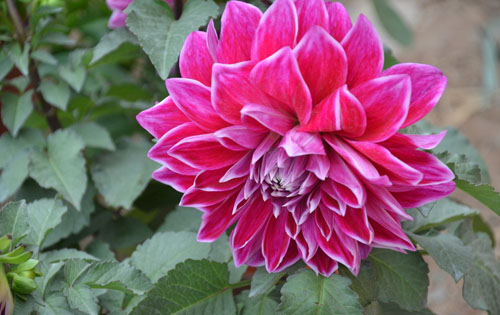
Dahlia planting methods:
1. Soil: Dahlias grow best in loose, fertile, well-drained sandy loam. They require crop rotation and have moderate fertility needs; they can grow well at pH 6.7-7.8.
2. Sunlight: Dahlias love light and cannot tolerate shade. If kept in a shaded place for a long time, they will grow poorly, with weak roots, thin leaves and slender stems, and small, pale flowers; some may even fail to bloom. Therefore, potted dahlias should be placed in a spot with ample sunlight. During the leaf-growing period they need sufficient light, requiring more than 6 hours of sunlight per day, so that the plants grow strong and the flowers are large and full. If daily sunlight is less than 4 hours, stem and leaf branching and flower bud formation will be somewhat affected; especially under overcast and rainy conditions with little light, flowering will be poor, stems and leaves will grow poorly, and the plants will be prone to disease.
3. Temperature: They naturally prefer a cool climate and are not strict about ecological factors, so they are quite adaptable. During the growing period they are not demanding about temperature and can grow normally between 5-35°C, but 10-25°C is most suitable.
4. Watering: The amount of water given can control the height of the dahlia plant. During the seedling stage, moisture should be controlled to encourage dwarfing. In summer, to lower the temperature, increase air humidity, and reduce moisture evaporation from the dahlia's stems and leaves, water should be sprayed 1-2 times daily. Water once at 3-4 pm, and the amount should not be too large.
5. Fertilizing: Dahlias love fertilizer. During the growing period, apply a top dressing once every 7-10 days, or apply dilute liquid fertilizer 2-3 times. However, because dahlias dislike heat and often enter a semi-dormant state in summer, no fertilizer or only extremely dilute fertilizer may be applied during this stage. After the plant forms buds, the amount of phosphorus fertilizer can be increased to make the flowers bloom better. The dahlia's root system is rather delicate, and concentrated fertilizer should be avoided throughout the entire growing process.
6. Pests and diseases: Dahlias mainly suffer from problems such as powdery mildew, gray mold, bacterial wilt, viral diseases, and moth borers, and should be treated with regular spraying of chemicals.
7. Pruning: To cultivate medium and small flowers on dahlias, simply remove the side buds on several nodes of the lower stem so that they bloom successively. If you want to cultivate a large single flower, keep only the terminal bud and remove all other side buds. At the end of June and beginning of July, after the first flush of flowers, the weather gradually grows hotter and plant growth slows; pruning can be done at this time. When pruning, first twist the stem in the middle of the branch between two leaves and bend it downward, leaving a height of 20-30 cm. After a few days, once the wound has dried and shrunk, cut it. This can prevent rainwater from entering the hollow stem and causing rot. If grown until October, it can bloom again.
Dahlias are brilliantly colorful and endearing. What is the dahlia's flower language?
The dahlia is a symbol of generosity and opulence and is honored as the national flower of Mexico. Dahlias are suitable for flower beds, flower borders, or mass planting in front of a courtyard, and dwarf varieties can be grown in pots. Their shape resembles the magnificent tree peony, and their colors are brilliantly diverse and endearing. The dahlia is also known as dahlia chrysanthemum, dahlia flower, tree peony of India, Oriental chrysanthemum, sweet potato flower, passionflower, and so on. So, what is the dahlia's flower language?
I. Introduction to the dahlia
The dahlia, with aliases dahlia flower, tree peony of India, Oriental chrysanthemum, dahlia chrysanthemum, and sweet potato flower, is a plant of the Asteraceae family and the genus Dahlia. It is a perennial herb with huge club-shaped tuberous roots. The stem is upright, much branched, and stout. It originated in Mexico, and Mexicans regard it as a symbol of generosity and opulence, honoring it as the national flower.
At present, it is cultivated in most countries around the world, and new varieties are released from time to time. According to statistics, there are already more than 30,000 dahlia varieties, making it one of the species with the most flower varieties in the world. The dahlia has many renowned colors and flower forms, rich and varied, and is one of the world's famous flowers; it can also invigorate the blood and disperse stasis, and has a certain medicinal value.
There are many flower forms of the dahlia, which can be divided into sunflower type, orchid type, chrysanthemum type, round ball type, peony type, cactus-flowered type, lotus type, and so on. Dahlias are mostly double-flowered, with colors including red, yellow, orange, purple, white, and so on, all splendidly colorful and intoxicating. Among them, the most distinctive is the thousand-petaled flower with red stripes set in white petals, like red agate embedded in white jade, extraordinarily alluring and eye-catching.
II. Growth habits of the dahlia
Dahlias adapt to different climates and soil types across the country, have few pests and diseases, are easy to manage, and are best propagated. The dahlia is the national flower of Mexico, the city flower of Seattle, the provincial flower of Jilin Province, and the city flower of Zhangjiakou City, Hebei Province. The gorgeously diverse dahlia symbolizes generosity, opulence, and great good fortune. Today, it has spread to countries around the world, becoming a frequent guest in gardens and a world-famous ornamental flower.
Dahlias are easy to propagate, whether by sowing, cuttings, or root division, and they naturally prefer sunlight and loose, fertile, well-drained soil. Grafting when they first sprout can produce colorful dahlia flowers and dahlia chrysanthemums. Dahlias are suitable for flower beds, flower borders, or mass planting in front of a courtyard, and dwarf varieties can be grown in pots. The flowers are used to make cut flowers, flower baskets, garlands, and so on. The tuberous roots contain inulin, which is similar to glucose in medicine. The whole plant can be used as medicine and has the effect of clearing heat and detoxifying.
III. The dahlia's flower language
The dahlia's flower language: generosity, gratitude, freshness, and elegant nobility.
In our daily lives, if you are congratulating an elder on their birthday, you might choose dahlias, because giving dahlias, longevity flowers, winter jasmine, orchids, and so on all imply "blessings as deep as the Eastern Sea and longevity as enduring as the Southern Mountains." The dahlia also has the auspicious meaning of "great good fortune" through its homophone.
In addition, in France, the dahlia's flower language is "gratitude, freshness, novelty, and new meaning," all meanings of good fortune. Therefore, you might as well plant a dahlia at home, which, while bringing you "great good fortune," also shows off your extraordinary temperament.
The generous and opulent dahlia has high ornamental value. It is brilliantly colored and richly varied in varieties, giving people a feeling of elegant nobility. So planting a pot of dahlias at home can make your home environment gorgeous, elegant, fresh, and lively.
The above is the relevant introduction in this article. I believe that after reading it you have gained a simple understanding of it. If you need more, you can continue to follow No. 1 Home Network to learn more information.
Introduction to dahlia planting and cultivation
Name: Dahlia
Dahlia aliases: dahlia chrysanthemum, tree peony of India, tiaopeony, sweet potato flower, dahlia flower, passionflower, foreign chrysanthemum
Scientific name: Dahlia pinnata Cav.
English name: Dahlia, Garden Dahlia
Family name: Asteraceae Compositae, genus Dahlia
Flower language: Dahlia -- great good fortune. French flower language: Dahlia——gratitude, freshness, novelty, new meaning
The dahlia is a perennial herb of the Asteraceae family. Chrysanthemums bloom proudly in frost, but the dahlia is different: it blooms successively between spring and summer, blooms again after the summer, and withers at the time of frost descent. Its flower shape resembles the magnificent tree peony, and its colors are brilliantly diverse and endearing.
The dahlia is the national flower of Mexico, the city flower of Seattle, the provincial flower of Jilin Province, and the city flower of Zhangjiakou City, Hebei Province. The gorgeously diverse dahlia symbolizes generosity, opulence, and great good fortune. Today, it has spread to countries around the world, becoming a frequent guest in gardens and a world-famous ornamental flower.
Dahlias are easy to propagate, whether by sowing, cuttings, or root division, and they naturally prefer sunlight and loose, fertile, well-drained soil. Grafting when they first sprout can produce colorful dahlia flowers and dahlia chrysanthemums.
Dahlias are suitable for flower beds, flower borders, or mass planting in front of a courtyard, and dwarf varieties can be grown in pots. The flowers are used to make cut flowers, flower baskets, garlands, and so on. The tuberous roots contain inulin, which is similar to glucose in medicine. The whole plant can be used as medicine and has the effect of clearing heat and detoxifying.
Dahlia regions
The dahlia's homeland is the Mexican highlands at an altitude of 1500 m. It can neither tolerate cold nor endure intense summer heat; the climate there is mild and cool, with a low-temperature period for dormancy. In China, the climate in places such as Liaoning and Jilin is suitable for dahlias, and they grow well there.
The dahlia has thick, hammer-shaped fleshy tuberous roots. Plant height varies from tall to short depending on the variety. The leaves are opposite, 1-3 times pinnately divided, with ovate lobes and coarse, blunt serrations. The flowers grow at the top of the stalk. Dahlias are welcomed for their long flowering period, blooming continuously from autumn to spring; each flower can last 1 month, and the flowering period lasts half a year. In southern China, they bloom from February to June in spring.
Characteristics of the dahlia
The dahlia is also known as passionflower and dahlia chrysanthemum. To cultivate dahlias well, you need to master its four major characteristics:
(1) It likes moisture but fears waterlogging. Dahlias are afraid of drought and avoid standing water. This is because the dahlia has fleshy tuberous roots, and too much watering easily rots the roots. But its leaves are large and its growth is lush, so it also needs more water. If it wilts from lack of water and cannot be replenished in time, then under sunlight, in mild cases the leaf edges scorch, and in severe cases the basal leaves fall off. Therefore, watering should follow the principle of "water thoroughly only after the soil has dried out."
(2) It likes fertility but fears excess. When planting dahlias, choose fertile, loose soil. In addition to applying base fertilizer, top dressing is also needed. Usually from mid-to-late July until flowering, apply a dilute liquid fertilizer once every 7-10 days, and the concentration of the fertilizer should gradually increase, so that the stems grow thicker and stronger and the leaves become deep green and spread out.
(3) It likes sunlight but fears shade. Dahlias like ample sunlight. If kept in a shaded place for a long time, they grow poorly, with weak roots, thin leaves and slender stems, and small, pale flowers; they may even fail to bloom. Only by planting them in a spot with ample sunlight can the plants grow robustly and produce bright flowers.
(4) It likes coolness but fears heat. During the flowering period, dahlias like a cool climate, and grow best at a temperature of around 20°C. When planted in places such as North China, they can grow well from late spring to late autumn. But they fear direct exposure to the intense summer sun, especially the blazing sun after rain clears; at this time they should be slightly shaded, and then they will grow even better.
Dahlia propagation methods
Mainly by root division and cuttings; seed propagation is used for breeding.
1. Root division propagation
This method is the most commonly used. Because dahlias can sprout only from the root crown, when dividing, part of the root crown must be included, otherwise new plants cannot sprout. To make identification easier, the pre-burial rooting method is often used to force sprouting; after the adventitious buds on the root crown sprout, they are divided and planted. The root division method is simple and easy to carry out, with a high survival rate and strong seedlings, but the number of propagated plants is limited. 2. Cutting propagation is the main propagation method for dahlias, with a high propagation coefficient. It is generally carried out in early spring, and can also be done in summer and autumn; cutting in a greenhouse or hotbed in March to April gives the highest survival rate. Cuttings are taken from sprouted tuberous roots; when a pair of leaves at the base of the new shoot unfolds, they can be peeled off from the base for cutting. You can also take cuttings by leaving more than one node at the base of the new shoot, and later take young shoots from the axillary buds as they grow, so that more cuttings can be obtained. Spring cuttings, after full growth through summer and autumn, can bloom in the same year. From early June to August, shoots can be taken from growing plants for summer cuttings, but the survival rate is lower than for spring cuttings; cuttings in September to October have a lower survival rate than in spring, but higher than summer cuttings. The cutting medium should preferably be sandy loam with a small amount of leaf mold or peat.
3. Seed propagation is limited to flower bed varieties and breeding use. In summer, seed set is often poor due to heat and humidity, so seeds are mostly collected from those that mature after the autumn turns cool. Drooping-petal varieties are not easy to obtain seeds from and require artificial supplementary pollination. Sowing is generally done in a seed box; at around 20 C, they sprout and emerge in 4-5 days. After true leaves grow, they are transplanted separately, and they bloom after 1-2 years.
Cultivation methods
The dahlia's stem is crisp and tender, unable to withstand strong winds, and it also fears waterlogging. When planting in the ground, choose a place with high, dry terrain, good drainage, ample sunlight, and shelter from the wind, and make raised beds. The plant and row spacing is generally about 1 m for standard varieties and 40 cm-50 cm for dwarf varieties. Dahlia stems are tall, juicy, and tender, so supports should be set up to prevent wind breakage. Watering should follow the principle of watering only after the soil has dried out. After continuous overcast days in summer followed by sudden bright sun, promptly spray clear water on the ground and leaves to cool them down, otherwise the leaves will develop scorched edges and turn yellow and withered. During the dog days when there is no rain, besides watering every day, water should also be sprayed to lower the temperature. After buds appear, apply liquid fertilizer once every 10 days until the flower buds show color. Before frost, leave 10 cm-15 cm of root crown, cut off the branches and leaves, dig up the tuberous roots, dry them in place for 1-2 days, then pile them indoors in dry sand for storage. The storage room temperature should be around 5 C.
For potted dahlias, it is better to repot several times. Choose a shallow pot with a large opening, and at the same time chisel the drainage holes at the bottom of the pot as large as possible, laying a layer of broken tiles underneath as a drainage layer. The growing soil must contain half sandy soil. The last repotting needs sufficient base fertilizer to supply ample nutrition; other management is the same as for ground planting. For dahlias used as cut flowers, the key cultivation points are the same as for ground planting, with a plant and row spacing of 50 cm-100 cm; during the peak growing season, apply liquid fertilizer once every half month, pinch appropriately, and keep more side branches.
Cultivation management
Mostly propagated by cuttings and sowing, mainly by cuttings, generally carried out in September-October.
① Potting time is generally in mid-October, with 1-2 plants per pot;
② When the seedlings grow to 10-12 cm tall, leave 2 nodes and pinch off the top, training each pot to have 6-8 branches; the last pinching is done 40-50 days before Spring Festival, so as to control flowering during Spring Festival;
③ Watering: water 2-3 times a day; before blooming is needed, water can be appropriately controlled to promote flowering;
④ Fertilizing: mainly nitrogen fertilizer in the early stage, and mainly phosphorus and potassium fertilizer in the later stage. Generally apply inorganic fertilizer once every 10 days and organic fertilizer once a month.
⑤ Pest and disease control: spray chemicals regularly to protect the basal leaves;
⑥ Staking with bamboo: after the last pinching and branch setting, begin staking with bamboo, one bamboo strip per branch, and at the same time remove excess side branches to improve ventilation;
⑦ Bud thinning: when the flower buds grow to the size of a peanut, keep 2 buds per branch and remove the others;
⑧ Final bud setting: when the flower buds show red, keep only 1 bud per branch.
Key points for potting The key to whether potted dahlias grow well lies in strengthening management of the plant's potting soil, giving sufficient light, frequently applying water and fertilizer, and promptly carrying out shaping and pruning management.
(1) Management of potting soil
Dahlias are suited to loose, humus-rich, well-drained sandy loam. For potting soil used for planting potted dahlias, it is generally advisable to use a growing soil mixed from garden soil (50%), leaf mold (20%), sandy soil (20%), and dried manure (10%). Compacted soil easily causes waterlogging and root rot and cannot be used. In daily management, loosen the soil promptly and remove standing water from the pot, because the dahlia's fleshy tuberous roots rot when the soil contains too much water and air permeability is poor.
(2) Light
Dahlias love light and cannot tolerate shade. If kept in a shaded place for a long time, they grow poorly, with weak roots, thin leaves and slender stems, and small, pale flowers; some may even fail to bloom. Therefore, potted dahlias should be placed in a spot with ample sunlight. The leaves require ample light, with more than 6 hours of sunlight per day, so that the plants grow strong and the flowers are large and full. If daily sunlight is less than 4 hours, stem and leaf branching and flower bud formation will be somewhat affected; especially under overcast and rainy conditions with little light, flowering will be poor, stems and leaves will grow poorly, and the plants will be prone to disease.
(3) Water frequently
Dahlias like water but avoid standing water; they fear both waterlogging and drought. This is because the dahlia has fleshy tuberous roots, and too much watering easily rots the roots. But the dahlia's branches and leaves are lush and its transpiration is high, so it also needs more water. If it wilts from lack of water and cannot be replenished in time, and is then exposed to sunlight, in mild cases the leaf edges scorch, and in severe cases the basal leaves fall off. Therefore, watering should follow the principle of "water thoroughly only after the soil has dried out." Generally, in the early growth stage during the seedling phase, water needs are limited; on sunny days, water once a day, keeping the soil slightly moist as the standard; both too dry and too wet are unsuitable. In the later growth stage, when branches and leaves are lush, water consumption is greater; on sunny days or days with north winds, note that water shortage is likely around noon or evening, and the amount of watering should be appropriately increased.
(4) Fertilize appropriately
The dahlia is a flowering plant that loves fertilizer. Starting from the seedling stage, generally apply a dilute liquid fertilizer once every 10-15 days. After budding, apply once every 7-10 days. When the flower buds show color, fertilizer water should be stopped. Fertilizer should also not be applied when the temperature is high. The amount of fertilizer applied should be determined according to the plant's growth condition. If the leaves are light in color and thin, it indicates a lack of fertilizer; conversely, if fertilizer is excessive, the leaf edges scorch or the leaf tips turn yellow; thick leaves with a deep, rich green color indicate that fertilization is appropriate. The concentration of the fertilizer should be increased each time compared with the last, so that the stems become stout.
(5) Shaping and pruning potted plants
Pruning of dahlias should be handled flexibly according to the variety. Generally, large varieties use single-stem shaping, and medium varieties use four-stem shaping. Single-stem shaping means keeping the terminal bud and removing all axillary buds, so that nutrition is concentrated and a low-growing, large-flowered single-stem dahlia is formed. Four-stem dahlias are made by pinching the seedling and keeping two nodes at the base, so that 4 side branches form; each branch keeps its terminal bud, producing a potted dahlia with 4 stems and 4 flowers.
(6) Insert stakes to support the plant
The dahlia's stem is both hollow and brittle, and is easily blown over and broken by wind, so bamboo stakes should be inserted in time for support. Staking can also prevent the branches from growing crooked and improve the ornamental value of the potted plant. When the plant grows taller than 30 cm, insert a small bamboo stick beside each branch and tie it fixed with hemp fiber (or thin string); as the plant grows taller and taller, replace it in time with longer stakes, and the last small bamboo stick inserted should reach the lower part of the flower bud. (7) Protect the plant through winter safely Dahlias are not cold-tolerant (mainly the tuberous roots cannot freeze). In November, after the branches and leaves wither, cut off the aboveground part, move it indoors, and keep it in the original pot. You can also take out the tuberous roots, dry them for 1-2 days, and bury them indoors in slightly moist sandy soil, with the temperature not exceeding 5 degrees, and then plant them in pots again the following spring.
Prevention of dahlia pests and diseases
The pests and diseases that easily occur during dahlia cultivation include: powdery mildew, flower rot, moth borers, and red spiders.
(1) Dahlia powdery mildew
The disease is severe from September to November, and high temperature and high humidity will promote its occurrence. After being affected, the plant is short, the leaf surface is uneven or curled, and the tender shoots develop abnormally. After the flower buds are affected, they cannot bloom or can only produce deformed flowers. When the disease is severe, it can cause the leaves to dry up and even the whole plant to die.
Control methods:
① Strengthen care so that the plants grow robustly and their disease resistance improves. Control watering and increase phosphorus fertilizer.
② When the disease occurs, promptly remove the diseased leaves and spray for control with a 50% amobam aqueous solution at 800 times dilution or a 70% thiophanate-methyl at 000 times dilution.
(2) Dahlia flower rot.
It mostly occurs from full bloom to the petal-fall period; relatively high soil moisture and relatively high soil temperature favor the occurrence of the disease. When the petals are affected, the spots are initially faded green, then turn yellow-brown; after the spots expand, they become irregular, yellow-brown to gray-brown.
Control methods
① Strengthen ventilation and light transmission between plants; in the later stage, water and nitrogen fertilizer must not be used too much, and phosphorus and potassium fertilizer should be increased.
② After the bud stage, spray with 0.5% Bordeaux mixture or 70% thiophanate-methyl at 1500 times dilution, once every 7-10 days, which has a relatively good control effect.
(3) Dahlia moth borer
This insect mainly harms dahlias and chrysanthemums, with the larvae boring into the stems to cause damage. When the damage is severe, the plant cannot bloom and may even become crippled.
Control method: generally from June to September, spray once every 20 days or so with 90% trichlorfon technical at 800 times dilution, which can kill the newly hatched larvae.
(4) Red spider
The red spider is the carmine spider mite; see the control section on carmine spider mite in "Jasmine."
The dahlia is a perennial herbaceous flower with persistent roots of the Asteraceae family. The leaves are opposite, 1-3 deeply lobed, with serrated leaf margins. The capitulum is terminal, with flower colors such as purplish red, peach red, pink, and mixed colors. (5) Dahlia cotton leafhopper pest
Damage: adults and nymphs suck sap on the underside of the plant's leaves, causing yellow-brown spots to appear on the leaf surface; the leaves shrink toward the underside, and in severe cases the entire leaf discolors and scorches.
Control methods: A. Combined with pruning, cut off and dispose of damaged branches and leaves to reduce the source of insects. B. During the adult damage period, use light traps to kill adults. C. During the occurrence period of nymphs and adults, spray 90% crystalline trichlorfon at 1000-1500 times dilution, or 40% omethoate emulsifiable concentrate at 1000-1500 times dilution, or 2.5% deltamethrin emulsifiable concentrate at 1500-2000 times dilution for control. The number of sprayings depends on the pest situation, generally once every 10 days or so.