How many years does Conophytum burgeri take to bloom? This is the best way to care for it
Conophytum burgeri is a plant in the genus Conophytum of the family Aizoaceae. The plant surface is bright green and semi-transparent, and as long as the environment is suitable, it will bloom. So how many years does Conophytum burgeri take to bloom? May to September is the dormancy period of Conophytum, and after the dormancy period the flowers begin to grow and then bloom, roughly around late September to early October.
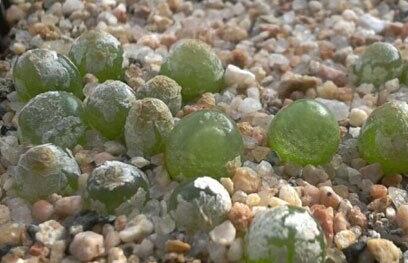
How many years does Conophytum burgeri take to bloom:
Conophytum burgeri is a plant in the genus Conophytum of the family Aizoaceae. The plant surface is bright green and semi-transparent, and as long as the environment is suitable, it will bloom. May to September is the dormancy period of Conophytum, and after the dormancy period the flowers begin to grow and then bloom, roughly around late September to early October.
The skin of Conophytum burgeri is bright green and semi-transparent; during the summer dormancy period, in an environment with sufficient light, the skin turns red. The flowers are large and pale purplish-red, with a white center, opening in spring or autumn. The flowers open during the day and close at night; if the growing environment has insufficient light or it is a cloudy and rainy day, it will be difficult for them to bloom.
How to grow Conophytum burgeri:
Conophytum burgeri goes dormant in summer and grows in the other seasons. The skin-shedding period is relatively long, almost throughout the entire summer; during the skin-shedding period it can be given more sun, but pay attention to the sun and do not let it get sunburned, and during the skin-shedding period give little or no water. By the end of May to July it will basically finish shedding; if water is given during this period, the skin-shedding period will be extended into the summer. The skin shedding of Conophytum burgeri is when the old leaves slowly dry up while the new plant slowly grows inside the old plant, and the old plant slowly dries up into a thin, dry and brittle skin; only at this point is the skin shedding completely successful, and entering summer it basically relies on the dried old skin for protection to get through the summer. Conophytum burgeri likes a cool, dry and sunny environment, grows under conditions with a large temperature difference between day and night, is tolerant of drought, and fears waterlogging.
The growing medium used for Conophytum burgeri is cinder mixed with a small amount of peat, also mixed with a small amount of akadama and orchid stone. The surface is covered with granular river sand. The growing medium should be mainly permeable and breathable; this variety is not tolerant of sun, so in summer it must be shaded; spring is the growing season, so it can be sunned and given a small amount of water. This variety, Conophytum burgeri, is usually given relatively little water, and not even a few waterings a month, basically watering without the soak-and-drain method. Throughout the summer, shade it and place it in a bright, ventilated place with diffused light; throughout the summer, because it is the dormancy period, give only a small amount of water, as too much will cause rot.
After the temperature drops in autumn, watering can be resumed, step by step. If the plant is plump, it does not need supplemental water, otherwise the plant's body is prone to splitting open. In winter, avoid frost damage from temperatures that are too low; when the potting soil is dry, minus 3 degrees is no problem at all. In winter, because it is the growing season, the plant should be placed in a sunny place for care, but do not water heavily; if the potting soil accumulates water, the plant is very prone to rotting. Because Conophytum burgeri grows relatively slowly and has low nutrient requirements, a slow-release fertilizer can be used during cultivation. The differences between north and south are relatively large, so growers should cultivate according to their own environment.
Conophytum burgeri can be propagated by sowing, carried out in autumn, that is, mid to late September. Because Conophytum burgeri seeds are tiny, after sowing cover with glass or plastic wrap; before germination, water using the soak-and-drain method, and at the seedling stage a small sprayer can be used for misting. As for the sowing temperature for Conophytum burgeri, the temperature at germination must not be too high, around 15 to 20 degrees Celsius during the day, and it should drop to 5 to 10 degrees Celsius at night. With a bit of temperature difference, the sowing temperature is somewhat lower than for other varieties, and doing a good job of sterilizing the seedling pot is key.
Conophytum burgeri can also be propagated by division, but who would have the heart to do so? After all, it is a slow-growing variety and does not like to divide into heads. Of course, Conophytum burgeri is only beautiful when it grows into a cluster.
Conophytum burgeri
Conophytum burgeriAizoaceae, genus Conophytum,
Place of origin: South Africa
Conophytum burgeri is a winter-growing type. The plant has no stem and is generally single-headed; after being grown for a long time, multi-headed clusters will appear. The plant is hemispherical, with a bright green, semi-transparent skin; in the cool season with a large temperature difference between day and night, high air humidity and sufficient light, the skin turns red. The flowers of Conophytum burgeri are pale purplish-red, opening in autumn, cross-pollinated, day-opening type. If the growing environment has insufficient light or it is a cloudy and rainy day, it will be difficult for them to bloom.
Conophytum burgeri goes dormant in summer and grows in the other seasons. The skin-shedding period is relatively long, almost throughout the entire summer; during the skin-shedding period it can be given more sun, but pay attention to the sun and do not let it get sunburned, and during the skin-shedding period give little or no water. By the end of May to July it will basically finish shedding; if water is given during this period, the skin-shedding period will be extended into the summer. The skin shedding of Conophytum burgeri is when the old leaves slowly dry up while the new plant slowly grows inside the old plant, and the old plant slowly dries up into a thin, dry and brittle skin; only at this point is the skin shedding completely successful, and entering summer it basically relies on the dried old skin for protection to get through the summer. Conophytum burgeri likes a cool, dry and sunny environment, grows under conditions with a large temperature difference between day and night, is tolerant of drought, and fears waterlogging.
The growing medium used by Kite is cinder mixed with a small amount of peat, also mixed with a small amount of akadama and orchid stone. The surface is covered with granular river sand. The growing medium should be mainly permeable and breathable; this variety is not tolerant of sun, so in summer it must be shaded; spring is the growing season, so it can be sunned and given a small amount of water. This variety, Conophytum burgeri, is usually given relatively little water, and Kite does not even give it a few waterings a month, basically watering without the soak-and-drain method. Throughout the summer, shade it and place it in a bright, ventilated place with diffused light; throughout the summer, because it is the dormancy period, give only a small amount of water, as too much will cause rot. After the temperature drops in autumn, watering can be resumed, step by step. If the plant is plump, it does not need supplemental water, otherwise the plant's body is prone to splitting open. In winter, avoid frost damage from temperatures that are too low; when the potting soil is dry, minus 3 degrees is no problem at all. In winter, because it is the growing season, the plant should be placed in a sunny place for care, but do not water heavily; if the potting soil accumulates water, the plant is very prone to rotting. Because Conophytum burgeri grows relatively slowly and has low nutrient requirements, a slow-release fertilizer can be used during cultivation. The differences between north and south are relatively large, so growers should cultivate according to their own environment. Propagation can be done by sowing, carried out in autumn, that is, mid to late September. Because Conophytum burgeri seeds are tiny, after sowing cover with glass or plastic wrap; before germination, water using the soak-and-drain method, and at the seedling stage a small sprayer can be used for misting. As for the sowing temperature for Conophytum burgeri, the temperature at germination must not be too high, around 15 to 20 degrees Celsius during the day, and it should drop to 5 to 10 degrees Celsius at night. With a bit of temperature difference, the sowing temperature is somewhat lower than for other varieties, and doing a good job of sterilizing the seedling pot is key. Conophytum burgeri can also be propagated by division, but who would have the heart to do so? After all, it is a slow-growing variety and does not like to divide into heads. Of course, Conophytum is only beautiful when it grows into a cluster. The pot below is the Conophytum burgeri grown by Kite
By mid-June it has basically finished shedding; the old leaves are like transparent kraft paper, wrapping the plant and serving to protect it
Blooms around October
Below is the 2-year-old Conophytum burgeri sown by Kite.
The significance of cultivating multi-headed plants in the Aizoaceae
Aizoaceae succulents have been cultivated and promoted in our country for several decades, and can more or less be seen in flower markets and ordinary households. As enthusiasts gradually increase, the cultivation techniques, species and grades have also reached a brand-new stage. Therefore, cultivating well-proportioned, full-of-vitality and more ornamental multi-headed plants is the development trend of Aizoaceae succulent cultivation.Cultivating multi-headed plants is a test of patience and perseverance
Cultivating plants with numerous heads and larger clumps is not a very difficult matter for some genera of the Aizoaceae. For example, varieties of the genera Bergeranthus and Faucaria take much less time than other kinds, and can be grown in 3-5 years. But for many kinds of Lithops, growing them into large multi-headed plants still very much tests one's patience and perseverance.
If species of the genus Conophytum are propagated by sowing, there will be many disadvantages: the seeds are extremely tiny, growth after germination is slow, and it takes 2-3 years before the characteristics of the adult plant can be seen, etc., so many enthusiasts would rather use the most convenient method of directly buying the varieties they like, and once they reach a certain size, divide the heads and take cuttings. For example, Conophytum calculus, under suitable soil and water conditions, can split from the original 1 head into at most 7 heads, and those with fewer divisions also have 2-3 heads. Varieties such as Conophytum pageae and Conophytum minutum are the same. To cultivate them into multi-headed plants, as long as they are single heads over 3 years old, then with a few more years it is enough to grow stacked multi-headed large clumps. The relatively popular and relatively difficult-to-cultivate Anzhen series and medal series, as long as there are larger single heads, 3-5 years is enough to grow them into multi-headed plants.
Species of the genus Oophytum divide heads relatively slowly, but sowing easily produces seedlings, and after 4-5 years they can also be cultivated into multi-headed plants. Enthusiasts generally believe that extremely popular varieties such as Ruby, Red Diamond and Conophytum burgeri are even less likely to divide heads; in most years, after shedding their skins they are still single-headed, and in several years there may be only 1-2 instances of head division. Of course, as long as they are cared for for a considerable number of years, they will likewise divide heads, but one must be patient and wait.
Species of the genus Lithops differ completely in head-division speed and number depending on the different lines. For example, Lithops of the Lingshui line can grow to 6 cm in size as a single plant with a single head, but in most subsequent years, the single head is still a single head. There are also Lithops that split into 2 heads in the 4th year after sowing, yet after 13 years of care up to now, they are still 2 heads. Meanwhile, Lithops pseudotruncatella begins to divide heads in the second year after sowing, and after 4-5 years the number of heads reaches more than 30. Species such as Lithops julii and Lithops dorotheae also divide heads very quickly.
It can be seen that to cultivate satisfactory multi-headed Aizoaceae plants, we must first be sufficiently mentally prepared. Generally, from sowing to flowering takes 3-5 years. Being able to bloom marks that most plants have begun to divide heads. But it must be specially pointed out that growing 1 single-headed Lithops plant into more than 10 or even 30-50 heads takes at least more than 10 years. This kind of cultivation, which is quite time-consuming, laborious and demanding, may precisely be where the joy of cultivating Aizoaceae plants lies; being anxious is of no use. If one wants to quickly cultivate multi-headed plants in a relatively short time, perhaps with the help of advanced technology it could be done, but at present people in this country do not have such conditions, and everything can only rely on the passage of time to fulfill one's wishes.
Cultivating them into multi-headed plants is progress in horticulture and aesthetics
Cultivation experience tells us that the rarer the species, the harder it is to grow. Red species are harder to grow than grayish-brown species, grayish-white species are harder to grow than green and grayish-green species, and slow-growing species are harder to grow than fast-growing species; these have become the consensus of most people. A small number of high-level growers and enthusiasts already have their own unique and feasible methods. Some people like to plant several species in one pot, even if they are just tiny single heads. Some people like to collect rare individual plants, some like red ones, some like green ones, and some like unique patterns, and so on, it varies. The goal of enthusiasts is to collect and accumulate and grow them, and eventually one day grow them into multi-headed plants.
We know well that cultivating a pot of multi-headed Aizoaceae takes time, effort and even more care, so its aesthetic value and commercial price are self-evident. The problem is how we can preserve the varieties we have collected, let them thrive, and then develop them into ideal multi-headed plants. This is what we will discuss below, and it is also one of the meanings of what I call horticultural progress. The second meaning is that in this process new varieties may also be born. If what is chosen is not a new variety, as long as it blooms and is pollinated, seeds can be obtained; at the same time the original plant is also dividing heads, and the next year it blooms and sets seeds again, and then divides heads again. In this process, if artificial hybridization and selection are carried out, is it possible to breed more popular horticultural varieties? Japan, the Netherlands and other countries have so many popular horticultural varieties, and they were not all bred by professionals! Ordinary enthusiasts and growers can also complete this seemingly complex and profound horticultural act. For example, if one breeds a new horticultural variety in one's own cultivation process, wouldn't that be very fulfilling? And at the same time the collected varieties also grow ever more robust and divide into multiple heads; only this is truly the best of both worlds. So how do we cultivate multi-headed Aizoaceae plants? The next article, Cultivation Guide for Multi-headed Aizoaceae Plants.