Six Major Reasons Why Bougainvillea Does Not Bloom and How to Solve Them
Some flower enthusiasts grow bougainvillea that does not bloom, or blooms very sparsely, and urgently need to understand the reasons why bougainvillea does not bloom. Simply put, bougainvillea usually fails to bloom due to insufficient light, improper pruning leading to overly dense branches and foliage, and poor soil with insufficient fertilizer. So if you want bougainvillea to bloom abundantly, you need to start from these areas. Below, the editor brings you detailed information on why bougainvillea does not bloom, hoping it can help everyone.
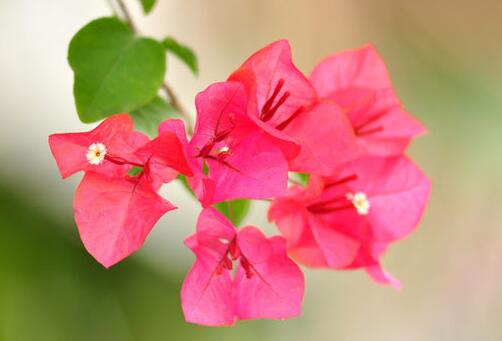
Why bougainvillea does not bloom:
1. Whether bougainvillea blooms is also related to the size of the flower pot. Bougainvillea has a well-developed root system; planted in the open air, its roots can extend several meters, so the pot should be changed regularly according to the size of the plant.
2. Bougainvillea is native to tropical regions and loves strong light. Throughout its growing period, it needs sufficient light. The longer the sunlight hours, the more it blooms and the more vivid the flower color. Conversely, if bougainvillea does not receive sunlight for a long time, it will not only fail to bloom, but even the color of its leaves will gradually fade and may even drop off.
3. Too many and too dense branches on bougainvillea will also affect the distribution of nutrients and cannot promote flower bud formation. During care, thin out overly dense and excess branches irregularly according to the shape of the plant.
4. Fertilizer issues: Potted flowers all face fertilizer issues, especially woody flowering plants, which have a greater demand for fertilizer. Depending on the size of the pot, generally once a month; during the vigorous growth period of bougainvillea, apply liquid fertilizer once every half month; if the ambient temperature is higher, more can be applied. Applying more phosphorus and potassium fertilizer is beneficial for flower bud differentiation and ensures strong flower buds.
5. Watering issues: There is a saying: “Frequent watering, no flowers; little watering, flowers keep coming.” Water control can make the flower bud differentiation of bougainvillea largely influenced by the amount of water. Generally, water control should be carried out about 50 days before flowering. That is, to make bougainvillea bloom on “National Day” (October 1), we should start water control on August 10. If rainy days occur, it should be moved into a greenhouse or covered with a rainproof film to prevent rainwater from soaking the pot soil. The water control period is about 10 days, at which point the epidermis of the current year's branches of bougainvillea is slightly wrinkled. After that, resume watering and carry out normal management. At this time, bougainvillea will shed old leaves and sprout new buds.
6. Pruning issues: Some flower enthusiasts are reluctant to prune, resulting in scattered nutrients and difficulty forming flower buds. Every spring when bougainvillea has flower buds, some weak branches and diseased branches can be cut off, and after flowering, the flower stalks should also be cut off.#p#Subtitle#e#
What to do if bougainvillea does not bloom
1. Light
Bougainvillea loves light, so it can be placed in a sunny location. This is not only beneficial for its vegetative growth but also for reproductive growth. Plants treated with strong sunlight have shorter internodes, more substantial growth, more flowers, deeper flower color, and a longer flowering period.
2. Pruning
Bougainvillea has a long and fast growth period, so it needs proper pruning and pinching.
3. Water
Bougainvillea should begin water control in mid-August. After watering once, wait until the leaves and young buds droop before watering again. The degree of water control is based on the plant not dying from dryness. Repeat this treatment until flower buds begin to appear in the leaf axils at the branch tips, then gradually resume normal watering. Water control can increase the concentration of cell sap in bougainvillea and can promote flower bud differentiation and formation.
4. Fertilizing
Bougainvillea is very sensitive to urea. If the fertilizing period is improper or the ratio is improper, it may produce the phenomenon of flourishing branches and leaves but few flowers, so applying urea must be done with special caution. In summer, when temperatures are high and there is more rain, plants tend to grow leggy, so urea should not be applied alone. Some fertilizer made from rotted vegetable leaves can be applied. It is best to use a 0.2%-0.3% potassium dihydrogen phosphate solution as a foliar top dressing, applying fertilizer once every half month. At the initial stage of flower branch growth, urea can be applied once to promote flower branch growth.
How to Grow Bougainvillea: An Analysis of Why Bougainvillea Does Not Bloom
In early summer, the bougainvillea in Shenzhen blooms vibrantly. The ordinary and unpretentious bougainvillea can be seen everywhere in this city. As a tropical plant, bougainvillea prefers a warm and humid climate and is not cold-tolerant. People also call it paperflower, bougainvillea, and so on. The flower color is vivid, the leaves are lush, and the flowering period is accompanied by leaf fall. In the south, if managed properly, bougainvillea can bloom continuously all year round, and its flowering period is generally between November and December. In the methods for growing bougainvillea, the decoration editor will comprehensively introduce some details in bougainvillea cultivation and reveal the reasons why bougainvillea does not bloom!
[How to Grow Bougainvillea]
1. Soil: Bougainvillea is not strict about soil requirements. It grows well in well-drained, mineral-rich clay loam, is tolerant of poor soil, alkali, and drought, and dislikes waterlogging. Slightly acidic soil is most favorable for the growth of bougainvillea.
2. Watering: In spring and autumn, water once a day. In summer, water once each morning and evening. In winter, watering should be controlled. After flower buds appear, water once each morning and evening, and at the same time spray water on the leaf surface 1-2 times. During the plum rain season, prevent waterlogging to avoid root rot and plant death.
3. Temperature: The suitable growth temperature is 15-30°C. In summer, appropriate shading or measures such as spraying water and ventilation should be taken. In winter, the ambient temperature should be maintained at no lower than 5°C.
4. Fertilizing: In addition to applying sufficient base fertilizer in the pot soil, top dressing should also be applied during the growing season. Add a small amount of potassium dihydrogen phosphate, and at the same time spray a 0.1%-0.2% potassium dihydrogen phosphate solution on the leaf surface. During the full flowering period, water with alum fertilizer water once a week and spray 0.2% potassium dihydrogen phosphate on the leaf surface.
5. Light: Throughout the year, except that newly potted seedlings should first be placed in semi-shade. In winter, it should be placed in front of a south-facing window, and the light duration must not be less than 8 hours.
6. Propagation: Selection of cuttings: Bougainvillea branches, whether as thick as an arm or as thin as incense, can be used for cuttings; thick branches root later but form shape quickly; one-year-old lignified green branches easily develop new roots and have a high survival rate. Generally, choose tightly structured, thick 1-2 year old outer sun-facing branches (do not use overly thin branches, immature branches, leggy branches, or shaded branches). Use a sharp knife to cut into sections of 3-4 nodes (about 8-10 cm long). The lower diagonal cut surface should be 5-10 mm below the node. Remove the lower leaves and keep the upper two and a half (whole) leaves as the cutting.
7. Pruning: Bougainvillea has strong growth vigor, so it needs shaping and pruning every year. Bougainvillea is commonly propagated by cuttings, and raising seedlings is easy. In May and June, cut mature lignified branches, 20 cm long, insert them into a sand pot, cover with glass, keep moist, and they can root in about one month. After two years of cultivation, they can bloom. Pruning method: After flowering, prune moderately, cut off the flower stalks, shorten the flowering branches by 1/3, and thin out weak branches, short branches, and inner branches. In winter, prune in conjunction with changing the pot soil. Pruning should master: short, heavy, thin. Short means short cutting, retaining 1/3 of the branch; heavy means heavily pruning long flowering branches; thin means thinning out weak branches so that strong branches regrow, also called renewal pruning. The cut branches can be kept as cuttings for propagation. In the south, where bougainvillea is planted for flower trellises, fences, and courtyards, it does not go dormant or shed leaves in winter, so only light pruning is needed, but binding, distributing, and training should be done so that the branches on the trellis are evenly and reasonably distributed and cover the trellis.
8. Pest and disease control: Bougainvillea brown spot disease harms leaves, producing yellow-brown to light brown spots with a diameter of 0.1-0.5 cm on the leaf surface. When a small number of diseased leaves are found, remove and burn them promptly. In the early stage of the disease, use 70% mancozeb wettable powder at 400 times dilution, spraying once every 10 days, for 3 to 4 consecutive times. Bougainvillea leaf spot disease initially shows yellow-brown spots surrounded by a yellow-green halo, later expanding into nearly round or irregular lesions with dark brown edges. In the later stage, small black dots appear on the lesions. When a small number of lesions are found, miconazole nitrate cream can be applied on them, and branches with more disease can be cut off. In the early stage of the disease, generally 50% carbendazim wettable powder at 500 times dilution can be used for control, spraying once every 7-10 days. In severe cases, according to actual experience, spray once again on the fourth day, then once every 7 days. For 3-4 consecutive times, the control effect is good. Scale insects: In environments with poor light, poor ventilation, and high temperature and humidity, various scale insects are prone to sucking and causing damage. They can be killed by spraying 45% malathion emulsifiable concentrate at 1000 times dilution.
[Summary of Bougainvillea Cultivation Problems]
1. In hot summer and winter, because the plant grows slowly or goes dormant, fertilization should be stopped.
2. Do not apply concentrated fertilizer or raw fertilizer.
[Why Bougainvillea Does Not Bloom (Causes + Solutions)]
1. Whether bougainvillea blooms is also related to the size of the flower pot. Bougainvillea has a well-developed root system; planted in the open air, its roots can extend several meters, so the pot should be changed regularly according to the size of the plant.
2. Bougainvillea is native to tropical regions and loves strong light. Throughout its growing period, it needs sufficient light. The longer the sunlight hours, the more it blooms and the more vivid the flower color. Conversely, if bougainvillea does not receive sunlight for a long time, it will not only fail to bloom, but even the color of its leaves will gradually fade and may even drop off.
3. Too many and too dense branches on bougainvillea will also affect the distribution of nutrients and cannot promote flower bud formation. During care, thin out overly dense and excess branches irregularly according to the shape of the plant.
4. The last and most important point is water control and fertilizer control. Before the flowering period of bougainvillea arrives, control the amount of watering, and water appropriately only when the leaves are slightly wilted. Stop applying nitrogen fertilizer and increase phosphorus and potassium fertilizer.
[Bougainvillea Flower Language]
In terms of love, the flower language of bougainvillea means fickleness in love. There is also another flower language: passion, perseverance, and indomitable striving.
When Bougainvillea Blooms: The Most Suitable Blooming Time in Each Region
Bougainvillea has a long flowering period and can be enjoyed for both flowers and leaves, so it is sought after by many flower enthusiasts. So when does bougainvillea bloom? The flowers of bougainvillea are very small and not often noticed, but they are small and cute, very pleasing to the eye. Bougainvillea generally blooms from November to December. If cultivation and management are done well, we can also make bougainvillea bloom all year round. Below, the editor brings you detailed information.
When bougainvillea blooms:
The flowers of bougainvillea are very small and not often noticed, but they are small and cute, very pleasing to the eye. Bougainvillea generally blooms from November to December. If cultivation and management are done well, we can also make bougainvillea bloom all year round. In this way, we can see the beautiful bougainvillea blooming at any time.
In most cases, the bougainvillea of flower enthusiasts blooms multiple times a year, with an average flowering period of about 30-120 days (the flowering period is affected by temperature; when the temperature is high, the flowering period is relatively shorter). The blooming time is concentrated between April and November. Of course, some varieties bloom at different times, and some are greenhouse bougainvillea, whose blooming time is also different.
A pot of bougainvillea was still blooming in December. According to his description, as long as the temperature is not lower than 10°C and sufficient fertilizer and water are given, bougainvillea still blooms tenaciously.
It must be calculated backward according to the local temperature and the most suitable blooming time. In Guangdong, it can bloom from December to New Year's Day, or even during the Spring Festival. In Guilin, it can only bloom from October to November, when the temperature is relatively suitable, with mild "little Indian summer" weather, not too cold, and an average daily temperature reaching 12 degrees. Not too hot, so the flowering period is drawn out. If the climate is good, it can bloom until New Year's Day. The flowering period lasts as long as sixty days. If it is made to bloom on National Day, then the temperature is too high. The flowering period is only one month.
Based on this observation, I choose to arrange the flowering period from the end of October to November. This can both extend the flowering period and allow it to pass winter safely. If it is Beijing, only October blooming can be considered, which can both add glory to National Day and allow safe overwintering. The farther north, the earlier it must be, as the temperature does not spare anyone.#p#Subtitle#e#
How to make the bougainvillea flowering period longer:
1. Watering must be scientific
Watering must be scientific, that is, the combination of watering, water control, and heavy watering. After Qingming Festival, bougainvillea is cultivated outdoors after leaving the greenhouse. During the vegetative growth period, water once a day to ensure normal growth of branches and leaves. From May to June, according to different varieties, appropriately carry out intermittent water control to promote flowering. The degree of water control is preferably when the branch tips droop and the leaves are slightly wilted. At this time, spray water on the leaves 1-2 times a day. After 2-3 days, water thoroughly once. Repeat this 3-4 times, which can stop the top growth of the plant, concentrate nutrients, and promote flower bud differentiation. When a red flush appears at the top of the branch tips, water thoroughly again; when flower buds appear on new shoots, water heavily once each morning and evening, and spray water 1-2 times, until flowering. After the flowering period, appropriately reduce the number of waterings. Because after continuous flowering periods, nutrients in the plant are consumed excessively, and most leaves turn yellow and fall off. If watered too much and the soil is too wet, the roots will rot. When entering the greenhouse for maintenance in autumn and winter, water must be controlled for 1 month to facilitate flower bud differentiation and blooming during the Spring Festival. Afterward, watering can follow the principle of watering when dry and stopping when wet.
2. Fertilizing must be appropriate
Bougainvillea blooms a lot, has a long flowering period, and consumes many nutrients. In addition, the pot soil is limited, so fertilizer must be supplemented regularly. When repotting in spring, apply sufficient base fertilizer. According to the size of the pot, apply 10 to 20 grams of decomposed cake fertilizer or chicken manure soil per pot. After leaving the greenhouse, apply quick-acting nitrogen fertilizer 1-2 times. When entering the vigorous growth period, apply decomposed cake fertilizer water every 7 days to accelerate flower bud differentiation. When flower buds appear in the leaf axils, more fertilizer can be applied, mainly phosphorus and potassium fertilizer, and nitrogen fertilizer should be avoided to prevent the plant from growing leggy and affecting flowering. From August to October, even more heavy fertilizer and heavy water are needed, using dilute fertilizer instead of water, watering flowers with alum fertilizer water or cake fertilizer water, and applying phosphorus fertilizer several more times.
3. Light must be strong, sunlight must be long, and temperature must be high
Bougainvillea loves light. During the growing period, it requires sufficient light, which is beneficial for producing more flowers. If light is insufficient, new branches grow thin and weak, leaf color is dull, and flowers are few and not vivid. Bougainvillea can bloom when the continuous temperature is above 20°C, can still grow normally above 35°C, and the overwintering temperature must not be lower than 7°C.
When caring for it in northern regions, no shading is needed in summer. With 10 to 12 hours of sunlight per day, strong light, long sunlight hours, and good ventilation conditions, the flowering period can reach 180 to 200 days. Among them, purple bougainvillea can bloom until the Spring Festival. After leaving the greenhouse at Qingming Festival, it can bloom beautifully again during “May 1st”.
4. Pruning must be reasonable
Bougainvillea is robust and has strong sprouting ability, and is very tolerant of pruning. Reasonable pruning and shaping can also promote more branches and abundant flowers. For potted bougainvillea, generally prune twice a year. The first time is from March to April before sprouting, in conjunction with repotting; the second time is in late autumn when bougainvillea enters the greenhouse.
When pruning, three principles should be mastered: short, heavy, thin. That is, short-cut horizontal branches to promote more flowering mother branches at the base and ensure vigorous flowering; heavily prune new leggy branches to prevent them from competing for fertilizer and water and consuming nutrients; thin out dense branches, weak branches, and terminal branches. Each pruning should be moderate. Pruning too heavily will weaken the growth of bougainvillea, delay the flowering period, reduce the number of flowers, lengthen the growth period, and reduce the ornamental effect.
5. Pest and disease control must be timely
Bougainvillea has relatively few pests and diseases. In winter and spring, there are occasionally scale insects and aphids causing damage, making stems and leaves curl and affecting photosynthesis. Spray 1500 to 2000 times omethoate for control. For leaf spot disease, spray 65% zineb wettable powder at 600 times dilution.
6. Loosening the soil must be frequent
Because potted bougainvillea has limited soil and is often watered, the soil easily becomes compacted and hardened, causing poor root development and affecting plant growth. Therefore, during the growing period, loosen the soil frequently, and remove weeds while loosening the soil to prevent them from competing with bougainvillea for water and fertilizer.
For potted bougainvillea, as long as there is sufficient light, temperature, water, and fertilizer, plus reasonable pruning, timely pest and disease control, frequent soil loosening, and timely flowering-promoting cultivation, it can grow vigorously and bloom continuously all year round.