How long does Bougainvillea take to root from cuttings? Reasons it keeps failing to root
How long does Bougainvillea take to root from cuttings? In May and June, cut mature woody branches of Bougainvillea, 20 cm long, insert them into a sand pot, cover with glass, and keep moist; they can root in about one month, and can bloom after two years of cultivation. So why does Bougainvillea often fail to root from cuttings? Below, the editor brings you the detailed content.
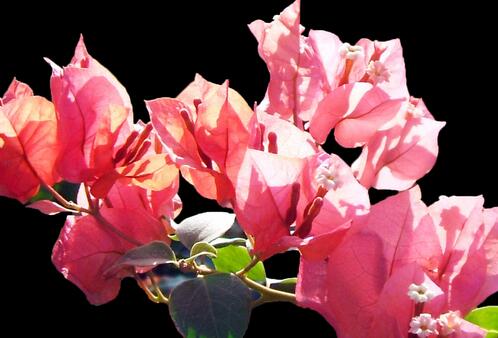
How long does Bougainvillea take to root from cuttings:
@Zhuyelian
Generally it can root in one to one and a half months, related to season, temperature, material, and level of management.
@Zhenzhuyuan
The toothpick seedlings I propagated took root in as fast as twenty days, and the slow ones took more than a month to root.
@Manshihua
After I propagated them for several months, the flowers only then sprouted. Just wait patiently!
How to care for Bougainvillea that keeps failing to root from cuttings:
Choosing the growing medium
It is not strict about soil requirements, but it fears waterlogging and cannot tolerate waterlogging. Therefore, a loose, well-drained growing medium must be chosen. Generally, a growing medium made of 4 parts humus soil, 4 parts garden soil, and 2 parts sand can be used. Dried pond mud mixed with some coal cake residue can also be used as potting soil.
An evergreen small shrub with bright red, eye-catching flowers and relatively large blooms; every 3 bracts gather into a small triangular flower, hence it is also called triangle flower. Bougainvillea glabra likes warmth and sufficient light, is not cold-tolerant, and dislikes waterlogging. [8] It is suitable for growing in fertile, loose, well-drained sandy soil. In heavy, alkaline, low-lying, easily waterlogged soil, it not only grows poorly but also easily rots at the roots and dies. The growing medium should be prepared with 4 parts leaf mold, 2 parts garden soil, 1 part decomposed barnyard manure, 1 part sawdust, and 2 parts river sand. When potting, 30 g of decomposed cake fertilizer should also be mixed in as base fertilizer.
It needs a certain amount of nutrients, and appropriate fertilization during the growing period is required to meet its growth needs. Fertilizer should be decomposed, and fertilization should be applied in small amounts many times, with a diluted concentration; otherwise, it easily damages the root system and affects growth. Starting in May, apply a 10%-15% cake fertilizer solution once every half month to promote spring shoot growth; in the high-temperature season of July-August, to meet its growth needs, apply a 10% cake fertilizer solution and a small amount of superphosphate or a small amount of compound fertilizer solution once every 15-20 days; after September, less nitrogen fertilizer should be applied, and charred mud ash and a small amount of superphosphate can be used to promote the bracts to open in a bright red and beautiful color. Bougainvillea glabra needs less water than other flowers; during the growing period, it is enough as long as the potting soil is neither dry nor wet. [9]
Reasonable fertilization
To make it bloom, sufficient nutrients must be ensured, and fertilization must be timely and appropriate, used reasonably. Generally, during the vigorous growth period from April to July, apply liquid fertilizer once every 7-10 days to promote robust plant growth. The fertilizer can be 10%-20% decomposed soybean cake, rapeseed cake water, or human manure water, etc. Starting in August, in order to promote flower bud formation, apply fertilizer mainly based on phosphorus fertilizer once every 10 days; 20% decomposed chicken, duck, and pigeon manure and fish scraps liquid fertilizer can be used. From October onward, it enters the flowering period. From this time until mid-November, apply fertilizer mainly based on phosphorus fertilizer once every half month, with a fertilizer water concentration of 30%-40%. After each flowering thereafter, an additional topdressing must be applied once, so that the flowering period continuously receives nutrient supplementation. [9]
Water control before flowering
Usually, watering should follow the principle of "do not water if not dry, and water thoroughly when watering." But for neat and abundant flowering, water control must be carried out before flowering. Starting in September, control watering of Bougainvillea. Each watering should wait until the potting soil is dry and the branches and leaves are soft and drooping before proceeding. Repeat this continuously for half a month, then after half a month restore normal watering as usual. During the water control period, absolutely do not fertilize, so as to avoid fertilizer burning the root system. In this way, flower buds will appear and bloom in about one month, and the flowers will open neatly and luxuriantly.
Loosening soil and repotting
Due to long-term watering, fertilization, and rain washing, the potting soil easily becomes compacted. Therefore, the soil must be loosened regularly, and weeds in the pot should be removed at the same time, so as to benefit the growth of Bougainvillea. Otherwise, if the potting soil is compacted and waterlogged, it easily causes root rot or poor growth. In addition, Bougainvillea glabra grows relatively fast, has a well-developed root system and very many fibrous roots, and needs repotting once a year.
[Image] Bougainvillea propagation methods, Bougainvillea propagation and cultivation time
Bougainvillea has many varieties, beautiful leaves and brilliant flowers, and in addition has a particularly long flowering period and tolerates drought and heat, making it the first choice for balcony growers. The main propagation method of Bougainvillea is cuttings, with a high survival rate.
Bougainvillea propagation method 1. Preparation for Bougainvillea cuttings (medium, branches)The cutting substrate should preferably be vermiculite, perlite + vermiculite, clean sand, or sandy loam soil (plain soil). Before use, place it in a pot and rinse it several times with boiling water to sterilize it, then use after cooling. Water propagation can also be used.
Bougainvillea branches, whether as thick as an arm or as thin as incense, can all be used for cuttings; thick branches root late but take shape quickly; one-year-old woody green branches easily grow new roots and have a high survival rate.
2. Bougainvillea cutting timeMaster seasonal cuttings. In Hangzhou, late May to early June, before the rainy season, is the best time for cuttings. (There are differences among places; for example, some articles say that in Hainan, October to March of the following year is best, while in Fuzhou, spring, summer, and autumn are all suitable.) At this time the temperature is suitable (20-30 degrees) and the humidity is high, making management convenient.
3. When taking Bougainvillea cuttingsFirst use a small wooden stick slightly thicker than the cutting branch to make slanted holes in the substrate. Insert the cutting branch about 4-6 cm deep, and after watering, move it to a slightly shaded place for care.
4. Management after Bougainvillea cuttingsLight should be appropriate: within 15 days, provide sparse light (not too shady; on sunny days shade about 50%), then gradually increase light, with new roots growing in 20-30 days, and full sun in about 25 days; only by fully receiving sunlight can the new roots be strong.
Moisture retention: within 20 days, if the weather is dry, cover with plastic wrap to retain moisture, leaving ventilation holes. In the evening, uncover for ventilation, spray water, and then cover again.
Foliar fertilization: spray once about every ten days with one-thousandth monopotassium phosphate + urea.
Watering: in the early stage, keep the substrate moist (air humidity about 70%); after 40 days, gradually alternate between dry and wet.
5. Potting Bougainvillea cuttingsSeedlings that survive 40 days after cutting should be hardened for one week under strong sunlight and watered with dilute fertilizer. At 50-60 days, divide and pot them. Place the cutting seedling together with the pot into a basin of water, and let the substrate and roots float apart; or directly pour out the roots, separate them, and plant them with part of the substrate into the growing medium.
Bougainvillea cutting example steps 1. Soil treatmentFirst prepare the cutting substrate. (Vermiculite, perlite, peat, 1:1:1. Sand, plain sandy loam, etc. can also be used.)
Add a small amount of furnace slag to the growing soil. Before cutting, the furnace slag must be sieved, selecting particles about 2 to 5 mm, soaked in boiling water, and sterilized. Control the water and dry until it no longer drips, then stir and mix thoroughly for later use.
2. Prepare flower potsIf many pots of cuttings are needed, simple plastic pots can be used, and after successful rooting they can be potted. After choosing the flower pot, soil needs to be added; a thin layer of elastic wadding or cotton can also be placed at the bottom of the pot.
After the soil is added, water thoroughly, place in the sun, and dry for later use.
3. Cutting branchesCut sun-facing branches as cuttings; new branches should preferably have a bit of old branch. New branches that have already become semi-lignified after June do not need to have old branch. When cutting branches, old branches should preferably be thick, and leafy new branches should be included.
Use a sharp knife to cut off the cutting branch. For large leaves, keep two half-leaves; for small leaves, keep two leaves and one bud, about 7-10 cm long. Cut the base of the branch; if the cut is uneven and the tissue is damaged, use a sharp knife to remove the damaged tissue, and cut the base into a slanted surface in one stroke. The picture below shows the prepared branches.
4. Soak the branchesPrepare rooting powder according to the instructions and soak the base of the cutting branch. Bougainvillea cuttings: soaking branches
5. Bougainvillea cuttingsUse a clean (sterilized) wooden stick to make slanted holes 7-8 cm deep, then bury the cutting branch, exposing the node where leaves are retained.
After inserting a pot, water thoroughly so that the substrate closely contacts the base of the cutting branch, cover with plastic wrap to retain moisture, open ventilation holes on top, and place in a place with scattered light for care.
Bougainvillea with plastic wrap and added humidity has survived; divide and pot.
How to propagate Bougainvillea by cuttings, Bougainvillea cutting methods
Bougainvillea, also known as Bougainvillea spectabilis, three-leaf plum, paper flower, etc., is often used as bonsai or in gardening. Do you know how to propagate Bougainvillea by cuttings? Let's take a look at the Bougainvillea cutting methods below.
1. The best time for cuttings is spring and summer-autumn. In spring (March-April), after moving outdoors, one-year-old branches cut from pruning can be used for cuttings (also called old-branch cuttings), but the survival rate is not very high, only about 70%. Summer and autumn are the peak growth seasons for Bougainvillea; choosing semi-lignified branches of the current year for softwood cuttings can achieve a survival rate of more than 90%. As long as management is strengthened, they can bloom in the same year.
2. The cutting substrate is relatively flexible, and flower enthusiasts can use local materials. The substrate can be coarse sand, fine sand, sandy loam with good permeability, or loose not-too-fertile loam, or crushed burned coal balls, coal cinder, etc. Then add 0.1% carbendazim for disinfection treatment, pile up the soil, and cover with film for 7-10 days. The cutting bed is 1 m to 1.2 m wide, 15-20 cm high, and unlimited in length.
3. Treatment of cuttings: choose one-year-old branches with short internodes and thick stems, cut into 8-10 cm lengths, and keep only 2-3 leaves on each cutting. Before cutting, treat with rooting hormone to promote earlier and more rooting.
4. The cutting depth should preferably be 3-4 cm (equivalent to 1/3 or 2/5 of the cutting). Before inserting, first make holes with a guiding stick, then insert the cutting, and lightly press the substrate at the base of each cutting so that the cutting closely contacts the substrate. Then water thoroughly once, and cover with film to retain heat.
Precautions:
1. Try every possible way to reduce the bacterial content of the cutting substrate (sand, coal cinder, soil, etc.). Sand can be disinfected by various methods, such as sun exposure, pouring boiling water, potassium permanganate or carbendazim sterilization, etc. Coal cinder should be fresh. When taking cuttings at the edge of the pot, try to reduce the application of undecomposed organic fertilizer and high-concentration chemical fertilizer, reducing opportunities for bacteria and root damage.
2. Pay attention to placing it in a cool place to reduce water evaporation.
3. Pay attention to keeping it moist, but do not let there be too much water; too much water easily breeds mold and is also unfavorable for rooting.
3. Bougainvillea is a southern flower and is suitable for growing in a soil environment with a pH value of 6.0 to 7.0. In the north, where soil and water are more alkaline, apply ferrous sulfate solution once a month.