Which month is best for propagating bougainvillea by cuttings? A detailed explanation of cutting times
Bougainvillea cutting propagation is a very common and important method of propagating bougainvillea. The cutting methods are also diverse. Generally, the cutting medium used should be loose and airy, free of undecomposed organic matter, and also free of salts. Today, the editor brings you the cutting time for bougainvillea. Let's take a look at the details.
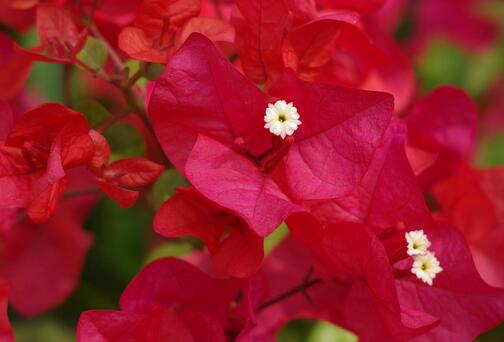
Cutting time for bougainvillea:
Cutting season: The two periods of September to October and February to April of the following year are better. The temperature and humidity are more suitable, mold activity is not strong, wounds are not easily infected, and callus tissue easily forms new roots.
Quote: “For summer cuttings, it is advisable to use semi-lignified new shoots with leaves. However, because summer temperatures are high, transpiration is fast, and new shoots easily lose water and wilt and die, summer cuttings require cooling and moisture retention to maintain the water balance of the cuttings. The cutting site should be shaded and misted.”
Steps of the bougainvillea cutting method:
1. Cutting medium: Generally, the cutting medium used should be loose and airy, free of undecomposed organic matter, and also free of salts. Remember that soil containing fertilizer must not be used. Commonly used media include river sand, vermiculite, perlite, plain sandy soil, peat soil, rotten moss, rice husk ash, sawdust, floral foam, and so on. I am not too particular and just aim for simplicity, generally using yellow sandy soil and red mud sand as the medium. Compared with pure sand cuttings, cutting with red mud soil has the advantage when dividing into pots that the soil ball does not all fall apart when lifting the seedlings.
2. For the pruned branches, it is enough that the cut end of the cutting is smooth; there are not many requirements (if conditions permit, you can soak them in carbendazim powder). Insert them directly into the potting soil. After inserting, water with ”settling“ water, then seal and cover completely with transparent film, and place in a place not exposed to direct sunlight (not a dark place).
3. Because I am usually quite busy, I uncover it once every 5 days, water according to the dryness and wetness of the potting soil, but each time I also spray mist on the branches and leaves. After nearly 1 month, the transparent film can be completely removed for normal care.
4. Choose the time for potting according to the condition of the seedlings. For high-density cuttings like mine, the seedlings must be lifted quite carefully. It is best to use a small shovel to lift them one by one into pots. Figures 5-6 show the current state of the young seedlings.
Note: Complete sealing is to ensure sufficient temperature under slightly strong indirect light and to maintain the humidity of the soil and the space. Some people say complete sealing will cause mold. The main reason is not seeing sunlight and no temperature, while the humidity is too high, which leads to mildew.
There is nothing much worth studying about the term high density. The main point is that it can save space. This is also just a habit that flower farmers doing landscaping around here have always followed.
Which month is best for bougainvillea cuttings? Bougainvillea cutting method / 4 steps for March cuttings
The beauty of bougainvillea needs no excessive description. Anyone who has seen it should be deeply impressed. Its emerald green leaves and vivid flower colors are truly extremely beautiful. Besides being beautiful, bougainvillea also has many effects and uses, so it is propagated in large quantities. The commonly used method of propagating bougainvillea is cuttings, so which month is best for bougainvillea cuttings? Below, the editor brings you a very detailed bougainvillea cutting method.
1. Which month is best for bougainvillea cuttings? March to June
The propagation methods of bougainvillea include cuttings, air layering, and grafting, but the most convenient is undoubtedly cuttings. However, if you want a high survival rate for bougainvillea cuttings, the choice of time is key. As for which month is best for bougainvillea cuttings, based on the personal experience of many flower lovers, the conclusion is: March to June is suitable, generally at a temperature of around 25°C, and roots can form in about 30 days.
2. Bougainvillea cutting method
Materials: one flower pot, one bottle of rooting water
1. Selection of cuttings
Bougainvillea is toxic, and its branches have thorns, so when taking cuttings, it is best to wear gloves. Cuttings are generally cut from sun-facing branches. For new branches, it is best to include a bit of old branch, keep a few leaves at the upper part, and cut off all the rest. If you are not cutting at the best time but after June, then you should choose already semi-lignified new branches as cuttings.
Cutting treatment: After selecting the cuttings, we also need to carry out some treatment. Soak the base of the cuttings in rooting water for a period of time.
2. Cutting medium
Before bougainvillea cuttings, the medium needs to be prepared. According to the growth habits of bougainvillea, the commonly used cutting media are generally: river sand, vermiculite, perlite, plain sandy soil, peat soil, floral foam, etc. As for me, it can be simpler; choosing plain sand and perlite is enough. Then pour the medium into the flower pot.
Soil selection: After pouring the medium into the flower pot, you should also spread a layer of 7-8 cm of soil on top. As for soil selection, according to the soil requirements in bougainvillea cultivation methods, choose nutrient soil containing humus, loose and well-drained.
3. Starting bougainvillea cuttings
After completing the above preparations, bougainvillea cuttings can formally begin. First, insert the cuttings into the potting soil, exposing only the upper part with leaves. Pay attention to the distance between the inserted branches; do not make them too dense. After the bougainvillea cuttings are completed, cover the flower pot with a layer of plastic wrap, and use a needle to poke some holes in the plastic wrap for ventilation. Pay attention to the spacing of the holes.
After that, move the flower pot to a place with light but not direct sunlight. Then spray a little water on the plastic wrap to keep it moist, so that bougainvillea can better absorb water. After completing the above steps, the bougainvillea cuttings are basically done, and what follows is later care.
4. Care and management
Care after bougainvillea cuttings is also very important. About 5-7 days after the cuttings are completed, you can uncover the plastic wrap once to let the bougainvillea breathe. Then observe the moisture of the potting soil. If it is dry, water appropriately, and each time spray mist on the branches and leaves. After about 30 days, bougainvillea can root. At this point, you can completely remove the transparent film for normal care!
That is all the editor has to introduce about the bougainvillea cutting propagation method. Although bougainvillea can also be propagated by grafting, air layering, and other methods, the most suitable one for flower lovers is still cuttings. So friends who want to turn one pot of bougainvillea at home into many pots, hurry up and try the above method! The time is just right now; if you miss it, you will have to wait another year~
How to propagate bougainvillea by cuttings: bougainvillea cutting method
Bougainvillea, also known as paperflower, three-leaf bougainvillea, leaf flower, etc., is often used as bonsai or in gardening. Do you know how to propagate bougainvillea by cuttings? Let's take a look at the bougainvillea cutting method below.
1. The cutting time is best in spring and summer-autumn. In spring (March to April), after moving outdoors, you can use the one-year-old branches cut during pruning for cuttings (also called old-branch cuttings), but the survival rate is not very high, only about 70%. Summer and autumn are the peak growth seasons for bougainvillea. Choosing semi-lignified branches of the current year for softwood cuttings can achieve a survival rate of more than 90%. As long as management is strengthened, they can bloom in the same year.
2. The cutting medium is relatively flexible, and flower lovers can use local materials. The medium can be coarse sand, fine sand, sandy loam with good permeability, or loose not-too-fertile loam, or crushed burned honeycomb briquettes, coal cinders, etc. Then add 0.1% carbendazim for disinfection treatment, pile up the soil, and cover with film for 7-10 days. The cutting bed is 1 m to 1.2 m wide, 15-20 cm high, and the length is unlimited.
3. Cutting treatment: Choose one-year-old branches with short internodes and thick stems, cut them into 8-10 cm lengths, and keep only 2-3 leaves on each cutting. Before cutting, treat with rooting hormone, which can promote earlier rooting and more roots.
4. The cutting depth should be 3-4 cm (equivalent to 1/3 or 2/5 of the cutting). Before inserting, first make holes with a dibber, then insert the cuttings, and press the medium at the base of each cutting slightly so that the cuttings are in close contact with the medium. Then water thoroughly once, and cover with film to keep warm.
Precautions:
1. Try every possible way to reduce the bacterial content of the cutting medium (sand, coal cinders, soil, etc.). Sand can be disinfected by various methods, such as sun exposure, pouring boiling water, sterilization with potassium permanganate or carbendazim, etc. Coal cinders should be fresh. For cuttings along the edge of the pot, try to reduce the application of undecomposed organic fertilizer and high-concentration chemical fertilizer, reducing the chance of carrying bacteria and damaging roots.
2. Be careful to place it in a cool place to reduce water evaporation.
3. Be careful to keep it moist, but not with too much water. Too much water easily breeds mold and is also unfavorable for root development.
3. Bougainvillea is a southern flower and grows suitably in a soil environment with a pH value of 6.0 to 7.0. In the north, where water and soil are more alkaline, apply ferrous sulfate solution once a month.