How to care for the Michelia figo (orange jasmine) in winter? Winter care methods shared
The Michelia figo has very poor cold tolerance. Improper winter care will affect its growth and blooming the following year, and in more serious cases cause its death. To help the Michelia figo survive the winter safely, today we bring you the winter care of the Michelia figo, sharing the winter cultivation methods. Let's take a look at the details.
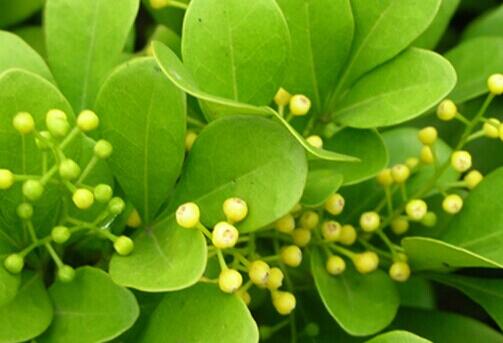
Winter care of the Michelia figo:
1. Improve cold resistance
The Michelia figo itself has poor cold resistance. Can changing the environment improve its cold resistance? The answer is: yes. After early autumn, stop fertilizing, especially with nitrogen fertilizer. Of course, a moderate application of phosphorus and potassium fertilizer is fine. At the same time, control watering and keep the potting soil on the dry side, promoting more lush growth of branches and leaves. This can effectively increase the plant's resistance, so that when a cold wave arrives, it will not be so easily brought down.
2. Increase the temperature appropriately
When the temperature drops below 0°C, the growth of the Michelia figo will be disrupted and the leaves will suffer frost damage. Generally, move the plant indoors early, closely observe the weather conditions, and take countermeasures. Place the flowerpot in a sunny spot indoors, not in a drafty spot, to prevent cold wind from reaching the plant. Throughout the winter, the indoor temperature should not fluctuate too much, to avoid affecting the plant's dormancy. Generally keep it at 10-12°C. If the room temperature exceeds 15°C, the plant will sprout new shoots and consume nutrients.
The passing of winter does not mean the Michelia figo's winter is over. In early spring, do not move it outdoors too early, to avoid cold wind damage after being moved out, which easily causes dried shoot tips and affects blooming. After moving it outdoors, if the temperature is still low, you can cover the entire plant with plastic film, or cover it with cold-protection material, but not for too long, to avoid affecting the plant's photosynthesis and accumulation of nutrients.
3. Water appropriately
In winter, the Michelia figo is in a dormant or semi-dormant state. Do not let the potting soil become too dry or too wet, and do not wait until the potting soil is completely dry before watering, nor should you water heavily. Keep the moisture in the potting soil balanced. In addition, to prevent the leaf surface from being covered with dust, which hinders photosynthesis and causes leaves to turn yellow and drop, spray water close to room temperature about once every 10 days to clean the leaves, and be careful not to spray too much water.
4. Do not move it outdoors too early
As mentioned earlier in the article, the Michelia figo's winter is very long, and the cold waves of early spring are also winter to the Michelia figo. So when the spring climate is not yet stable, do not rush to move the flowerpot outdoors. Before moving it out, you can open the windows around noon for ventilation, letting the plant adapt to the outdoor environment in advance, and then move it outdoors after a few days. If you suddenly encounter strong wind or cold wave weather, you need to move it indoors in time. #p#Subheading#e#
How to grow the Michelia figo:
1. The Michelia figo likes a warm climate, so it is generally recommended to grow it in a greenhouse. In summer it can be placed outside, but pay attention to shading; appropriate shading is still fine. Generally keep the temperature at around 25°C. In the hottest part of summer, water appropriately to cool it down. In winter it must not go below 10°C, otherwise it will suffer frost damage.
2. The Michelia figo likes moisture, so it needs to be watered at the right times, especially during the growing period. But remember that waterlogging must not occur, because too much watering will cause a series of problems such as yellowing leaves and root rot. So generally watering twice a day is enough, and in summer the leaves need to be sprinkled appropriately.
3. The Michelia figo does not have very high fertilizer requirements, but because it blooms many times a year, this causes a shortage of nutrients, so after blooming it needs a timely application of a little fertilizer, but not too much.
4. For soil, just choose acidic soil. The humus content should be mainly leaf mold, or you can buy special fertilizer from the market.
When growing the Michelia figo in a pot, the soil should be loosened frequently to ensure air circulation and drainage. Generally repot once every 2 years, and during the growing period fertilize the potting soil every 2 weeks.
How to grow the Michelia figo: cultivation methods and points to note
What Huahui Potted Plant Network introduces today is:How to grow the Michelia figo, mainly introducing the cultivation methods and points to note for the Michelia figo
Flower introduction: Michelia figo, also known as Mizailan, Shulan, Suimilan, Yuzilan, Mubenzhulan, Muzhulan, Lanhuamu, Sailanxiang, Sijimilan, Shuzhulan, is an evergreen shrub or small tree of the genus Michelia in the family Meliaceae.
Michelia figo flower language: With love, life will bloom.
Growing area: Native to southern Asia. Widely planted in tropical regions around the world. In China it is distributed in Fujian, Guangdong, Guangxi, Sichuan, Yunnan and other places, and in the north it is mostly grown in pots.
Benefits of growing it: The leaf color is lush and dense, the tree form is graceful, and the flowers are golden and shiny, with ornamental value; the flowers can be used to extract essence; the stem wood is fine and can be used for carving and making furniture; the Michelia figo can absorb sulfur dioxide and gas from the air, and it can also release volatile oil with bactericidal effects, purifying the air and benefiting human health.
Flower and leaf appearance: Odd-pinnate compound leaves, alternate, with dark green blades. Panicle-shaped flowers, born at the leaf axils at the ends of the tree, yellow flowers, with a rich fragrance.
Variety selection: There are four commonly cultivated Michelia figo varieties, namely Michelia figo, Taiwan Michelia figo, large-leaf Michelia figo, and Siji
Plant selection: A healthy plant has glossy leaves and golden-yellow flowers.
Flowerpot selection: A tall clay pot.
Preparation of growing soil: The Michelia figo likes loose, fertile, slightly acidic soil, so for the growing soil you can choose one based mainly on leaf mold.
Preparation method 1: Mix compost, leaf mold, and river sand in a 1:2:1 ratio.
Preparation method 2: Mix leaf mold, manure, and river sand in a 4:3:3 ratio.
Cultivation: Place about 3-5 cm thick coarse sand or charcoal crumbs at the bottom of the pot as a drainage layer, then spread a small amount of growing soil on top, put the plant in the center of the pot, and fill in soil while pressing it down, so that the plant's root system is closely combined with the soil. After potting, water thoroughly once, then water sparingly for the next half month, and keep it in a semi-shaded place to encourage new roots. After that, water promptly when the potting soil is slightly dry.
If it is a seedling, wait until it grows new leaves before gradually letting it see light, and keep its environment moist. Note that after potting, the temperature should be kept above 15°C.
Fertilizing: After the temperature rises in spring, after the Michelia figo has been moved outdoors for a week, loosen the soil and apply some dilute nitrogen fertilizer; you can use 10%-20% decomposed cake fertilizer water. After that, apply liquid fertilizer about once every 10 days to promote the growth of branches and leaves.
Starting in June, the Michelia figo enters its vigorous growth period and blooming period, until mid-October. During this period, apply a stronger fertilizer based mainly on phosphorus fertilizer about once every 15 days, or spray a 0.3% potassium dihydrogen phosphate solution once every 15-20 days. This can also appropriately ensure more abundant blooming.
During the blooming period, phosphorus fertilizer must be the main type, otherwise the phenomenon of only growing leaves without blooming will occur. From June to October, if fertilizer is insufficient, conditions such as flower buds withering without opening, fewer blooming times, and unscented flowers easily occur.
Watering: The Michelia figo likes moisture, but must not be too wet. Generally, water again when the potting soil dries to the point that the surface soil turns white. Watering must be thorough, judged by water flowing out from the bottom of the pot. At the same time, watering the Michelia figo should differ according to the growth stage and seasonal climate changes.
Generally after Qingming, the Michelia figo is moved out of the room. The amount of watering should begin to increase. Water less on cloudy days, do not water on rainy days, and on sunny days generally water once every 2-3 days.
In the high-temperature seasons of summer and autumn, the Michelia figo is in its vigorous growth period and has a high water demand, so at this time it is generally watered once a day. On hot sunny days, sometimes it also needs watering once in the morning and once in the evening. But on rainy days, promptly pour out accumulated water in the pot to prevent root rot.
In late autumn, as the weather gradually turns cooler, the growth of the Michelia figo slows down. At this time, watering should be gradually reduced to prevent excessive moisture causing leaf drop and root rot. Generally watering once every 3-4 days is enough.
In winter, as the temperature drops, the Michelia figo enters a dormant state and its water demand decreases. At this time it can be watered once every 10-15 days, keeping the potting soil moist but not overly dry. If the potting soil is grayish-white, it proves that the potting soil is already very dry, and it should be watered promptly at noon on a sunny day, otherwise the plant will wither and die from long-term water shortage. Do not water during severe cold and continuous cold cloudy weather. In winter, the water temperature used for watering should be close to or slightly higher than the potting soil, to prevent damage to the root system.
Warm tip: The Michelia figo's leaves easily drop. If the leaves fall when you slightly touch them with your hand or shake the flowerpot, this phenomenon indicates that the plant is being overwatered, the leaf stalks have already formed an abscission layer with the branches, and chlorophyll has decreased, affecting photosynthesis, resulting in the plant lacking nutrients, weakening, and dying.
Pruning: The Michelia figo can be shaped from the seedling stage. Keep a section of main trunk 15-20 cm high, and do not let the main branches grow in clusters from the ground.
Because the Michelia figo produces flower spikes in the axils of new leaves, new leaves are generally not pruned. However, if the Michelia figo has overwintered indoors, or is cultivated outdoors, a small amount of dead branches often appears. These dead branches should be pruned at any time to keep the tree shape attractive and benefit the plant's growth. So when moving it outdoors in spring, you can do one pruning, cutting off dead branches, diseased and pest-infested branches, and thin, overly dense branches, so as to strengthen ventilation and light penetration and concentrate nutrients.
During its growth period, pruning is generally not needed, but if it grows too densely, you can appropriately prune some non-blooming inner branches or crossing branches, and shorten branches that grow irregularly or too tall, to facilitate light and ventilation.
If after several years of pot cultivation the plant grows too tall, you can cut away the overly dense and overly tall parts so that it produces more side branches and blooms more. You can also bend and shape it to increase its ornamental value. The pruned material can also be used for cutting propagation.
Light and temperature management: The Michelia figo is a sun-loving flower. Only in an environment with sufficient light, sufficient fertilizer, and good ventilation can it grow robustly. It is not cold-tolerant and is slightly shade-tolerant.
During the care of the Michelia figo, it can be given sufficient sunlight in all four seasons. The daily light duration should be 8-12 hours or even longer, so that the plant will grow lushly, the leaf color will be deep green, the branches will be thick and strong, more flower buds will form, the number of bloomings will increase, the flower color will become more vivid, and the fragrance will be more intense. If the Michelia figo is kept in an environment with insufficient sunlight, the plant will grow leggy, the branches will be thin and weak, the number of bloomings will decrease, and the fragrance will become faint.
The Michelia figo likes warmth. The higher the temperature, the more vivid and fragrant the flowers it produces. The most suitable growing temperature is between 20°C and 35°C. Therefore, from June to October, the number of bloomings can sometimes reach 5 times. When the temperature is above 30°C, under sufficient sunlight, the flowers it produces are very rich in fragrance; if the temperature is below 30°C and light is insufficient, the fragrance of the flowers it produces will be reduced. When the winter temperature is below 10°C, it enters a dormant state, and below 5°C it is prone to frost damage.
Flowering and fruiting period management: The Michelia figo's blooming period is from June to October each year. To make the plant bloom better and more, frequently loosen the soil and fertilize. Every week, use fermented fish scraps, internal organs, eggshells, and vegetable peelings made into a decomposed fertilizer liquid, diluted with more than half water, and pour it on. When the Michelia figo grows new shoots, remove the yellow-brown fuzzy leaf buds to reduce nutrient loss, and keep the green buds with white. In addition, maintain a sunny, warm, and moist environment with fertile sandy loam so that it grows well. Prune branches and leaves in time to ensure ventilation and light penetration. In such an environment, it can be encouraged to grow healthily and bloom frequently.
The Michelia figo can grow well only with sufficient sunlight and is not shade-tolerant. So after winter begins, the blooming period can be regulated by controlling the duration of light. In this way, it is possible to make it bloom as usual during the Spring Festival. If the blooming time needs to be delayed, light can be reduced. If flowering needs to be forced, the light duration can be extended, and artificial light can be added for a few hours at night, which can promote the flower buds to open earlier.
Before the flowers form buds, apply more phosphorus fertilizer so as to form more buds.
Repotting: For potted Michelia figo, generally repot and change the soil once every two years, and the most suitable time is about one week after it is moved out in spring. Because the Michelia figo's root system is mainly fibrous roots, it is very easy to damage the roots when repotting. So, in order to damage the roots as little as possible, do not break up the old soil on the plant when repotting. Keep more old soil, only remove the old soil from places without roots, and then use a knife to cut away rotten roots.
Wash the pot clean or replace it with a new pot that has already been soaked, and replace it with new growing soil. When changing the soil, you can add an appropriate amount of phosphorus fertilizer at the bottom of the pot as a base fertilizer, but not too much. After potting, place it in a cool place to recover. After about a week, move it to a sunny place and enter normal management.
Propagation: The main propagation methods of the Michelia figo are layering and cutting propagation.
Layering propagation mostly uses the air layering method, and the best layering time is during the plum rain season.
Choose a one-year-old lignified branch, then perform ring-barking about 20 cm from its base. A bark removal width of about 1 cm is enough. Leave 2-3 small branches on the upper part, cut off all the lower side branches, then apply moss or peat to the ring-barked part. Note that the moss and peat must be disinfected beforehand before use. After wrapping, tie it tightly with plastic film at the top and bottom. Do not let the lower part leak water; the upper part can be tied a bit looser. Then spray water on the wrapped area in time to keep it moist. After 2-3 months it will take root, and then it can be cut off from the mother plant and planted.
Cutting propagation: This propagation method is mainly carried out from June to August. You can cut off robust branches of the current year that have already lignified as cuttings, about 10 cm in length, leave 2-3 small leaves at the tip, cut off the lower leaves, and insert them into a cutting bed with peat as the substrate or with sand and perlite as the substrate. Insert about 4 cm is enough, then water thoroughly and seal the mouth of the cutting pot with plastic film to keep it warm and moist. Keep the indoor temperature at about 28°C and the humidity at about 95%, keep the cutting bed moist, and after about nearly 2 months it can take root and be transplanted. If before cutting, the cuttings are soaked in a 500 ppm naphthaleneacetic acid solution for about 20 hours at the cut end, cleaned, and then inserted, it can promote earlier rooting of the cuttings.
Overwintering: Around Frost's Descent, when the temperature drops below 10°C, the Michelia figo should be brought indoors. For home pot cultivation, generally as long as the indoor temperature in winter is not lower than 5°C, it can overwinter safely. Even if the branch tips drop leaves because the weather is slightly cold, after spring begins the next year, after pruning and repotting, and then strengthening water and fertilizer management and careful care, it will quickly sprout new leaves and bloom again.
If particularly cold weather occurs, you can cover the plant with two layers of plastic bags for warmth, and puncture a few small holes in the plastic bags for ventilation. Remove the plastic bags every 1-2 days to let it breathe fully, otherwise the leaves will turn yellow.
The indoor temperature is best kept between 8°C and 10°C. If the temperature is too high, the top branches easily sprout new shoots and consume nutrients, and when moved outdoors in spring, the shoot tips easily wither, directly affecting the next year's growth and blooming.
During overwintering, also avoid indoor temperatures suddenly rising and falling, and do not frequently change the placement location.
During the overwintering period, keep the potting soil moist. Too dry will cause leaves to turn yellow and drop, and too wet will cause leaf drop and root rot. When the air is dry, you can spray water on the leaf surface. The best time to spray is at noon on a sunny day, and the temperature of the sprayed water should be similar to the potting soil temperature. If stains appear on the leaf surface, clean them so that it can breathe normally.
If for a period of time, due to various factors such as going out, you cannot water the Michelia figo, you can place the Michelia figo flowerpot on a shallow tray with moist soil, letting the plant absorb a tiny amount of water from the bottom of the pot.
If withered and rotten leaves are found, remove them in time, so as to avoid consuming too many nutrients and also affecting appearance.
After bringing it indoors, also pay attention to ventilation, but do not place it in a drafty environment, to avoid frost damage.
The time to move it outdoors should be after Qingming, and only consider moving it out when the temperature is basically stable above 15°C. Before moving it out, first let it adapt to the outside environment. You can open the windows and let the Michelia figo gradually adapt to the outside air. After a transition period, then move it outdoors.
Pest and disease control: The main diseases of the Michelia figo are stem rot, anthracnose, Michelia figo chlorosis, etc.; the main pests are white wax cicada, aphids, red spiders, scale insects, etc.
Stem rot: If the plant develops stem rot, in the early stage of the disease promptly apply 0.5%-1% Bordeaux mixture or 70% thiophanate-methyl 800 times solution to the branches and trunk.
Anthracnose: Anthracnose is the main disease the Michelia figo is prone to, often breaking out from June to October. Infected leaves begin from the leaf tip and leaf margin and gradually turn brown. If the leaf stalks and stems are infected with this pathogen, they will also gradually turn brown.
To control this pathogen, promptly cut off the diseased body after discovering diseased branches and leaves, cut off the source of infection, and then improve ventilation conditions.
You can also spray a 1000-1200 times potassium permanganate aqueous solution.
Michelia figo chlorosis: This disease occurs relatively commonly, mostly at the turn of spring and summer in hot and rainy seasons. Infected plants have new leaves lacking green, and branch tips wither, and in severe cases even cause the whole plant to die. This disease is mostly caused by soil containing alkali. Improve the soil so that it is slightly acidic, and loosen the soil.
Red spiders, aphids: If the plant is affected by the above-mentioned pests such as red spiders and aphids, you can use 40% dimethoate 1000-1500 times aqueous solution or 1200 times dichlorvos aqueous solution for spraying and killing.
Best placement location: Outside a south-facing window.
How to care for the Michelia figo in winter: reduce watering and take freeze-protection measures
For most plants, winter is a very difficult period, and the same is true for the Michelia figo. So in winter, many points also need attention during the cultivation of the Michelia figo. As for how to care for the Michelia figo in winter, below we will take everyone through it.
How to care for the Michelia figo in winter
1. Improve cold resistance
The Michelia figo does not have very strong cold tolerance, so when caring for it in winter, freeze-protection measures must be taken. First, before winter begins, we can appropriately apply a little phosphorus and potassium fertilizer to the Michelia figo, which can make the branches and leaves grow more lushly and also improve its cold resistance.
2. Pay attention to temperature control
As for how to care for the Michelia figo in winter, controlling the environmental temperature is a very important part. When growing it indoors, it is best to keep the temperature between 8-12°, which will not affect its dormancy and can let it pass the winter safely.
3. Reduce watering
Winter is the semi-dormant period of the Michelia figo, so its water requirements are not too high. Therefore, the amount of watering must be controlled. Do not let the potting soil become too moist, because the winter weather is relatively cold, and if the potting soil is too moist it is very easy to freeze and damage the plant. Everyone should note this point.
4. Light requirements
In winter the Michelia figo is generally grown indoors, but at noon each day when the temperature rises slightly, it is best to move it outdoors and let the Michelia figo receive a few hours of light, which is more beneficial for its overwintering. But everyone must remember to move it back indoors in time, otherwise it is very easy to freeze and damage the plant.
5. Freeze-protection measures
If the Michelia figo needs to be grown outdoors in winter, freeze-protection measures must be taken. We need to use protective film to wrap the entire plant, which can protect it well from freezing. However, every 1-2 days when the temperature rises, the protective film needs to be opened to let it breathe. Everyone should remember this point.