Is the Ludwigia inclinata easy to grow? Its cultivation difficulty is quite high
Ludwigia inclinata, a rather alluring name. Ludwigia inclinata is a stem-type aquatic plant and one of the aquatic plant species with extremely high cultivation difficulty; it is an improved variety of Ludwigia octovalvis. So, is Ludwigia inclinata easy to grow?
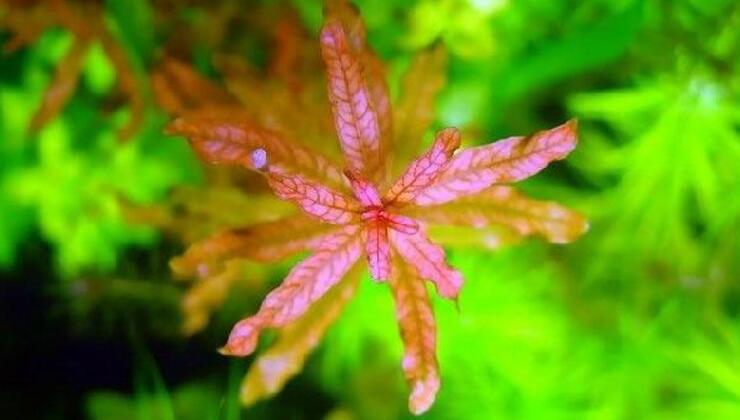
Introduction to Ludwigia inclinata:
Common name: Ludwigia inclinata
Scientific name: Ludwigia inclinata
Family: Onagraceae
Distribution: South America
Illumination: 2000Lux
Water temperature: 16-16°C
Position: mid-ground and background plant
Hardness: 2-12DH
P H:6.0-7.2
Is Ludwigia inclinata easy to grow:
Ludwigia inclinata is a dicotyledonous plant and an amphibious aquatic plant. Its emersed leaves are long ovate, with opposite phyllotaxis and obvious veins; it flowers, with yellow flowers emerging from the leaf axils, large and conspicuous. The leaf color can be green, tawny or coffee-colored, mainly varying with the season.
When Ludwigia inclinata is a submerged plant, the leaf texture becomes clearly distinct, which is also the origin of the name “Ludwigia inclinata”; and because the leaves are slender and long ovate, somewhat like willow leaves, it is also called “willow-leaf water ludwigia”. The leaf texture is very thin and full of gracefulness, looking elegant and graceful, with an elegant, beautiful and valuable appearance, always making people have the urge to cultivate it. However, this aquatic plant Ludwigia inclinata is extremely difficult to cultivate, so it is not suitable for novice aquatic plant enthusiasts. Especially wanting to raise it to top-quality condition in an aquatic plant tank is extremely difficult, and it may require very strong light intensity, as well as high concentrations of iron fertilizer and trace elements in the fertilizer.
How to grow Calathea makoyana: what pesticide to use for aphids
Calathea makoyana, this is a plant that is loved by a great many people. What is the cultivation method for this Calathea makoyana? What pesticide to use for aphids:
Cultivation method for Calathea makoyana:
1. Soil: When cultivating Calathea makoyana, choose soil with good aeration, good drainage, fertility and looseness. Before planting, the soil can be sterilized and disinfected.
2. Light: When growing potted Calathea makoyana indoors, choose a location with good transparency and good light, which is conducive to the lush growth of Calathea makoyana, thereby improving its ornamental value; except in summer, pay close attention to the direction of sunlight in the other three seasons.
3. Water: Calathea makoyana likes soil that is somewhat moist, but waterlogging and standing water must not occur, as this will cause root rot in Calathea makoyana; in summer, water a bit more than usual.
4. Temperature: It is rather afraid of cold, and its optimal growth temperature is between 18°C and 30°C; in winter the minimum temperature must not be lower than 10°C, so that it can overwinter normally.
5. Fertilizer: During the growth period of Calathea makoyana, ensure fertilizing about once every 2 days. The fertilizer should be mainly nitrogen fertilizer.
6. Preventing pests and diseases: Observe more and spray water on the leaves more, which can reduce pest and disease damage; fungicides can be sprayed to kill them.
What pesticide to use for aphids:
When the damage rate of new shoots reaches 25%, pesticide should be sprayed immediately for control. Commonly used pesticides include acetamiprid, dimethoate, and thiosultap, etc. Attention should be paid to protecting the seven-spot ladybird, Chrysopa major, hoverflies, Aphytis wasps, etc., and cutting off overwintering eggs to reduce the pest population base.
The cultivation method for Calathea makoyana is introduced here; pay attention to aphids.
[Calathea makoyana pictures] Cultivation method of Calathea makoyana_Does it prefer shade or sun?
Calathea makoyana is also called Calathea leopardina, white-veined calathea, prayer flower, green-veined calathea, etc. It is a perennial green herbaceous plant belonging to the genus Calathea in the family Marantaceae. Its plant often grows prostrate, and the plant height is about 10cm-30cm; the distance between nodes is very short, and it is in a multi-branched state, while the stem grows prostrate. Its leaves are relatively wide and rectangular-round in shape, generally 8cm-15cm in length and about 7cm-10cm in width, with a heart-shaped base and a pointed protruding front end, light green in color and very glossy. There are 6-8 pairs growing at the lateral vein positions, and between the veins there are two rows of feather-like markings arranged in a pattern, gray-brown in color, which will turn dark green during growth, just like a rabbit's footprints; the back is green, and the leaves are obovate, 7-10cm in length and 4-6cm in width, with dark green stripes arranged alternately on both sides of the main vein, while the newly grown leaves are white-green, looking very elegant. Below let us learn together about Calathea makoyana pictures, as well as the cultivation method of Calathea makoyana; is Calathea makoyana a shade-loving or sun-loving plant?
[Calathea makoyana pictures — growth habits]
Calathea makoyana is a foliage plant. It is native to some tropical regions such as the Americas, Asia, and Africa, and is very easy to grow. It was mainly selected and bred by Europeans from Calathea rotundifolia; it likes to grow in environments with sufficient sunlight, high humidity, and semi-shade. It is a plant that is afraid of cold and avoids strong light. The suitable growth temperature is 18-30°C, and it has relatively high requirements for the humidity of the growing environment, but it avoids planting in places where the potting soil and environment are dry. It is most suitable for growing in loose, fertile, well-drained, acidic leaf mold and peat soil rich in organic matter.
[Propagation method of Calathea makoyana]
The propagation method mainly used for Calathea makoyana is division propagation. Its propagation ability is very strong, and it is suitable for propagation throughout the four seasons. It is best to plant it in relatively loose, breathable and fertile soil; during cultivation, do not water too much, otherwise water accumulation in the potting soil will occur and cause root rot. Generally, root division propagation is used, usually carried out when repotting in spring each year.
[Cultivation method of Calathea makoyana]
1. Soil: When growing Calathea makoyana, it is best to plant it in loose, fertile, well-drained and well-aerated soil. Use chlorothalonil to disinfect the soil, and then carry out the planting of the plant.
2. Light: If potted Calathea makoyana is placed indoors for cultivation, it can be placed in an environment with relatively good light and relatively good transparency, so that Calathea makoyana will grow more luxuriantly. If placed in a place that is too shady, its growth trend will be relatively weak, and the markings on the leaves will fade. In summer, avoid direct strong light, otherwise the leaves will become scorched and curled, thereby reducing the ornamental value. In spring, autumn and winter, do more photosynthesis in the morning and evening.
3. Water: During the growth of Calathea makoyana, keep the potting soil moist, but do not cause water accumulation, otherwise root rot will occur. In summer, some watering is needed.
4. Temperature: The most suitable temperature for Calathea makoyana is 18-22°C, and during the overwintering season the temperature only needs to be kept above 10°C.
5. Fertilizer: Calathea makoyana likes to grow in fertile soil. In the season of relatively vigorous growth, it needs to be watered with fertilizer water 1-2 times a day. The fertilizer applied is best a compound fertilizer with nitrogen fertilizer as the main component.
6. Preventing pests and diseases: The pests encountered by Calathea makoyana are not particularly many, mainly scale insects and whiteflies, and phosmet and omethoate can be used for effective spraying to prevent and control them.
[Does Calathea makoyana prefer shade or sun]
Calathea makoyana is native to regions such as the Americas, Asia, and Africa. It likes to grow in warm, humid, and relatively cool environments. The suitable growth temperature is 18-22°C, and in winter the temperature must be above 10°C for it to overwinter safely. The plant of Calathea makoyana is relatively short, and it is generally grown together with relatively neutral or tall plants. It is propagated in positions such as display windows, flower racks, and desks, giving people a unique elegance, and it can also be placed in an office or indoors as a hanging basket plant for viewing.
More related information: Photinia davidsoniae pictures How to grow Photinia trees What effects and functions does Rorippa indica have How to grow Adiantum Liquidambar formosana leaves pictures