How to Prune Lemon Balm? Detailed Guide to Cultivation and Care
Lemon balm tolerates low temperatures in winter and high temperatures in summer. It is native to the southern shore of the Mediterranean in Europe and can be found in Europe, Central Asia, North America and Asia, with its main production area in France. So how do you prune lemon balm? Below, the editor brings you the detailed content.
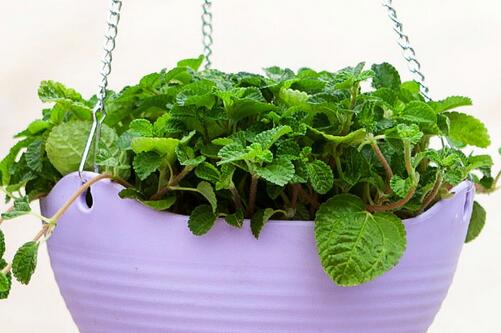
How to prune lemon balm:
Lemon balm grows very fast, so it is recommended to prune it once a week. Simply cut above the higher nodes where new leaves are growing. If leaves with black edges or old leaves at the base appear, there is no need to worry; just pull them off. (Growth is slow in winter, so prune as little as possible; after pruning, place it in a spot with plenty of sunlight.)
Cultivation and care of lemon balm:
Watering
Water it with clean water or rice-washing water every 3-5 days. If the branches and leaves wilt due to lack of water, replenish the water immediately and they will recover quickly. For supplemental nutrients, an ordinary commonly used plant nutrient solution will do.
Pruning
Lemon balm grows very fast, so it is recommended to prune it once a week. Simply cut above the higher nodes where new leaves are growing. If leaves with black edges or old leaves at the base appear, there is no need to worry; just pull them off. (Growth is slow in winter, so prune as little as possible; after pruning, place it in a spot with plenty of sunlight.)
Ventilation
If the room has good light, you can place the lemon balm in a spot with sunlight and normal indoor ventilation is fine; if the room does not have good light, such as a bathroom or kitchen, then after placing the lemon balm in the room for 72 hours, move it to a spot with plenty of sunlight, and after 72 hours or so put it back. When the weather is not cold, it can also be placed outdoors to absorb light and get fresh air.
Sunlight
Lemon balm likes bright light. If the room has good light, you can place the lemon balm in a spot with sunlight and normal indoor ventilation is fine; if the room does not have good light, such as a bathroom or kitchen, then after placing the lemon balm in the room for 72 hours, move it to a spot with plenty of sunlight, and after 72 hours or so put it back. When the weather is not cold, it can also be placed outdoors to absorb light and get fresh air.
Temperature
Lemon balm has low temperature requirements for cultivation. In winter it can tolerate low temperatures below 0°C, but in summer growth is restricted at high temperatures above 30°C. The most suitable growing temperature is between 10-20°C.
How to Prune Lemon Balm, Lemon Balm Pruning Methods / Learn 2 Tricks to Trim It Beautifully
Lemon balm, a common excellent choice for indoor growing, is not only highly ornamental but can also absorb various toxic gases, making it one of the favorite plants of flower lovers. However, during cultivation, because lemon balm grows extremely fast and easily overgrows its pot and ruins its appearance, it needs frequent pruning. So how do you prune lemon balm? Next, the editor will introduce the pruning methods for lemon balm.
I. How to prune lemon balm, the method matters
Whether it is a new house or an old house, keeping a pot of lemon balm in it is definitely a good choice, not only because it can absorb toxins, but more importantly because it looks beautiful. However, if you want to grow lemon balm attractively, pruning is essential. But for beginners, when it comes to pruning lemon balm, they do not know where to start. Let's take a look together at the pruning methods for lemon balm.
II. Pruning methods for lemon balm
1. The necessity/feasibility of pruning
Before understanding the pruning methods for lemon balm, the editor will first talk about the necessity and feasibility of pruning lemon balm:
Necessity: Lemon balm grows very fast. If the indoor environment, air humidity, nutrients, light and other conditions are very suitable, it easily overgrows its pot. At this point, if it is not trimmed, its rampant growth will look very ugly, so pruning lemon balm is very necessary.
Feasibility: For many beginners, when pruning lemon balm they are afraid of cutting it to death. Actually, there is no need to worry, because lemon balm is a plant that grows more vigorously the more it is pruned, so do not worry that once cut it will be gone.
2. Pruning methods
How to prune lemon balm? Generally speaking, pruning lemon balm is done because its leggy branches are growing rampant, or because the plant has many dead and diseased branches. At this point pruning is a must, because either situation greatly affects the appearance of the potted lemon balm.
① Pruning leggy branches
In summer, under high temperatures, if you provide lemon balm with sufficient nutrients and water, it will grow too vigorously and become rampant. At this point, we need to cut off some of the overly long branches and some of the denser branches.
② Pruning diseased and dead branches
In the pruning methods for lemon balm, besides pruning leggy branches, pruning diseased and dead branches is also very important, because their appearance also greatly affects the plant's appearance. Generally speaking, we can prune off its diseased and dead branches, but we must be careful not to damage the main branches.
3. Pruning frequency
Now that you know the pruning methods for lemon balm, you should also pay attention to the pruning time. Generally, during the growing season of lemon balm, its growth will be very good, and at this time flower lovers had best prune it once a week.
Lemon Balm Cutting Propagation Methods, Daily Cultivation and Care Sharing
Lemon balm is heat-tolerant, cold-tolerant, shade-tolerant, drought-tolerant, waterlogging-tolerant and pruning-tolerant. In winter it can tolerate low temperatures below 0°C, but in summer growth is restricted at high temperatures above 30°C. The most suitable growing temperature is between 10-20°C. Today, the editor brings you the cutting propagation methods for lemon balm, sharing daily cultivation and care. Below, the editor brings you the detailed content.
Cutting propagation methods for lemon balm:
Lemon balm is robust by nature and, compared with other herbs, is more heat-tolerant and will not rot its roots even with plenty of soil moisture. Because the seeds are positively photoblastic, no soil cover is needed after sowing, and the germination rate is about 50%. For cuttings, use 5 cm-long terminal buds, cut them and insert them into a clean medium and they will root very easily; they can be transplanted in about 2-3 weeks. However, note that lemon balm leaves are thin, so you must water frequently to maintain humidity and provide 50% shading, otherwise the cuttings will dry out and die before they even root. In the division method, the parts of the plant stem that touch the ground easily grow roots; just cut them off and replant them.
Lemon balm is heat-tolerant, cold-tolerant, shade-tolerant, drought-tolerant, waterlogging-tolerant and pruning-tolerant. In winter it can tolerate low temperatures below 0°C, but in summer growth is restricted at high temperatures above 30°C. The most suitable growing temperature is between 10-20°C. Prune once before the Start of Winter and it can overwinter safely. Lemon balm propagates easily and can be grown from seed, cuttings and division. The plant height is 50 cm, the stems and leaves have a soapy fragrance, the inflorescence is a verticillaster, and the flowers are white and labiate. It is heat-tolerant and cold-tolerant, and relatively drought-tolerant and waterlogging-tolerant.#p#Subtitle#e#
Cultivation and care of lemon balm:
Watering
Water it with clean water or rice-washing water every 3-5 days. If the branches and leaves wilt due to lack of water, replenish the water immediately and they will recover quickly. For supplemental nutrients, an ordinary commonly used plant nutrient solution will do.
Pruning
Lemon balm grows very fast, so it is recommended to prune it once a week. Simply cut above the higher nodes where new leaves are growing. If leaves with black edges or old leaves at the base appear, there is no need to worry; just pull them off. (Growth is slow in winter, so prune as little as possible; after pruning, place it in a spot with plenty of sunlight.)
Ventilation
If the room has good light, you can place the lemon balm in a spot with sunlight and normal indoor ventilation is fine; if the room does not have good light, such as a bathroom or kitchen, then after placing the lemon balm in the room for 72 hours, move it to a spot with plenty of sunlight, and after 72 hours or so put it back. When the weather is not cold, it can also be placed outdoors to absorb light and get fresh air.
Sunlight
Lemon balm likes bright light. If the room has good light, you can place the lemon balm in a spot with sunlight and normal indoor ventilation is fine; if the room does not have good light, such as a bathroom or kitchen, then after placing the lemon balm in the room for 72 hours, move it to a spot with plenty of sunlight, and after 72 hours or so put it back. When the weather is not cold, it can also be placed outdoors to absorb light and get fresh air.
Temperature
Lemon balm has low temperature requirements for cultivation. In winter it can tolerate low temperatures below 0°C, but in summer growth is restricted at high temperatures above 30°C. The most suitable growing temperature is between 10-20°C.