Is snowflake grass easy to grow? Specific planting methods included
Is snowflake grass easy to grow? This is a common question among many readers, so this article has gathered the relevant methods for growing snowflake grass for everyone; those who need it can refer to it.
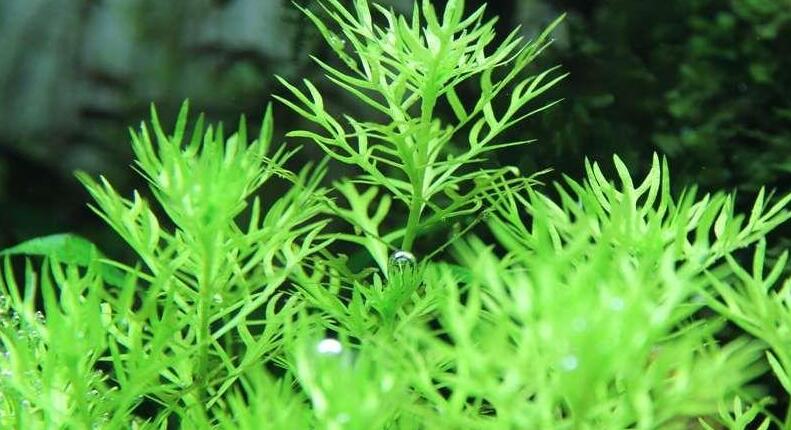
Introduction to snowflake grass:
Common name: snowflake grass
Scientific name: Hottonia inflata
Family: Primulaceae (primrose family)
Distribution: temperate regions of South America
Light: 2000 Lux
Water temperature: 18-24°C
Hardness: 2-10 DH
pH value: 6.0-7.2
Is snowflake grass easy to grow:
Snowflake grass is extremely similar to the related water violet (Hottonia palustris) and difficult to distinguish from it; viewed from above, their feathery leaves both closely resemble snowflake crystal patterns, but the feathery leaf spread of snowflake grass is wider while that of water violet is narrower, though the submerged leaves of the two are still not easy to tell apart.
The emersed and submersed forms of snowflake grass are of the same type; the emersed form usually grows protruding above the water surface, and can also creep along wet ground. The feathery leaves number about 7-9; whether emersed or submersed, it dislikes high-temperature environments, and if the temperature exceeds 28°C, growth becomes poor or it is difficult to raise successfully.
Cultivating the emersed form of snowflake grass is more difficult than the submersed form, so commercially sold plants are mainly the submersed form. Cultivation in an aquarium is somewhat difficult, but as long as the water temperature is not above 25°C, with sufficient nutrients and carbon dioxide and strong light, it can still grow well. Snowflake grass is a stem plant with alternately arranged leaves that are deeply pinnately divided 3-7 times, and it produces red-purple flowers above water. In artificial cultivation the leaves are generally alternately arranged with 3-5 times pinnate deep divisions; it loves low temperatures and is best kept below 27°C.
White orchid (Michelia alba) picture appreciation and detailed explanation of its uses
The white orchid (Michelia alba), a flower with a faint fragrance and pure white color, is a plant people love, and it is often grown indoors to improve the home environment. From its name to its appearance to its uses, the white orchid is beloved, which is why it has become one of people's favorite indoor plants. But although many people talk about the white orchid, few have actually seen one; some people's knowledge of it is limited to written descriptions and they have never seen it. This article has found white orchid pictures for everyone, so you can take a look.
White orchid pictures
Uses of the white orchid
I. Common uses
1. The biggest use of the white orchid flower: making perfume. White orchid contains linalool, phenylethyl alcohol, methyl eugenol and other components, which after collection can be used for scenting tea, brewing wine or extracting essence. Nowadays many perfumes, moisturizers and cold creams with a white orchid fragrance note commonly use white orchid flowers as an ingredient, and it can be used for beauty care, bathing, food and medicine.
2. Its ornamental value is also considerable. As an ornamental flower, the white orchid has an upright, branching plant shape and an elegant bearing; in the south it can be grown outdoors in courtyards and is a backbone tree species in southern gardens, while in the north it is grown in pots and can be used to decorate courtyards, halls and meeting rooms; small and medium-sized plants can be placed in the living room or study. Because it fears smoke, it should be placed in a spot with good air circulation. Besides being enjoyed for both its flowers and leaves, as an aromatic plant the white orchid can also serve as both spice and medicine; white orchid contains aromatic volatile oils, antioxidants, bactericidal substances and other compounds, and can beautify the environment, purify the air and perfume the room.
3. It can be used to make medicine. The medicinal name is white orchid, derived from the flowers of the magnolia family plant white orchid (Michelia alba), a dicotyledonous medicinal plant. Its traditional Chinese medicinal chemical components are: the leaves contain alkaloids, volatile oils and phenols; fresh leaves contain 0.7% oil, whose main components are linalool, methyl eugenol and phenylethyl alcohol; the roots and stem bark contain ushinsunine and oxidized ushinsunine. It has the effects of warming the lungs and stopping cough, and resolving turbidity, and is mainly used for chronic bronchitis, prostatitis, white turbidity and women's leukorrhea.
II. Home feng shui uses
1. Plants in the bedroom should be distinguished from those in the living room, and it is best to focus on beautiful flowers, which helps enhance marital affection. Bedroom plants can be chosen according to different Chinese zodiac signs; people born under the Rat and Pig signs mostly favor water, so they can grow flowering plants belonging to the metal and water elements. Also, in years of Yi and Geng, people whose five elements belong to metal, such as those born in 1955, 1960, 1965, 1970, 1980, 1985 and other years ending in 5 and 0, are best suited to growing white-series flowers or plants that look more austere in the bedroom; for such friends, the white orchid is a good choice.
2. The growing environment of the white orchid improves the growing environment of the home, and also improves the master's dominant feng shui environment. The white orchid likes warmth and humidity, prefers good ventilation and ample sunlight, fears cold, avoids dampness, and neither likes deep shade nor tolerates sunscald. Such living requirements give the owner a standard for judging whether the home environment is suitable in terms of warmth, humidity and ventilation. If a home's white orchid grows well, it proves that all these conditions have been met, and these conditions are precisely the standards for judging whether a house's feng shui is good or bad. If you don't know whether your home's feng shui is good, plant a white orchid and judge for yourself.
That is all for now on white orchid pictures and uses and related knowledge. The white orchid is not only beautiful but can also serve positive purposes, so growing white orchids at home or placing one or two bunches of them is a very good thing. Of course, growing white orchids well is not easy; besides knowing the environment it is suited to, you also need some understanding of light, fertilizing, watering and the choice of soil, and only by paying attention to all these aspects can the white orchid grow better and not slowly wither away.