Sharing the Cutting Method and Daily Cultivation Care of Lemon Balm
Lemon balm is heat-tolerant, cold-tolerant, and shade-tolerant, and it withstands drought, waterlogging, and pruning. In winter it can endure low temperatures below 0℃, while in summer growth is restricted at high temperatures above 30℃; the most suitable growing temperature is between 10~20℃. Today, the editor brings you the cutting method of lemon balm and shares daily cultivation care; below, the editor presents the detailed content.
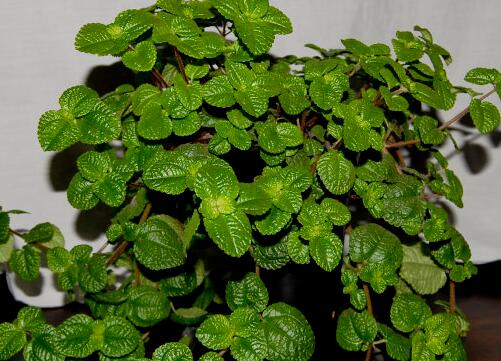
Cutting method of lemon balm:
Lemon balm (Melissa officinalis) is naturally vigorous; compared with other herbs, it is more heat-tolerant and will not rot its roots even when the soil holds plenty of water. Because the seeds are positively photoblastic, no soil covering is needed after sowing, and the germination rate is about 50%. For cuttings, use 5 cm-long terminal shoots as material, cut 5 and insert them into a clean medium; they root very easily, and after about 2~3 weeks they can be transplanted. However, note that lemon balm leaves are thin, so you must water frequently to maintain humidity and provide 50% shading; otherwise the cuttings dry out and die before they even root. In the division method, the parts of the stems that touch the ground readily grow roots; simply cut them off and replant.
Lemon balm is heat-tolerant, cold-tolerant, and shade-tolerant, and it withstands drought, waterlogging, and pruning. In winter it can endure low temperatures below 0℃, while in summer growth is restricted at high temperatures above 30℃; the most suitable growing temperature is between 10~20℃. Prune once before the Start of Winter, and it can overwinter safely. Lemon balm is easy to propagate, by sowing, cuttings, and division. The plant grows 50 cm tall, its stems and leaves have a soapy fragrance, the inflorescence is a verticillaster, and the flowers are white and lipped; it is heat-tolerant and cold-tolerant, and relatively tolerant of drought and waterlogging. #p#Subheading#e#
Cultivation and care of lemon balm:
Watering
Water it with clean water or rice-washing water every 3-5 days. If the branches and leaves wilt due to lack of water, replenish water immediately and they will recover quickly. For supplemental nutrient solution, a commonly used general plant nutrient solution can be used.
Pruning
Lemon balm grows very fast; it is recommended to prune once a week. Just cut above the new leaves growing on the higher nodes. If black-edged leaves or old leaves at the base appear, do not worry; simply pinch them off. (Growth is slow in winter, so prune as little as possible; after pruning, place it in a spot with ample sunlight.)
Ventilation
If the room has good lighting, place the lemon balm in a spot exposed to sunlight, and normal indoor ventilation is enough; if the room does not have good lighting, such as a bathroom or kitchen, place the lemon balm in the room for 72 hours, then move it to a spot with ample sunlight for 72 hours, or put it back again. When the weather is not cold, it can also be placed outdoors to absorb light and get fresh air.
Sunlight
Lemon balm prefers bright light. If the room has good lighting, place the lemon balm in a spot exposed to sunlight, and normal indoor ventilation is enough; if the room does not have good lighting, such as a bathroom or kitchen, place the lemon balm in the room for 72 hours, then move it to a spot with ample sunlight for 72 hours, or put it back again. When the weather is not cold, it can also be placed outdoors to absorb light and get fresh air.
Temperature
Lemon balm cultivation has low temperature requirements; in winter it can endure low temperatures below 0℃, but in summer growth is restricted at high temperatures above 30℃, and the most suitable growing temperature is between 10~20℃.
How to Prune Lemon Balm: What You Need to Know About Cultivation and Care
Lemon balm can endure low temperatures in winter and high temperatures in summer. It is native to the southern shore of the Mediterranean in Europe, and can be found in Europe, Central Asia, North America, and Asia; its main production area is France. So how do you prune lemon balm? Below, the editor presents the detailed content.
How to prune lemon balm:
Lemon balm grows very fast; it is recommended to prune once a week. Just cut above the new leaves growing on the higher nodes. If black-edged leaves or old leaves at the base appear, do not worry; simply pinch them off. (Growth is slow in winter, so prune as little as possible; after pruning, place it in a spot with ample sunlight.)
Cultivation and care of lemon balm:
Watering
Water it with clean water or rice-washing water every 3-5 days. If the branches and leaves wilt due to lack of water, replenish water immediately and they will recover quickly. For supplemental nutrient solution, a commonly used general plant nutrient solution can be used.
Pruning
Lemon balm grows very fast; it is recommended to prune once a week. Just cut above the new leaves growing on the higher nodes. If black-edged leaves or old leaves at the base appear, do not worry; simply pinch them off. (Growth is slow in winter, so prune as little as possible; after pruning, place it in a spot with ample sunlight.)
Ventilation
If the room has good lighting, place the lemon balm in a spot exposed to sunlight, and normal indoor ventilation is enough; if the room does not have good lighting, such as a bathroom or kitchen, place the lemon balm in the room for 72 hours, then move it to a spot with ample sunlight for 72 hours, or put it back again. When the weather is not cold, it can also be placed outdoors to absorb light and get fresh air.
Sunlight
Lemon balm prefers bright light. If the room has good lighting, place the lemon balm in a spot exposed to sunlight, and normal indoor ventilation is enough; if the room does not have good lighting, such as a bathroom or kitchen, place the lemon balm in the room for 72 hours, then move it to a spot with ample sunlight for 72 hours, or put it back again. When the weather is not cold, it can also be placed outdoors to absorb light and get fresh air.
Temperature
Lemon balm cultivation has low temperature requirements; in winter it can endure low temperatures below 0℃, but in summer growth is restricted at high temperatures above 30℃, and the most suitable growing temperature is between 10~20℃.
An Introduction to the Planting Method of Lemon Balm
Lemon balm (Latin name: Melissa Officinalis), scientific name lemon balm or curly mint, also known as bee balm and bee flower. It is native to the Mediterranean coast, and can be found in Europe, Central Asia, North America, and Asia; its main production area is France.
Lemon balm can effectively absorb indoor formaldehyde, radon, benzene, ammonia, sulfur dioxide, as well as smoke odors, peculiar odors, carbon dioxide and other indoor toxic gases, release negative ions quickly, and disinfect and sterilize. China Greening Information Network suggests placing one large pot of lemon balm per 10-15 sq m, and one small pot per 8 sq m. After a new house or new furniture is renovated, open all the doors and drawers of the new furniture, and after 72 hours there will be a noticeable elimination effect. It is suitable for indoor greening placement and is a very popular indoor flower.
Cultivation and care
Watering
Water it with clean water or rice-washing water every 3-5 days. If the branches and leaves wilt due to lack of water, replenish water immediately and they will recover quickly. For supplemental nutrient solution, a commonly used general plant nutrient solution can be used.
Pruning
Lemon balm grows very fast; it is recommended to prune once a week. Just cut above the new leaves growing on the higher nodes. If black-edged leaves or old leaves at the base appear, do not worry; simply pinch them off. (Growth is slow in winter, so prune as little as possible; after pruning, place it in a spot with ample sunlight.)
Ventilation
If the room has good lighting, place the lemon balm in a spot exposed to sunlight, and normal indoor ventilation is enough; if the room does not have good lighting, such as a bathroom or kitchen, place the lemon balm in the room for 72 hours, then move it to a spot with ample sunlight for 72 hours, or put it back again. When the weather is not cold, it can also be placed outdoors to absorb light and get fresh air.
Sunlight
Lemon balm prefers bright light. If the room has good lighting, place the lemon balm in a spot exposed to sunlight, and normal indoor ventilation is enough; if the room does not have good lighting, such as a bathroom or kitchen, place the lemon balm in the room for 72 hours, then move it to a spot with ample sunlight for 72 hours, or put it back again. When the weather is not cold, it can also be placed outdoors to absorb light and get fresh air.
Temperature
Lemon balm cultivation has low temperature requirements; it is cold-tolerant, shade-tolerant, and drought-tolerant. In winter it can endure low temperatures below 0℃, but in summer growth is restricted at high temperatures above 30℃, and the most suitable growing temperature is between 10-20℃.
The above is the planting introduction of lemon balm provided by Succulent Garden for everyone. We hope it can be helpful to you. You are welcome to continue following Succulent Garden to learn more about herb plants!