There are two ways to propagate goldfish plants by cuttings: tip cuttings and stem-section cuttings.
The goldfish plant (Nematanthus gregarius) has become quite a popular potted ornamental in recent years. Its leaves are emerald green and seem about to drip, and its flowers are strangely shaped, with a swollen belly, resembling little orange-red goldfish one after another, exceptionally cute. It is an excellent plant for both flowers and foliage. Below, the editor brings you the detailed content of goldfish plant cutting methods.
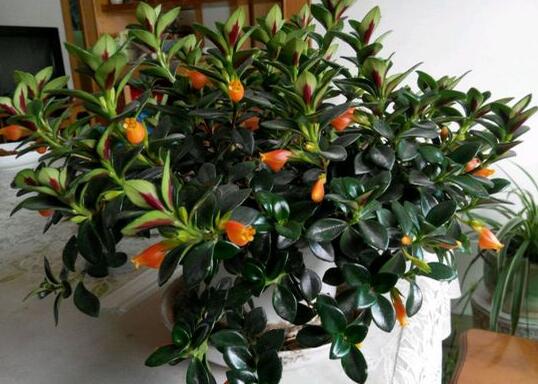
Goldfish plant cutting methods:
Cuttings propagation is further divided into tip cuttings and stem-section cuttings. Cuttings of the goldfish plant can be done year-round, but the best time is indoors after flowering. Cut one-year-old branches about 10-15cm long, keep 3-4 leaves, remove several pairs of small leaves at the base, and insert them into a cutting bed made of river sand or vermiculite. Maintain high humidity and a relatively stable temperature. You can cover the cuttings with glass or plastic film, keep the temperature at 20°C, and maintain high air humidity. Roots will form in about 3-4 weeks.
After rooting and surviving, care and management of the goldfish plant should be strengthened to promote new branch growth. Two months after surviving, begin pinching to encourage more branching, which favors more flowers. After 1-2 months, they can be potted up. Seedlings do not bloom in the first year; only after two or three years do orange-red flowers emerge from the leaf axils at the tips of the trailing branches.
Propagation methods for the goldfish plant:
The goldfish plant can be propagated by three methods: seed sowing, division, and cuttings. However, because the seeds of the goldfish plant are not easy to obtain, the sowing method is rarely used for propagation; generally, the cutting method is commonly used.
The cutting propagation method for the goldfish plant
What propagation methods does the goldfish plant have?
The goldfish plant can be propagated by three methods: seed sowing, division, and cuttings. However, because the seeds of the goldfish plant are not easy to obtain, the sowing method is rarely used for propagation; generally, the cutting method is commonly used.
The cutting propagation method for the goldfish plant
Cuttings propagation is further divided into tip cuttings and stem-section cuttings. Cuttings of the goldfish plant can be done year-round, but the best time is indoors after flowering. Cut one-year-old branches about 10-15cm long, keep 3-4 leaves, remove several pairs of small leaves at the base, and insert them into a cutting bed made of river sand or vermiculite. Maintain high humidity and a relatively stable temperature. You can cover the cuttings with glass or plastic film, keep the temperature at 20°C, and maintain high air humidity. Roots will form in about 3-4 weeks.
After rooting and surviving, care and management of the goldfish plant should be strengthened to promote new branch growth. Two months after surviving, begin pinching to encourage more branching, which favors more flowers. After 1-2 months, they can be potted up. Seedlings do not bloom in the first year; only after two or three years do orange-red flowers emerge from the leaf axils at the tips of the trailing branches.
How to grow the goldfish plant
The goldfish plant can be propagated by tip cuttings or stem-section cuttings. This method can be done year-round. Cut leaves of the goldfish plant; one-year-old branches are about 10 to 15cm, keep 3 to 4 leaves, remove some small leaves at the base, then insert them into sandy soil, cover them with glass or plastic film, keep the temperature at around 20°C, and maintain relatively high air humidity. After about 3 to 4 weeks, they can send out roots. Two months after surviving, begin pinching to encourage the goldfish plant to branch more, which can make the goldfish plant bloom more, and then it can be planted out into pots. The seedlings of the goldfish plant do not bloom in the first year; only after two or three years does the goldfish plant produce red flowers in the leaf axils at the tips of the trailing branches.
The goldfish plant can be propagated by sowing, division, and cuttings. Because the seeds are not easy to obtain, the sowing method of propagation is not used; under normal circumstances, the cutting method is often used for propagation. In spring and autumn, cut branches and insert them into a cutting bed made of river sand or vermiculite, maintain relatively high humidity, and then at a temperature of 20 to 25°C, after about one month, they can take root and sprout. After rooting and surviving, management of the goldfish plant should be strengthened to promote new branch growth.