A Complete Guide to Goldfish Begonia Propagation Methods and Care Precautions
Goldfish Begonia, also known as goldfish flower, kangaroo begonia, kangaroo flower, hanging goldfish, and so on. It is a perennial herbaceous plant of the genus Nematanthus in the family Gesneriaceae, with a semi-woody base. Today, the editor of wed114 wedding website brings you the relevant content on the propagation methods and precautions for Goldfish Begonia. Let's take a look at the details.
Propagation methods for Goldfish Begonia:
Goldfish Begonia has dense branches and leaves, with naturally trailing stems. During peak bloom, a single larger plant can bear over a hundred flowers at the same time, and the flowers are large and brightly colored, quite spectacular. Therefore, it is an ideal shade-loving trailing plant for foliage and flowers. It is very suitable as an epiphytic potted plant in greenhouses and indoor gardens, and can also be grown as a hanging plant for home appreciation.
The common propagation methods for Goldfish Begonia are seeding, division, and cutting, among which cutting is the most common. Take terminal shoot cuttings or stem section cuttings of Goldfish Begonia; this can be done year-round, with the best time being indoors after flowering. Cut annual branches about 10-15 cm long, keep 3-4 leaves, remove several pairs of small leaves at the base, and insert into sandy soil.
Then cover with glass or plastic film, keep the temperature at 20°C, and maintain relatively high air humidity. Roots will develop in about 3-4 weeks. After the plant survives, begin pinching two months later to encourage more branching and thus more flowers, and then it can be planted into pots. Seedlings do not bloom in the first year; only after two or three years do red flowers emerge from the leaf axils at the tips of the trailing branches.
For potted Goldfish Begonia, the substrate should be rich in humus, loose, and well-draining. Generally, equal parts of peat soil, perlite, and vermiculite are mixed, and the soil should be slightly acidic to promote growth. During the growing period, apply liquid fertilizer once every 1-2 weeks, and during peak growth and flowering, additional phosphorus and potassium fertilizer should be applied.
In winter there is a brief dormant period, during which watering can be reduced and the potting soil kept appropriately dry. In winter (that is, the flowering period), watering can be appropriately increased. During the growing period, there must be sufficient moisture, the potting soil must be kept constantly moist, and efforts should be made to increase air humidity. High temperature and high humidity can easily cause soft rot and death of stems and branches. If this happens, promptly cut away the soft rotted parts.
Goldfish Begonia prefers bright, indirect light, so when summer light is too strong, shade is necessary (50% shading). To promote flower bud formation, provide sunlight in autumn and keep the potting soil slightly dry. During winter dormancy, it is best to keep it in a dry, cool environment to promote flower bud differentiation. Before winter flowering, light can be appropriately increased; indoors it should be moved to the brightest window to ensure vigorous growth and flowering.#p#Subtitle#e#
How to grow Goldfish Begonia:
Goldfish Begonia is mostly grown in hanging pots, but ordinary pots can also be used. Generally, it is best placed in a sunny spot, but when the midday sun is too strong, provide appropriate shade and just keep the soil surface slightly moist.
Light: Spider plant is sensitive to light. If exposed to direct sunlight in summer and autumn, the leaves will turn yellow and withered, or even the whole plant may die. In winter, since the sunlight is not strong, the spider plant can be allowed to receive some direct sunlight.
Temperature: The optimum growing temperature for spider plant is 15—25°C. In Guangdong, the temperatures in spring, summer, and autumn are all suitable for spider plant growth, but if the winter temperature drops below 5—7°C, attention must be paid to cold protection and insulation.
Watering: Spider plant likes water. During the vigorous growth period, keep the potting soil completely moist. During the winter dormant period, water again only after the top approximately one centimeter of potting soil has dried. If the soil is too dry, the leaf cluster may temporarily fade in color and recover only after watering again, while the leaf tips may permanently turn brown, greatly reducing ornamental value.
Spider plant also likes relatively high air humidity, so during dry summer and autumn weather, measures such as misting should be used to increase the air humidity around the plant; otherwise, the leaf tips or edges may also become scorched.
Fertilizing: For spider plants that have begun to produce small plantlets, apply a nitrogen-based top dressing once every half month.
Soil: Spider plant is suitable for loose, fertile sandy loam.
Propagation: Spider plant is generally propagated by division or by cutting off young plantlets with aerial roots from the flower scapes at any time and planting them directly.#p#Subtitle#e#
Precautions for growing Goldfish Begonia:
1. Goldfish Begonia is sensitive to light and cannot be exposed to direct sunlight. In winter, when the sunlight is not strong, it can receive appropriate exposure.
2. When Goldfish Begonia lacks water, it can also cause leaf drop, or turn the leaves brown, affecting appearance. Water promptly.
3. When the climate is dry in summer and autumn, misting should be carried out to increase the air humidity around the plant; otherwise, excessive dryness may cause the leaf tips or edges to become scorched.
4. Do not fertilize Goldfish Begonia during the flowering period; after the flowers fade, pruning and shaping should be carried out.#p#Subtitle#e#
Key care points for Goldfish Begonia:
Goldfish Begonia originates from the tropical forests of the Americas, and its suitable growing temperature is 18-26°C. Generally, households can place it at a bright indoor window or on a balcony on the shady side. Under high temperature and high humidity, it is prone to soft rot and death of stems and branches. The growing soil must be loose and well-draining, and the soil must not contain lime; it is best if it is slightly acidic. During the winter dormant period, the temperature should be controlled at 15°C.
When Goldfish Begonia is cultivated in a greenhouse, porous pots and substrates such as sphagnum moss, fern roots, and bark chunks are usually used to facilitate good root drainage and aeration. In home rooms, to prevent water leakage when watering, use a round, attractive pot, choose well-draining coarse-grained stones to lay at the bottom of the pot, then add a small amount of leaf mold mixed with perlite as the growing medium. Select several full, plump goldfish flower branches with well-developed roots, plant them evenly in the growing medium around the pot, and make them lean toward the pot rim, then fill with growing medium. At this point, planting is complete. An appropriate amount of slow-release fertilizer can be added to the potting soil. When new branches grow to a certain length, they will hang down along the rim of the pot, giving a very good ornamental effect. During peak flowering, the small red flowers look like goldfish leaping in green waves, especially magnificent. When new branches grow to a certain length, pinching can be carried out to make the spreading, trailing plant shape more symmetrical and attractive.
In spring, summer, and autumn, Goldfish Begonia should be watered more, and the surrounding ground should often be sprayed with clean water. Never sprinkle water on the leaves. When summer temperatures are high, it is best to place the flower pot in a shallow tray filled with water. These measures can all help avoid leaf drop caused by dry air. Before flowering in winter and spring, goldfish flower should also be watered appropriately more, so that the flowers can open fully and the flower color will be bright and beautiful.
In addition to needing relatively sufficient sunlight in winter, Goldfish Begonia needs more shade in the other seasons. In spring, summer, and autumn, 60%-70% of sunlight should be blocked, or it can be hung in an outdoor shade shed, or in a cool, ventilated place under the shade of a large tree, receiving more scattered light and no direct sunlight. This kind of environment is very suitable for its growth.
Before Goldfish Begonia blooms in winter, light should be appropriately increased so that the flowers are abundant and brightly colored. When grown as a hanging potted plant at home, it can be placed in a bright, ventilated room and displayed and enjoyed year-round.
Do not fertilize Goldfish Begonia when it is flowering. After the flowers fade, pruning and shaping should be carried out, and more nitrogen-containing fertilizer should be applied. During the growing period, apply a diluted organic fertilizer solution once every 1-2 weeks to promote vigorous growth; before flowering, additional phosphorus fertilizer should be applied to help it produce more buds and flowers and enhance its ornamental effect.
Goldfish Begonia is propagated by cuttings. In spring and autumn, cut branches about 10 cm long with 3 to 4 nodes as cuttings, insert them into a cutting bed with coarse sand as the substrate, maintain relatively high humidity, and keep the temperature at about 20°C; they will root and survive easily.
When Does Goldfish Begonia Bloom? Growing Methods for Potted Goldfish Begonia
China has tens of thousands of flower varieties, each with its own unique charm. Some are cute, some are delicate and charming. Goldfish Begonia belongs to the cute flowers; its flowers, which look like goldfish, are very small and adorable, making people utterly fascinated. So do you know when Goldfish Begonia blooms? What are the growing methods for Goldfish Begonia? Today let's learn about Goldfish Begonia together.
Introduction to Goldfish Begonia
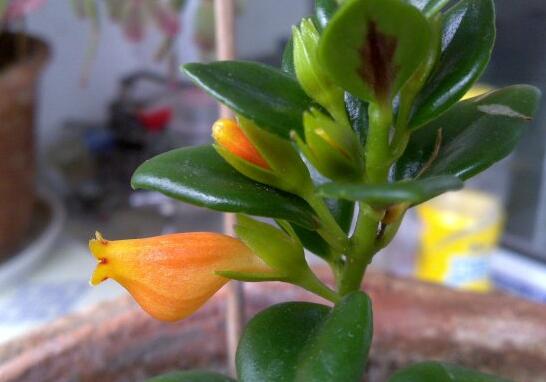
Goldfish Begonia is also called goldfish flower, hanging goldfish, kangaroo flower, and so on. Goldfish Begonia is a perennial herbaceous plant of the genus Nematanthus in the family Gesneriaceae, with a semi-woody base. The leaves of Goldfish Begonia are dark green, relatively thick and fleshy, with a small mouth and a big belly, and an orange-red appearance, very much like a little goldfish, hence the name Goldfish Begonia.
Goldfish Begonia likes a high-temperature, high-humidity, shade-loving environment. The suitable growing temperature for Goldfish Begonia is 18—22°C, and it dislikes low temperatures. Once the growing temperature for Goldfish Begonia drops below 10°C, the leaves will begin to turn yellow. In high summer temperatures, Goldfish Begonia grows very slowly, and above 30°C it may even drop leaves.
When Does Goldfish Begonia Bloom?
The flowering period of Goldfish Begonia is in spring and summer, and the flowering period is relatively long. Whenever it blooms, the orange-red appearance of Goldfish Begonia is very lovable, very much like many little goldfish hanging on the branch tips.
Growing Methods for Goldfish Begonia
Goldfish Begonia can be propagated by seeding, cuttings, and division, but because the seeds of Goldfish Begonia are not easy to obtain, cuttings are generally used. The cutting method for Goldfish Begonia is suitable in spring and autumn. Choose branches about 10 cm long and insert them into a river sand bed, maintain a certain humidity and temperature, and in about a month they will root. After rooting, care should be strengthened even more, and in about 2 months they can be planted into pots.
Key Care Points for Goldfish Begonia
1. The soil needed by Goldfish Begonia must have good drainage and is best if slightly acidic; under high temperature and high humidity, it is prone to soft rot and death of stems and branches.
2. In addition to needing sufficient sunlight in winter, Goldfish Begonia should be shaded in the other seasons; during the winter dormant period, the temperature should be controlled at 15°C.
3. When Goldfish Begonia is cultivated in a greenhouse, porous pots and substrates such as sphagnum moss, fern roots, and bark chunks are usually used to facilitate good root drainage and aeration.
4. In spring, summer, and autumn, Goldfish Begonia should be watered more, and the surrounding ground should often be sprayed with clean water. Never sprinkle water on the leaves. When summer temperatures are high, it is best to place the flower pot in a shallow tray filled with water. These measures can all help avoid leaf drop caused by dry air. Before flowering in winter and spring, goldfish flower should also be watered appropriately more, so that the flowers can open fully and the flower color will be bright and beautiful.
5. In addition to needing relatively sufficient sunlight in winter, Goldfish Begonia needs more shade in the other seasons. In spring, summer, and autumn, 60%-70% of sunlight should be blocked, or it can be hung in an outdoor shade shed, or in a cool, ventilated place under the shade of a large tree, receiving more scattered light and no direct sunlight. This kind of environment is very suitable for its growth.
Before Goldfish Begonia blooms in winter, light should be appropriately increased so that the flowers are abundant and brightly colored. When grown as a hanging potted plant at home, it can be placed in a bright, ventilated room and displayed and enjoyed year-round.
6. Do not fertilize Goldfish Begonia when it is flowering. After the flowers fade, pruning and shaping should be carried out, and more nitrogen-containing fertilizer should be applied. During the growing period, apply a diluted organic fertilizer solution once every 1-2 weeks to promote vigorous growth; before flowering, additional phosphorus fertilizer should be applied to help it produce more buds and flowers and enhance its ornamental effect.
Potted Growing Methods for Goldfish Begonia
Goldfish Begonia is mostly grown in hanging pots, but ordinary pots can also be used. Generally, it is best placed in a sunny spot, but when the midday sun is too strong, provide appropriate shade and just keep the soil surface slightly moist.
Light: Spider plant is sensitive to light. If exposed to direct sunlight in summer and autumn, the leaves will turn yellow and withered, or even the whole plant may die. In winter, since the sunlight is not strong, the spider plant can be allowed to receive some direct sunlight.
Temperature: The optimum growing temperature for spider plant is 15—25°C. In Guangdong, the temperatures in spring, summer, and autumn are all suitable for spider plant growth, but if the winter temperature drops below 5—7°C, attention must be paid to cold protection and insulation.
Watering: Spider plant likes water. During the vigorous growth period, keep the potting soil completely moist. During the winter dormant period, water again only after the top approximately one centimeter of potting soil has dried. If the soil is too dry, the leaf cluster may temporarily fade in color and recover only after watering again, while the leaf tips may permanently turn brown, greatly reducing ornamental value.
Spider plant also likes relatively high air humidity, so during dry summer and autumn weather, measures such as misting should be used to increase the air humidity around the plant; otherwise, the leaf tips or edges may also become scorched.
Fertilizing: For spider plants that have begun to produce small plantlets, apply a nitrogen-based top dressing once every half month.
Soil: Spider plant is suitable for loose, fertile sandy loam.
Propagation: Spider plant is generally propagated by division or by cutting off young plantlets with aerial roots from the flower scapes at any time and planting them directly.
1. Key Points for Pot Cultivation
Choosing a Pot and Soil
When Goldfish Begonia is cultivated in a greenhouse, porous pots and substrates such as sphagnum moss, fern roots, and bark chunks are usually used to facilitate good root drainage and aeration. In home rooms, to prevent water leakage when watering, use a round, attractive pot, choose well-draining coarse-grained stones to lay at the bottom of the pot, then add a small amount of leaf mold mixed with perlite as the growing medium.
2. Planting Techniques
During planting, paying attention to the selection of flower branches and the planting position can increase the survival rate of the plant and enhance the ornamental effect of the flowers.
Select several full, plump goldfish flower branches with well-developed roots, plant them evenly in the growing medium around the pot, and make them lean toward the pot rim, then fill with growing medium. At this point, planting is complete. An appropriate amount of slow-release fertilizer can be added to the potting soil. When new branches grow to a certain length, they will hang down along the rim of the pot. During peak flowering, each flower branch will bear dozens of small orange-red goldfish flowers. Set off by the green leaves, they look like goldfish leaping in green waves, delighting the heart and mind.
When new branches grow to a certain length, pinching can be carried out. This can make the spreading, trailing plant shape more symmetrical and attractive.
3. Water and Fertilizer Requirements
Goldfish Begonia is a tropical plant and has relatively high water requirements. In spring, summer, and autumn, it should be watered more, and the surrounding ground should often be sprayed with clean water. Never sprinkle water on the leaves. When summer temperatures are high, it is best to place the flower pot in a shallow tray filled with water. These measures can all help avoid leaf drop caused by dry air. Before flowering in winter and spring, goldfish flower should also be watered appropriately more, so that the flowers can open fully and the flower color will be bright and beautiful.
During the growing period, apply a diluted organic fertilizer solution once every 1-2 weeks to Goldfish Begonia to promote vigorous growth; before flowering, additional phosphorus fertilizer should be applied to help it produce more buds and flowers and enhance its ornamental effect; do not fertilize when flowering, and after the flowers fade, pruning and shaping should be carried out, and more nitrogen-containing fertilizer should be applied.
4. Light and Ventilation
In addition to needing relatively sufficient sunlight in winter, Goldfish Begonia needs more shade in the other seasons. In spring, summer, and autumn, 60%-70% of sunlight should be blocked, or it can be hung in an outdoor shade shed, or in a cool, ventilated place under the shade of a large tree, receiving more scattered light and no direct sunlight. This kind of environment is very suitable for its growth. Before Goldfish Begonia blooms in winter, light should be appropriately increased so that the flowers are abundant and brightly colored.
Goldfish Begonia Nematanthus wettsteinii Goldfish Begonia Illustrated Guide: How to Grow Goldfish Begonia / How to Propagate Goldfish Begonia
Goldfish Begonia ProfileGoldfish Begonia Nematanthus wettsteinii
Growing Methods and Precautions for Goldfish Begonia Introduction to Goldfish Begonia
Goldfish Begonia is also known as goldfish flower, kangaroo begonia, kangaroo flower, hanging goldfish, and so on. It is a perennial herbaceous plant of the genus Nematanthus in the family Gesneriaceae, with a semi-woody base. It likes high temperature, high humidity, and a shade-loving environment. If it is placed in a sunny place for a long time, is too dry, or the winter temperature is too low, it will cause leaf drop.
Goldfish Begonia is not choosy about soil and grows better in well-draining, loose, fertile sandy loam. It is not strict about light requirements and generally grows suitably under medium light conditions, and it also tolerates weak light. The optimum growing temperature is 15-25°C, and the overwintering temperature is 5°C.
The suitable growing temperature for Goldfish Begonia is 18-22°C, and it dislikes low temperatures. If the temperature is below 10°C for two consecutive days, the leaves will begin to turn yellow and dry, until even very slight vibration causes leaf drop. In addition to low temperatures, temperatures continuously above 30°C will also cause leaf drop. In high summer temperatures, Goldfish Begonia grows very slowly or almost stops growing. At this time, appropriate shading measures should be taken so that it can grow vigorously and not drop leaves.
Goldfish Begonia is suitable for epiphytic pot cultivation in greenhouses and indoor gardens, and can also be grown as a hanging plant for appreciation in home rooms.
Morphological Characteristics of Goldfish Begonia
Goldfish Begonia is a perennial herbaceous plant of the genus Nematanthus in the family Gesneriaceae, with a semi-woody base. The stems are ascending, 20-40 cm long; young stems are green, old stems are reddish-brown; leaves are simple, opposite, ovate, about 3-4 cm long, with pointed tips, fleshy, dark green on the upper surface and red near the main vein on the underside; flowers are solitary in the leaf axils, about 2-3 cm long, with 5 sepals, the corolla is bilabiate, inflated below, with 5 small lobes at the tip, orange-red, the lobes yellow, red between the lobes; stamens are attached to the petals, with anthers connivent; there is one pistil.
The leaves of Goldfish Begonia are dark green and relatively thick. The flowers are orange-red, with a small mouth and a big belly, and their shape closely resembles a goldfish. From a distance, they look like goldfish leisurely swimming among green aquatic plants, very interesting and full of charm.
The flowering period of Goldfish Begonia is spring and summer. The capsule is similar to plants in the Scrophulariaceae family.
Ecological Habits of Goldfish Begonia
Goldfish Begonia likes a high-temperature, high-humidity, shade-loving environment. If it is placed in a sunny place for a long time, is too dry, or the winter temperature is too low, it will cause leaf drop. Goldfish Begonia is most prone to leaf drop in winter, which is related to temperature. The suitable growing temperature for Goldfish Begonia is 18-22°C, and it dislikes low temperatures. If the temperature is below 10°C for two consecutive days, the leaves will begin to turn yellow and dry, until even very slight vibration causes leaf drop. In addition to low temperatures, temperatures continuously above 30°C will also cause leaf drop. In high summer temperatures, Goldfish Begonia grows very slowly or almost stops growing. At this time, appropriate shading measures should be taken so that it can grow vigorously and not drop leaves.
Goldfish Begonia originates from the tropical forests of the Americas, and its suitable growing temperature is 18-26°C. Generally, households can place it at a bright indoor window or on a balcony on the shady side. Under high temperature and high humidity, it is prone to soft rot and death of stems and branches. The growing soil must be loose and well-draining, and the soil must not contain lime; it is best if it is slightly acidic. During the winter dormant period, the temperature should be controlled at 15°C.
Cultivation Techniques for Goldfish Begonia
For potted Goldfish Begonia, the substrate should be rich in humus, loose, and well-draining. Generally, equal parts of peat soil, perlite, and vermiculite are mixed, and the soil should be slightly acidic to promote growth. During the growing period, apply liquid fertilizer once every 1-2 weeks, and during peak growth and flowering, additional phosphorus and potassium fertilizer should be applied.
In winter there is a brief dormant period, during which watering can be reduced and the potting soil kept appropriately dry; in winter (that is, the flowering period), watering can be appropriately increased; during the growing period, there must be sufficient moisture, the potting soil must be kept constantly moist, and efforts should be made to increase air humidity. High temperature and high humidity can easily cause soft rot and death of stems and branches. If this happens, promptly cut away the soft rotted parts.
Goldfish Begonia prefers bright, indirect light, so when summer light is too strong, shade is necessary (50% shading); to promote flower bud formation, provide sunlight in autumn and keep the potting soil slightly dry; during winter dormancy, it is best to keep it in a dry, cool environment to promote flower bud differentiation; before winter flowering, light can be appropriately increased; indoors it should be moved to the brightest window to ensure vigorous growth and flowering.
Goldfish flower originates from tropical regions and likes a warm, humid, shade-loving environment. For home care, it can be placed in a spot with bright scattered light. In the high-temperature summer season, attention should be paid to sun protection, and it is best to move it to a cool, ventilated place for care; otherwise, strong sunlight can easily cause soft rot disease in the stems of goldfish flower and lead to death. Winter and spring are the flowering period of goldfish flower, and at this time sufficient sunlight is needed so that the flower color is bright and beautiful.
In the season of vigorous growth, goldfish flower has relatively high water requirements. In spring, summer, and autumn, keep the potting soil moist, following the principle of "water when dry, stop when wet." Usually maintain environmental humidity, and it is best to frequently spray water around the flower pot, but avoid wetting the leaves. If there is no time to care for it, the flower pot can be placed in a shallow basin containing clean water, which can effectively ensure humidity in a small area. After entering winter, goldfish flower enters the dormant period and grows slowly. At this time, the amount of watering should be correspondingly reduced, maintaining appropriate dryness until the flower buds first appear. After the flower buds appear, the amount of watering can be appropriately increased to prepare for flowering.
Goldfish flower does not have high fertilizer and water requirements. Applying a diluted organic fertilizer solution about once every half month is enough. If some phosphorus fertilizer can be appropriately added before bud formation, it can produce more flowers and the flower color will be brighter.
After the flowering period, necessary pruning should also be carried out, removing faded flowers and dead branches, and cutting back the branches. Doing this can encourage the plant to branch more and lower the overall plant height, so that next year it will be even more floriferous and lush. However, if you want to grow it as a hanging pot, then appropriately cutting back the branches is enough.
Growing Methods and Key Care Points for Goldfish Begonia
Goldfish Begonia originates from the tropical forests of the Americas, and its suitable growing temperature is 18-26°C. Generally, households can place it at a bright indoor window or on a balcony on the shady side. Under high temperature and high humidity, it is prone to soft rot and death of stems and branches. The growing soil must be loose and well-draining, and the soil must not contain lime; it is best if it is slightly acidic. During the winter dormant period, the temperature should be controlled at 15°C.
When Goldfish Begonia is cultivated in a greenhouse, porous pots and substrates such as sphagnum moss, fern roots, and bark chunks are usually used to facilitate good root drainage and aeration. In home rooms, to prevent water leakage when watering, use a round, attractive pot, choose well-draining coarse-grained stones to lay at the bottom of the pot, then add a small amount of leaf mold mixed with perlite as the growing medium. Select several full, plump goldfish flower branches with well-developed roots, plant them evenly in the growing medium around the pot, and make them lean toward the pot rim, then fill with growing medium. At this point, planting is complete. An appropriate amount of slow-release fertilizer can be added to the potting soil. When new branches grow to a certain length, they will hang down along the rim of the pot, giving a very good ornamental effect. During peak flowering, the small red flowers look like goldfish leaping in green waves, especially magnificent. When new branches grow to a certain length, pinching can be carried out to make the spreading, trailing plant shape more symmetrical and attractive.
In spring, summer, and autumn, Goldfish Begonia should be watered more, and the surrounding ground should often be sprayed with clean water. Never sprinkle water on the leaves. When summer temperatures are high, it is best to place the flower pot in a shallow tray filled with water. These measures can all help avoid leaf drop caused by dry air. Before flowering in winter and spring, goldfish flower should also be watered appropriately more, so that the flowers can open fully and the flower color will be bright and beautiful.
In addition to needing relatively sufficient sunlight in winter, Goldfish Begonia needs more shade in the other seasons. In spring, summer, and autumn, 60%-70% of sunlight should be blocked, or it can be hung in an outdoor shade shed, or in a cool, ventilated place under the shade of a large tree, receiving more scattered light and no direct sunlight. This kind of environment is very suitable for its growth.
Before Goldfish Begonia blooms in winter, light should be appropriately increased so that the flowers are abundant and brightly colored. When grown as a hanging potted plant at home, it can be placed in a bright, ventilated room and displayed and enjoyed year-round.
Do not fertilize Goldfish Begonia when it is flowering. After the flowers fade, pruning and shaping should be carried out, and more nitrogen-containing fertilizer should be applied. During the growing period, apply a diluted organic fertilizer solution once every 1-2 weeks to promote vigorous growth; before flowering, additional phosphorus fertilizer should be applied to help it produce more buds and flowers and enhance its ornamental effect.
Potted Cultivation
Goldfish Begonia is mostly grown in hanging pots, but ordinary pots can also be used. Generally, it is best placed in a sunny spot, but when the midday sun is too strong, provide appropriate shade and just keep the soil surface slightly moist.
Light: Spider plant is sensitive to light. If exposed to direct sunlight in summer and autumn, the leaves will turn yellow and withered, or even the whole plant may die. In winter, since the sunlight is not strong, the spider plant can be allowed to receive some direct sunlight.
Temperature: The optimum growing temperature for spider plant is 15-25°C. In Guangdong, the temperatures in spring, summer, and autumn are all suitable for spider plant growth, but if the winter temperature drops below 5-7°C, attention must be paid to cold protection and insulation.
Watering: Spider plant likes water. During the vigorous growth period, keep the potting soil completely moist. During the winter dormant period, water again only after the top approximately one centimeter of potting soil has dried. If the soil is too dry, the leaf cluster may temporarily fade in color and recover only after watering again, while the leaf tips may permanently turn brown, greatly reducing ornamental value.
Spider plant also likes relatively high air humidity, so during dry summer and autumn weather, measures such as misting should be used to increase the air humidity around the plant; otherwise, the leaf tips or edges may also become scorched.
Fertilizing: For spider plants that have begun to produce small plantlets, apply a nitrogen-based top dressing once every half month.
Soil: Spider plant is suitable for loose, fertile sandy loam.
Propagation: Spider plant is generally propagated by division or by cutting off young plantlets with aerial roots from the flower scapes at any time and planting them directly.
Key Points for Pot Cultivation
Choosing a Pot and Soil
When Goldfish Begonia is cultivated in a greenhouse, porous pots and substrates such as sphagnum moss, fern roots, and bark chunks are usually used to facilitate good root drainage and aeration. In home rooms, to prevent water leakage when watering, use a round, attractive pot, choose well-draining coarse-grained stones to lay at the bottom of the pot, then add a small amount of leaf mold mixed with perlite as the growing medium.
Planting Techniques
During planting, paying attention to the selection of flower branches and the planting position can increase the survival rate of the plant and enhance the ornamental effect of the flowers.
Select several full, plump goldfish flower branches with well-developed roots, plant them evenly in the growing medium around the pot, and make them lean toward the pot rim, then fill with growing medium. At this point, planting is complete. An appropriate amount of slow-release fertilizer can be added to the potting soil. When new branches grow to a certain length, they will hang down along the rim of the pot. During peak flowering, each flower branch will bear dozens of small orange-red goldfish flowers. Set off by the green leaves, they look like goldfish leaping in green waves, delighting the heart and mind.
When new branches grow to a certain length, pinching can be carried out. This can make the spreading, trailing plant shape more symmetrical and attractive.
Water and Fertilizer Requirements
Goldfish Begonia is a tropical plant and has relatively high water requirements. In spring, summer, and autumn, it should be watered more, and the surrounding ground should often be sprayed with clean water. Never sprinkle water on the leaves. When summer temperatures are high, it is best to place the flower pot in a shallow tray filled with water. These measures can all help avoid leaf drop caused by dry air. Before flowering in winter and spring, goldfish flower should also be watered appropriately more, so that the flowers can open fully and the flower color will be bright and beautiful.
During the growing period, apply a diluted organic fertilizer solution once every 1-2 weeks to Goldfish Begonia to promote vigorous growth; before flowering, additional phosphorus fertilizer should be applied to help it produce more buds and flowers and enhance its ornamental effect; do not fertilize when flowering, and after the flowers fade, pruning and shaping should be carried out, and more nitrogen-containing fertilizer should be applied.
Light and Ventilation
Goldfish hanging plant (Nematanthus gregarius) needs fairly abundant sunlight in winter, but in the other seasons it needs more shade; in spring, summer and autumn, 60%-70% of sunlight should be blocked, or it can be hung in an outdoor shade shed, or in a cool, ventilated spot under the shade of a large tree, receiving plenty of scattered light without direct sunlight. Such an environment is very suitable for its growth. Before the goldfish hanging plant blooms in winter, light should be appropriately increased, as only then can its flowers be abundant and brightly colored.
Propagation methods
The goldfish hanging plant is propagated by cuttings. In spring and autumn, cut branches about 10 cm long with 3 to 4 nodes as cuttings, insert them into a cutting bed with coarse sand as the substrate, maintain relatively high humidity, and keep the temperature at around 20°C; they root and survive easily.
Propagation methods of the goldfish hanging plant
The goldfish hanging plant is propagated by cuttings or by stem-section cuttings. Because seeds are not easy to obtain, seed propagation is mostly not used; the cutting method is generally used for propagation.
For the goldfish hanging plant, in spring and autumn cut branches about 10 cm long with 3 to 4 nodes as cuttings, insert them into a cutting bed with coarse sand as the substrate, maintain relatively high humidity, and keep the temperature at around 20°C; they root and survive easily.
This can be done throughout the year, and is best done indoors after flowering. Cut about 10-15 cm of one-year-old branches, keep 3-4 leaves, remove several pairs of small leaves at the base, and insert them into sandy soil. Cover well with glass or plastic film, control the temperature at 20°C, and maintain relatively high air humidity; roots can develop in about 3-4 weeks. Two months after surviving, begin pinching to encourage more branching, which helps produce more flowers, and then they can be planted out into pots. Seedlings do not bloom in the first year; only after two or three years do red flowers emerge from the leaf axils at the tips of the trailing branches.
In spring and autumn, cut branches about 10 cm long (3-4 nodes) of the goldfish hanging plant, insert them into a cutting bed made of river sand or vermiculite, and maintain relatively high humidity. At a temperature of 20-25°C, they can root in about one month; after rooting and surviving, strengthen management to promote new growth, and pinch to encourage branching. After 1-2 months, they can be potted.
Variety classification of the goldfish hanging plant Common varieties
C. microphylla, also called button goldfish flower, is native to Costa Rica. The stems are slender and branch and trail. The leaves are opposite and small. The flowers are solitary in the leaf axils and orange-red. The flowering period is spring and summer.
C. stavanger. Also called Stavanger goldfish flower, it is a hybrid bred in Norway. It trails and hangs. The flowers are large and numerous, crimson, and the flowering period is winter and spring.
C. magnifica, also called whale flower. It is native to Costa Rica and Panama. The stems are upright and the branches are hairy. The corolla is scarlet.
C. magnifica, also called whale flower. The stems are upright and the branches are hairy. The corolla is scarlet.
In addition, there are also varieties such as bulb goldfish flower, sparsely hairy goldfish flower, and Adam goldfish flower.
Distribution area of the goldfish hanging plant
The goldfish hanging plant is native to Costa Rica and Panama.
Uses of the goldfish hanging plant Home potted plants
The goldfish hanging plant has dense branches and leaves, and its stems and vines hang naturally; at the peak of flowering, a larger plant can bloom more than a hundred flowers at the same time, and the flowers are large and brightly colored, quite spectacular, so it is a very ideal shade-loving hanging foliage and flowering plant. It is very suitable as an epiphytic potted plant in greenhouses and indoor gardens, and can also be hung indoors for appreciation.
Ornamental value
Before the goldfish hanging plant blooms in winter, light should be appropriately increased, as only then can its flowers be abundant and brightly colored. When grown as a hanging potted plant at home, it can be placed in a bright, ventilated room and displayed and enjoyed all year round.
Landscape uses of the goldfish hanging plant
The goldfish hanging plant is suitable for epiphytic potting in greenhouses and indoor gardens, and can also be used as a hanging plant for ornamental viewing in homes.
Cultural background of the goldfish hanging plant Origin of the name
As the name suggests, the goldfish hanging plant's flowers look like little goldfish, very cute.
The leaves of the goldfish hanging plant are dark green and rather thick. The flowers are orange-red, with a small mouth and a big belly, and their shape closely resembles a goldfish. From a distance, they look as if goldfish are leisurely swimming among green water plants, full of fun and charm.
Flower language of the goldfish hanging plant
Flower language of the goldfish hanging plant: loving each other.
Pictures of the goldfish hanging plant