What are the common pest control methods for the Lily of the Valley vine?
A Lily of the Valley vine in good growing condition has fresh, tender green leaves, and its flowers give off a subtle, elegant fragrance. But once the dreaded red spider mite appears, this "dance of falling flowers" turns into "falling flowers of the dance." So what are the common pests of the Lily of the Valley vine? And how do you control them?
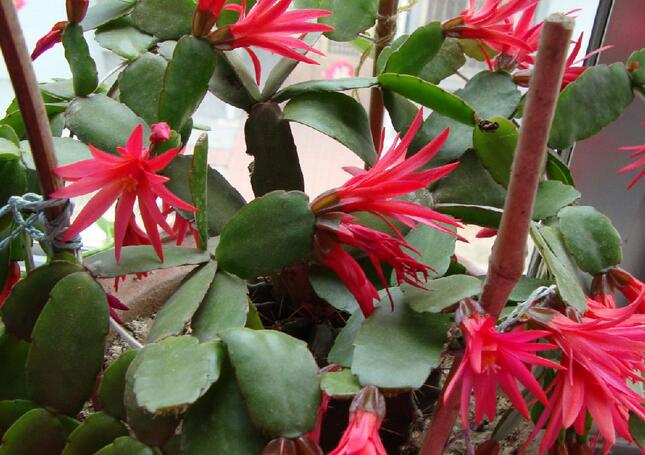
Common pests of the Lily of the Valley vine:
Red spider mite
The red spider mite, also known as the red leaf mite, belongs to the class Arachnida, order Prostigmata, family Tetranychidae. There are 3 commonly seen similar species, which mainly damage many vegetable crops in the Solanaceae, Cucurbitaceae, Fabaceae, Liliaceae and other families.
Flower lovers should commit the morphological features of the red spider mite to memory. Once found, kill it immediately!
Morphological features of the red spider mite
Adult mite: 0.42-0.52 mm long, with great variation in body color, generally red, pear-shaped, with one long black spot on each side of the back.
Egg: spherical, smooth, colorless to deep yellow tinged with red.
Larva: nearly round, with 3 pairs of legs.
Nymph: with 4 pairs of legs, and obvious blocky pigment on the sides of the body.#p#Subheading#e#
Occurrence characteristics of red spider mite infestation
The red spider mite mostly overwinters in soil crevices or under tree bark near the host after autumn. It begins activity in early spring of the following year from February to March, and from mid-to-late April to early May it successively moves onto plants to cause damage.
One female mite can lay over a hundred eggs. Adult mites and nymphs spread among plants by crawling or dropping on silk threads, causing damage.
Key points for controlling red spider mites on the Lily of the Valley vine
Carry out disinfection measures well to prevent mites from breeding.
Strengthen pest inspections, keep damage at the stage of scattered spots, and do well in checking, wiping, picking and treating.
Chemical control: Abamectin and pyridaben are very good agents for killing red spider mites. Focus spraying on the undersides of upper leaves, flowers, growing points and other parts of the plant.
Pests of the Lily of the Valley vine and their control methods
Common pest of the Lily of the Valley vine: red spider mite
The red spider mite, also known as the red leaf mite, belongs to the class Arachnida, order Prostigmata, family Tetranychidae. There are 3 commonly seen similar species, which mainly damage many vegetable crops in the Solanaceae, Cucurbitaceae, Fabaceae, Liliaceae and other families.
Flower lovers should commit the morphological features of the red spider mite to memory. Once found, kill it immediately!
Morphological features of the red spider mite
Adult mite: 0.42-0.52 mm long, with great variation in body color, generally red, pear-shaped, with one long black spot on each side of the back.
Egg: spherical, smooth, colorless to deep yellow tinged with red.
Larva: nearly round, with 3 pairs of legs.
Nymph: with 4 pairs of legs, and obvious blocky pigment on the sides of the body.
Occurrence characteristics of red spider mite infestation
The red spider mite mostly overwinters in soil crevices or under tree bark near the host after autumn. It begins activity in early spring of the following year from February to March, and from mid-to-late April to early May it successively moves onto plants to cause damage.
One female mite can lay over a hundred eggs. Adult mites and nymphs spread among plants by crawling or dropping on silk threads, causing damage.
Key points for controlling red spider mites on the Lily of the Valley vine
Carry out disinfection measures well to prevent mites from breeding.
Strengthen pest inspections, keep damage at the stage of scattered spots, and do well in checking, wiping, picking and treating.
Chemical control: Abamectin and pyridaben are very good agents for killing red spider mites. Focus spraying on the undersides of upper leaves, flowers, growing points and other parts of the plant.
How to grow lily of the valley? Cultivation methods and precautions for lily of the valley
[Common question] How to grow lily of the valley? What are the cultivation methods and precautions for lily of the valley?
[Expert answer]
Lily of the valley, also known as Junying grass, valley lily and bellflower, is the only species in the genus Convallaria. The fallen flowers of lily of the valley fluttering in the wind look like falling snow, so the grasslands of lily of the valley are also called "silver-white heaven." So how is lily of the valley grown? What good methods are there in cultivation? And what precautions should be taken when growing lily of the valley?
I. Cultivation methods for lily of the valley (basic knowledge)
Best propagation time: For lily of the valley, after the leaves wither in autumn, it can also be planted before the ground freezes, but spring planting is best.
Best growing soil: For lily of the valley, choose medium or above-medium fertility, slightly acidic soil; a semi-shaded, semi-sunny location is more suitable.
Growing humidity requirements: During the growing period, lily of the valley should often be kept in loose soil and the soil kept moist.
Best growing temperature: The best growing temperature for lily of the valley is 18-22°C.
Best growing light: Lily of the valley is suitable for scattered light and a semi-shaded environment.
II. Precautions for growing lily of the valley
Applying fertilizer:
1. Apply fully fermented topdressing once each in early spring and late autumn for lily of the valley. After 10-15 days, gradually move it toward the light, raise the room temperature to 20°C, keep the bottom temperature at 22°C, and increase watering and topdressing. After 3 weeks it can bloom.
2. When managing lily of the valley, apply sufficient base fertilizer. After sprouting in spring, water with diluted decomposed cake fertilizer once every 7-10 days. When flower stalks appear, after flowers fade, and after autumn, apply liquid fertilizer once each.
Key points for watering:
(1) After planting lily of the valley, water thoroughly, and pay attention to watering during drought.
(2) Lily of the valley likes a moist soil environment and is not tolerant of drought. Often spray water into the environment to maintain relatively high air humidity. The water used is best soft water.
Key points for pruning:After lily of the valley blooms, it is best to cut off the stems and branches early so that nutrients are concentrated to supply the rhizome.
Repotting:For potted lily of the valley, mostly choose plump and large rhizome buds, plant 4-5 buds per pot, and repot once every year.
Key points for propagation:Division propagation.
(1) Division propagation. It can be done in spring or autumn, best in November. Its rhizome has young buds of different sizes. After the aboveground part withers in autumn, dig up the rhizome, cut off each terminal bud with a section of rhizome and plant it, and it will become a new plant.
(2) After division, plump buds can bloom the following spring, while small ones need to wait 1 year before blooming. In autumn, wash the seeds out of the red-ripe berries and sow them directly in an open seedbed; they will sprout the following spring.
(3) Carry out division propagation once every 2 to 3 years; in late autumn, after the aboveground part of the plant withers, dig up the young buds at the ends of the rhizome for division planting.
(4) After division, large young buds bloom the following spring, while small ones bloom after a year.
(5) The top of the underground rhizome of lily of the valley has flower buds and leaf buds. Flower buds are bluntly conical, plump and short, and can bloom the next year; leaf buds are long conical, slender and pointed, and can bloom only in the third year. For the first division, it is best to keep 4-6 buds, including both flower buds and leaf buds, and plant them in deeply plowed, fertile ground. It is also possible from after autumn to early March of the following spring to divide the rhizome into several sections, each with 4 to 6 buds, smear the wounds with some plant ash or sulfur powder, and cover the holes with about 5 cm of soil.
(6) If breeding or introducing from distant places, seed propagation can be used, sowing in autumn and sprouting the following spring.
Pest and disease control:When no pests or diseases are found on lily of the valley, generally no chemical control is needed; once found, control should be carried out promptly.
[Editor's comments] Lily of the valley should be planted in loam or sandy loam rich in humus. In early spring, loosen the soil, and manage water and fertilizer reasonably. The First Agricultural Economics editor has already introduced the specifics for you above. To learn more, such as "What kind of plant is lily of the valley? Introduction to lily of the valley plant information" and "What are the key cultivation techniques for planting lily of the valley?", you can follow the planting techniques channel of our website.