What to Do If Avonia quinaria subsp. alstoni (White-flowered Avonia) Does Not Bloom, and When Is It Hard for It to Open
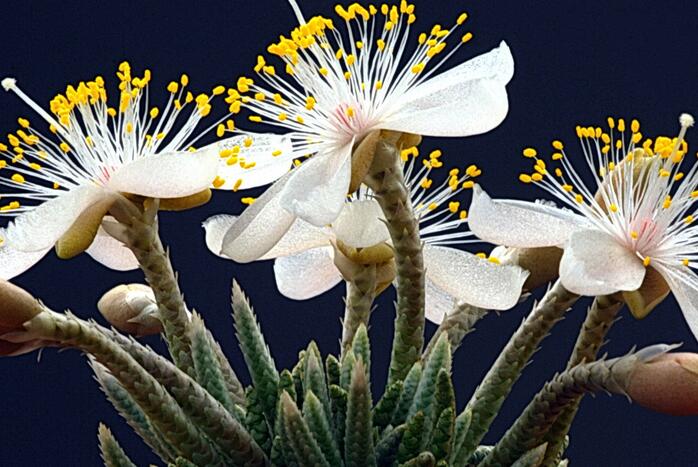
The flowers of White-flowered Avonia resemble plum blossoms, with pale yellow anthers set among the white petals, showing off bright, vivid vitality! Yet such a “fleeting” delicate bloom is rarely seen, and sometimes it does not flower at all. At such times, if you want to admire the “dancing silver snakes”, what should you do if White-flowered Avonia does not bloom?
What to do if White-flowered Avonia does not bloom:
The flowering period of White-flowered Avonia is generally from May to July.
Because its flowering period is short, and because this plant was introduced to our country not long ago and is not widely cultivated, few people have seen its flowers.
Once the flowering period of White-flowered Avonia arrives, it generally blooms in the afternoon when there is plenty of sunlight. At this time, the owner only needs to be patient enough to observe the changes in the Avonia and quietly wait.
When is it hard for White-flowered Avonia to open:
Although Avonia is known as the “epiphyllum” of the “Portulacaceae”, the editor believes that the epiphyllum opens at night, and the owner can slowly wait for her arrival in the dark night, but Avonia usually blooms in the afternoon during the day, and we often miss her beautiful moment because of some small matters.
If it encounters cloudy and rainy days or the cultivation environment has insufficient light, it may even be hard for it to open!
At this time, what the owner needs to do is place her in a well-ventilated spot with the best light, and then wait for the surprise to arrive!
White-flowered Avonia opens in the afternoon and closes at night, and each flower lives only 4 to 5 hours. Such a short flowering period makes us cherish her beauty all the more. Because there is currently not enough technology in the country to support the care of White-flowered Avonia, those who want to grow it should just follow its natural growth and wait for her flowers to arrive!
What to do if White-flowered Avonia does not bloom
Estimating the flowering period of White-flowered Avonia
The flowering period of White-flowered Avonia is generally from May to July.
Because its flowering period is short, and because this plant was introduced to our country not long ago and is not widely cultivated, few people have seen its flowers.
Once the flowering period of White-flowered Avonia arrives, it generally blooms in the afternoon when there is plenty of sunlight. At this time, the owner only needs to be patient enough to observe the changes in the Avonia and quietly wait.
When is it hard for White-flowered Avonia to open
Although Avonia is known as the "epiphyllum" of the "Portulacaceae", the editor believes that the epiphyllum opens at night, and the owner can slowly wait for her arrival in the dark night, but Avonia usually blooms in the afternoon during the day, and we often miss her beautiful moment because of some small matters.
If it encounters cloudy and rainy days or the cultivation environment has insufficient light, it may even be hard for it to open!
At this time, what the owner needs to do is place her in a well-ventilated spot with the best light, and then wait for the surprise to arrive!
White-flowered Avonia opens in the afternoon and closes at night, and each flower lives only 4 to 5 hours. Such a short flowering period makes us cherish her beauty all the more. Because there is currently not enough technology in the country to support the care of White-flowered Avonia, those who want to grow it should just follow its natural growth and wait for her flowers to arrive!
Avonia Avonia quinaria Avonia illustrated guide: how to grow Avonia / how to propagate Avonia
Avonia profileAvonia Avonia quinaria
Avonia cultivation methods and precautions, an introduction to Avonia
Avonia is a succulent plant of the genus Avonia in the family Portulacaceae, a perennial herb with a tuberous root, and its flowers are white and red.
Morphological characteristics of Avonia
The Avonia plant has an irregular rhizome (commonly known as a "tuberous root"), with small branches clustered at the top; the small branches are wrapped in scale-like small leaves that are greenish within white, and the small leaves have stipules, which are papery stipules that wrap around the tiny leaves. The flowers are 5-parted, and the flowering period is extremely short; some species bloom for only one hour. Avonia belongs to self-pollination, with a maturity period of about three weeks. The Avonia flower is plum-blossom-shaped, born at the tips of the small branches, about 2 cm in diameter, with relatively long stamens that often exceed the petals, with golden yellow anthers at the tips, and silky petals that are white. The flower is plum-blossom-shaped, born at the tips of the small branches, with silky petals, white or red, usually opening after evening when there is plenty of sunlight, closing at night; if it encounters cloudy and rainy days or insufficient light in the cultivation place, it is hard for it to bloom, and each flower lives only 1 to 2 hours, opening in summer. A single plant blooms for 7 to 10 days.
People often use "a fleeting epiphyllum" to describe the short life of a plant's flower; in fact, the flowers of many plants live even shorter than the epiphyllum, and Avonia is one of them, taking less than 2 hours from opening to closing. Because its flowering period is short, and because this plant was introduced to our country not long ago and is not widely cultivated, few people have seen its flowers. It usually opens in the afternoon when there is plenty of sunlight and closes at night, and each flower lives only 4 to 5 hours. If it encounters cloudy and rainy days or insufficient light in the cultivation environment, it is hard for it to open. The flowering period is from May to July.
White-flowered Avonia
Small branches are clustered at the top; the small branches are wrapped in scale-like small leaves that are greenish within white; the flower is plum-blossom-shaped, born at the tips of the small branches, with silky petals, white or red, usually opening after evening when there is plenty of sunlight, closing at night; if it encounters cloudy and rainy days or insufficient light in the cultivation place, it is hard for it to bloom, and each flower lives only 1 to 2 hours, opening in summer. A single plant blooms for 7 to 10 days. Its form is peculiar, and the small branches and the antique rhizome set each other off beautifully, much like a stone sea anemone attached to a rock, and also like dancing silver snakes. Moreover, the plant is small and grows slowly, just like a living handicraft. It is suitable for planting in a small pot and placing in sunny spots, on windowsills, and other places, to be carefully admired in leisure time and to appreciate its magical charm.
Ecological habits of Avonia
Native to the desert regions of South Africa and Namibia, it likes a cool, dry, and sunny environment, is drought-tolerant, afraid of waterlogging, and also afraid of stuffy heat and humidity, and is slightly cold-tolerant.
Distribution area of Avonia
Native to the desert regions of South Africa and Namibia.
Landscape uses of Avonia
Its form is peculiar, and the small branches and the antique rhizome set each other off beautifully, much like a stone sea anemone attached to a rock, and also like dancing silver snakes. Moreover, the plant is small and grows slowly, just like a living handicraft. It is suitable for planting in a small pot and placing in sunny spots, on windowsills, and other places, to be carefully admired in leisure time and to appreciate its magical charm.
Variety classification of Avonia
Avonia is divided into two types: White-flowered Avonia and Red-flowered Avonia.
White-flowered Avonia
The scientific name of White-flowered Avonia is: Avonia quinaria subsp. alstoni
Red-flowered Avonia (A.alstonii), with deep pink flowers; its other characteristics are basically the same as those of Avonia. Similar species in the same genus include Silver Silkworm (A.albissima), also called Dance of the Fairy, which has a thick, fleshy short stem, with clustered slender round branches, and the surface densely covered with scale-like spiral small leaves; Snow Chang'e (A.papyracea), also called White Snake Palace, has a fleshy stem that is thick and short, with many branches at the top of the stem, extending obliquely or curved toward the ground, and the stem surface covered with scale-like white papery small leaves, with small white-green flowers opening at the top.
Red-flowered Avonia (A.alstonii), with deep pink flowers,
Red-flowered Avonia
The scientific name of Red-flowered Avonia is: Avonia quinaria subsp. quinaria
Synonym: Anacampseros quinaria
Its other characteristics are basically the same as those of Avonia. Similar species in the same genus include Silver Silkworm (A.albissima), also called Dance of the Fairy, which has a thick, fleshy short stem, with clustered slender round branches, and the surface densely covered with scale-like spiral small leaves; Snow Chang'e (A.papyracea), also called White Snake Palace, has a fleshy stem that is thick and short, with many branches at the top of the stem, extending obliquely or curved toward the ground, and the stem surface covered with scale-like white papery small leaves, with small white-green flowers opening at the top.
Propagation methods of Avonia
Propagation is by sowing seeds.
Cultivation techniques of Avonia
Avonia is native to the desert regions of South Africa and likes a cool, dry, and sunny environment. It is drought-tolerant, afraid of waterlogging, and also afraid of stuffy heat and humidity, and is slightly cold-tolerant. From the end of September to April of the following year is its main growing period, when the small branches at the top of the rhizome begin to sprout and grow. It can be placed in a sunny spot for care, and watering should follow "do not water until dry, and when watering, water thoroughly", avoiding soil waterlogging so as to prevent the tuberous root from rotting. Because it grows slowly and needs few nutrients, it generally does not need additional fertilization. In winter, control watering; it can tolerate a low temperature of about 5°C. In summer, pay attention to good ventilation, avoid rain, and strictly control watering, so as to prevent rot caused by stuffy heat and humidity and waterlogging in the potting soil. The potting soil should be loose and breathable, with good drainage and a certain degree of granularity. It can be mixed from 1 part leaf mold or peat and 3 parts coarse sand or vermiculite, with a small amount of calcareous materials such as bone meal mixed in, and it can also be planted with materials such as akadama soil.
Avonia pictures