What are the planting methods and precautions for skullcap (Scutellaria barbata)?
Skullcap is an excellent ornamental flowering plant; its vivid, striking flower colors and graceful, elegant flower form make it a very good choice for decorating rooms and courtyards. Today, the editor brings you the planting methods and precautions for skullcap, let's take a look at the details.
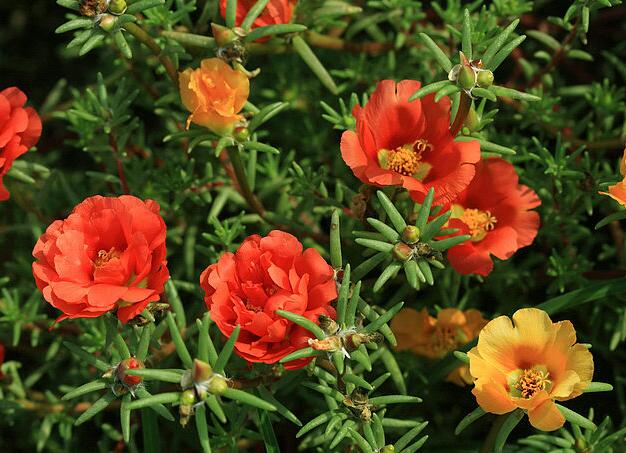
Planting methods for skullcap:
Environment
It prefers a warm, dry environment with ample light, is drought-tolerant, dislikes waterlogging, and has strong adaptability.
Planting
Mainly propagated by cuttings. After cutting off the branches, place them in a shaded environment for 1 day, then the next day insert them directly into plain sand; after watering, they will take root in a warm environment, and rooting is easy.
Temperature
It prefers warmth and is not cold-tolerant; the suitable growth temperature is 20-30 degrees Celsius.
Light
It is sensitive to light and is a strongly sun-loving flower. It is not shade-tolerant; in summer high-temperature weather, which is precisely the peak period of plant growth and flowering, it also needs sufficient sunlight so that the plant can bloom abundantly with vivid flower colors.
Watering
Because the succulent stems and leaves can store water, it has strong drought resistance and can grow and bloom even under relatively dry conditions. But to enable the plant to grow and bloom well, appropriate water must also be supplied.
Pests and diseases
It is harmed by pests and diseases such as rust disease and hawk moths.
Overwintering of seedlings
After the Frost's Descent solar term each year, move the double-petaled sunrose (Portulaca grandiflora) indoors to a sunny spot. After the start of winter, place it inside a glass window and let the potting soil stay a little on the dry side, and it can overwinter safely.
Cultivation precautions
Avoid excessive moisture and water accumulation; when there is too much of it, it easily causes leggy growth of stems and leaves, and can even lead to root rot and death. When a cold wave arrives, it needs to be brought inside a window for care. Throughout the entire growth period, sufficient light is needed to enable normal growth and flowering.
What should be noted when planting skullcap? Precautions for planting skullcap
How do you plant skullcap? Have you mastered all the precautions for planting skullcap? Next, the editor will introduce in detail the precautions for planting skullcap.
Precautions for planting skullcap:
1. Overwintering of seedlings: After the Frost's Descent solar term each year, move the double-petaled skullcap indoors to a sunny spot. After the start of winter, place it inside a glass window and let the potting soil stay a little on the dry side, and it can overwinter safely. After Qingming the following year, the flower pot can be placed outside the window; if a cold wave arrives, it still needs to be brought inside a window for care.
2. Cutting time: From early May to the end of August, tender stem tips of about 5 cm can be cut for insertion.
3. Preparing the growing medium: Use 3 parts mature garden soil, 5 parts yellow sand, 2 parts rice husk ash or fine sawdust, then add a little superphosphate powder and mix evenly.
4. Planting container: Clay pots, porcelain pots, plastic flower pots, or other containers that can drain water at the bottom. Place a tile shard over the drainage hole at the bottom to facilitate drainage, then fill with growing medium and plant.
5. Cutting method: Smooth the surface of the growing medium in the container, insert the cut tender tips of skullcap into holes made with a bamboo chopstick, going no more than 2 cm deep into the growing medium. To make the potted flowers take shape and fill out as quickly as possible, depending on the size of the pot, multiple plants can be inserted in one pot as long as a spacing of 2 cm can be maintained (when the seedlings become crowded, they can be divided and planted in other pots).
Then water thoroughly. Newly inserted cuttings can be shaded or not shaded; as long as a certain humidity is maintained, they generally survive in 10 to 15 days and enter normal care.
6. Routine care: Skullcap rarely suffers from pests and diseases. Usually maintain a certain humidity and apply one-thousandth potassium dihydrogen phosphate once every half month, and it can achieve large flowers, vivid colors, and continuous blooming. If multiple varieties are inserted in one pot, flowers of various colors blooming together in one pot have even higher ornamental value.
How to plant skullcap: planting methods and precautions for skullcap
Skullcap may be very familiar to everyone, as it is relatively common in our lives. Skullcap flowers are small and exquisite, with vivid and striking colors and graceful flower forms; it is a very beautiful flowering plant. At the same time, the whole plant of skullcap can be used as medicine, and its medicinal value is also extremely high. So do you know how skullcap is planted?
How to plant skullcap
Skullcap is native to South America, prefers a warm and humid climate, and has low requirements for soil. Wild skullcap is mostly found in moist places by field edges, ditches, and roadsides. A soil environment that is too dry is not conducive to the growth of skullcap. Generally, after 3-4 years of cultivation, the plant begins to age and its sprouting ability weakens, so it must be resown or divided and replanted.
Skullcap seeds are very small and very easy to germinate. The seed lifespan is 1 year, and the suitable germination temperature is 25°C. Do not cover the seeds with soil after sowing, as this will result in a very low emergence rate; even if seeds germinate, the seedlings often cannot push through because the soil covering is too thick, and growth stops. When sowing, prepare a small amount of fine sand, mix the fine sand and seeds evenly, then sprinkle evenly on the soil, and do not cover with soil on top. Doing this can ensure even sowing and neat emergence.
Skullcap planting methods and precautions
1. Environment: It prefers a warm, dry environment with ample light, is drought-tolerant, dislikes waterlogging, and has strong adaptability.
2. Planting: Mainly propagated by cuttings. After cutting off the branches, place them in a shaded environment for 1 day, then the next day insert them directly into plain sand; after watering, they will take root in a warm environment, and rooting is easy.
3. Temperature: It prefers warmth and is not cold-tolerant; the suitable growth temperature is 20-30 degrees Celsius.
4. Light: It is sensitive to light and is a strongly sun-loving flower. It is not shade-tolerant; in summer high-temperature weather, which is precisely the peak period of plant growth and flowering, it also needs sufficient sunlight so that the plant can bloom abundantly with vivid flower colors.
5. Watering: Because the succulent stems and leaves can store water, it has strong drought resistance and can grow and bloom even under relatively dry conditions. But to enable the plant to grow and bloom well, appropriate water must also be supplied.
6. Pests and diseases: It is harmed by pests and diseases such as rust disease and hawk moths.
7. Precautions: Avoid excessive moisture and water accumulation; when there is too much of it, it easily causes leggy growth of stems and leaves, and can even lead to root rot and death. When a cold wave arrives, it needs to be brought inside a window for care. Throughout the entire growth period, sufficient light is needed to enable normal growth and flowering.
When to sow skullcap
When can skullcap be sown? Actually, there is no great restriction on propagating skullcap by sowing; it can be sown in spring, summer, and autumn. However, when sowing skullcap, the main practice is autumn sowing.
Skullcap seeds generally germinate in about 10 days when the temperature is above 20°C. Skullcap also grows very quickly; if the temperature is kept at a relatively high level, it will soon bloom. After skullcap blooms, it will bear fruit; when the fruit matures, it will split open, and at this time the seeds should be collected promptly to prevent the seeds from falling into the soil.
Growing environment
It grows by paddy field edges, stream sides, or on moist grassland, at altitudes below 2000 m. Skullcap prefers a warm climate and a humid, semi-shaded environment. It has low requirements for soil; for cultivation, deep, loose, fertile, well-drained sandy loam or humus loam is best. Heavy clay soil and low-lying, easily waterlogged plots are not suitable for planting. It often grows wild by field edges or stream ditches in hilly and flat areas. It prefers a relatively humid environment and grows poorly in overly dry areas.
The above is the skullcap cultivation technique summarized by the editor; I hope it is helpful to everyone. Skullcap is a new type of plant that combines ornamental and medicinal uses. Made into a potted plant, it can decorate a room, balcony, or courtyard; used as medicine, it has effects such as relieving pain and dispersing blood stasis, and clearing heat and removing dampness.