How to grow French marigold? Detailed steps for sowing and raising seedlings plus answers to related questions
French marigold likes sunshine, but it can also bloom when planted in semi-shade. It is not demanding about soil. It tolerates transplanting, grows quickly, and is very easy to cultivate and manage. Seeds that fall on the ground can grow on their own under suitable temperature and humidity conditions, making it a flower with very strong adaptability. Today, the editor brings you the cultivation method of French marigold. Let us look at the details together.
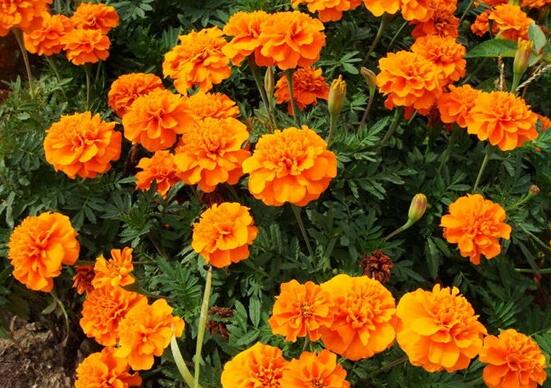
Cultivation methods of French marigold:
I. Sowing and seedling raising
French marigold seeds number 290 to 350 per gram. Under protected cultivation conditions in the middle and lower reaches of the Yangtze River, sowing can be done all year round. However, due to restrictions on when flowers are needed, the two holidays "May Day" and "National Day" have the largest flower demand. Also, because sowing French marigold requires a temperature above 15°C (or heating and insulation conditions), the sowing period in the middle and lower reaches of the Yangtze River is generally from November to August. In the warm south, it can be sown all year round; in the north, spring sowing is common. If raising seedlings in early spring, care should be taken to ensure a certain growing temperature and try to avoid growth stagnation. For sowing, it is advisable to use a relatively loose artificial medium, sowing in beds or boxes to raise seedlings, and if conditions permit, plug tray seedling raising can be used. The medium requires a pH value of 6.0 to 6.2 (slightly higher than other varieties), and an EC value of<0.75,经消毒处理,播种后用蛭石稍稍覆盖。孔雀草的发芽适温22~24℃,发芽时间5-8天。
1. 2 to 5 days after sowing, the seed shows white (the radicle emerges). French marigold seeds do not need light to germinate. Usually after sowing, cover with a thin layer of medium. It is recommended to use coarse vermiculite, as this can both block light and maintain moisture in the medium during the early seedling stage. Keep the medium moist, but prevent it from becoming too wet, and maintain the temperature at 22 to 26°C.
2. From radicle emergence to full expansion of the cotyledons takes about 7 days. Once the radicle emerges, lower the humidity, and water only after the medium has slightly dried to facilitate better germination and root growth. Provide 4500 to 7000 Lux of light, and keep the medium pH at 6.0 to 6.2, and the EC value at<0.75,介质温度20~21℃。如果所使用的介质不含有营养启动剂,则可以在子叶完全展开时施以50ppm的14-0-14水溶性肥料。
3. Rapid seedling growth stage. For French marigold seedling growth, prevent excessively high humidity, so between two waterings let the medium dry thoroughly. Of course, do not let the medium become too dry and cause the seedlings to wither. Keep the medium pH at 6.0 to 6.2, and the EC value at<1.0,介质和环境温度可适当降低至18℃。每隔5~10天时间交替施用100~150ppm的20-10-20和14-0-14水溶性肥料,如果介质温度低于18℃,则避免施用硝酸铵。此阶段后期,植株根系可以长至3~5厘米,苗高也有3~4厘米,2~3对真叶。
4. Hardening-off stage. At this stage, the root system has already formed well, with 3 pairs of true leaves, and the temperature can be lowered to 15°C, but preferably not below 15°C. If needed, at this stage apply a 100 to 150 ppm 14-0-14 water-soluble fertilizer, but avoid applying ammonium nitrate. As in the second stage, between two waterings let the medium dry thoroughly, and strengthen ventilation to prevent leggy growth.
The main problems in seedling raising:
(1) The pH value of the medium is too low. The main symptoms are necrotic spots and scorched edges on old leaves, and death of the growing point. A pH value below 6.0 can also cause deficiencies of certain trace elements such as magnesium, iron, sodium and zinc. The main solution is: keep the medium pH between 6.0 and 6.7 (this can be adjusted by adding 1 pound of lime to 100 gallons of water); choose less sensitive French marigold varieties.
(2) When raising seedlings at low temperatures in early spring, if humidity is too high, blight is likely to occur. It first appears as water-soaked areas at the base of the stem, then necrosis and lodging. Therefore, note that when raising seedlings in early spring, increase the temperature as much as possible and control humidity to prevent disease.
(3) Pay attention to nutrition during the seedling stage. If fertilizer is lacking during the seedling stage, the plants will be thin and weak, forming small old seedlings - that is, plants flowering during the seedling stage due to lack of fertilizer. Such seedlings often cannot form a good plant shape and cannot be sold, causing losses.
II. Transplanting and potting
For those raised in plug trays, transplant and pot when they grow to 2 to 3 pairs of true leaves. In the Zhejiang area, most people habitually use 12 cm diameter nutrient pots, potting once in place without another repotting. If sowing and raising seedlings in open seedling trays by broadcasting, sow thinly, and at 2-3 pairs of true leaves, directly transplant the seedlings into pots.
III. Maintenance and management
Light regulation: French marigold is a sun-loving plant, and both growth and flowering require ample sunlight. Sufficient light also helps prevent leggy growth. However, in our province from July to September, direct sunlight should be avoided, and shading and cooling are needed around noon.
Temperature control: After potting, the temperature can be lowered from 22°C to 18°C, after a few weeks it can be lowered to 15°C, and before and after flowering it can be as low as 12 to 14°C. Such temperatures are ideal for forming a good plant shape, but in actual production it may be difficult to achieve these conditions. Therefore, generally speaking, as long as it is above 5°C it will not suffer cold damage, and it can grow well between 10°C and 30°C.
Water and fertilizer management: The key to water management is to use a well-drained medium. Although keeping the medium moist is important, proper drying before each watering is necessary. Of course, do not let the medium become too dry and cause the plant to wither. For those grown entirely in artificial medium, fertilization should use 20-10-20 and 14-0-14 fertilizers, applied alternately once every 7 to 10 days at a concentration of 200 to 250 ppm. When winter temperatures are low, reduce the use of 20-10-20 fertilizer. If the medium is ordinary soil, a compound fertilizer can be mixed in an appropriate amount as a base fertilizer before potting. If fertility is insufficient, then apply additional water-soluble fertilizer.
Pest and disease control: French marigold has relatively few pests and diseases, but in greenhouse production, moth larvae during early growth will eat new leaves, so regular inspection is needed, and once found, spray pesticide for control. Quality at shipment: Cultivated in 12 cm nutrient pots. Ship from the time of color showing to before full bloom. The crown width should generally be between 20 and 25 cm, with a neat, full plant shape and uniform flowering.
French marigold varieties easily crossbreed and degenerate: French marigold not only has single-petaled, double-petaled, different flower colors, and different height varieties, but also the same genus African marigold, and natural hybridization between them also easily causes degeneration. Choose varieties with good flower color, sow separately, plant separately, and keep a distance of more than 100 m from other varieties. Collect seeds separately and store them separately.
Cultivation and maintenance of French marigold
Growth habits of French marigold: Likes sunshine, but can also bloom when planted in semi-shade. It is not demanding about soil. It tolerates transplanting, grows quickly, and is very easy to cultivate and manage. Seeds that fall on the ground can grow on their own under suitable temperature and humidity conditions, making it a flower with very strong adaptability. In southern China, its flowering period is from March to May and from August to December. It takes only 70 days from sowing to flowering. Seedlings raised in early spring can be grown in a greenhouse without heating, and after the last frost they can be planted in courtyards, flower beds, or pots.Sowing method: Can be sown all year round. However, due to restrictions on when flowers are needed, the two holidays "May Day" and National Day have the largest flower demand. Also, because sowing French marigold requires a temperature above 15°C (or heating and insulation conditions), the sowing period in the middle and lower reaches of the Yangtze River is generally from August to November. In the warm south, it can be sown all year round, while in the north spring sowing is common. If raising seedlings in early spring, care should be taken to ensure a certain growing temperature and try to avoid growth stagnation. For sowing, it is advisable to use a loose artificial medium, sowing in beds or boxes to raise seedlings, and if conditions permit, plug tray seedling raising can be used. After disinfection treatment, sow with a slight covering. The suitable germination temperature for French marigold is 22 to 24°C.
(1) 2 to 5 days after sowing, the seed shows white (the embryo emerges). French marigold seeds do not need light to germinate. Usually after sowing, cover with a thin layer of medium, as this can both block light and maintain moisture in the early seedling stage. Keep the medium moist, but prevent it from becoming too wet, and maintain the temperature at 21 to 24°C.
(2) From radicle emergence to full expansion of the cotyledons takes about 7 days. Once the radicle emerges, lower the temperature, and water only after the medium has slightly dried to facilitate better germination and root growth. Also provide light and apply a small amount of fertilizer.
(3) Rapid seedling growth stage. For French marigold seedling growth, prevent excessively high humidity, so between two waterings let the medium dry thoroughly. Of course, do not let the medium become too dry and cause the seedlings to wither. The medium and ambient temperature can be appropriately lowered to 18°C. Apply fertilizer alternately every 5 to 10 days. If the medium temperature is below 18°C, avoid applying ammonium nitrogen fertilizer. In the later part of this stage, the plant root system can grow to 3 to 5 cm, and the seedling height is also 3 to 4 cm, with 2 to 3 pairs of true leaves.
(4) Hardening-off stage. At this stage, the root system has already formed well. With 3 pairs of true leaves, the temperature can be lowered to 15 to 17°C, but preferably not below 15°C. But avoid using ammonium nitrogen fertilizer. As in (2), between two waterings let the medium dry thoroughly, and strengthen ventilation to prevent leggy growth. If seedling raising fails or there are problems, after ruling out possible seed quality issues, the main reasons are: First, the pH value of the medium is too low. The main symptoms are necrotic spots and scorched edges on old leaves, and death of the growing point. Second, a pH value below 6.0 can also cause excess of certain trace elements such as magnesium, iron, sodium and zinc. The main solution is: keep the medium pH between 6.0 and 6.7. This can be adjusted by adding 0.4526 kg of lime to 38 kg of water; Third, when raising seedlings at low temperatures in early spring, if the temperature is too high, blight is likely to occur. It first appears as water-soaked areas at the base of the stem, then necrosis and lodging. Therefore, note that when raising seedlings in early spring, increase the temperature as much as possible and control humidity to prevent disease. Fourth, pay attention to nutrition during the seedling stage. If fertilizer and water are lacking during the seedling stage and the plants are thin and weak, small old seedlings will form. Content provided by Yuhuagu.
Cultivation steps:
1. Prepare the land and make beds, and apply sufficient base fertilizer. Rationally prepare the land, make beds and apply sufficient base fertilizer. Decomposed organic fertilizer can be applied, such as 1000 kg/mu of chicken manure into the beds, covering the field soil. Generally, the bed height is more than 30 cm, the bed width is 100 cm, and the bed length varies at 20 m, and the ditches should drain smoothly so that accumulated water can be removed in time after rain.
2. Planting and dense planting. Plant the seedlings on the prepared beds. Before planting, first open holes, plant four in each hole, with a plant-row spacing of 30x30 cm. After planting, water with settling water so that the soil is tightly combined, keep the soil moist, and promote growth.
3. Cultivation, water and fertilizer management. After planting, cultivate and weed in time to prevent soil compaction and weeds from growing densely. Because deeper cultivation promotes roots to grow deeper, generally cultivate 2--3 times before canopy closure. After canopy closure there are generally no weeds, ground water evaporation is reduced, and cultivation is not needed. In the early stage, apply frequently and lightly, mainly with N fertilizer, once every seven days. During the vigorous growth period, from flower bud differentiation and formation to the bud stage, heavy additional fertilization can be applied, 50 kg of compound fertilizer per mu, and foliar fertilizer sprayed once a week, stopping fertilization when the flower buds are about to open. Content provided by Yuhuagu.
4. Light. French marigold is a short-day plant. Under the short-day conditions after autumn, French marigold will not grow tall and can only tiller underground. The light duration must be extended to make the aboveground stems taller. Generally one month after planting, begin artificial supplementary lighting. Generally use a 100W or 60W electric light bulb hung 80 cm above the plants, with each lamp illuminating 4 sq m, adding 4 hours of lighting time per day for 40 consecutive days, ending 60 days before the Spring Festival. The supplementary lighting method can start when it gets dark at night, or start 4 hours before dawn.
French marigold Tagetes patula L French marigold gallery: how to grow French marigold / how to propagate French marigold
French marigold profileFrench marigold Tagetes patula L
Cultivation methods and precautions for French marigold Introduction to French marigold
French marigold aliases: yellow chrysanthemum, five-petal lotus, laolaihong, stinking chrysanthemum, peacock chrysanthemum, small African marigold, red-yellow herb, satin flower. It is the whole plant of the Asteraceae plant French marigold. Harvested in summer and autumn, used fresh or dried in the sun. It grows on mountain slopes and grasslands at an altitude of 750-1600 m, in forests, or cultivated in gardens. Distributed in Sichuan, Guizhou, Yunnan and other places. Main indications: clearing heat and detoxifying; relieving cough. Mainly for wind-heat common cold; cough; whooping cough; dysentery; parotitis; acute mastitis; boils; toothache; stomatitis; red swollen painful eyes.
French marigold, Yi medicine name Yini Buchiwu: Yi doctors use flowers or roots as medicine, mainly treating snake bites, mumps, breast sores, chronic cough, heat cough and asthma, dizziness, cold and fever and other symptoms, "Yi Zhi Yao". The root treats venomous snake bites, "Ai Lao". The whole plant treats upper respiratory tract infections, dysentery, whooping cough, toothache, parotitis, "Da Li Zi Zhi".
Morphological characteristics of French marigold
Plant height 30 to 40 cm. Pinnately compound leaves, leaflets lanceolate. Flower stalks emerge from leaf axils, capitula terminal, single or double. Flower colors include red-brown, yellow-brown, light yellow, purple-red spots, etc. The flower shape is similar to African marigold, but the flowers are smaller and more numerous. When blooming, on the short, much-branched plant, yellow-orange flowers cover the tips, appearing gorgeous and lovely. French marigold has good ornamental value and is suitable for potted planting, ground planting and cut flowers. Leaves opposite, pinnately parted, lobes lanceolate, leaf margins with obvious oil gland dots. Capitula terminal, the outer ring of the flower dark red, the inner yellow, hence also called red-yellow herb. Because of repeated interspecific hybridization, in addition to red-yellow, pure yellow, orange and other varieties have also been bred, as well as single-petaled, semi-double and other varieties. The flowering period lasts from "May Day" all the way to "National Day".
Annual herb, 30-100 cm tall, stems erect, usually branched near the base, branches spreading obliquely. Leaves pinnately parted, 2-9 cm long, 1.5-3 cm wide, lobes linear-lanceolate, margins serrate, tooth tips often with long fine awns, tooth bases usually with 1 gland. Capitula solitary, 3.5-4 cm in diameter, peduncle 5-6.5 cm long, slightly thickened at the apex; involucre 1.5 cm long, 0.7 cm wide, oblong, upper end with sharp teeth, glandular-punctate; ray florets golden yellow or orange, with red spots; ray laminae nearly round, 8-10 mm long, 6-7 mm wide, apex slightly concave; tubular florets corolla yellow, 10-14 mm long, equal to the pappus, with 5 tooth-like lobes. Achenes linear, narrowed at the base, 8-12 mm long, black, covered with short soft hairs, pappus scale-like, of which 1-2 are long awn-like, 2-3 are short and blunt. Flowering period July-September.
Ecological habits of French marigold
French marigold is native to Mexico. It is a flower with very strong adaptability. It can also be seen in many places in China, especially more commonly in the south. Its flowering period is from March to May and from August to December.
Because scarlet sage cannot withstand the low temperatures of "May Day" and cannot endure the early frost of "National Day", and the severe heat of midsummer can leave most plants half-dead. Therefore, French marigold has gradually become a main flower for flower beds and courtyards. Its orange, yellow and red flowers are extremely eye-catching. They add much vitality to wherever they are planted. Its role and value have attracted the attention of many landscaping workers.
French marigold seeds have a low germination rate; with ordinary sowing methods the germination rate is only 10%-30%. To plant French marigold, first raise seedlings in containers such as boxes and pots, filled with sandy loam soil, creating a soft, well-aerated germination environment for the seeds. Sow the seeds directly on the soil surface, cover with straw mats or newspaper, and make them closely contact the soil. Water frequently with a watering can, and do not let the surface soil dry out. After the seeds emerge, remove the covering.
French marigold has very strong adaptability, tolerates drought and cold, and can withstand the test of early frost. It can grow on its own and is easy to manage.
Growth characteristics
French marigold is an annual herbaceous flower of the Asteraceae genus Tagetes. The plant is relatively short, 20-40 cm tall, compact in shape, much-branched and clump-forming, stems purplish. Leaves opposite, pinnately parted, lobes lanceolate, leaf margins with obvious oil gland dots. Capitula terminal, the outer ring of the flower dark red, the inner yellow, hence there are also single-petaled, semi-double and other varieties.
The flowering period starts from French marigold has strong adaptability, likes a warm and sunny environment, is relatively drought-tolerant, and is not strict about soil and fertilizer requirements.
French marigold is relatively cold-tolerant and can withstand the invasion of early frost. In the severe heat of midsummer, the number of flowers is relatively small.
The seedling period is short. It takes only 70 days from sowing to flowering. Seedlings raised in early spring can be grown in a greenhouse without heating, and after the last frost they can be planted in courtyards, flower beds, or pots. In midsummer there are few flowers, and it can be cut back completely once. After the Start of Autumn, new lateral branches can bloom again at the tips, or it can be left uncut, but then the plant is relatively loose.
Varieties easily degenerate. French marigold not only has single-petaled, double-petaled, different flower colors, and different height varieties, but also the same genus African marigold, and natural hybridization between them also easily causes degeneration. Choose varieties with good flower color, sow separately, plant separately, and keep a distance of more than 100 m from other varieties.
Collect seeds separately and store them separately. French marigold likes sunshine, but can also bloom when planted in semi-shade. It is not demanding about soil. It tolerates transplanting, grows quickly, and is very easy to cultivate and manage. Seeds that fall on the ground can grow on their own under suitable temperature and humidity conditions, making it a flower with very strong adaptability.
It takes only 70 days from sowing to flowering. Seedlings raised in early spring can be grown in a greenhouse without heating, and after the last frost they can be planted in courtyards or pots. It can be sown all year round. However, due to restrictions on when flowers are needed, and because sowing French marigold requires a temperature above 15°C (or heating and insulation), the sowing period in the middle and lower reaches of the Yangtze River is generally from August to November. In the warm south, it can be sown all year round, while in the north spring sowing is common. If raising seedlings in early spring, care should be taken to ensure a certain growing temperature and try to avoid growth stagnation.
For sowing, it is advisable to use a loose artificial medium, sowing in beds or boxes to raise seedlings, and if conditions permit, plug tray seedling raising can be used. After disinfection treatment, sow with a slight covering. The suitable germination temperature for French marigold is 22 to 24°C. At this stage, the root system has already formed well. With 3 pairs of true leaves, the temperature can be lowered to 15 to 17°C, but preferably not below 15°C. But avoid, as in the second stage, between two waterings let the medium dry thoroughly, and strengthen ventilation to prevent leggy growth.
If seedling raising fails or there are problems, the main reasons are: First, the pH value of the medium is too low. The main symptoms are necrotic spots and scorched edges on old leaves, and death of the growing point. Second, a pH value below 6.0 can also cause excess of certain trace elements such as magnesium, iron, sodium and zinc. The main solution is: keep the medium pH between 6.0 and 6.7. This can be adjusted by adding 0.4526 kg of lime to 38 kg of water; Third, when raising seedlings at low temperatures in early spring, if the temperature is too high, blight is likely to occur. It first appears as water-soaked areas at the base of the stem, then necrosis and lodging. Therefore, note that when raising seedlings in early spring, increase the temperature as much as possible and control humidity to prevent disease. Fourth, pay attention to nutrition during the seedling stage. If fertilizer and water are lacking during the seedling stage and the plants are thin and weak, small old seedlings will form. One week after sowing, the embryo can be seen growing. At this time, keep the soil moisture at 75% to 85% to facilitate the downward extension of the radicle. When the cotyledons expand and the first pair of leaves grows, control the seedling bed humidity at this time, pay attention to ventilation, and at the same time begin applying a water-soluble fertilizer at a concentration of 50 ppm to the seedlings, once every 5 to 7 days. As the 2nd to 3rd pairs of leaves begin to grow, the seedlings enter the rapid growth stage.
Cultivation techniques of French marigold Sowing method
Can be sown all year round. However, due to restrictions on when flowers are needed, the two holidays "May Day" and National Day have the largest flower demand. Also, because sowing French marigold requires a temperature above 15°C (or heating and insulation conditions).
(1) First stage
2 to 5 days after sowing, the seed shows white (the embryo emerges). French marigold seeds do not need light to germinate. Usually after sowing, cover with a thin layer of medium, as this can both block light and maintain moisture in the early seedling stage. Keep the medium moist, but prevent it from becoming too wet, and maintain the temperature at 21 to 24°C.
(2) Second stage
From radicle emergence to full expansion of the cotyledons takes about 7 days. Once the radicle emerges, lower the temperature, and water only after the medium has slightly dried to facilitate better germination and root growth. Also provide light and apply a small amount of fertilizer.
(3) Third stage
Rapid seedling growth stage. For French marigold seedling growth, prevent excessively high humidity, so between two waterings let the medium dry thoroughly. Of course, do not let the medium become too dry and cause the seedlings to wither. The medium and ambient temperature can be appropriately lowered to 18°C. Apply fertilizer alternately every 5 to 10 days. If the medium temperature is below 18°C, avoid applying ammonium nitrogen fertilizer. In the later part of this stage, the plant root system can grow to 3 to 5 cm, and the seedling height is also 3 to 4 cm, with 2 to 3 pairs of true leaves.
(4) Fourth stage
Hardening-off stage, but avoid using ammonium nitrogen fertilizer. As in the second stage, between two waterings let the medium dry thoroughly, and strengthen ventilation to prevent leggy growth. If seedling raising fails or there are problems, the main reasons are: First, the pH value of the medium is too low. The main symptoms are necrotic spots and scorched edges on old leaves, and death of the growing point. Second, a pH value below 6.0 can also cause excess of certain trace elements such as magnesium, iron, sodium and zinc. The main solution is: keep the medium pH between 6.0 and 6.7. This can be adjusted by adding 0.4526 kg of lime to 38 kg of water; Third, when raising seedlings at low temperatures in early spring. If the temperature is too high, blight is likely to occur. It first appears as water-soaked areas at the base of the stem, then necrosis and lodging. Therefore, note that when raising seedlings in early spring, increase the temperature as much as possible and control humidity to prevent disease. Fourth, pay attention to nutrition during the seedling stage. If fertilizer and water are lacking during the seedling stage and the plants are thin and weak, small old seedlings will form.
Maintenance principles
(1) Light regulation
French marigold is a sun-loving plant, and both growth and flowering require ample sunlight. Sufficient light also helps prevent leggy growth. In high-temperature seasons, direct sunlight should be avoided, and shading and cooling are needed around noon.
(2) Temperature control
After potting, the temperature can be lowered to 18°C, after a few weeks it can be lowered to 15°C, and before and after flowering it can be as low as 12 to 14°C. Such temperatures are ideal for forming a good plant shape, but in actual production it may be difficult to achieve these conditions. Therefore, generally speaking, as long as it is above 5°C it will not suffer cold damage, and it can grow well between 10 and 30°C.
(3) Water and fertilizer management
The key to water management is to use a well-drained medium. Although keeping the medium moist is important, proper drying before each watering is necessary. Of course, do not let the medium become too dry and cause the plant to wither. For those grown entirely in artificial medium, fertilizer can be applied alternately once every 7 to 10 days. When winter temperatures are low, reduce the amount of fertilizer used. If ordinary soil is used as the medium, a compound fertilizer can be mixed in an appropriate amount as a base fertilizer before potting. When fertility is insufficient, apply additional fertilizer.
Cultivation steps
(1) Land preparation
Prepare the land and make beds, and apply sufficient base fertilizer. Rationally prepare the land, make beds and apply sufficient base fertilizer. Decomposed organic fertilizer can be applied, such as 1000 kg/mu of chicken manure into the beds, covering the field soil. Generally, the bed height is more than 30 cm, the bed width is 100 cm, and the bed length varies at 20 m, and the ditches should drain smoothly so that accumulated water can be removed in time after rain.
(2) Planting
Plant the seedlings on the prepared beds. Before planting, first open holes, plant four in each hole, with a plant-row spacing of 30x30 cm. After planting, water with settling water so that the soil is tightly combined, keep the soil moist, and promote growth.
(3) Management
After planting, cultivate and weed in time to prevent soil compaction and weeds from growing densely. Because deeper cultivation promotes roots to grow deeper, generally cultivate 2--3 times before canopy closure. After canopy closure there are generally no weeds, ground water evaporation is reduced, and cultivation is not needed. In the early stage, apply frequently and lightly, mainly with N fertilizer, once every seven days. During the vigorous growth period, from flower bud differentiation and formation to the bud stage, heavy additional fertilization can be applied, 50 kg of compound fertilizer per mu, and foliar fertilizer sprayed once a week, stopping fertilization when the flower buds are about to open.
(4) Light
White French marigold is a short-day plant. Under the short-day conditions after autumn, French marigold will not grow tall and can only tiller underground. The light duration must be extended to make the aboveground stems taller. Generally one month after planting, begin artificial supplementary lighting. Generally use a 100W or 60W electric light bulb hung 80 cm above the plants, with each lamp illuminating 4 sq m, adding 4 hours of lighting time per day for 40 consecutive days, ending 60 days before the Spring Festival. The supplementary lighting method can start when it gets dark at night, or start 4 hours before dawn.
(5) Harvesting
To make white French marigold cut flowers last longer, the best time to cut is when about 10 top buds are open and the others are just about to open. If the weather is hot, it is better to cut the flowers when it is cool. After cutting, bring them back to the workroom, grade and package them, tying every twenty stems into a bunch, wrap them well in paper, and store them in the warehouse or pack them for sale.
Cultivation using cold sheds
French marigold can be sown and propagated all year round at 41 degrees north latitude and an altitude of 690 m, but winter propagation and flowers for "May Day" are the most difficult. The suitable temperature for sowing French marigold is 15°C to 23°C, and below 13°C or above 26°C the plants will show uneven germination and a low seedling survival rate. After potting, the seedlings grow slowly or wither in patches, and in the end few remain.
In winter, when the temperature is between -12°C and -23°C and the climate is dry, cold shed technology is used in winter: double-layer greenhouse cold protection and heating measures, that is, building an inner shed inside the original outer greenhouse, canceling the original centralized heating supply. The application of this technology saves coal and money. At the same time, the accuracy rate of flowering time and the flower production rate of the flowers are both significantly improved. The French marigold propagated has a germination rate of 98% and a seedling survival rate of 95%.
I. Sowing
To make French marigold bloom on "May Day", sow in mid-to-late December each year, cultivate in plastic greenhouses, and use simple plug tray seedling raising. Initially keep the seedling soil moisture at 85% to 95% to facilitate seed water absorption and swelling. French marigold seeds do not like light, so after sowing they need to be covered with soil, but not too thick, as this can improve the seed germination rate and uniformity. In low-temperature weather, after the temperature drops each afternoon, use a sprayer to spray inside the greenhouse to increase air humidity.
II. Seedling stage management
For each additional pair of leaves the seedlings grow, increase the fertilization concentration correspondingly by one time, gradually increasing to 200 ppm to 250 ppm. During leaf growth, pay attention to alternating dry and wet conditions in the seedling bed to promote root growth. In early spring, temperatures are low. Since there are no heating measures, supplementary lighting must be used to increase the seedling bed temperature and appropriately control water, otherwise French marigold seedlings are difficult to grow well.
III. Cultivation management
Winter is generally low-temperature and low-humidity weather, which is precisely a difficult period for French marigold growth. Practice shows that if two layers of film protection are used, the survival rate of French marigold is only 25%; if three layers of film protection are used, the survival rate of French marigold seedlings can reach 95.22%. On the seedling bed, pot the French marigold seedlings with 2 to 3 pairs of leaves into small pots. After the seedlings have settled in, conventional water and fertilizer management can be carried out. Because it is protected cultivation, after each watering and fertilizing, strengthen ventilation to prevent excessive humidity from causing seedling rot. After the Spring Festival, temperatures begin to rise, and French marigold enters the rapid growth period. At this time, the film on the seedling bed can be gradually removed, while strengthening fertilizer and water management.
IV. Pest and disease control
French marigold mainly has root rot during the seedling stage, which can be controlled by drenching the roots with 800 times liquid thiophanate-methyl.
The main pest is red spider mite damage, which can be controlled by spraying 1500 times liquid dimethoate.
Disease control of French marigold
French marigold mainly has root rot during the seedling stage, which can be controlled by drenching the roots with 800 times liquid thiophanate-methyl.
The main pest is red spider mite damage, which can be controlled by spraying 1500 times liquid dimethoate.
Common diseases include brown spot disease and powdery mildew, which are fungal diseases. Choose good land for cultivation, pay attention to drainage and irrigation, remove diseased plants and diseased leaves, burn residual branches, and promptly spray fungicides such as Xiufenning. The main pest is red spider mite. Cultivation management can be strengthened. In the early stage of pest occurrence, spray 20% dicofol emulsifiable concentrate at 500--600 times for control.
The main reasons for poor growth of French marigold in summer are:
① French marigold fears high temperatures. During severe summer heat, growth vigor weakens and the number of flowers decreases.
② French marigold grows relatively quickly. French marigold potted in spring begins to age by summer, so even after autumn temperatures turn cooler, French marigold planted in the ground has already recovered good growth and flowering, but potted French marigold not only will not recover, but will go from bad to worse.
Therefore, in autumn, use the young branches of French marigold for cuttings. French marigold cuttings root and can be potted one week after cutting. After autumn turns cool, they can quickly grow into shape and continuously produce bright flowers.
Propagation methods of French marigold
French marigold can be propagated by both sowing and cuttings. Sowing is done from November to March. Those sown in winter and spring bloom from March to May. Sowing can be done by direct sowing in courtyards or in pots. For potted plants, about 1 month after sowing, the seedlings can be dug up and potted for planting. For cutting propagation, from June to August, cut young branches about 10 cm long and insert them directly into the courtyard, with shading and covering, and they grow quickly. They can also be inserted directly into flower pots. Those cut in summer and autumn bloom from August to December. Whether inserted in the ground or in a bed (pot), cuttings can survive.
For flowers to welcome "May Day" and celebrate "National Day", sow in a greenhouse or indoors in mid-February. After one transplanting, plant temporarily in flower pots with a diameter of 20 cm. After the last frost, remove the pots and plant in the open field.
Distribution area of French marigold
It is often cultivated in gardens in various parts of China. The main cultivation bases are in Jiangsu, Zhejiang, Anhui and other places.
Uses and purposes of French marigold
It is most suitable as flower bed edging material or for planting in flower clusters, flower borders, etc. It can also be potted and used as cut flowers.
French marigold has medicinal and health benefits. The flowers and leaves can be used as medicine, with the effects of clearing heat and resolving phlegm, and nourishing blood and promoting menstruation. It can treat whooping cough, bronchitis, and colds. Residents of the Caucasus region in Russia often eat French marigold, which has the effect of prolonging life.
Cultural background of French marigold
Flower of Saint Francis of Sales, saint of the 17th century
Since ancient times, Christianity has had the habit of linking saints with specific flowers. This follows from the church's practice, when commemorating saints, of often decorating the altar with blooming flowers. In medieval Catholic monasteries, various flowers were planted almost like gardening centers. Over time, the church combined the 366 days of saints with different flowers, forming the so-called flower calendar. At that time, most monasteries were located in Southern Europe, and Southern Europe has a Mediterranean climate, extremely suitable for growing flowers and plants. French marigold belongs to the Asteraceae family, is an annual herbaceous plant, and is native to Mexico. It was chosen to commemorate Saint Francis of Sales, who established the Feast of the Immaculate Conception of the Virgin Mary.
French marigold originally had a common name called "sunflower". Later it was "taken away" by the sunflower. Its flowers have the habit of opening at sunrise and closing tightly at sunset, and it grows in a heliotropic way. Therefore, its flower language is "clear weather", extended to mean "cheerful, lively". Anyone born under the blessing of this flower never does things sloppily, which is a rare virtue!
Flower language of French marigold
Flower language: cheerful sunshine
Birthday Flower of the French Marigold
Birthday flower for August 21: French Marigold (French Marigold)
French Marigold image