What to Do When Pitcher Plant Leaves Turn Yellow and Why the Leaves Curl
When it comes to the pitcher plant, it has a feature that many plants do not have: the pitcher plant is carnivorous. Let's take a look at what to do when pitcher plant leaves turn yellow, and why pitcher plant leaves curl:
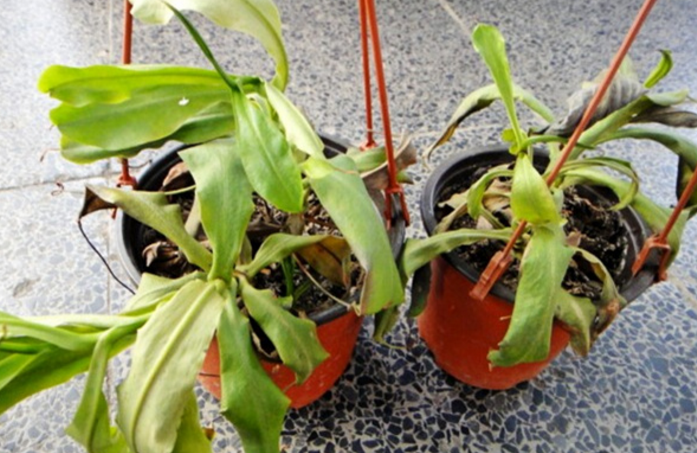
What to do when pitcher plant leaves turn yellow and withered:
1. Water yellowness
Yellowing of leaves caused by watering too frequently and too much, mainly shown as newly grown leaves turning yellow and losing their gloss, while old leaves show no obvious change.
Solution:
Stop watering immediately and control the water; in severe cases, directly repot and replace with new soil.
2. Drought yellowness
Drought yellowness means lack of water, shown as old leaves gradually turning yellow from the bottom of the plant upward, with new leaves growing slowly; if the lack of water lasts a long time, the whole plant will turn yellow and may even die.
Solution:
Water in time. If it has not been watered for a long time, do not water too much the first time; proceed gradually. Or use the immersion irrigation method to water.
3. Fertilizer yellowness
Fertilizer yellowness means fertilizer damage has occurred, caused by fertilizing too frequently or with too high a concentration. It is mainly shown as newly grown leaves being rather thick and glossy, but with an uneven leaf surface.
Solution:
Water in time to dilute the fertilizer strength in the soil. Or turn the soil and reduce fertilizing.
4. Starvation yellowness
The pitcher plant does not need too many nutrients to grow, but that does not mean it will grow well without fertilizing; if not fertilized for a long time, the leaves will also turn yellow. Long-term lack of fertilizing is shown as new stems and leaves turning yellow; if fertilizer is still not supplied in time, it will cause the plant to die.
Solution:
By no means apply a large amount of fertilizer at one time; stick to the principle of many times and small amounts when supplementing fertilizer.
5. Iron-deficiency yellow leaves
Just like people, the pitcher plant needs iron for its growth, and once it lacks iron, yellow leaves will appear. The leaf mesophyll will show obvious yellowing.
Solution:
Spray with an aqueous ferrous sulfate solution; after 3~4 times it will gradually improve. #p#Subtitle#e#
Why pitcher plant leaves curl:
1. Insufficient humidity
The pitcher plant needs 80% humidity to grow, but the humidity in a home living room does not reach the standard; even with frequent watering, the air humidity still cannot meet the growth requirements of the pitcher plant, causing the leaves to curl.
2. Too much fertilizer
The pitcher plant needs fertilizer for its own growth, but it does not necessarily need artificial fertilizing. The pitcher plant's insect-trapping pitchers catch insects, and it directly obtains nutrients from the decomposed matter of insects, meeting part of its own nutrient needs for growth. If too much fertilizer is applied, even once, the pitcher plant will react directly, with the leaves curling greatly and wilting.
3. Too much watering
Many plant lovers are not measured when caring for plants and do not know how to water. Water can accumulate unnoticeably at the bottom of the flowerpot, and under long-term waterlogged conditions, the pitcher plant itself is stimulated and reacts by wilting and curling.
How to handle curled leaves:
1. Increase humidity
Often sprinkle water and mist around the leaves to increase air humidity. If conditions allow, you can place the pitcher plant on a sunny bathroom windowsill; it will not need frequent misting and can still maintain good humidity. But make sure the bathroom has good sunlight and no odor.
2. Control fertilizer reasonably
Do not fertilize all the time; during growth, stick to the principle of small amounts many times, just sprinkle a thin layer of fertilizer on the soil surface, once every half month, and when the leaves curl, the fertilizer amount can be appropriately reduced.
3. Water correctly
Too much watering is actually the wrong watering method. With the wrong watering, the plant easily becomes wilted and the leaves curl.
That is all for the methods of handling yellowing pitcher plant leaves; if the pitcher plant leaves curl, there are also other methods that can handle it.
What to do when pitcher plant leaves turn yellow and withered
Water yellowness
Yellowing of leaves caused by watering too frequently and too much, mainly shown as newly grown leaves turning yellow and losing their gloss, while old leaves show no obvious change.
Solution
Stop watering immediately and control the water; in severe cases, directly repot and replace with new soil.
Drought yellowness
Drought yellowness means lack of water, shown as old leaves gradually turning yellow from the bottom of the plant upward, with new leaves growing slowly; if the lack of water lasts a long time, the whole plant will turn yellow and may even die.
Solution
Water in time. If it has not been watered for a long time, do not water too much the first time; proceed gradually. Or use the immersion irrigation method to water.
Fertilizer yellowness
Fertilizer yellowness means fertilizer damage has occurred, caused by fertilizing too frequently or with too high a concentration. It is mainly shown as newly grown leaves being rather thick and glossy, but with an uneven leaf surface.
Solution
Water in time to dilute the fertilizer strength in the soil. Or turn the soil and reduce fertilizing.
Starvation yellowness
The pitcher plant does not need too many nutrients to grow, but that does not mean it will grow well without fertilizing; if not fertilized for a long time, the leaves will also turn yellow. Long-term lack of fertilizing is shown as new stems and leaves turning yellow; if fertilizer is still not supplied in time, it will cause the plant to die.
Solution
By no means apply a large amount of fertilizer at one time; stick to the principle of many times and small amounts when supplementing fertilizer.
Iron-deficiency yellow leaves
Just like people, the pitcher plant needs iron for its growth, and once it lacks iron, yellow leaves will appear. The leaf mesophyll will show obvious yellowing.
Solution
Spray with an aqueous ferrous sulfate solution; after 3~4 times it will gradually improve.
What to Do When Pitcher Plant Leaves Turn Yellow and Withered, and Why Pitcher Plant Leaves Turn Yellow
The structure of the pitcher plant leaf is complex, divided into the petiole, leaf blade and tendril. The end of the tendril expands and curls back to form a pitcher shape, which can catch insects. The pitcher plant has a raceme, with small green or purple flowers, and the pitcher-shaped body at the leaf tip is a tool for catching insects. So what to do when pitcher plant leaves turn yellow and withered? Why do pitcher plant leaves turn yellow? Below, the editor of wed114 wedding website brings you the detailed content.
What to do when pitcher plant leaves turn yellow and withered
1. Water yellowness
Yellowing of leaves caused by watering too frequently and too much, mainly shown as newly grown leaves turning yellow and losing their gloss, while old leaves show no obvious change.
Solution:
Stop watering immediately and control the water; in severe cases, directly repot and replace with new soil.
2. Drought yellowness
Drought yellowness means lack of water, shown as old leaves gradually turning yellow from the bottom of the plant upward, with new leaves growing slowly; if the lack of water lasts a long time, the whole plant will turn yellow and may even die.
Solution:
Water in time. If it has not been watered for a long time, do not water too much the first time; proceed gradually. Or use the immersion irrigation method to water.
3. Fertilizer yellowness
Fertilizer yellowness means fertilizer damage has occurred, caused by fertilizing too frequently or with too high a concentration. It is mainly shown as newly grown leaves being rather thick and glossy, but with an uneven leaf surface.
Solution:
Water in time to dilute the fertilizer strength in the soil. Or turn the soil and reduce fertilizing.
What to do when pitcher plant leaves turn yellow and withered
4. Starvation yellowness
The pitcher plant does not need too many nutrients to grow, but that does not mean it will grow well without fertilizing; if not fertilized for a long time, the leaves will also turn yellow. Long-term lack of fertilizing is shown as new stems and leaves turning yellow; if fertilizer is still not supplied in time, it will cause the plant to die.
Solution:
By no means apply a large amount of fertilizer at one time; stick to the principle of many times and small amounts when supplementing fertilizer.
5. Iron-deficiency yellow leaves
Just like people, the pitcher plant needs iron for its growth, and once it lacks iron, yellow leaves will appear. The leaf mesophyll will show obvious yellowing.
Solution:
Spray with an aqueous ferrous sulfate solution; after 3~4 times it will gradually improve.