Treating a money tree with root rot this way, and can the soil left after it dies still be used?
The money tree (Pachira aquatica) is something many people love to grow; it looks so beautiful and is also very auspicious. Let's look at how to treat root rot in a money tree. Can the soil left after a money tree dies still be used:
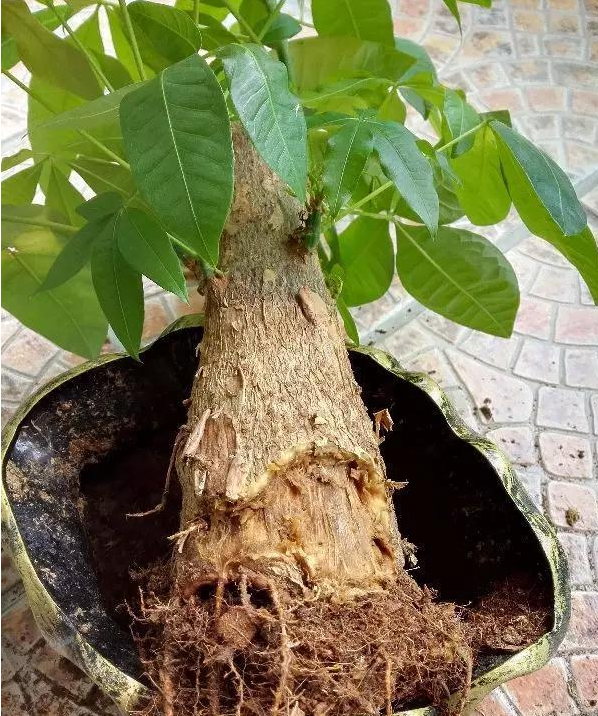
Treatment methods for money tree root rot:
1. Waterlogged potting soil
Cause:
Money tree root rot is generally caused by waterlogged potting soil. When the roots stay in an overly wet environment for a long time, their respiration is blocked and the roots become soft and rot.
Solution:
Water when the soil turns white, and when you water, water thoroughly; better dry than wet. Also, pay attention to the cleanliness of the flowerpot at ordinary times; if the small hole at the bottom of the pot is clogged, clear it promptly.
2. Pests and diseases
Cause:
When a money tree is infested by pests and diseases, root rot can also occur. Common diseases include powdery mildew, root rot, and root-knot nematodes parasitic in the soil.
Solution:
1. Strengthen cultivation management and avoid wounds;
2. Pay attention to controlling trunk and branch pests, prune diseased leaves in time and remove diseased residue from the surface soil;
3. Do not apply too much nitrogen fertilizer, and pay attention to ventilation and light.
Can the soil left after a money tree dies still be used:
Do not use the soil from a dead money tree to plant a new money tree; it will infect it and may also cause the new money tree to develop root rot. However, you can use this soil to grow other plants.
That is all for the methods of dealing with money tree root rot. Take good care of your money tree, and only then can it grow even better.
How to deal with money tree root rot, and rescue and treatment methods for money tree root rot
The money tree is a common household potted plant and office potted plant, but when it is not properly cared for, root rot can occur. Of course, do not panic when root rot appears in a money tree; when you find root rot in a money tree, you must first analyze what is causing it, and once you find the cause you can save it. Below is a summary of the causes of money tree root rot and rescue methods.
Signs of money tree root rot: bark peeling offAfter a money tree develops root rot, it will also show on the bark. Observant flower growers may notice that on the trunk of the money tree at home, near the roots, sticky secretions appear, along with white fuzz like mold; when touched lightly by hand, it feels soft, and the nearby bark will also peel off.
Causes of money tree root rot 1. Waterlogged potting soil causes money tree root rotMoney tree root rot is generally caused by waterlogged potting soil. When there is too much water in the pot, the roots stay in an overly wet environment for a long time, respiration is blocked, and the roots become soft and rot. There are mainly two reasons for waterlogged potting soil. First, watering too much; second, poor ventilation, too humid and stuffy.
2. Severe pests and diseases cause money tree root rotWhen a money tree is infested by pests and diseases, root rot can also occur. Because the water quality is poor and the potting soil is relatively wet, it is very easy for pests and diseases to breed, gnaw the roots, and cause rot. Common pests and diseases occurring on money trees include: powdery mildew, root rot, and root-knot nematodes parasitic in the soil.
How to deal with money tree root rot 1. Root treatmentWhen the plant's leaves turn yellow and the bark becomes soft, prune the roots in time. Cut off the yellowed leaves and keep only the buds. Take out the woody stem; do not deal with the root system first, and clean the soil off the bottom. Use scissors to prune the root system and cut off the rotten parts. If the rot is severe, directly cut off all the tangled root system. If the stem also begins to rot, remove the rotten parts, turning it into separate pieces.
Put the treated roots and stems into a solution of thiophanate-methyl or potassium permanganate and soak for 24 hours; or spray the wounds with procymidone. Then dry them in a cool, ventilated place and replant.
2. Medication treatmentWhen root rot and other water mold fungi are active, spray with propamocarb, hymexazol, metalaxyl, or ethylicin; the effect generally lasts about two weeks. In addition, for insect pests on money trees, non-fumigant nematicides such as fenamiphos, thionazin, miral, and phorate can be used for insecticidal treatment.
How to prevent money tree root rot 1. Choice of soil substrateTo grow a healthy money tree, you need to provide it with an excellent soil substrate, and it must have good air permeability. You can prepare a cultivation substrate with good air and water permeability by mixing medical pond mud, river sand, and decomposed sawdust in a 5:3:2 ratio; or mix mountain soil and river sand in a 7:3 ratio. You can also go to a flower market to buy special horticultural nutrient soil, as well as anti-rot and anti-root-decay granules.
2. Water according to the soil and in the right amountWatering is an important part of care and management. When caring for a money tree, you must strictly control the amount of water. Water when the soil turns white, and when you water, water thoroughly. A money tree does not need to be watered every day; at room temperature it can be watered once every five or six days, better dry than wet. Also, pay attention to the cleanliness of the flowerpot at ordinary times; if the small hole at the bottom of the pot is clogged, clear it promptly.
Symptoms of money tree root rot and how to remedy money tree root rot
What are the symptoms of money tree root rot? Money trees do not like water, and too much watering can cause root rot. So how do you remedy money tree root rot? Let's take a look below.
1. Symptoms of money tree root rot
1. Leaves turn yellow and fall off
Flower growers often ask: “My money tree's leaves suddenly turned yellow and began to fall off in large numbers. What is the reason?” It is very likely that your precious money tree has developed root rot. When a money tree has root rot, it hinders the normal transport of nutrients and water, thus causing leaves to turn yellow or even fall off.
2. Bark peeling off
The saying “people want face, trees want bark” sounds rough, but it is a “truth” in the plant world.
After a money tree develops root rot, it will also show on the bark. Observant flower growers may notice that on the trunk of the money tree at home, near the roots, sticky secretions appear, along with white fuzz like mold; when touched lightly by hand, it feels soft, and the nearby bark will also peel off.
2. Causes of money tree root rot
1. Waterlogged potting soil
Money tree root rot is generally caused by waterlogged potting soil. When there is too much water in the pot, the roots stay in an overly wet environment for a long time, respiration is blocked, and the roots become soft and rot.
There are mainly two reasons for waterlogged potting soil. First, watering too much; second, poor ventilation, too humid and stuffy.
2. Pests and diseases
When a money tree is infested by pests and diseases, root rot can also occur. Because the water quality is poor and the potting soil is relatively wet, it is very easy for pests and diseases to breed, gnaw the roots, and cause rot.
Common pests and diseases occurring on money trees include: powdery mildew, root rot, and root-knot nematodes parasitic in the soil.
3. How to remedy money tree root rot
1. Root treatment
When the plant's leaves turn yellow and the bark becomes soft, prune the roots in time. Cut off the yellowed leaves and keep only the buds. Take out the woody stem; do not deal with the root system first, and clean the soil off the bottom.
Use scissors to prune the root system and cut off the rotten parts. If the rot is severe, directly cut off all the tangled root system.
If the stem also begins to rot, remove the rotten parts, turning it into separate pieces.
Put the treated roots and stems into a solution of thiophanate-methyl or potassium permanganate and soak for 24 hours; or spray the wounds with procymidone. Then dry them in a cool, ventilated place and replant.
2. Medication treatment
When root rot and other water mold fungi are active, spray with propamocarb, hymexazol, metalaxyl, or ethylicin; the effect generally lasts about two weeks.
In addition, for insect pests on money trees, non-fumigant nematicides such as fenamiphos, thionazin, miral, and phorate can be used for insecticidal treatment.
4. How to prevent root rot from occurring
1. Soil substrate
To grow a healthy money tree, you need to provide it with an excellent soil substrate, and it must have good air permeability.
You can prepare a cultivation substrate with good air and water permeability by mixing medical pond mud, river sand, and decomposed sawdust in a 5:3:2 ratio; or mix mountain soil and river sand in a 7:3 ratio.
You can also go to a flower market to buy special horticultural nutrient soil, as well as anti-rot and anti-root-decay granules.
2. Water according to the soil
Watering is an important part of care and management. When caring for a money tree, you must strictly control the amount of water.
Water when the soil turns white, and when you water, water thoroughly. A money tree does not need to be watered every day; at room temperature it can be watered once every five or six days, better dry than wet. Also, pay attention to the cleanliness of the flowerpot at ordinary times; if the small hole at the bottom of the pot is clogged, clear it promptly.
Here, the editor adds one more thing: according to feedback from many flower growers, money trees are extremely prone to dying from root rot caused by overwatering during cultivation. So if you do not know how to control the amount of water, then you must resist the urge to water your money tree frequently.