How to Propagate Air Plants from Seed, and Do They Die After Blooming?
Air plants (Tillandsia) are a very popular plant these days, super easy to grow, and able to survive in the air. Let's take a look at how to sow and propagate air plants. Do air plants die after blooming?
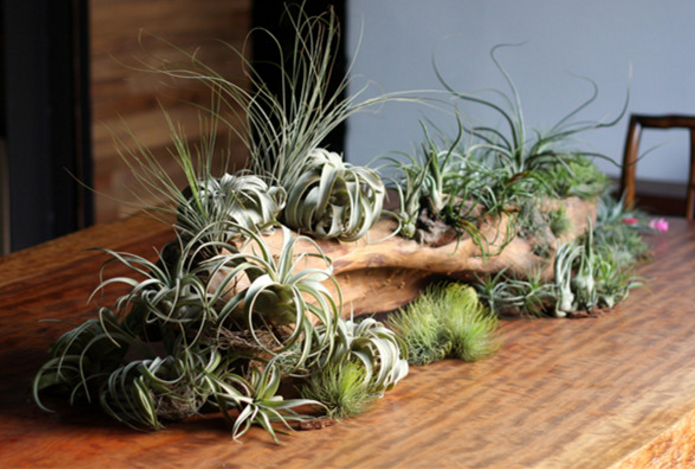
How to propagate air plants from seed:
1. Pollination
Air plant flowers are quite beautiful, but they are actually not common. If you find that your air plant has bloomed, this is a good opportunity. You can pollinate it, which will promote the air plant to set seed, and once the seeds have formed, you can sow them.
For pollination, you can generally use self-pollination, sticking the pollen from the male stamens of the same plant onto the female stigma, or you can cross-pollinate. However, when pollinating, seeds will not successfully form every time; generally, the success rate of cross-pollination is a bit higher.
When pollinating, be careful not to get water on the stamens and stigma. After pollination, it generally takes a very long time for seeds to form.
2. Sowing
Once you have obtained air plant seeds, you can start sowing, but this process is extremely long and may take 3——5 years, or even longer.
Sowing can be done every year from March——November. You can place the seeds in a humid environment, keep the temperature above 20°C, and provide good indirect light, growing them in a sealed container. Generally, after 5 days, you can see the seeds turn green, which means the seeds have begun to germinate.
3. Seedling Care
After the air plant seeds germinate, all you need to do is maintain suitable humidity and place them in an environment with indirect light to let them grow naturally. Note that in summer and winter, when temperatures are too high or too low, measures must be taken to prevent the seedlings from dying.
Do air plants die after blooming:
Yes, but they will not die immediately; after blooming they will grow for another 1-2 years. But you can take this opportunity to propagate offspring.
When the air plant's flowers begin to wither, it is recommended to cut off these withered flower stalks, as this will produce more pups. When the pups that are to be divided begin to sprout, the leaves at the base of the plant will begin to loosen and appear withered. At this time, do not cut off the leaves, because these places are where the pups' growth buds are located. Wait until the pups have grown and can be divided, then the mother plant can rest.
That's all for the introduction to air plant seed propagation methods. Air plants will die after blooming, but not immediately, so it is still best to propagate offspring right away.
How to Propagate Air Plants from Seed
Pollinating Air Plants
Air plant flowers are quite beautiful, but they are actually not common. If you find that your air plant has bloomed, this is a good opportunity. You can pollinate it, which will promote the air plant to set seed, and once the seeds have formed, you can sow them.
For pollination, you can generally use self-pollination, sticking the pollen from the male stamens of the same plant onto the female stigma, or you can cross-pollinate. However, when pollinating, seeds will not successfully form every time; generally, the success rate of cross-pollination is a bit higher.
When pollinating, be careful not to get water on the stamens and stigma. After pollination, it generally takes a very long time for seeds to form.
Sowing Air Plants
Once you have obtained air plant seeds, you can start sowing, but this process is extremely long and may take 3-5 years, or even longer.
Sowing can be done every year from March to November. You can place the seeds in a humid environment, keep the temperature above 20°C, and provide good indirect light, growing them in a sealed container. Generally, after 5 days, you can see the seeds turn green, which means the seeds have begun to germinate.
Air Plant Seedling Care
After the air plant seeds germinate, all you need to do is maintain suitable humidity and place them in an environment with indirect light to let them grow naturally. Note that in summer and winter, when temperatures are too high or too low, measures must be taken to prevent the seedlings from dying.
How Often to Water Air Plants, and How to Propagate Air Plants from Seed
Speaking of air plants, many people may not know what they are. In fact, air plants can be said to be the only plants on Earth that do not need soil and grow entirely in the air. An occasional spray of water is enough for them to grow very well, and they can also produce very gorgeous flowers, giving them extremely high ornamental value. So how should air plants be watered?
How Often to Water Air Plants
1. Misting
Misting is used relatively rarely and is best reserved for winter only; in summer, mist occasionally to lower the temperature a little. If misting is not controlled well, water easily accumulates in the leaf center and at the leaf base where it is hard to notice, which instead makes the heart prone to rot. Also, when misting, more evaporates than is absorbed, and misting too little has no effect.
2. Soaking
This is one of the more commonly used watering methods. Do it about once every 7-10 days, changing the length of time according to the season: within 4 hours in spring, no more than 2 hours in summer, at most 6 hours in autumn, and finished within 2 hours in winter. Pay attention to the timing of soaking in summer; when temperatures are high, it is best not to soak.
3. Dipping
This is the most commonly used method: prepare a bucket of water, pick up the air plant and swish it in the water, just like swishing meat slices when eating hot pot, until the air plant's leaves are completely soaked. Silver-gray leaves are easy to spot; when the leaves turn grayish-green, you can take it out and gently shake it off, or hang it upside down for a while, then return it to its normal care spot.
How to Propagate Air Plants from Seed
1. Pollinate the Air Plant
Air plant flowers are quite beautiful, but they are actually not common. If you find that your air plant has bloomed, this is a good opportunity. You can pollinate it, which will promote the air plant to set seed, and once the seeds have formed, you can sow them.
For pollination, you can generally use self-pollination, sticking the pollen from the male stamens of the same plant onto the female stigma, or you can cross-pollinate. However, when pollinating, seeds will not successfully form every time; generally, the success rate of cross-pollination is a bit higher.
When pollinating, be careful not to get water on the stamens and stigma. After pollination, it generally takes a very long time for seeds to form.
2. Sow the Air Plant
Once you have obtained air plant seeds, you can start sowing, but this process is extremely long and may take 3-5 years, or even longer.
Sowing can be done every year from March to November. You can place the seeds in a humid environment, keep the temperature above 20°C, and provide good indirect light, growing them in a sealed container. Generally, after 5 days, you can see the seeds turn green, which means the seeds have begun to germinate.
Air Plant Growth Habits
Air plants originally grow in tropical and subtropical rainforests or dry mountain areas at altitudes of 100 m to 5,000 m, attached to tree trunks, rocks and cliff crevices, with a few growing on cacti. Unlike other plants, they mainly absorb water through the silver-gray fuzzy scales on their leaf surfaces, do not need soil, and do not need to be placed in water; a spray of water is enough for them to survive.
Air plants tolerate drought and strong light, while a small number prefer humid environments. Most of the more advanced air plants appear grayish-white because their leaf surfaces are covered with fuzzy trichomes, which serve to reflect light, avoid sunburn and prevent water evaporation. The more exposed they are to sunlight, the denser their trichomes become.
Notes on Growing Air Plants
A reminder to everyone: never put air plants in a terrarium. Air plants need a large amount of air circulation and will rot in a sealed terrarium. If the air is too dry, you can soak the plant in water for one hour, then shake the water off the leaves. Note that when there is water on the leaves, never put the plant in the sun.
Usually the winter temperature should be kept above 5°C. Generally, household temperatures in winter are around 20°C, which is just right, but when growing indoors, do not place them near air conditioning vents or radiators, and do not let cold wind blow directly on them.
Through the above content, I believe everyone has gained some understanding of air plants. Many people like to grow a few air plants at home, not only as decoration, but they also have a very good effect on air purification!