What to Do When a Kumquat Tree Drops Its Leaves? Master the Growing Methods and Precautions
Speaking of kumquats, many people really love eating them - they are truly delicious beyond words. Let's take a look at the growing methods and precautions for kumquat trees. What to do when a kumquat tree drops its leaves:
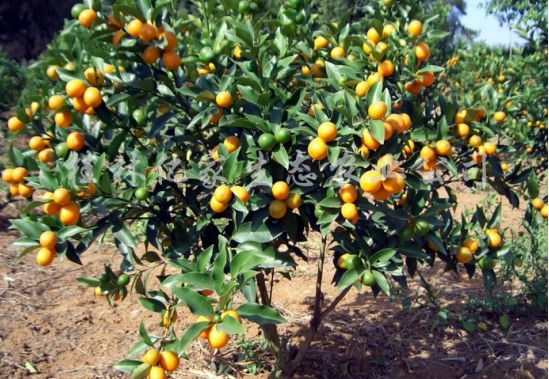
Growing methods and precautions for kumquat trees:
Daily care:
1. During daily care of the kumquat tree, be careful to protect it from rain during the flowering period, and do not spray water on open flowers. Kumquats like a warm, humid environment with plenty of sunlight, so remember to place it in a spot with ample sunlight;
2. During the flowering and fruit-setting stages, kumquats should not be given heavy watering. Water normally only after the fruit has set, but water must not accumulate in the pot, as this may cause fruit drop.
Care after the New Year:
1. After the New Year, remember to change the soil for the New Year kumquat. Remove half of the old soil, trim away part of the fine side roots around the edges, but be careful never to damage the main root. Add some new soil, apply a multi-element fertilizer around the inside of the pot, and firm the soil down.
2. Remove all the fruit, prune part of the branches and leaves, cutting the height down by about one third. Cut away dead branches and withered leaves, keep the strong branches and leaves, and let it grow new buds.
3. When watering, water thoroughly until water flows out of the drainage hole at the bottom of the pot. Water once every 3 to 4 days, and do not water if the soil is not dry.
4. Prevent pests and diseases, and spray flower medicine promptly.
5. Control moisture well, remove weeds promptly, and loosen the soil appropriately to promote normal growth of the New Year kumquat. By the Spring Festival period, the fruit will begin to ripen.
Precautions:
Indoor New Year kumquats generally need to be taken out to the balcony about every 3 days to catch some dew, get some fresh air, and bask in the sun a little. If kept indoors for too long, it will affect the growth of the New Year kumquat, causing leaf drop and even withering and death.
Kumquats like slightly acidic soil. In the north, potted plants can be watered once a week with fertilizer water, or given a top dressing of potassium dihydrogen phosphate, or watered weekly with a 200—250 times vinegar-water solution combined with fertilizing. This helps the leaves become deep green, the growth lush, and the fruiting abundant.
What to do when a kumquat tree drops its leaves:
Leaf drop in kumquat trees is generally caused by too much watering, especially in winter. Do not water too much, or it will freeze to death. Also, keep the indoor air slightly humid, and when the sun comes out, let the kumquat tree go outside to bask in the sun.
That is all for the growing methods for kumquat trees and how to deal with leaf drop. Why not get one for your own home right away?
Care measures and precautions for kumquat trees
1. Light
Kumquat trees like sunlight and a warm, humid environment, so it is best to place the kumquat tree in a spot with ample sunlight. However, in summer, pay attention to moderate light exposure - only then will the kumquat tree grow well.
2. Pruning
For kumquat trees, pruning is a very important matter. Be sure to prune according to the requirements so that the kumquat tree keeps a beautiful shape.
3. Fertilizing
Kumquat trees like fertilizer, so they should be fertilized frequently during cultivation, about once every 10 days.
4. Watering
Kumquat trees are not tolerant of waterlogging, so there must be no standing water when watering, otherwise the kumquat tree will suffer root rot. It is best to keep the pot soil moist.
5. Pest and disease control
The most common problem for kumquat trees is pest damage, so once pests are found, spray insecticide - this is relatively convenient.
Well, that is all for today's content. I hope the growing methods and precautions for kumquat trees provided here can help you solve the situation of leaf drop in kumquat trees. Thank you for reading!
What to do when a kumquat tree drops its leaves
Chinese scientific name: kumquat. Alternative names: jinzao, jindan, jindan, jingan, Mashui tangerine, kumquat, kumquat, crisp-skin tangerine. Division: Angiosperms. Class: Original perianth class. Suborder: Rutales. Subfamily: Citroideae. Subspecies: kumquat. English name: kumquat. Latin scientific name: Fortunella margarita (Lour.) Swingle. Kingdom: Plantae. Class: Dicotyledons. Order: Rutales. Family: Rutaceae. Genus: Fortunella. Distribution area: Yangshuo, Guangxi, Jinshuo kumquat, Qinling, south of the Yangtze River.
Light: Likes an environment with ample sunlight, slightly shade-tolerant.
Temperature: Suitable growing temperature 22-28°C.
Soil: Likes fertile, loose, acidic sandy loam. Pot soil is best mixed with 4 parts leaf mold, 5 parts sandy soil, and 1 part cake fertilizer.
Watering: In the spring growing season, keep the pot soil moist. When summer temperatures are high, water in the morning and evening, and frequently spray water around the plant and on the leaves to increase air humidity. After the start of autumn, reduce watering. In winter, keep the pot soil moist but on the dry side.
Fertilizing: In spring, apply fully decomposed cake fertilizer water once about every 10 days. In early summer, apply alum fertilizer water once every 7-10 days to increase the acidity of the soil. Before autumn, apply enough fertilizer mainly based on phosphorus, and spray 1-2 times with a 0.1%-0.2% potassium dihydrogen phosphate solution to increase the fruit-setting rate. In winter, apply to the leaf surface once every half month a mixture of 0.1% magnesium sulfate, 0.3% urea, and 0.2% potassium dihydrogen sulfate.
Precautions
Avoid spraying water during the flowering period. Protect from rain during the flowering period, and do not spray water on open flowers. This is neither good for pollination nor good for preventing flower rot. Avoid insufficient light. Kumquats like a warm, humid environment with ample sunlight. If placed indoors in a spot with insufficient sunlight for a long time, the plant will grow weakly, affecting flower bud differentiation and fruiting. Avoid soil alkalization. Kumquats like acidic soil. In the north, potted plants can be watered once a week with fertilizer water, or given a top dressing of potassium dihydrogen phosphate, or watered weekly with a 200-250 times vinegar-water solution combined with fertilizing. This helps the leaves become deep green, the growth lush, and the fruiting abundant. Kumquat trees require some care knowledge to maintain their ornamental value. The growing methods and precautions introduced above are hoped to be helpful to friends who want to grow kumquat trees!