What to Do When Umbrella Papyrus Leaves Turn Yellow? Detailed Guide to Growing Methods and Precautions
When it comes to umbrella papyrus, this is a water-grown plant found in many places, and its survival rate is very high. Let's look at the growing methods and precautions for umbrella papyrus. What to do when umbrella papyrus leaves turn yellow:
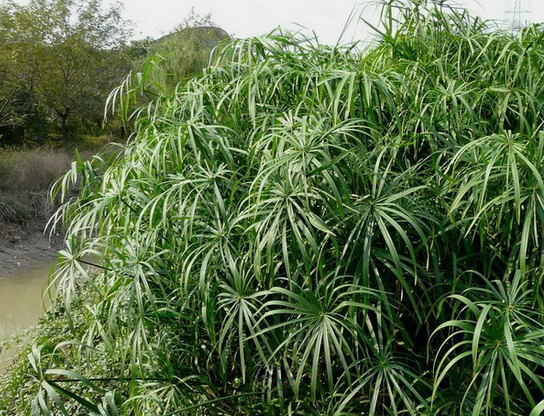
Growing methods and precautions for umbrella papyrus:
Soil-cultured umbrella papyrus:
1. Soil: Vermiculite, river sand, or loose potting soil all work; keep it somewhat moist;
2. Temperature and light: During high summer temperatures, maintain air humidity and keep the potting soil moist; do not allow direct strong sunlight. In winter, room temperature should not fall below 5°C. Remember to place umbrella papyrus in full sun or partial shade; in summer, placing it in partial shade is more beneficial for its growth.
3. Fertilizing: Apply dilute liquid fertilizer once every two weeks. In May, you can apply 1 watering of 400 ppm paclobutrazol, which can effectively control excessive height growth;
4. Watering: If using tap water to water umbrella papyrus, it must be left to settle before use. You can frequently mist the leaf surface.
Hydroponic umbrella papyrus:
1. First, cut the bottom of the umbrella papyrus at a 45-degree angle;
2. Place the cut umbrella papyrus into a bottle with water. Do not use too much water; the portion below the leaves down to the water level should ideally be exposed by about 1.5 cm;
3. It is recommended to change the water every three days; if conditions permit, ideally once a day;
4. It is best to place umbrella papyrus in a more shaded spot; do not expose it to blazing sun.
Precautions:
If root rot occurs, the rotting part must be cut off promptly to prevent the rotting area from expanding. It is best to cut at the bamboo node.
As long as there is a certain amount of light every day, good air circulation, and frequent watering, it can grow stout, lush, and emerald green. It looks elegant and refined, giving people a beautiful enjoyment.
When the seedlings are weak, you can water with a small amount of human urine or chemical fertilizer diluted in water. Once the umbrella papyrus grows a bit larger, we can also add small decorative items such as miniature rockeries to enhance its appearance.
What to do when umbrella papyrus leaves turn yellow:
If the umbrella papyrus was just bought and its leaves are turning yellow, that is normal. After all, it takes time to adapt to a new environment. You should add a little nutrient solution to the umbrella papyrus, give it some light, and fertilize once every half month. If the temperature is below 5°C, you should still cover it with a plastic bag. Also, watering should not be done every day; generally, water once every 2 to 3 days.
Now that the growing methods for umbrella papyrus and how to handle yellowing leaves have been covered, go get a few plants for your home right away.
What to Do When Umbrella Papyrus Leaves Turn Yellow: Causes and Solutions for Yellowing and Drying Leaves
Umbrella papyrus is a relatively common plant in people's daily lives, with good ornamental value, and it can be grown both in pots and on a large scale. However, no matter how ornamental a plant is, yellowing leaves will affect its overall aesthetic appeal. So what to do when umbrella papyrus leaves turn yellow? How do you solve yellowing and drying umbrella papyrus leaves? Below, the editor will walk you through it.
1. What to do when umbrella papyrus leaves turn yellow: Find the cause
If you want to know what to do when umbrella papyrus leaves turn yellow, we must first find the cause. Only by knowing what is causing it can we address it specifically. Causes such as too much light, improper fertilizing or watering, and so on all lead to this phenomenon. As for the specific solutions, they are introduced below. Let's take a look.
2. Causes of yellowing and drying umbrella papyrus leaves, with solutions
1. Improper fertilizing: dilute before applying
Fertilizer is one of the main nutrients during the growth of umbrella papyrus. If we fertilize too little or the fertilizer concentration is too high, it will cause the leaves to turn yellow. If too little fertilizer is applied, it will turn yellow and wither due to insufficient nutrients; if the fertilizer concentration is too high, it will burn the plant and cause yellowing.
Solution: Umbrella papyrus has a high demand for fertilizer during growth. Only after fertilizing will its growth improve noticeably. Spring and summer are its peak growing seasons, so we should fertilize frequently. However, the fertilizer concentration must not be too high when fertilizing; it must be diluted with water before application. If the concentration is too high, it can easily burn the plant.
2. Too little watering: keep the soil moist / avoid waterlogging
Umbrella papyrus prefers a warm and humid environment. When we grow it, especially after it enters the growing season, its demand for water is very high. If we keep forgetting to water it and cause the plant to lack water, it will cause the leaves to turn yellow.
Solution: If the problem is caused by too little watering, we should not immediately flood it with water. We need to do it gradually. If too much water is given at once, it can easily cause root rot. Generally, when the weather is relatively dry, watering once every 3-5 days is sufficient.
3. Too much light: provide shade in summer
Umbrella papyrus is a light-loving plant. If the light in spring and autumn is relatively suitable, we can grow it outdoors and let it receive light all day. However, it is rather afraid of strong light, so after summer arrives, shading is still necessary. Otherwise, too much light can easily scorch the plant and cause yellowing leaves.
Solution: If the yellowing of umbrella papyrus leaves is caused by too much light, we should promptly move it indoors to a semi-shaded spot for growing. After growing it this way for a period, the leaves will gradually turn green again.
4. Pests and diseases: handle promptly
In the process of growing umbrella papyrus, if it is not grown properly, problems such as pests and diseases easily occur. These problems are extremely harmful to the plant, not only causing the leaves to turn yellow but in severe cases causing the plant to wither and die.
Solution: If this problem is caused by pests and diseases, we must handle it promptly, because the longer it drags on, the greater the harm to the plant. The specific treatment methods are introduced by the editor in the article on pest and disease control for umbrella papyrus. You can take a look.
5. Environmental maladjustment: a normal phenomenon
If our umbrella papyrus is a mature plant bought from outside, it is very likely to develop yellowing leaves right after being brought home. This is a normal phenomenon, because it reflects maladjustment to the environment and requires an adaptation period. With normal care, it will gradually turn green again.
Growing Methods and Precautions for Umbrella Papyrus: A Collection of Tips on How to Grow Umbrella Papyrus
Bamboo has always given people a feeling of nobility and elegance. Many people are particularly fond of bamboo, even using it in home decor. Umbrella papyrus is a relatively common ornamental bamboo plant. It can be grown in pots or hydroponically, paired with stones and miniature rockeries, and placed in a study, living room, etc., giving a distinctive charm. So how do you grow umbrella papyrus? The editor will walk you through the growing methods and precautions for umbrella papyrus:
Basic information about umbrella papyrus:
Umbrella papyrus (scientific name: Phyllostachys heteroclada Oliver) likes to grow in water, hence its name. It belongs to the sedge family (Cyperaceae) and is a perennial herbaceous plant. It is a dual-purpose bamboo grown mainly for its culms and also for its shoots. The culm is slender, with long internodes and a green color; the rhizome internodes are relatively short, and the root system is well developed. The material is flexible, springy, extremely strong in fiber, and smooth on the surface. Wild plants generally have culms 1 to 2 m tall and about 1 cm in diameter. The sheath tips are hairless, and the skin is dark green. The sheath leaves are triangular or lanceolate. The branchlets are solitary, with 3 to 5 leaves. The spikelets contain 3 to 4 florets. After umbrella papyrus blooms, the leaves remain green and the underground parts do not die, unlike most bamboos, which die after flowering. Therefore, it has good ornamental value.
Growing methods for umbrella papyrus:
Growing methods for soil-cultured umbrella papyrus:
1. Soil:It has low requirements for soil; fertile, slightly clayey soil is suitable.
2. Watering:During the growing season, keep the soil moist, or plant it directly in a watertight pot and keep about 5 cm of water in the pot. This saves the trouble of watering every day. When temperatures are high, also pay attention to misting the leaves to maintain humidity.
3. Light:It adapts to a wide range of light conditions and can grow well in full sun or partial shade. Avoid exposure to blazing sun. Placing it in partial shade in summer is more beneficial for its growth and can keep the leaves tender green and not aging.
4. Temperature:It is not cold-tolerant. In the East China region, it can overwinter outdoors with slight protection. Winter temperatures should not fall below 5°C.
5. Fertilizing:Fertilize with thin fertilizer and apply frequently. In spring and summer, you can apply a 1% compound fertilizer in water. Avoid over-fertilizing, which easily causes leaves to turn yellow.
6. Pests and diseases:Leaf blight and red spider mite damage commonly occur. For leaf blight, spray with a 50% thiophanate 1000x solution; for red spider mites, spray with a 40% dimethoate emulsifiable concentrate 1500x solution.
Growing methods for hydroponic umbrella papyrus:
It can be grown in soil in a flowerpot or hydroponically in a water-filled container. For hydroponic growing, you can use lake water, river water, well water, rainwater, or tap water that has been left to settle for 24 hours; ideally acidic water from electrolyzed ionized water. Do not use mineral water. You can place several colored glass marbles or pebbles in the bottle to stabilize the center of gravity and increase its beauty.
In summer, evaporation is relatively high. Pay attention to topping up and changing the water to keep the water quality free from contamination. Autumn is dry, so prevent it from being blown over by wind. You can frequently mist the leaves and let it receive night dew in the evening.
Umbrella papyrus does not need much fertilizer. Just dissolve one or two fertilizer tablets in water and pour it on.
When growing umbrella papyrus hydroponically, the water surface should contact the upper part of the roots at 3 cm; do not submerge too much, to avoid root rot affecting respiration. If the stem rots, the rotting part must be cut off promptly to prevent the rotting area from expanding. It is best to cut at the bamboo node. Generally, once umbrella papyrus has rooted, rot is unlikely to occur. If rot does occur, besides cutting off the rotting part, you can also put some Lianglübao in the water to promote rooting.
Precautions for growing umbrella papyrus:
1. Umbrella papyrus is best grown in water in spring, summer, and autumn; in winter, it can be switched to pot culture. With frequent watering, it can grow stout, lush, and emerald green.
2. In high-temperature summer seasons, maintain relatively high air humidity and keep the potting soil moist. Avoid direct strong light. Apply dilute liquid fertilizer once every two weeks. In winter, room temperature should not fall below 5°C. If fertilizer and water are insufficient, the plant is overcrowded, the temperature is too low, or the potting soil is dry, the stems and leaves will turn yellow and wither.
3. During the peak growing season, fertilize 1-2 times per month. To control height, in May you can apply 1 watering of 400 ppm paclobutrazol, which can effectively control excessive height growth of umbrella papyrus.
4. Although umbrella papyrus likes water, it cannot be left soaking in stagnant water; flowing water is better.
5. Umbrella papyrus prefers acidic and slightly acidic water quality. Because most areas in the north have soil with relatively high salinity and alkalinity, after being grown for a period, the bamboo will gradually lose green and turn yellow due to a lack of soluble iron that the plant can absorb. You can apply 0.2% ferrous sulfate once a month.
Propagation methods for umbrella papyrus:
Umbrella papyrus is commonly propagated by division and cuttings, and can also be grown from seed. Cuttings are taken from June to July; healthy branches selected before flowering root most easily. Take 3-5 cm from the stem tip, and shorten the whorled leaves by half to reduce water evaporation. Then insert into sand or vermiculite, press the leaves against the substrate, water thoroughly, and keep the substrate moist afterward. Roots will form in 20 days. The root system is fine, so root division propagation can be done. Division can be carried out year-round, but mid-to-late March when repotting is most suitable. Sowing in April also easily germinates into seedlings.
Umbrella papyrus has upright stems and luxuriant leaves, with clear layers, elegant and natural, evergreen all year round. It is an excellent indoor ornamental plant and is highly favored by bonsai enthusiasts. Placed in the home, it also appears clean and elegant, showcasing the owner's taste. The growing methods and precautions for umbrella papyrus are shared here. We hope they are helpful to everyone. For more related information, please continue to follow the Flowers column.
More reading:
Early Bamboo Picture Gallery Early Bamboo Pictures to Enjoy and Information Introduction