What to Do When Cineraria Leaves Wilt? Detailed Guide to Growing Methods and Precautions
Cineraria really is very beautiful, and it looks a bit like a chrysanthemum, only with more colors. Let's take a look at what the growing methods and precautions for cineraria are. What to do when cineraria leaves wilt:
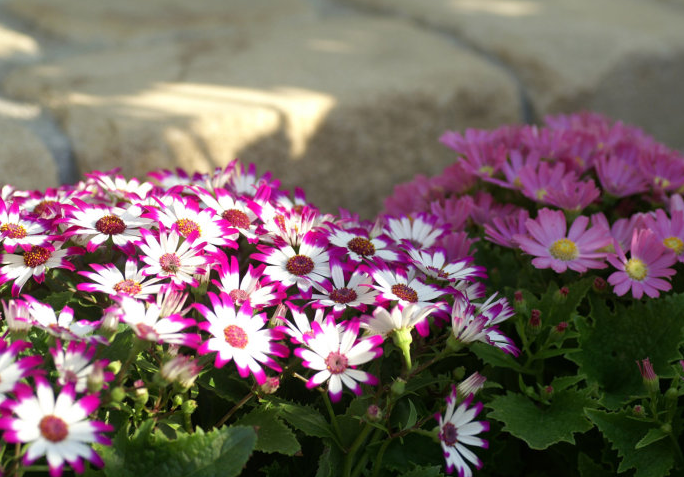
Growing methods and precautions for cineraria:
Also known as rich chrysanthemum, cucumber flower. The leaves are large and shaped like cucumber leaves, green and glossy. The flowers are terminal, with numerous capitula aggregated into corymbs, and the inflorescences densely cover the top of the branches, often forming a pot-bottom shape. The flower colors are rich; all colors except yellow are present, and there are also bicolors with red and white alternating.
1. Soil: The soil for planting cineraria should be sandy soil containing humus and with good drainage, leaning toward neutral and slightly acidic soil.
2. Watering: Keep sufficient moisture, but the potting soil must not be too wet, so usually watering should depend on whether the potting soil is dry or wet. Water again after it dries, about once every 2-3 days. You can spray the leaf surface with clean water once a day.
If the weather is relatively hot, we can spray water on the leaves to lower the temperature and increase air humidity. After flower buds appear, watering should be controlled, and the flowerpot should be placed in a cool place at 8-12°C.
3. Light: During the growing period, cineraria relatively likes sunlight, so it should not be shaded. It is best to place it by a sunny window, and sometimes turn the flowerpot so that the branches and leaves receive light evenly.
4. Temperature: Cineraria grows best under conditions of 15-20°C.
5. Fertilizing: In addition to applying base fertilizer when planting, during the growth process apply a thin cake fertilizer once every 7-10 days. After flower buds appear, 1-2 additional applications of 1000-fold potassium dihydrogen phosphate solution may be given. Fertilizing should continue until flowering (do not fertilize on rainy days).
Remember: when fertilizing, do not get it on the leaves. If it gets on the leaves, wash it off immediately!
What to do when cineraria leaves wilt:
1. If cineraria leaves wilt, treat the cause accordingly. If it is due to insufficient light or overly strong light, then light should be controlled well. It is best to have 8 hours of sunlight per day, and place it in a well-ventilated spot with scattered light for care. In winter, when there are many rainy and snowy days, even more care should be taken to prevent insufficient light.
2. In cultivation and management, the spacing between pots should be increased as the cineraria grows. The plants must not be allowed to grow too densely and shade each other, lest the cineraria become leggy. Cineraria has relatively strong phototropism, so the pot should often be turned so that the plant does not grow toward any one side, keeping the plant even all around to improve its ornamental value.
3. To prevent cineraria leaves from wilting, fertilizer and water should be controlled well. Generally, for potted plants, apply liquid fertilizer about once every 2 weeks, diluted with water before use, using more phosphorus and potassium fertilizer and less nitrogen fertilizer. The amount of water should also be controlled well; the potting soil must not be too dry or waterlogged, so as not to affect normal leaf growth.
4. To keep cineraria leaves from wilting, the temperature should also be controlled well. Cineraria likes warmth and is not tolerant of high temperatures; it grows best under conditions of 15-20°C. In spring, summer, and autumn, it should be placed in a cool, ventilated place for care, and in summer attention should be paid to shading. The temperature must not be allowed to be too high or too low, as this will affect leaf growth.
That is all for the introduction to cineraria growing methods. If the leaves wilt, there is no need to worry; they can be revived.
What to Do When Cineraria Leaves Wilt: Causes and Solutions for Wilting Cineraria Leaves
Cineraria is one of the main ornamental potted flowers during New Year's Day and the Spring Festival. In growing cineraria, what should be done when the leaves wilt? Let's take a look below at the knowledge on the causes and solutions for wilting cineraria leaves.
Causes of wilting cineraria leaves:
1. When cineraria leaves wilt, the first possible cause may be a problem with moisture and humidity. Cineraria likes humidity and has relatively high humidity requirements. If during cultivation the potting soil becomes too dry, then the cineraria leaves are very likely to remain in a wilted state, which is extremely unfavorable to leaf growth and can easily cause the leaves to turn yellow and even lead to pest problems.
2. Cineraria is a short-day, light-loving flower, and light is naturally also one of the important factors affecting its leaf growth. Sufficient light is what enables cineraria to have abundant flowers and luxuriant leaves, enhance disease resistance, and reduce the occurrence of pests and diseases. If light is insufficient, the flowers of cineraria will grow, the stems will become slender, and the flower color will be pale and improper, affecting its appearance. If light is too strong, the cineraria leaves will slowly wilt and gradually dry up and turn yellow.
3. Temperature is also an important factor affecting wilting cineraria leaves. Cineraria is suitable for a growing temperature of 15-20°C. If the temperature is too high, branches and leaves will grow excessively and flowering will be affected. If the temperature is too low, growth will stop and cold damage will occur. Temperature must be controlled well; once cineraria leaves wilt, their ornamental value is no longer as good.
4. Cineraria leaf growth is also related to fertilizer. If during cultivation fertilization is moderate, cineraria leaves can be moist, fresh, and green, fresh and pleasant. If too much or too little fertilizer is applied and the amount is not controlled well, and ventilation is also poor, then the cineraria leaves are likely to wilt and eventually lead to death.
Solutions for wilting cineraria leaves:
1. If cineraria leaves wilt, treat the cause accordingly. If it is due to insufficient light or overly strong light, then light should be controlled well. It is best to have 8 hours of sunlight per day, and place it in a well-ventilated spot with scattered light for care. In winter, when there are many rainy and snowy days, even more care should be taken to prevent insufficient light.
2. In cultivation and management, the spacing between pots should be increased as the cineraria grows. The plants must not be allowed to grow too densely and shade each other, lest the cineraria become leggy. Cineraria has relatively strong phototropism, so the pot should often be turned so that the plant does not grow toward any one side, keeping the plant even all around to improve its ornamental value.
3. To prevent cineraria leaves from wilting, fertilizer and water should be controlled well. Generally, for potted plants, apply liquid fertilizer about once every 2 weeks, diluted with water before use, using more phosphorus and potassium fertilizer and less nitrogen fertilizer. The amount of water should also be controlled well; the potting soil must not be too dry or waterlogged, so as not to affect normal leaf growth.
4. To keep cineraria leaves from wilting, the temperature should also be controlled well. Cineraria likes warmth and is not tolerant of high temperatures; it grows best under conditions of 15-20°C. In spring, summer, and autumn, it should be placed in a cool, ventilated place for care, and in summer attention should be paid to shading. The temperature must not be allowed to be too high or too low, as this will affect leaf growth.
More informationCineraria Growing Methods: How to Grow Cineraria
There are extremely many horticultural varieties of cineraria. They can roughly be divided into four types: large-flowered, star-shaped, intermediate, and multi-flowered. Within different types there are also varieties with different degrees of double flowers and different heights. Today let's learn about cineraria growing methods!
Cineraria growing methods
I. Cineraria growing methods
Cineraria is a plant in the Asteraceae family. It was first produced in the Canary Islands and has now spread throughout the world. It has abundant varieties, including large-flowered, small-flowered, double-flowered, and multi-flowered types. The flower colors include red, snow blue, white, purple, pink, blue, and various mixed colors. It generally can grow to 20-70 cm tall. Around the upright stems there is white downy hair, the leaf blades are large and triangular or heart-shaped, and the capitula form flower clusters.
1. Cineraria seeds
In spring, when the weather is clear and the temperature gradually rises, the plant can be moved to a place exposed to sunlight, and pollination is completed through warm wind and insects, making it easy to set seed. By April, when the light is relatively strong, partial shading measures need to be taken to help seed set. Usually it matures in one month, and it can be picked when the white pappus first appears at the top of the fruit, to prevent the seeds from falling. The collected seeds are dried and packed in paper bags, then stored in a well-ventilated and dry place.
Generally, seeds are sown in mid-September. After seedlings grow, they need to be transplanted twice, and in December they are planted in place. For pot cultivation, a size of 18-20 cm should be chosen. Then, after cultivation, they can bloom in February-March of the following year.
2. Cineraria growing methods
This plant is suitable for growing in a warm environment with sufficient moisture. It can tolerate a certain degree of cold. It can be cultivated in a cold frame or a low-temperature space. At night the temperature should be above 5°C, and during the day it should be below 20°C. The optimal temperature range is between 10-15°C.
Light should be suitable, avoiding excessive dryness and direct strong light, and there should be a smooth ventilated environment, keeping it cool and moist. When in the bud stage, the plant should be given more than 3 hours of sunlight to avoid affecting flowering. It is best to turn it during the middle period to avoid uneven crown growth.
For the soil, it is best to choose loose, easily drained, nutrient-rich sandy loam, preferably slightly acidic or neutral soil, with an appropriate amount of humus added, avoiding excessive dryness and waterlogging. Its flowering period is long, generally from December to April of the following year, and it blooms relatively well in March-April.
Cineraria
II. How to grow cineraria?
Propagation: Sowing can be used. Sow in July-August, provide a temperature of 20-25°C, and after about 10-20 days buds gradually grow, then repot.
Soil: General leaf mold and peat can be mixed with a small amount of sandy soil and a little base fertilizer, keeping it loose and preventing water accumulation.
Temperature: Prevent the temperature from being too high during hot periods, and try to keep it at 10-20°C. Its seedlings can survive at a room temperature of 1°C. During flowering, appropriate cooling measures can extend the flowering time.
Light: During the vigorous growth period, it should receive sufficient sunlight, with moisture and warmth retained. Once flowers appear, it can be placed indoors. Make sure that the other three directions besides the north window receive 4 hours of sunlight, and constantly change the plant's direction so that it grows evenly.
Water: Let the soil have a slight feeling of moisture. Water thoroughly in one go, and pay attention to usual drainage. In high-temperature weather, pay attention to water supply.
Fertilizing: During the growth period, some diluted fertilizer can be applied. During this process, avoid fertilizer touching the leaves, then rinse and spray with New High Lipid Membrane. Plants in the bud stage can be given Huaduo Zhuangdiling to make the buds healthy and the flowers more beautiful. Please do not fertilize during the flowering period.
Diseases and pests: The plant is susceptible to red spiders and aphids, so environmental conditions should be controlled well, diseased branches should be discovered early and dealt with immediately, and a small amount of pesticide can also be sprayed. If the disease or pest situation is severe, focus on spraying 2000-fold dimethoate dilution on the back of the leaves and the top of the cineraria, and also spray a little on other parts.
Cineraria flower language
III. Cineraria flower language
Cineraria flower language: When its flowers are in full bloom, it presents a scene of abundance, vitality, and prosperity, implying celebration, joy, family happiness, prosperity, wealth, and financial fortune. Because it carries the meaning of wealth, attracting wealth, and prosperity, some people also call it rich chrysanthemum. Giving it to relatives and friends during the most important Spring Festival of the year represents beautiful blessings.
In addition, different flower colors also have their own flower languages. The white variety means noble and principled, the blue variety means the troubles of love, the red variety represents celebration and good fortune, the pink variety symbolizes luck, and the purple variety's flower language is confused memories. It is the guardian flower of Sagittarius.
Cineraria grows luxuriant stems and layered leaves. Whether in bleak autumn or hot summer, it remains verdant all year round, strong and upright, showing infinite vitality. It implies that no matter how the environment changes, once you firm up your beliefs and know what you want to protect, life remains forever young.
IV. What to do when cineraria leaves wilt?
1. There are the following reasons why cineraria leaves wilt:
① It itself likes a moist environment. Once it is in dry conditions, leaf wilting will appear, turning yellow and even being invaded by insects.
② Light problems. If there is too little sunlight, the plant's immunity is poor and it is not robust enough, but if it is too strong, it is very likely to cause withering, wilting, and yellowing.
③ Temperature problems. If it is high, it will accelerate branch and leaf growth, which is unfavorable to flowering; if it is low, it will slow growth and affect the appearance of the leaves.
④ Fertilizer problems. If the amount of fertilizer applied is not controlled properly, especially under poor ventilation, it can also cause leaf wilting and even death.
2. What to do when cineraria leaves wilt:
① During drought, first spray water on the surface, then water thoroughly in one go, avoiding water accumulation.
② Control light, place it in scattered light or take shading measures. When light is insufficient, supplement it manually. During the growing process, adjust the branches, leaves, and plant spacing in the pot so that every part receives sunlight evenly.
③ Adjust the temperature, generally placing it under conditions of 15-20°C.
④ Adjust the amount of water and fertilizer. Usually a thin fertilizer can be applied once every two weeks, mainly phosphorus and potassium fertilizer, with a small amount of nitrogen fertilizer added.